Great to see our work on the limitations of large language models in clinical decision-making appearing in @NatureMedicine. Thanks to a fantastic set of collaborators!
https://t.co/iiuQJaNMAt
Peak alpha frequency (PAF) is a promising EEG-based biomarker of pain. We have performed a large study, including multiverse analysis and internal replication, showing that PAF does not universally predict pain sensitivity. https://t.co/ht3PboXeNT
Why is every pain we experience individual? @markus_ploner, Professor of Human #PainResearch, explains how pain is processed in the #brain - and why we feel it so differently. Watch this episode of ZDF Terra Xplore (in German): https://t.co/EN4ZGeqBf5
#Neuroscience
📷ZDF
New preprint: How do centrally acting analgesics influence EEG biomarker candidates for chronic pain?
Our results show minimal effects from opioids, antiepileptics, and antidepressants.
https://t.co/lrguzHJK6a
Our latest preprint is here: https://t.co/JctrtPJX8E. Using the UK Biobank, All of Us, and Open Pain portal, we propose a holistic framework to optimize the prediction of biomarkers for chronic pain.
@CNAP_AAU & @GravenNielsen excited & honored to lead new MSCA DN: FRESCO4NoPain. Looking forward to continue collaborations Ipek Yalcin, Didier Bouhassira, Nadine Attal, Tony Pickering, Markus Ploner, Andre Mouraux, Giulia Liberati, Rohini Kuner, DC de Andrade @GrundforskFond
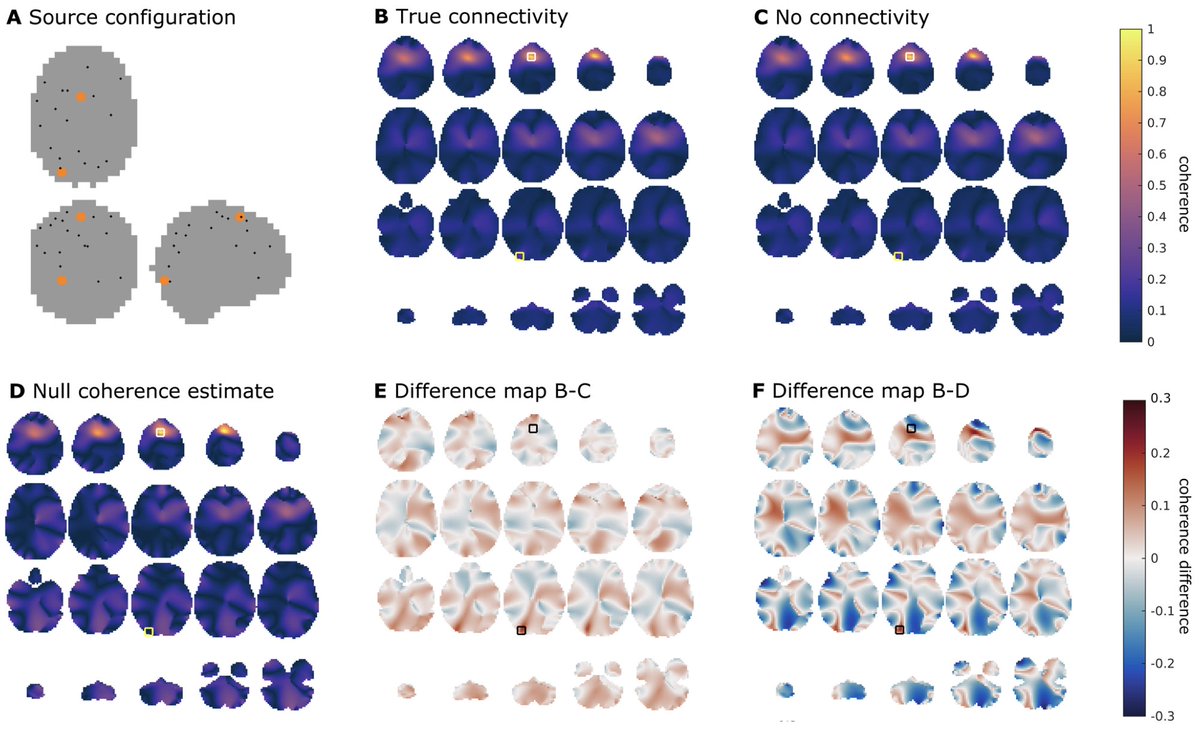
New paper in Imaging Neuroscience by Britta U. Westner, Jan-Mathijs Schoffelen, et al:
Towards a more robust non-invasive assessment of functional connectivity
https://t.co/2qQVvP2tZJ
We are just weeks away from our meeting 🎉 🥳 The full programme is available online https://t.co/WVCzKujw0o As always the meeting promises to be packed with novel scientific advances driven by state of the art approaches in the field of pain research. See you there! 🇮🇹 🥂 🧬
We just released a new version of DISCOVER-EEG! 🥳 Now preprocessing of EEG event-related data is also possible. Check it out: https://t.co/zSi80Ya8az @markus_ploner#PainlabMunich#EEG#Neuroimaging
We are pleased to invite registrations for the conference 'From Pain to Suffering: Determining the Driving Factors of Burden and Disability in Chronic Pain' bringing together philosophers, neuroscientists, physicians, and clinical practitioners. Berlin, 2nd – 4th of May 2024!!!
📢*REMINDER* 🧠✍️
Just over 3 weeks left to register for our 2 day 'Neurotechnology & Pain' workshop at @UniofExeter on 2nd & 3rd July 2024. With talks from various guest speakers, poster presentations and 2 interactive workshops. To find out more, visit https://t.co/evdEVsq50R
Our Global #Postdoc#Fellowship is a funding opportunity for #international#postdoctoral scientists who would like to start their research at our university. Join the info session on March 7 and apply for the program by March 31: https://t.co/UkNxOxH1t0
@TUMPostdoc
Joining forces to identify brain imaging biomarkers of chronic pain?
The ENIGMA Chronic Pain Working Group furthers large-scale collaborative efforts. We now also work on #EEG.
We look forward to welcoming new partners.
https://t.co/2FD4EjsoKX
@enigmabrains@SylviaGustin2
Great to see this out, has been 3+ years in the making, great work by @HVoetterl who took a lot of courage in the challenge of ‘blinded out-of-sample validations’… one of our largest EEG studies!
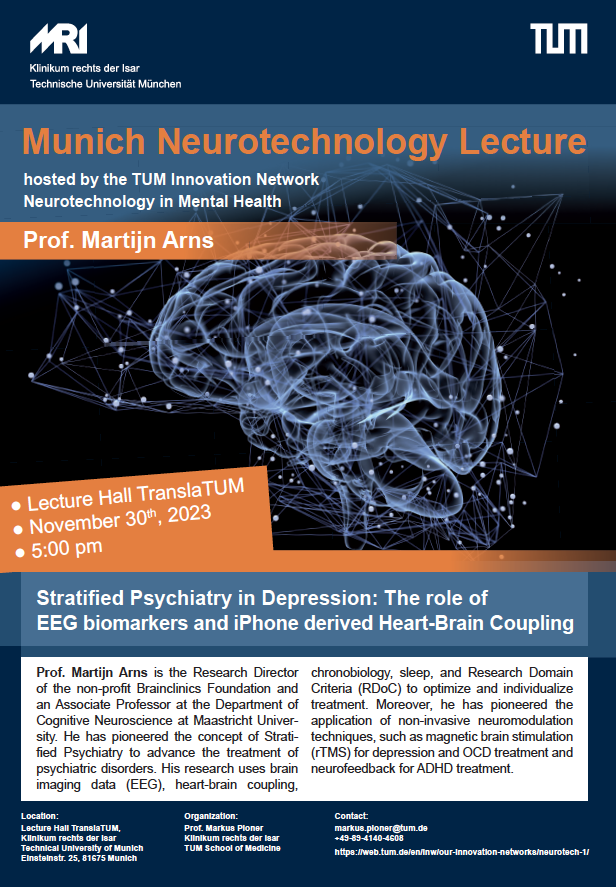
Look forward providing the Munich Neurotechnology Lecture November 30th on Stratified Psychiatry in Depression. Will cover both our EEG Brainmarker work as well as TMS Induced Heart-Brain Coupling.
https://t.co/0Pq4bW0pa2
Congrats to Felix Bott on winning the German Prize for Pain Research 🏆🎉. He received the prize during the German Pain Conference for his EEG study on expectation effects on pain. https://t.co/9jHSzuZk8b
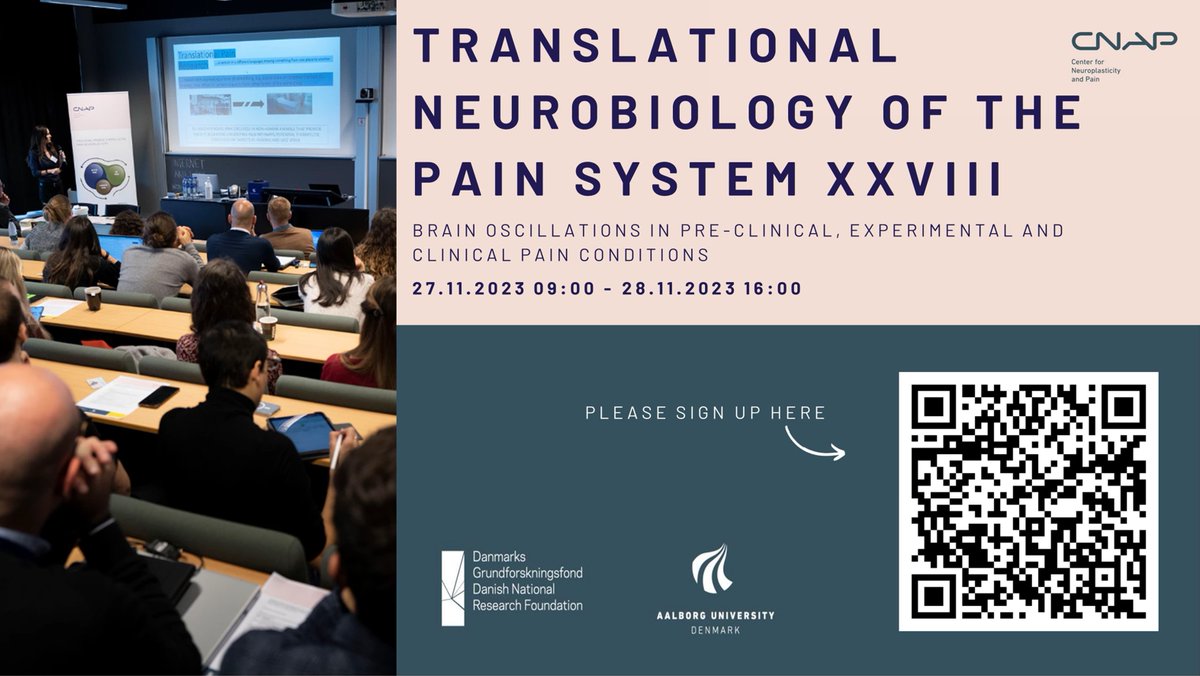
The temporal coding of neuronal activity in acute and chronic pain is not fully understood but likely involves brain oscillations. This year the @CNAP_AAU TRANSLATIONAL NEUROBIOLOGY OF THE PAIN SYSTEM seminar will focus on brain oscillations in pain conditions. 👇 PLEASE RP.