1/ 🧵 A Russian-owned refinery in Finland is quietly turning Russian nickel into "Western" metal — and shipping a copper by-product back to Russia.
Through 4+ (or 12+) years of war, the EU has never sanctioned it. We built NICKEL22 to expose it. 🇫🇮🇷🇺
Kuten Ukrainan ulkoministeri tässä toteaa, pakoteaukot on suljettava.
Venäjältä hankittu nikkeli on sisällytettävä EU:n 22. pakotepakettiin. Olemme keränneet kaikki asiaan liittyvät olennaiset tiedot sivustolle https://t.co/hPXKcXDQaD
EU:n reaktiot ovat kuitenkin välillä hitaita, mistä syystä ehdotamme asiaan puuttumista myös suomalaisen lainsäädännön kautta. Kannata kansalaisaloitettamme ja jaa tietoa siitä!
https://t.co/GpHQpUzwbZ
Components discovered in the missiles and drones Russia has used against Ukraine in recent months indicate that its military-industrial complex continues to receive foreign electronics from at least eight countries.
Our experts examine every piece of weaponry to determine the number of foreign components it contains, as well as where and by whom they were manufactured. This analysis covers the weapons Russia most frequently employs in its systematic strikes against civilian targets—including Ukraine’s energy grid, bridges, and other critical infrastructure, as well as residential buildings.
An Iskander-M missile contains over 147 foreign components from at least eight countries. A Geran-5 jet-powered drone contains more than 115. A 48N6 missile (used in the S-400 system) contains over 115, while a Geran-4 drone contains more than 46 components.
Electronics, however, represent only part of the broader picture. Russia’s weapons production also relies on imported raw materials and machine tools. I once again urge EU countries to ban the export of alumina to the Russian Federation, as it is subsequently used in the production of Russian missiles.
Sanctions cannot be a one-time measure. Russia is constantly adapting, and therefore, our partners must adapt as well. Systematic effort is required: continuously updating sanctions by introducing new restrictions in response to every Russian strike, combating sanctions evasion, ensuring an appropriate response from law enforcement agencies to instances of smuggling of weaponry components, and strengthening the vetting of counterparties by manufacturing companies.
Just another day with nickel stone trains crossing the ”closed” border. Rus cargo discount continues on Ni and NH3. @yleuutiset does not mention who owns the company and who buys it as ”Finnish”. You should talk to Yle @vladvlas if Ukraine would like to get this sanctioned.
@andrii_sybiha Dear Mr Sybiha, please discuss also with @elinavaltonen re Nornickel Harjavalta in Finland which processes nickel from Russia. Our friend @markus_tm has created an amazing web portal with most important details. Security of nickel supply has alternatives. https://t.co/TLoc3PPvSp
Allekirjoita kansalaisaloite, jos haluat tämän vihdoin loppuvan! Venäläisen nikkelin tuonti ja jalostus Suomessa lopetettava - Kansalaisaloitepalvelu https://t.co/Xldh7s8ZVz
Suomi rahoitti Venäjän raakalaismaista sotaa Ukrainaa vastaan yli 840 miljoonalla eurolla viime vuonna! Eikä loppua näy?#kupari22#nikkeli22 https://t.co/nubMJWt2BF
@andrii_sybiha Full support, the EU has to practise what it preaches! Alumina (Rusal) and also nickel stone and copper matte (Norilsk nikel) need to be included in sanctions. https://t.co/jvd4xRqs0S
Yesterday NRK Sørlandet interviewed me about what Sørlandet Hospital can learn from Ukrainian hospitals in war. https://t.co/LF8epD0JXA. You can find my interview under "tidspunkter" by clicking on 15:54.
It is rare for researchers to be invited on air, so I really appreciate the interest in this topic. My aim is to get this rich material and the knowledge out to Norwegian and other Nordic hospitals. The questions were asked in Norwegian and I answered in Swedish. That is also one way that Nordic cooperation can look!
The Norwegian government has asked hospitals to prepare to receive thousands of wounded. This raises questions that Ukrainian hospitals have had to answer for almost five years. In 2026 I interviewed 22 directors, doctors and nurses at ten Ukrainian hospitals.
Some of the points from the interview:
What we should do now? Think of cooperation and coordination between hospitals under extreme situations such as war. Our Ukrainian colleagues are convinced that Norwegian surgeons will learn to operate on war injuries when they need to. The structures for cooperation and coordination, however, cannot be built overnight. This does not mean to understate the importance for specialized knowledge, though.
We work under little pressure compared with our Ukrainian colleagues. At one hospital, the indoor temperature dropped to eight degrees after an attack, while injured people kept arriving. Staff then had to decide who would be treated first, and where to evacuate those who did not need treatment right away. Fortunately we don’t have to work under such conditions, but it is wise to think them through beforehand.
At many Ukrainian hospitals, leadership structures changed so that the distance between leaders and staff became smaller. Many Ukrainians say that you cannot understand war without experiencing it. That is why I think that staff exchange, in Ukraine or in Norway, is a good way to learn from the Ukrainian experiences.
I am now sorting the interview material by theme and building general preparedness scenarios based on what is realistic here in Norway. I have already spoken with the hospital’s preparedness leadership, and we have identified situations where we can do better than today. The project ends at the turn of the year, and I hope to continue next year with more detailed scenario exercises.
Ukrainian health workers have paid a high price for this knowledge. We should receive it and be grateful for it. Thank you to everyone who shared their experiences with me, and to NRK Sørlandet. The project has received funding from the Norwegian Directorate for Higher Education and Skills (HK-dir). Thank you!
#preparedness #totaldefence #healthsecurity #Ukraine #Nordiccooperation
⚠️Guys, I know many of my followers are foreigners living in Ukraine. Some of you work with humanitarian missions, others are fighting for our country.
I know I probably don’t need to remind you, but please be careful when dating or meeting people you don’t know well. Check who you’re meeting, and keep an eye on your drinks.
Today, Ukrainian police reported that a 19-year-old girl poisoned a 32-year-old Colombian who had served in Ukraine’s Armed Forces. Investigators say Russian intelligence recruited her, used her account to arrange a date, and paid her to poison him.
He died within an hour.
Just remember that Russian intelligence operates here too, and not every threat comes with a missile or a drone.
Please stay safe.
🕯️🕯️🕯️🕯️🕯️🕯️🕯️🕯️🕯️🕯️🕯️🕯️🕯️🕯️🕯️🕯️🕯️🕯️🕯️🕯️🕯️🕯️🕯️🕯️🕯️🕯️🕯️🕯️🕯️🕯️🕯️🕯️🕯️🕯️🕯️🕯️🕯️🕯️🕯️🕯️🕯️🕯️🕯️🕯️🕯️🕯️🕯️🕯️🕯️🕯️🕯️🕯️🕯️🕯️🕯️🕯️🕯️🕯️🕯️🕯️🕯️🕯️🕯️🕯️🕯️🕯️🕯️🕯️🕯️🕯️🕯️🕯️
russia keeps causing immense pain until it is stopped by force. We must all do more for Ukraine.
Unfortunately, our worst fears have been confirmed.
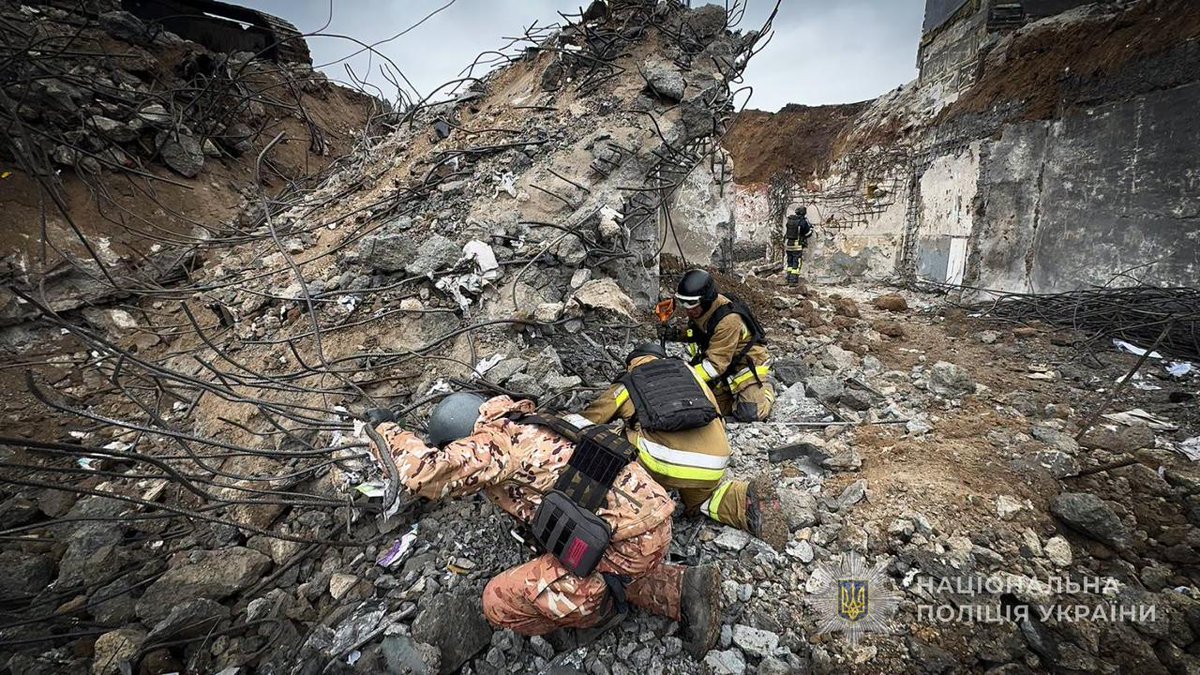
After two weeks of recovery operations to retrieve the bodies of those killed in the Russian strike on November 2 against a school building in the town of Komyshuvakha, where humanitarian aid was being distributed to local residents that day, the death toll has reached 72. Four more persons are missing.
This is one of the deadliest mass murders of Ukrainian civilians by Russian forces in this war for which a confirmed death toll is known.
The number of victims exceeds even that of the devastating Russian missile strike on Kramatorsk railway station on April 8, 2022 (61 killed), or the Russian strike on a cafe in the village of Hroza during a memorial gathering on October 5, 2023 (59 killed).
Yesterday NRK Sørlandet interviewed me about what Sørlandet Hospital can learn from Ukrainian hospitals in war. https://t.co/LF8epD0JXA. You can find my interview under "tidspunkter" by clicking on 15:54.
It is rare for researchers to be invited on air, so I really appreciate the interest in this topic. My aim is to get this rich material and the knowledge out to Norwegian and other Nordic hospitals. The questions were asked in Norwegian and I answered in Swedish. That is also one way that Nordic cooperation can look!
The Norwegian government has asked hospitals to prepare to receive thousands of wounded. This raises questions that Ukrainian hospitals have had to answer for almost five years. In 2026 I interviewed 22 directors, doctors and nurses at ten Ukrainian hospitals.
Some of the points from the interview:
What we should do now? Think of cooperation and coordination between hospitals under extreme situations such as war. Our Ukrainian colleagues are convinced that Norwegian surgeons will learn to operate on war injuries when they need to. The structures for cooperation and coordination, however, cannot be built overnight. This does not mean to understate the importance for specialized knowledge, though.
We work under little pressure compared with our Ukrainian colleagues. At one hospital, the indoor temperature dropped to eight degrees after an attack, while injured people kept arriving. Staff then had to decide who would be treated first, and where to evacuate those who did not need treatment right away. Fortunately we don’t have to work under such conditions, but it is wise to think them through beforehand.
At many Ukrainian hospitals, leadership structures changed so that the distance between leaders and staff became smaller. Many Ukrainians say that you cannot understand war without experiencing it. That is why I think that staff exchange, in Ukraine or in Norway, is a good way to learn from the Ukrainian experiences.
I am now sorting the interview material by theme and building general preparedness scenarios based on what is realistic here in Norway. I have already spoken with the hospital’s preparedness leadership, and we have identified situations where we can do better than today. The project ends at the turn of the year, and I hope to continue next year with more detailed scenario exercises.
Ukrainian health workers have paid a high price for this knowledge. We should receive it and be grateful for it. Thank you to everyone who shared their experiences with me, and to NRK Sørlandet. The project has received funding from the Norwegian Directorate for Higher Education and Skills (HK-dir). Thank you!
#preparedness #totaldefence #healthsecurity #Ukraine #Nordiccooperation
🚨 Residents of Kyiv’s Left Bank are struggling to get home.
Apocalyptic scenes of massive traffic jams across the Ukrainian capital.
❗️ Kyiv is experiencing major evening traffic gridlock. Video footage shows enormous traffic jams and severe congestion on the capital’s roads.
Traffic between the two banks of the Dnipro River has been severely disrupted, with residents struggling to make their way home.
These are the scenes unfolding in Ukraine’s capital tonight.
And you know what?
Don’t even start telling me about the Crimean Bridge, “Ukrainian provocations,” or any of that other Russian propaganda bullshit.
Let me remind you of one simple historical fact.
Ukraine did not invade Russian territory with tanks, weapons, and occupying forces.
It was Russia that invaded Ukraine in 2014, occupied Crimea, and started the war in Donbas.
It was Russia that launched its full-scale invasion on February 24, 2022, attempting to seize our country.
And it is Russia that continues to wage war against Ukraine.
We are not conquering someone else’s country. We are defending our own.
We are fighting for our cities, our homes, our families, and for the return of our prisoners of war, civilian hostages, and everyone Russia has deprived of their freedom.
We want to return home. And we want to bring our people home.
Crimea is Ukraine. Donbas is Ukraine. Every single meter of our internationally recognized territory is Ukraine.
And no amount of Russian propaganda will ever change who started this war and who has the right to defend themselves.
Glory to Ukraine! Glory to the Armed Forces of Ukraine!
#Ukraine #Kyiv #RussiaInvadedUkraine #CrimeaIsUkraine #SlavaUkraini
On 17 November, the 37th meeting of the Ukraine Defence Contact Group was held in Brussels in the Ramstein format. The meeting was opened by the UK Defence Secretary, Wes Streeting, after which Volodymyr Zelenskyy took the floor.
The President began by addressing air defence:
“These interceptors should not be sitting in warehouses. They should be in air defence batteries, protecting our cities, towns and villages from Russian strikes and saving lives.”
“Ukraine needs Patriot and IRIS-T interceptors from the stocks you already have right now. And in return, we can give you new missiles that Ukraine has already ordered, when they are produced.”
“This is not a donation – it's an exchange. You give us the missiles we need now, and you get newer and better missiles in return.”
A specific request was also made regarding aviation:
“Specifically, we need 40 more F-16 fighter jets. We are also working hard to get Gripen jets flying in Ukrainian skies as soon as possible.”
“The Mirage jets can be put to work right now. Europe can help us with this. Please make this decision.”
Zelenskyy then moved on to Russian attacks on our infrastructure and Ukraine’s response:
“Last night, Russia struck bridges in Kyiv with ballistic missiles. Russia has also attacked bridges, railways, and other infrastructure in many regions of Ukraine.”
“Today, Ukrainian forces completed an operation targeting a key route used by the Russian military to supply our occupied Crimea. Ukrainian drones and missiles struck the bridge connecting Russia with Crimea. The target was hit.”
Even before the meeting, Zelenskyy revealed some details of this operation:
“With the help of 'Flamingo,' our soldiers carried out a precision strike—and the communication system worked flawlessly right up until the very last seconds.”
Following Zelenskyy, Streeting took the floor and announced the UK’s aid package:
“We will be providing 240 million pounds to meet Ukraine’s most urgent winter air defence requirements. This will consist of over 1,000 additional short-range air defence missiles, as well as the accompanying launchers.”
“Deliveries to Ukraine’s Armed Forces will begin in December, building on the 400 surface-to-air missiles the UK has already supplied Ukraine ahead of winter.”
He framed the political part of his speech as follows:
“Ukraine is the first echelon of Europe’s and NATO's defence. So learning from Ukraine is imperative for allies.”
“Ukraine is solving today the challenges that NATO may face tomorrow.”
It is good when partners openly acknowledge that Ukrainians are also defending them. This should determine both the scale of the aid and the speed with which it is provided.
Boris Pistorius spoke next. He warned of Russia’s plans for the winter:
“Russia may intentionally try to cause humanitarian emergencies in Kyiv, Odesa and other large cities to break the Ukrainian people’s resistance.”
“We cannot tolerate Russia deliberately terrorising civilians with air strikes right here on our continent, right before our very eyes.”
On the subject of defence cooperation, Pistorius stated:
“We are establishing another German-Ukrainian joint venture for the production of uncrewed land vehicles for Ukraine, made in Germany.”
He also spoke about the German army’s testing of the Ukrainian DELTA system:
“Now we want to develop it further in cooperation with Ukraine and to test its use within the Bundeswehr.”
Mark Rutte then took the floor. Speaking about Putin, the NATO Secretary-General stated:
“He will not win in Ukraine, and he will not break our support to Ukraine.”
As for the link between military aid and negotiations, he said:
“Ukraine's position at the negotiating table is, however, directly strengthened by our, by your, each of your support.”
It would be good if this understanding were accompanied by timely deliveries every time.
Next to speak was Elbridge Colby, United States under secretary of defense for policy. He began to explain why Ukrainian long-range strikes are allegedly failing to produce the desired result:
“While the public conversation focuses on the spectacle of deep strikes designed to incur pain on the Russian population, our assessment is that such strikes have not been effective in driving an end to the war. Nor do they contribute to blunting Russia's advances on the front line.”
He then specifically mentioned Wildberries:
“Such strikes, especially those that target civilian infrastructure such as Wildberries, have actually probably hardened the Russian public's resolve and the Kremlin's own willingness to escalate.”
Following Ukraine’s resounding triumph last night, calls not to strike Russia sound like the Kremlin’s panicked wails. At the same time, Russia is striking Ukrainian civilian infrastructure with complete impunity, whilst Ukraine, for some reason, is expected to consider some sort of strengthening of Russian resolve — whatever that might mean.
It is telling that Colby himself went on to admit:
“Strikes against the Russian war machine can also help contribute to slowing Russia's advances on the front lines.”
At the closing press conference, Pistorius announced Germany’s and Norway’s contributions to the new PURL package:
“Both countries will contribute US$300 million each.”
In response to criticism of Ukrainian strikes, he said that the focus should first and foremost be on Russian attacks on the civilian population. Regarding Ukrainian strikes on military targets, he emphasised:
“…lawful and legitimate strikes against Russia, targeting non-civilian targets.”
Streeting also directly refuted the claim that long-range strikes are ineffective:
“This has helped to weaken Putin’s war machine, saving time and saving lives.”
For Ukraine, this war is existential. We are fighting for our very existence. Russia must be deprived of the ability to continue its aggression.
Even an ordinary walk can become dangerous during a Russian attack.
Ukrainian mothers are forced to think about protecting their children from drones instead of simply enjoying time together.
Help protect Ukrainian lives. Join Sky Defense: https://t.co/4Os08VprA0
ZELENSKYY CONFIRMS UKRAINIAN STRIKES ON CRIMEAN BRIDGE IN MULTI-WEEK SPECIAL OPERATION
The Ukrainian President said the attack formed the seventh phase of an operation jointly prepared by the Security Service of Ukraine (SBU) and the General Staff of the Armed Forces.
Ukrainian forces systematically targeted Russian air defence systems, radars and electronic warfare equipment before launching the main strike.
The operation involved Palyanytsia, Neptune, Ruta and FP-5 Flamingo missiles.
According to Zelenskyy, Palyanytsia missiles struck the bridge’s road section, while the other weapons targeted its railway section.
❗️🌉Footage showing the destruction of the road arch and span of the Crimean Bridge across the Kerch Strait.
Unlike an ordinary bridge span, the massive steel arch cannot be easily replaced. Road traffic across the bridge has been completely severed, leaving the occupied land corridor as the only remaining overland route.
Furthermore, the collapse also threatens Russian maritime traffic between the Black Sea and the Sea of Azov. The navigable channel beneath the bridge is only 120 meters wide and 8.3 meters deep, meaning the submerged steel structure could prevent large vessels from passing until the debris is removed.
💔 72 lives lost in Komyshuvakha, Ukraine.
After two weeks, rescue operations have ended following a russian attack in the Zaporizhzhia region.
During the search, russia attacked the village 11 more times, including 9 strikes directly on the rescue site.
Four people are still missing.
72 lives. 72 stories. 72 futures stolen💔