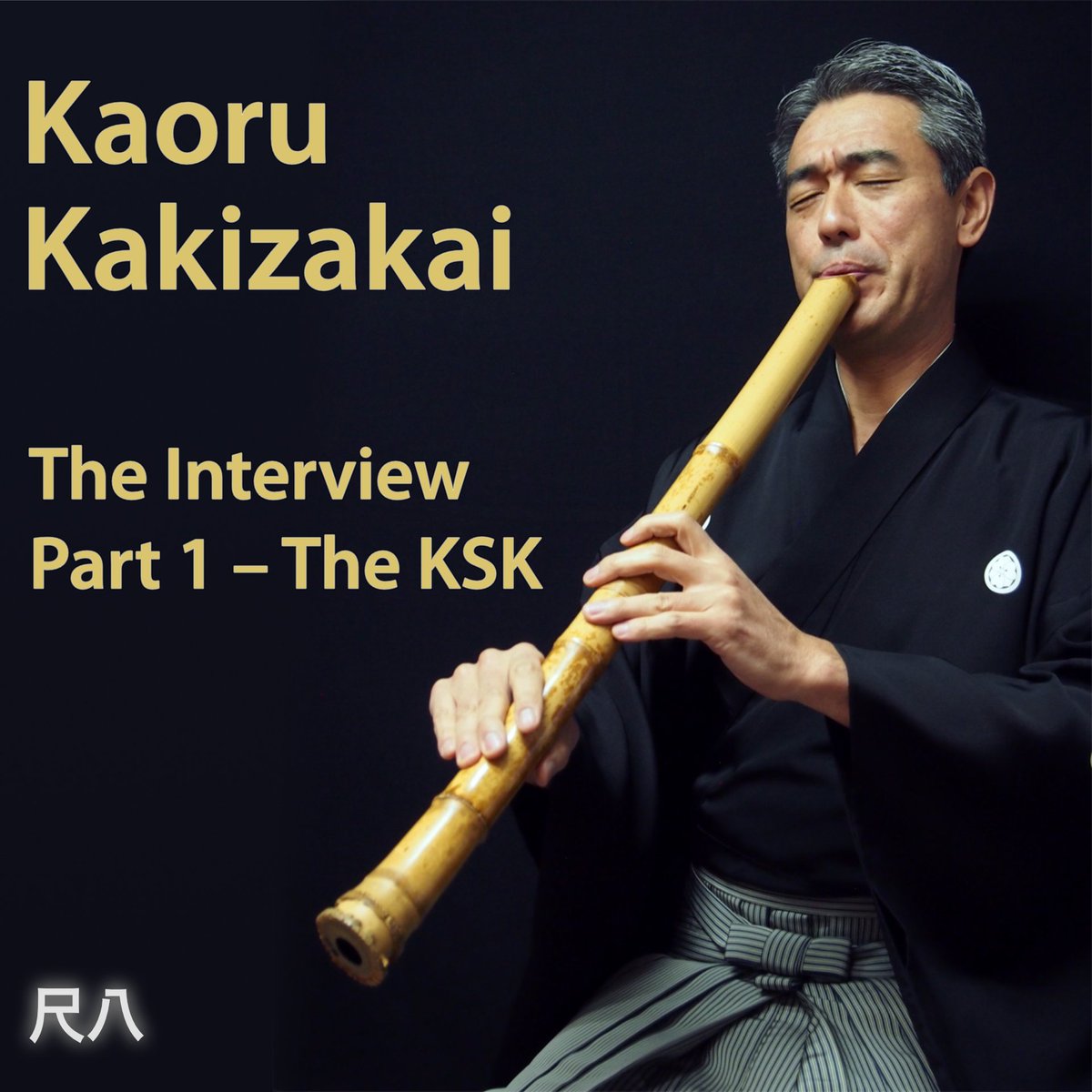
2nd episode of 'Markus Talks to Awesome People', feat Gunnar Jinmei Linder, one of very few shakuhachi players with extensive experience in Japan and outside. He is a main Chikumeisha teacher in Europe.
#shakuhachi#KSK#chikumeisha#yamaguchigoro
https://t.co/KPOirnmNry
Watch the inaugural episode of the 'Markus Talks to Awesome People' podcast with Christophe Kazan/Kamei Gaston, who holds two licenses from Shin-Tozan and Chikumeisha. He is also the creator of Chikumeisha France.
#shakuhachi#KSK#chikumeisha#shintozan
https://t.co/eJ7a46PFxu
You got your first shakuhachi, you managed to get a tone, and then: The pitch is too low! Have you been scammed?
I discuss how you can detect if you have been scammed and what you can do about the low pitch.
#shakuhachi#scam#xiao#pitch#tone
https://t.co/T5H3EPslUy
I just published a video on tamane (玉ね, ‘flutter tongue’) on the shakuhachi. Tamane means to make a trill with the tongue or throat while playing. This creates a flutter effect.
#shakuhachi#introduction#tutorial#tmane#technique#尺八#玉ね
https://t.co/zkeGdIqM61
Here's a simple play-along to 'Hama Chidori' (浜千鳥 – Plover on the beach) on a 1.8 shakuhachi. Suitable for beginners to practise playing.
https://t.co/ndngd5SgIq
I published a tutorial on how to play ‘Kimigayo’ (君が代, the Japanese national anthem) on the shakuhachi (尺八). This is a companion video to the simple play-along (https://t.co/sh377SIizu).
#shakuhachi#tutorial#kimigayo#尺八#君が代
https://t.co/u8y3gFIyNY
Part 7 of the mini-series on special shakuhachi techniques: mawashi yuri (‘circle vibrato’) is a technique frequently used in shakuhachi koten honkyoku.
#shakuhachi#introduction#tutorial#mawashiyuri#technique#尺八
https://t.co/feeL3SguUm
I just posted an introductory tutorial on ‘yuyake koyake’ (夕焼け小焼け) on the shakuhachi (尺八). This is a companion video to the simple play-along, which you can find here: https://t.co/aRFeFjYlhw.
#shakuhachi#tutorial#yuyakekoyake#尺八#夕焼け小焼け
https://t.co/HeEKCfKFT7
Another special shakuhachi techniqu: kubi furi (首振り), the main vibrato technique. Despite the saying 首振り三年’ (kubi furi san nen’ – three years for kubi furi) there is just one core technique.
#shakuhachi#tutorial#kubifuri#vibrato#尺八#首振り
https://t.co/ZWwmX4LQhT
I played kuyō kyoku (供養曲) on a 2.7 shakuhachi, a traditional piece (shakuhachi koten honkyoku; 尺八古典本曲). The title translates as ‘memorial service’.
#kuyokyoku#供養曲#shakuhachi#尺八#kotenhonkyoku#古典本曲#honkyoku
https://t.co/Vymc8z31Y1
Here's a tutorial on how to play ‘hi no maru no hata’ (日の丸の旗 – Flag of Japan) on the shakuhachi. This is a companion video to the play-along video. Score on Patreon: https://t.co/vGV24WBKTp #shakuhachi#tutorial#hinomarunohata#日の丸の旗#尺八 https://t.co/2VRw2xzlKR
Part 4 of the series on special shakuhachi techniques: the チ–ル (Chi–ru) pattern. It can be confusing initially but is straightforward when you know what to practise.
#shakuhachi#尺八#honkyoku 本曲 #chiru#chirupattern#チル#practice
https://t.co/z4F9sHNR6D