Zlatan Ibrahimović after Manchester United’s disaster against Como:
“What Ronaldo said about the club is beginning to come true. People blamed him, forgetting that he is a club legend who knows the club inside out.
The problem will never be the coach or the players. There is something the board isn’t telling the fans, and they deserve to know the truth.
It’s time for the fans to apologize to Cristiano Ronaldo because what he said is turning out to be true.
Big respect to Cristiano Ronaldo for always speaking up, regardless of the consequences, although I don’t like him and never will.”
Dos niñas que no se conocían coincidieron en Disney con el mismo vestido de la princesa Tiana y la misma muñeca. En cuanto se vieron, fueron corriendo a conocerse.
I have been on many job sites in my days and it is true these guys usually have the best lunches. Whether it’s their wives or families cooking it, it always looks and smells so good.
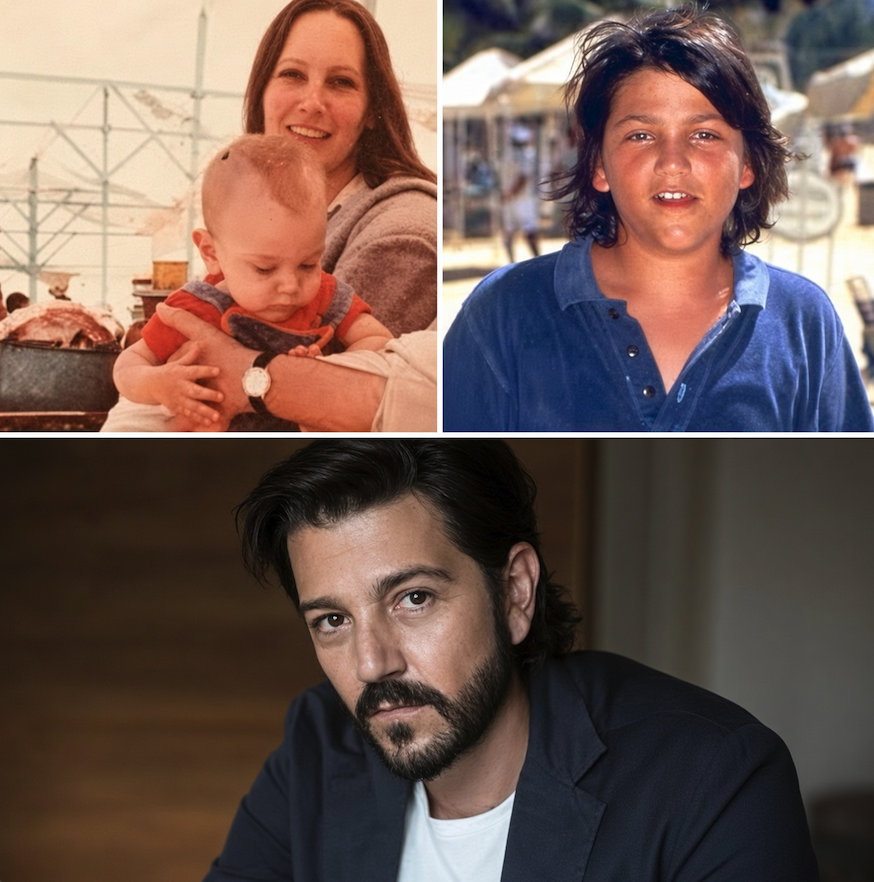
Diego Luna se atrevió a decir lo que casi nadie admite: que hay ausencias que nos explican la vida entera.
Su mamá murió cuando él tenía dos años. No la recuerda. Y aun así, hace muy poco, presentando su nueva película como director, lo dijo sin rodeos:
«Perdí a mi madre cuando tenía dos años y, de alguna manera, buena parte de mi vida la he pasado intentando entender lo que esa ausencia significa».
Y luego añadió algo todavía más íntimo: «Mi relación con mi padre, por ejemplo, no la entiendo sin esa ausencia».
Fíjate en eso. Un hombre que ha triunfado en México y en Hollywood, que ya es papá de hijos casi adultos, reconoce que una pérdida que ni siquiera recuerda sigue ordenando su manera de querer, de cuidar y de relacionarse con los suyos.
En otra entrevista fue más lejos: «Por momentos, tengo cosas muy resueltas y, por momentos, soy el niño de 8 años que no entiende por qué a él no le tocó».
Imagina a ese niño. Quizá miraba a otros niños salir de la escuela de la mano de su mamá. Quizá no tenía palabras para nombrar lo que le faltaba, porque no se puede extrañar con claridad a alguien que no recuerdas. Y quizá por eso ese vacío se volvió tan grande: porque no tenía forma, solo peso.
Pero Diego también contó la otra parte. Habló de las personas que lo acompañaron, «esas redes que me acogieron y me abrazaron cuando mi madre ya no estaba». Amigas de su madre, gente del teatro, una familia que se fue tejiendo alrededor de un niño que había perdido algo esencial.
Eso es lo que me conmueve de su confesión. No dice «ya lo superé». Dice que todavía lo está entendiendo. Y lo hace sin vergüenza.
Muchos cargamos ausencias así. Un papá que se fue. Una mamá que estaba, pero no estaba. Un abuelo del que nadie hablaba. Lo que no se nombra en una familia no desaparece: se hereda. Pasa en silencio de una generación a otra y aparece después en cómo amamos, en lo que tememos y en lo que exigimos a los demás sin saber por qué.
Y hay algo liberador en hacer lo que hizo Diego: dejar de fingir que ya está resuelto. Mirar de frente al niño que no entendió y decirle: «Ahora sí te escucho».
No hace falta tener todas las respuestas. A veces sanar empieza simplemente por darle un lugar a lo que faltó.
Una chica mexicana llevaba un año sufriendo acoso escolar, con insultos también en grupos de WhatsApp. Pese a las numerosas quejas a la dirección del centro, el problema seguía sin resolverse.
Su padre decidió llevar a su hija mayor a una cafetería donde estaban las presuntas acosadoras al salir de clase. Allí, le hizo un gesto para que interviniera y esto fue lo que pasó.
Al terminar, la hermana mayor advirtió: «Esto es lo que le va a pasar a cualquiera que se meta con mi hermana».
JUST IN: The heroic bystander who took down a 16-year-old gunman during a deadly Oregon elementary school shooting has been identified as 36-year-old Kaylub Giamanco.
Giamanco, whose two daughters attend Silver Rail Elementary School, saw the suspect shoot at a truck before blasting through the glass panes of the school’s double doors to get inside.
Police say the teenager entered a classroom and fired as many as 15 rounds. Giamanco grabbed a legally owned .40-caliber pistol from his car and rushed into the building, following the sounds of gunfire.
When he reached the classroom, he found the suspect struggling with a teacher who had thrown her cellphone at the gunman and tackled him.
Giamanco then shot him multiple times, ending the attack.
Three children and a teacher were killed, while two others were injured.
New details are emerging about the father’s actions and what his family says about the tragedy: https://t.co/MvY6R3fBSS | @foxandfriends
🚨 ¡Alumnos del CONALEP responden con su trabajo a influencers que se burlaron de ellos!
Estudiantes del CONALEP de Nuevo León respondieron a los comentarios realizados en el podcast de los parrilleros, donde se refirieron a los alumnos como “bandidos” y bromearon con que estaban “a nada de embarazar a una chica del CONALEP”.
🔴 En lugar de quedarse callados, los jóvenes difundieron videos mostrando las actividades que realizan en sus planteles, como mantenimiento automotriz y mantenimiento electrónico, para demostrar su preparación técnica.
🗣️ Los estudiantes rechazaron las expresiones de los creadores de contenido y señalaron que “sus comentarios no son humor, son discriminación”.
La respuesta de los alumnos pone en discusión los prejuicios hacia quienes estudian carreras técnicas en México.
¿HAY ALGO QUE HAGAN MAL LOS HIJOS DE CR7? 🤩
🥹 Georgina Rodríguez presumió la habilidad de Eva María para la gimnasia.
Una familia de futbolistas, artistas y ahora gimnastas. 😎
📹 georginagio
Cristiano Ronaldo defies gravity! 🐐🚀 That leap, the power, and the perfect header. At 41, CR7 is still a force in the air!
And some people still have the nerve to compare him to the dwarf. 😂🐐👑
🚨🇺🇸 Devoted teacher killed in Oregon school shooting was a 25-year-old living her dream job.
Megan Lambert gave everything to her students.
“She was compassionate and had a huge heart. She always fought for the underdog.”
Her kindness knew no bounds.
In her first year coaching volleyball, she refused payment so families who could not afford to play were covered.
RIP 💔
Writer: Bri
In 2018, Jacksonville State University basketball player Norbertas Giga experienced an unforgettable surprise when he was reunited with his mother after five years apart. The 7-foot center had left his home country of Lithuania in 2013 to chase his basketball dreams in the United States, but hadn’t been able to return home to see his family.
What Giga thought would be a routine film session with his coaches quickly turned into something far more meaningful. As they casually asked him about his favorite traditional Lithuanian foods, his mother unexpectedly walked into the room.
The moment he realized who was standing before him, the towering basketball player was overcome with emotion, embracing his mother in a heartwarming reunion. The surprise came just before his senior conference tournament, making an already important moment in his college career even more special.
A dog spent a whole night on a rock that the sea was trying to take back.
Not a beach. Not a pier. A rock. Wet, narrow, surrounded by water that did not care who he was or how frightened he was.
And the reason he ended up out there has nothing to do with the sea. It started with a sound.
Somewhere on this planet tonight, someone will light a firework because it looks beautiful. It will last four seconds. It will be gone before the smoke clears. For the people who lit it, it is a celebration.
For a dog, it is the sky breaking open with no explanation and no off switch.
That gap, between what a sound means to us and what it means to them, is where this entire story lives.
Dogs hear far more than we do. Their range is wider, their sensitivity to sudden, sharp bursts is higher, and a festive bang that makes us smile can land in their bodies as something closer to an attack. Vets and shelters in many countries repeat the same warning every holiday season: lost-dog reports climb after fireworks, because panic does not read maps. A frightened dog does not run toward anything. It runs away from everything. Fences, leashes, open gates, familiar streets: none of it registers as a boundary when the body has already decided to flee.
Which raises the question that makes this video worth your next minute.
How far can fear carry a living creature before the ground simply runs out?
In this case, the answer was: all the way to the edge of the water. And then into it.
Here is what makes the situation so brutal in its simplicity. Nothing in what we know points to a villain. No cruelty. No grand mistake. Just noise, a terrified animal, and a coastline with no mercy in it. An ordinary night. An ordinary celebration. One dog's nervous system doing exactly what evolution built it to do, and that instinct delivered him to a place with no way back.
The sea is a strange kind of danger. It is not aggressive. It does not chase. It simply keeps arriving, wave after wave, patient and indifferent, and over hours it wears down everything that stays in its path: stone, strength, certainty. You can stand your ground against an enemy. How do you stand your ground against repetition?
A rock in that setting is not shelter. It is a countdown with a surface just large enough to stand on.
Think about the length of a night when you are the one waiting for it to end. We measure ours in sleep, in dreams, in the click of an alarm. Out there, there is no unit for it except the next wave. We cannot know what that animal felt, and anyone who claims they do is guessing. But we can say this much: a creature that cannot understand why the loud thing happened, or when it will stop, or whether anyone is coming, is left holding a single question. And it has no words to ask it.
Hours of that. Not minutes. Hours.
Now hold that thought, because here is the part of the story that rarely gets the attention it deserves.
Before any rescuer arrives anywhere, someone has to notice.
Someone has to stop on the way to wherever they were going, look at something that is not their problem, and decide that it is. Nobody pays strangers to stare at the water. Their phones could have stayed in their pockets. That stretch of shoreline could have stayed one more anonymous mess of rock and foam, and the night could have ended the way many nights like it end, unseen.
Instead, local people spoke up. They alerted the people whose job it is to respond. And that single act of attention is the reason there is anything to watch at all.
We talk about heroism as if it begins at the dramatic moment. It rarely does. It usually begins a few steps earlier, in the unglamorous second where an ordinary person refuses to look away. The rescue is the second link in the chain. The first link is somebody paying attention.
Most rescues have no footage. Most heroism leaves no trace. It happens at the wrong hour, in the wrong weather, in places no camera is pointed, and it ends with tired people going home and telling nobody. That is what makes it strange to be allowed to see one.
So let me tell you what I keep thinking about, and I will try not to tell you more than that.
The people who responded had training. They had equipment. They had rope, which is what you reach for when you want distance between yourself and a danger. Rope is the tool of people who intend to do the job and keep their feet on solid ground.
And still, the story turns on a sentence nobody wants to hear in a rescue: it was not enough.
When the water refuses to cooperate, the job changes. It stops being technical and becomes personal. If the safer method fails, there is only one method left, and it requires putting a human body exactly where the rope could not go.
Pause on that. For a dog. In waves that were, by the video's own account, too strong for the careful approach.
I am not going to tell you what to think about it. I am going to ask you to notice that this is a real question that people answer every day in uniform, usually without an audience: how much risk is a life worth, when that life is small, four-legged, and cannot ask?
Cold logic says a dog is not worth a person's danger. Cold logic also says nobody should run into a burning building for a cat, or sit up all night with a sick child who will never remember it, or hold a stranger's hand in a storm. Cold logic is a wonderful tool for spreadsheets. It is a terrible tool for deciding what kind of people we want to be.
There is a second drama inside a rescue like this, and it has nothing to do with water.
It is the drama between a frightened animal and a stranger's hands.
An animal that has spent a night in terror does not know that you are the rescue. To him, you may be one more unpredictable thing in a world that has been made entirely of unpredictable things since the first bang. Rescuers know this. The good ones move accordingly: slow where slow is possible, calm where calm is almost absurd, patient in a way that never shows up in the highlights but is most of the job.
Dogs have lived beside people for many thousands of years. We shaped them and they shaped us, and somewhere in that long partnership a strange instinct took root. A dog in genuine trouble will sometimes run from everything, and then, when the running is over and the strength is gone, look toward a human being and wait.
Not because the dog understands what a person can do. Because the dog has learned, across generations, that people are where help sometimes comes from.
So here is what I would ask you to watch for. Not the water. Not the rock. Watch the moment between a creature's fear and a human's reach, and decide for yourself which one wins.
Let me widen the lens for a second, because there is a larger story hiding behind this small one.
Every year, the same conversation returns in the days after big celebrations. Owners post photos and phone numbers. Shelters remind people to check microchips. Neighbors walk the streets at dusk calling a name into the dark. It is a quiet, recurring heartbreak that mostly does not trend, because it has no villain, no scandal, and usually no video.
This one has a video.
There is an uncomfortable fact in here for anyone who loves an animal: the night we plan for joy may be the night they need us most. A closed door. A familiar blanket. A room away from the windows. A collar with a number that actually works. None of it feels heroic. All of it is the first link in the same chain that starts with somebody paying attention.
I am not saying this to make anyone feel guilty. Celebrations matter. People are allowed to be happy. I am saying that the distance between a perfect night and a disaster can be one open gate and one very loud second, and that most of us only learn how thin that margin is when we watch it play out for somebody else.
Consider the strange arithmetic of this whole thing.
A single sound, lasting almost no time at all.
A single leap, made in a panic that cannot be argued with.
A night that, for the one living through it, must have felt endless.
A call made by people who owed nothing.
A decision made by responders who could have chosen the safer, slower, more comfortable option and chose differently.
Five events. Not one of them was large. Each one is the kind of thing that could be missed, skipped, postponed, or rationalized away. And yet the whole story balances on them like a house of cards, where the removal of any single piece changes everything.
That is what fascinates me about rescues. We think of them as big moments. They are actually the sum of small ones, each requiring somebody to do the slightly inconvenient, slightly frightening, slightly unrewarded thing.
There is also a question about time that I cannot shake.
The fear lasted a whole night. The rescue, by comparison, is measured in a stretch of time so short that you could cover it with a single scroll. Hours of dread, followed by minutes of action. Which of those is the real story?
The easy answer is the action. That is what gets filmed. That is what makes us hold our breath. But anyone who has ever waited for news in a hospital corridor knows that the long, silent stretch before the action is where the weight actually sits. The action is only the release.
When you watch, notice how little of the video's emotional power comes from what is happening in that exact second, and how much comes from everything you already know happened before it. The night is not on screen. The night is in you.
Now, I promised myself I would be honest about what we know and what we do not.
We know the animal was frightened by fireworks. We know he was stranded on that shore overnight. We know that people nearby raised the alarm. We know that the water was too rough for rope alone, and that the people who came for him went in themselves.
We do not know his name. We do not know how long he had been without food or water, or what condition he was in, or where he came from, or who is waiting for him. We do not know what he was thinking, and I will not pretend we do. Every time someone writes a dog's thoughts in the first person, a little bit of the truth gets traded for a little bit of drama.
But here is the thing about honest uncertainty: it makes the unanswered questions heavier, not lighter. Not knowing how a story ends is a very particular kind of tension. It is the tension of being asked to care about someone before you are told whether it was worth it.
And that, in the end, is exactly what the people on that shoreline were asked to do.
They did not know how it would end either.
Nobody standing at the edge of rough water knows how it will end. That is what separates a brave decision from a safe one. A safe decision comes with a guarantee. A brave one comes with a question mark, and the person making it goes anyway.
I think about the word "stranded" a lot. It is a lonely word. It suggests not just being stuck, but being stuck somewhere that was never meant for you, far from anyone who knows your name, with the situation getting worse and no clear way to change it.
Dogs are not built for solitude. They are built for packs, for households, for the particular warmth of being someone's. To be stranded is to have that taken away without warning. The night does not only threaten the body. It threatens the one thing a dog has spent thousands of years being built around: belonging.
And so the real contrast in this story is not between a dog and the sea.
It is between being alone and being found.
Let me take you somewhere slightly uncomfortable for a moment.
Your feed is full of things designed to make you react. Outrage. Panic. Contempt. Strangers arguing about strangers. Most of it asks you to pick a side and feel superior. Very little of it asks you to do something as old and quiet as worry about a living creature who has done nothing wrong.
A frightened dog has no politics. He has no agenda, no brand, no argument he is trying to win. He is simply in trouble, and the entire moral question is whether anyone nearby is going to treat that as important.
That is why stories like this land harder than they should. Not because they are sentimental. Because they strip everything else away and ask the oldest question there is: when someone weaker than you is in danger, and it would be easier not to get involved, what do you do?
Most of us would like to think we know our answer. Most of us have never been tested by waves.
There is a phrase buried in this story that deserves more attention than it gets: before it was too late.
Think about how much that sentence is doing. It means there was a moment when it was not too late. It means there will be a moment when it is. And it means the entire difference between those two moments was decided by how quickly a handful of people chose to act.
Too late is one of the most unforgiving phrases in any language. It does not describe a feeling. It describes a door. Before it, everything is possible. After it, nothing is. And the cruel part is that you almost never see the door until you are already on the wrong side of it.
Every rescuer in the world lives in the narrow strip of time before that door. Their entire profession is the art of arriving early enough for it to matter.
What would you give to be early enough for something?
Here is something else I find myself thinking about: the sheer, boring complexity behind a moment like this.
Somebody had to notice. Somebody had to find a number. Somebody had to explain a location to a stranger over a phone, with the sound of the sea probably in the background. Somebody had to decide this was worth a response. Somebody had to get in a vehicle and travel. Somebody had to look at the conditions and weigh the options. Somebody had to say, out loud or silently, that the first plan was not going to work.
None of that is cinematic. None of it makes the thumbnail. But take away any single step, and the story either never happens or ends differently.
We love the final scene and forget the supply chain of decency that makes it possible. Behind every dramatic rescue is a long invisible line of ordinary people doing ordinary tasks with unusual seriousness.
If you want to understand what a society values, do not look at what it says. Look at what it will send people into rough water for.
I want to say something about the people who do this work, because they are usually reduced to a single word in a headline.
Rescuers are not fearless. Anyone who tells you that has never spoken to one. The people who do this for a living are, for the most part, intensely aware of what can go wrong. They know how quickly water turns. They know what it does to a body. They have seen cases where an act of kindness turned into a tragedy for the person offering it.
That awareness is exactly what makes the choice meaningful. Courage is not the absence of knowledge. Courage is acting while holding all of it.
So when a team decides that the safer option is not going to work, and chooses to do the harder thing anyway for a creature that will never be able to thank them, it is worth noticing what that says. Not about heroism in the abstract. About the kind of seriousness it takes to treat one animal's life as worth real effort.
There is a version of the world where that never happens. Where the dog is a problem somebody hopes will resolve itself. Where "someone should do something" never turns into someone doing something.
We have all lived in that version of the world for a few seconds. We have all walked past. We have all assumed somebody else had it handled.
This story is about the people who did not.
Let me ask something that has no right answer, so feel free to disagree.
Is it strange that a dog can make a crowd of adults go quiet?
We like to believe we are rational, busy, and hardened by everything we have seen. Yet put a single frightened animal in a situation where we cannot look away, and something old and unguarded wakes up. A protective instinct that no one taught us. A refusal to let something helpless go unanswered.
Where does that come from? Evolution? Upbringing? Something about the way vulnerable faces, eyes, and bodies signal to us? Researchers have spent decades on versions of that question and there are real, interesting answers. But none of them fully explain why it is so hard to scroll past.
Maybe the explanation is simpler. Maybe we recognize ourselves. Because everyone has had a night where the noise was too loud, the ground was too far away, and all that was left was to wait and hope that somebody noticed.
If you have ever been stranded in any form, you already know how this story feels from the inside.
There is also the matter of the hands.
I will say very little about this, because it is the part you should see for yourself. But I will say that there is a difference between rescuing something and being trusted by it. A rescue can be done to an animal. Trust has to be given by one.
The rescuer needs the dog to allow it. The dog has every reason, after a night like that one, not to. Whatever happens between those two pieces of logic is the real center of the video, and no description of it can do the job that a few seconds of watching will.
Fear says: do not let anything touch you.
Exhaustion says: please, somebody, anybody.
Which voice wins in a body that has been awake and afraid for a very long time?
Here is a small test of your own instincts. Before you watch, decide what you think happens when a frightened animal, soaked and exhausted, is reached by a stranger in the middle of chaos. Write it down in your mind. Then notice, afterward, how much of that prediction was about the dog and how much was about you and what you believe about the world.
Most people who think about it discover that their forecast says more about their view of kindness than about animal behavior. Optimists see surrender. Skeptics see struggle. Realists see both within the same few seconds.
The video does not care what you predicted.
Notice, too, how rarely we ask what a rescue leaves behind. The footage ends. The crowd disperses. Everyone goes back to their own life, and the animal goes back to being a fact in somebody's day rather than the center of it. But a night like that one does not vanish. It lives on in how a dog reacts to the next loud noise, and in how the people who stood at that edge remember what they were willing to do. Some stories end when the video does. The best ones keep working on the people inside them long after.
Let me try a different angle, because there is a quieter lesson in the way this whole situation unfolded.
Nobody in this story was powerful. The dog had no power at all. The locals had no authority over the sea. The responders, for all their training, were still at the mercy of the same waves as anyone else. Every single person involved was working inside limits they could not change.
And yet the outcome was shaped by what each of them chose to do inside those limits.
That is a lesson worth carrying out of any rescue video. We tend to believe that doing something meaningful requires being in control of the situation. It does not. It requires accepting that you are not in control and acting anyway. The water was never going to be tamed. The rescue happened because people decided to work with something they could not command.
I have known people who spent their entire lives waiting for conditions to become safe enough to help. The conditions never became safe enough. The people who help are the ones who stopped waiting.
Something else that stays with me: how small a dog looks against the scale of everything around him.
A coastline is enormous. The sea is enormous. A night is enormous. In the middle of all that vastness, there is a creature who weighs a fraction of what any one of the people sent to help him weighs, and the whole machinery of a response turns toward him.
That is not an efficient allocation of resources. It is not a rational distribution of effort. It is a statement, made in rope and boots and wet clothes, that size does not determine worth.
If you strip away every other thing about this story, that is the idea that remains. In a world that is constantly teaching us to measure value by scale, reach, and numbers, some people still organize themselves around a single small life because it is in front of them and it matters.
Now I want to talk about what happens to the people watching.
Every time a rescue like this circulates, a strange thing occurs in the comments. Some people cry. Some people argue about whether it was worth the risk. Some people post the name of a shelter. Some people write that they are going to go hug their own dog tonight.
That last reaction is the most revealing one. A video about someone else's animal sends people home to their own. It does not teach us anything we did not already know. It reminds us of something we tend to forget when life is loud: that the creatures who depend on us are always, quietly, one bad night away from needing us completely.
I do not think of that as a sad realization. I think of it as a clarifying one. It points attention at what is worth protecting while there is still time to protect it.
Maybe that is the real reason this kind of footage spreads. Not because it entertains. Because it recalibrates something in us for a few minutes, and we feel the difference and want someone else to feel it too.
Which is, I suppose, why you are reading this.
One more thing, and it is about contrast.
The same sky that lit up for some people was, for him, the beginning of a crisis. Two completely different realities, produced by exactly the same sound, within a short distance of each other. Joy in one place. Terror in another. And neither side could see the other.
That is the uncomfortable geometry of a shared world. Our happiest moments are sometimes somebody else's worst ones, and nobody is to blame for it, because nobody knew. The only thing we can control is whether we look once the damage is visible.
Some people look. That is what separates a bystander from a witness.
A bystander sees a problem and keeps walking. A witness sees a problem and lets it change the plan for the evening. The difference is not courage, and it is not talent. It is a willingness to be interrupted by someone else's emergency.
Be interruptible.
There is a point at which I should stop talking and let the thing speak for itself, and I think we have reached it.
But before you press play, let me leave you with the questions I could not answer for myself.
What does it cost to treat a stranger's problem as your own, and who decides when that cost is worth paying?
When the safer plan fails, and the only remaining option carries risk, how do you know you are making the right decision, and how do you live with it either way?
How much of what we call compassion is instinct, how much is training, and how much is a choice we make fresh every time?
And what does a creature who has spent a whole night alone, afraid, and surrounded by water make of the first hands that reach for him?
I cannot answer that last one. I can only tell you that the answer is on the other side of one short video, and that the people who made it possible are not asking for credit. They were busy.
Some stories are loud because the thing inside them is loud. This one is loud because of how quiet the important parts are. A call that could have gone unmade. A decision that could have gone the other way. A hand that could have stayed at someone's side.
We spend so much time looking for proof that the world is cold. Rarely do we stop to look at the evidence that points in the other direction: ordinary people, uncelebrated, in difficult conditions, deciding that a frightened animal on a rock is worth getting wet for.
I cannot promise that watching it will change anything for you.
I can promise it is difficult to watch it and feel nothing.
Whatever is waiting for you in that video, you are going to feel the weight of that night. Not because anyone told you how to feel, but because the stakes are real, the fear is real, and the people involved were real enough to step into it.
Nothing about this is complicated. A frightened animal, a stretch of shore, and a handful of people who decided he mattered. The rest was the distance between those three facts.
Watch for the moment the waiting ends.
Watch what it costs.
Watch who is willing to pay.
And afterward, if you are the kind of person who carries things with you, take one practical thing along: the next time you hear the first bang of a celebration, look around for the creature who is not celebrating.
Somewhere, someone's heart is already racing.
Somewhere, a gate is open.
Somewhere, a stranger might be the only thing standing between a very bad night and a very different one.
Be the first link.
Press play.