una cosa muy sencilla y liberadora que ha cambiado mi vida? decir más "no sé"
permitirse no saber, partir del no saber, que la reacción default no sea sentenciar u opinar con claridad meridiana, pasar más tiempo en el "no sé" que en el "sé"
¿Cómo se evalúan los aprendizajes éticos en la actualidad? ¿Cuáles son las estrategias más utilizadas? ¿Que caracteriza a la investigación realizada sobre este tema en los últimos años? En el artículo publicado en @EducacionXX1 abordamos estas cuestiones https://t.co/bSCzApAFJY
They get excellent exam results
A lot is justified in the name of exam results. It’s okay to control every moment of a child’s day, if the school can show they get excellent exam results. It’s okay to have behaviour policies which put many children in isolation, if the school gets excellent exam results. It’s okay for parents to be complaining, and children to be protesting, if the school can show improving exam results.
Our education system has decided that only one outcome really matters in the lives of our young people. Excellent exam results. When people talk of evidence based education, they usually mean, what the research shows gets better exam results.
There’s a problem with this, because it’s not possible for everyone to get excellent exam results. Excellence is defined in contrast to everyone else. ‘Good results’ really means ‘better than the others’. An ‘excellent school’ means one that does better than the others, often in exam results. If everyone does very well, it just becomes the norm. They’d have to shift the goal posts.
Half of our young people will always get below average exam results. Not because they don’t try hard, but because an average means ‘the middle’ (and yes I know it doesn’t literally mean that and that there are different ways to calculate an average).
The quest for ever better exam results has a cost. Because it seems fairly clear to me that an effective way to get better exam results from more teenagers is to focus myopically on the test. To drill them in what they will need to do, and only that. To make them self quiz themselves for homework, and to do not just a mock exam, but a mock-mock too. To make school hours longer and to stop off-topic discussions. To punish them if they step out of line and to tell them that their lives will be over if they don’t do well. To coach them in how to take exams, so they become experts in that. To terrify them about the consequences if they don’t spend hours each night on their homework.
All this ‘works’. Some of them will get better exam results than they would have done otherwise.
But there’s a cost. There’s a cost for those who fall by the wayside and stop being able to attend school. There’s a cost for those who get through their exams and then breakdown and can’t go on. There’s a cost for those who submit to all the rules and then still don’t do well, and who spend their lives feeling like failures. There’s a cost to those who develop anxiety, eating disorders and depression. There’s a cost to those who burnout before they are sixteen.
The question we need to reckon with is this. If focusing on excellent exam results inevitably has a cost to the wellbeing of young people, is that cost one we are willing to bear? Are we prepared to write off some young people as collateral damage, whilst lauding those who get the top grades?
Instead what happens is that there is collective denial of the costs. Governments pretend that schools can focus on high stakes test results AND wellbeing, and that there isn’t a trade off there. Schools claim that children are happy to have every moment of their lives controlled, because it makes for a quiet classroom, and that those who say otherwise are the troublemakers.
What if we accepted that an education which prioritises exam results come at a cost, and asked whether this is one we are willing for our young people to pay? What then?
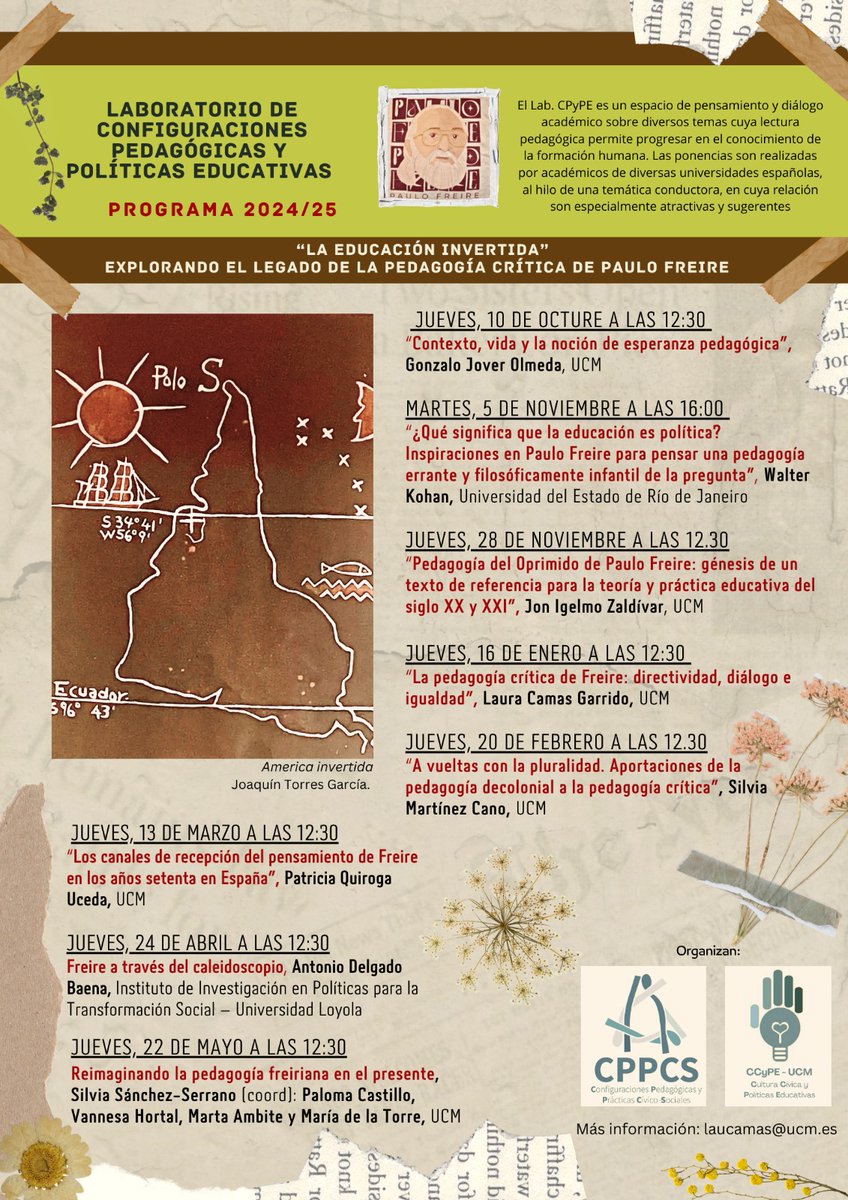
⚠️¡Ya tenemos listo el programa 24/25 del Laboratorio de Configuraciones Pedagógicas y Políticas Educativas que organizamos junto al @CPyPC_2024! Este año lleva por título "La educación invertida: explorando el legado de la pedagogía crítica de Paulo Freire". ¡Os esperamos!
Descubre la reseña del libro "Democracia y tradición en la teoría y práctica educativa del siglo XXI", coordinado por @jlfuentes31, Fernández-Salinero, C. y @josuahedoruiz y publicado por @narceaediciones
Reseña realizada por Marta Ambite Pérez. https://t.co/Ha99Lrkyd1
A raíz de la cantidad de señores que han venido a "explicarme" que ellos SABEN que las mujeres en la prehistoria no cazaban, vamos a hacer una pequeña reflexión sobre la importancia del RELATO. Porque no es "yo se" es "siempre me lo han contado así" ¿Y eso por qué?
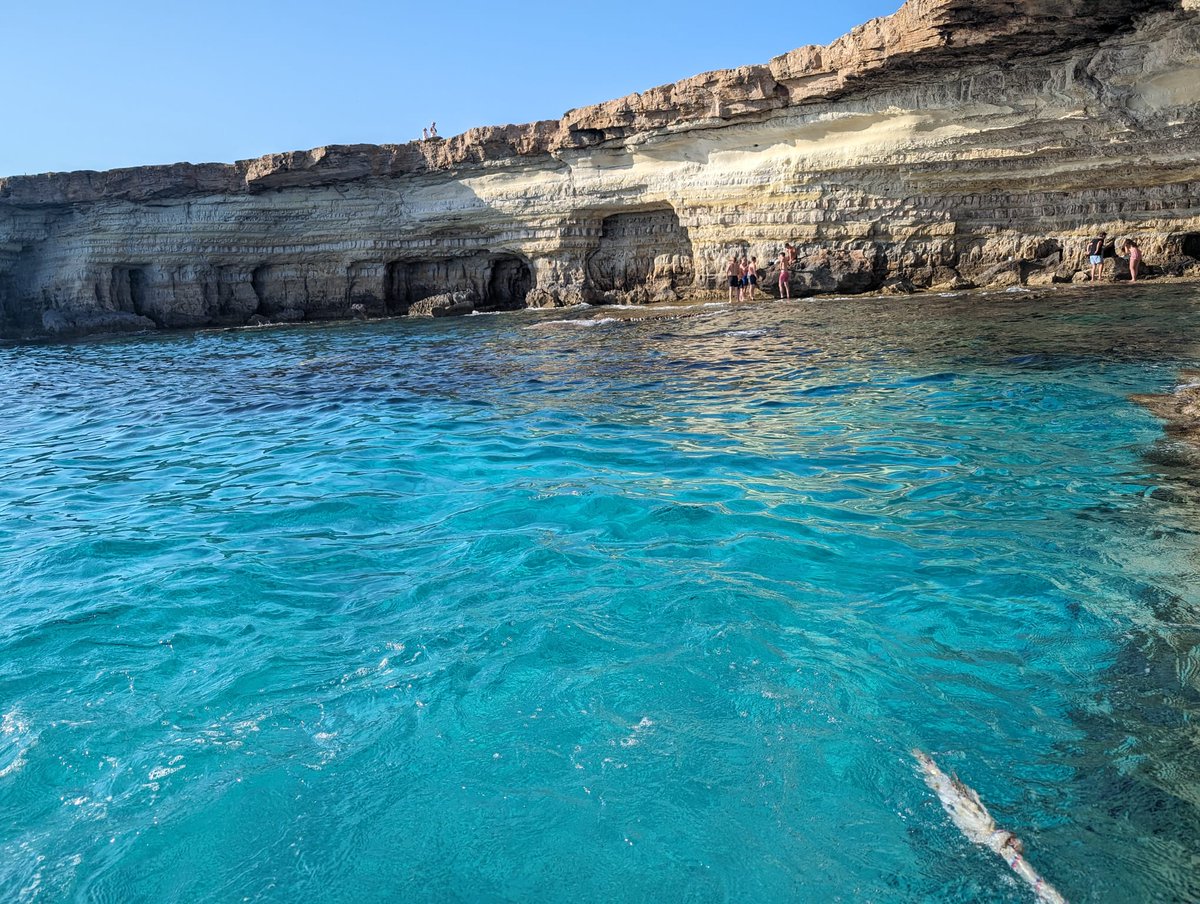
En el mes de junio tuve la oportunidad de viajar a Chipre con el programa Erasmus+ Current development and trends in educational leadership. Allí, he tenido la suerte de conocer a estudiantes y profesores con los que he compartido reflexiones educativas y un viaje inolvidable.
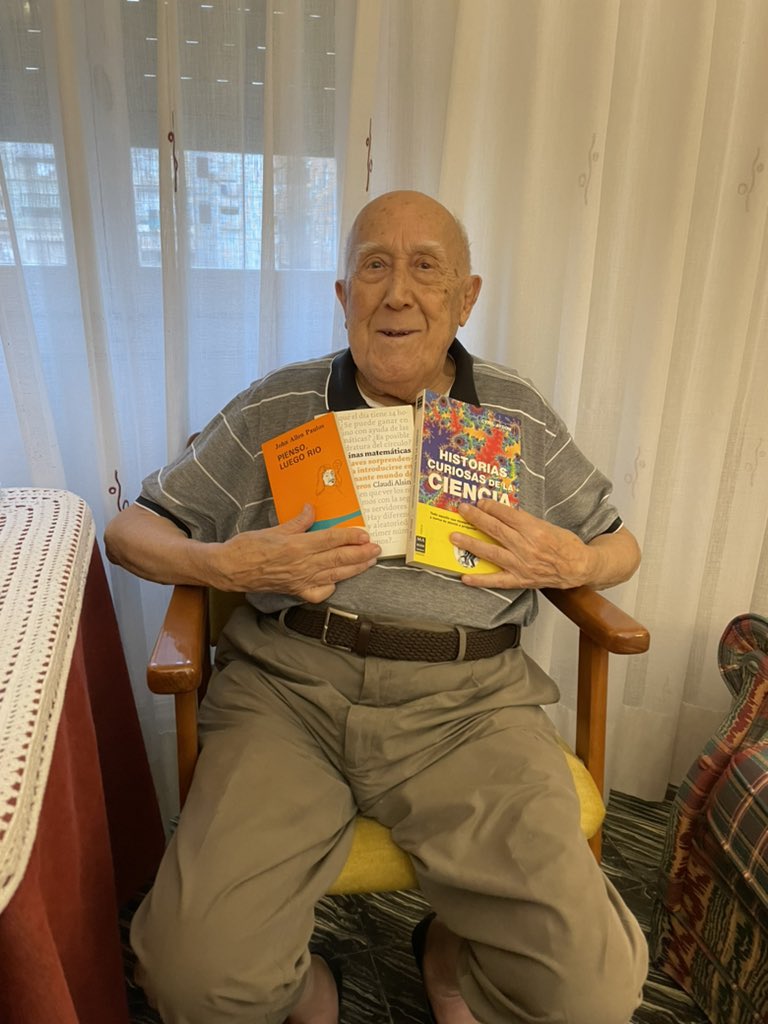
¡Feliz día del Libro!
A veces me preguntan por experiencias que han sido para mí valiosas en el aula así que vengo a recordar la que, sin duda, es la mejor que he propuesto hasta la fecha. Simple pero es tremendamente poderosa: la lectura colectiva.
Abro hilo para compartirla🧵
echar un poquito de menos un sitio es tener guardada la localización en la app del tiempo y mirarlo de vez en cuando pensando en cómo estará el cielo por allí
It’s just me and the 2-year-old tonight and when I asked her what she wants to do she said “I want to take a bath with a strawberry” and I will tell you she is having the time of her fucking life taking a bath with a strawberry
Una amiga de mi hija pequeña: entonces mi amigo imaginario me contó un cuento.
Yo: ¿tienes un amigo imaginario?
Ella: tenía dos, pero mi padre se sentó encima de uno sin querer y lo mató.
Yo: 😱😱
Es increíble que tengamos incorporado -sobre todo mi generación- el ansia de seguir y no parar nunca como algo positivo. El afán por producir, estar siempre presentes y no detenerse nunca convive con el miedo a desconectar o justificar cualquier parón. Una época vital acelerada.