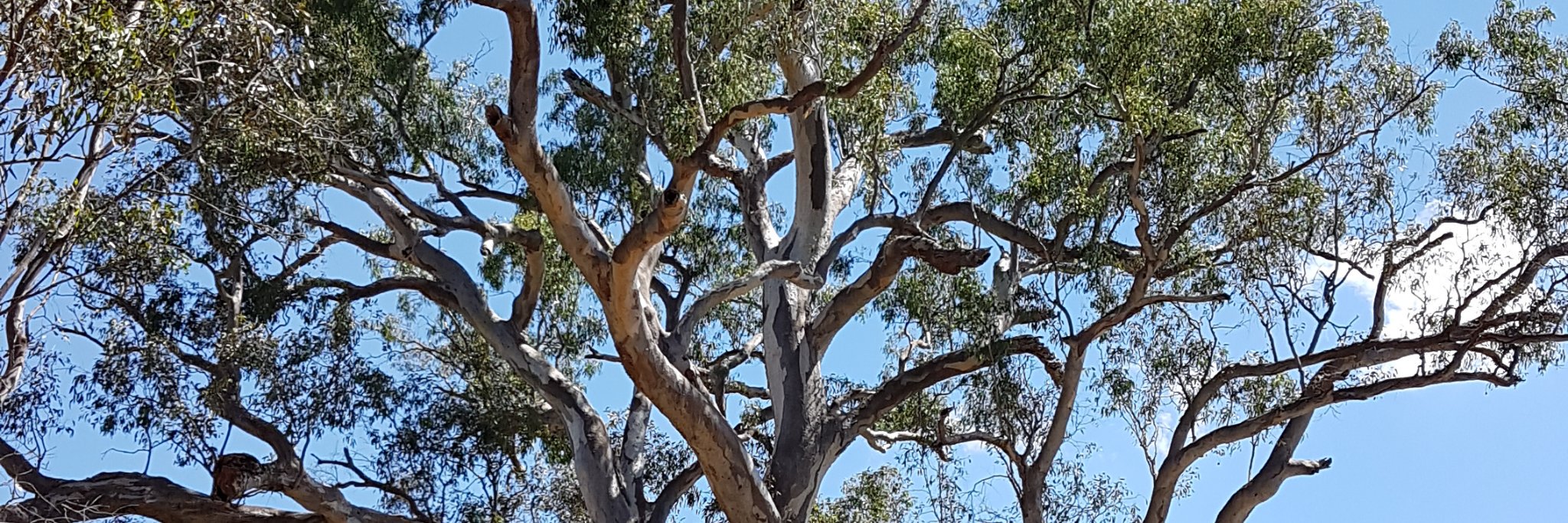
Ecology @unimelb PhD working on Wurundjeri & Boon wurrung lands [-O-] Artificial Light at Night-Eucalypts-Psyllids-Birds. Also Lego-Whisky-Sci-fi-Chocolate.
Your mission, should you choose to accept it.🕵️
Become a ‘wren watcher’ and help us understand where superb fairy-wrens are living in Melbourne. 🐦
Your feedback will help us plan vegetation works to improve habitat for small birds. 🍃
Find out how: https://t.co/9bTyoCuUwu
Artificial light at night (ALAN) is bad for animals but… what about trees? Do they photosynthesize at night? Lose water? Grow more? Change shape? New paper from the @urbanlightlab has the answers! 🧵1/
https://t.co/iibIyswmwk
@skyglowberlin @urbanlightlab We aimed to replicate light levels higher up where streetlights intersect tree canopies (as is commonly the case); in that context there is more than enough light photosynthesize and (it seems) provoke morphological responses to dim light
@urbanlightlab Thanks to my awesome co-authors @Theresabemused @BecRasmussen8@weArndtalab@GarethRHopkins, @UrbanLightLab volunteers, Susan & Murray, 2 anonymous reviewers 🥸🥸 who improved the paper in countless ways, and the editorial staff at Elsevier / Environmental Pollution 🤗🤗🤗 10/10
@urbanlightlab In summary – Eucalyptus trees exposed to ALAN adapted to dim light morphologically, but not physiologically (we also explored the effects on colonizing herbivores (lerp psyllids) – but that’s a whole other thread!) /9
@gndaskalova We lost a few recorders (4/24 over two years) until we started putting them inside nylon stockings - provided a bit of camouflage but perhaps more importantly *didnt* look valuable/interesting. Also mounting them just out of reach (using a step or short ladder) seems to help.
We've known that burning forest in SW WA promotes dense shrub growth. We've now shown that this causes 4-5 decades of greatly increased bushfire likelihood, and that older, self-thinned forests have been the least likely places to burn all along.
https://t.co/olN2maPbN4
New #lightpollution paper out from our #BeachLight project. We're looking for thresholds for impacts and see decreasing habitat suitability for plovers above 0.05 lux and for grunion a 0.1 lux. These levels are far lower than thresholds typically used for env. impact analysis.
Nades has his forklift license & his old job is waiting for him at the local meatworks in Biloela.
Country towns are crying out for hard workers like Nades. But Mr Morrison's Ministers are STILL stopping his family coming #HometoBilo.Take action https://t.co/3TQhvephVl
#forklifts