Abstract submission is NOW OPEN for the SETAC 14th Young Environmental Scientists (YES) Meeting through April 8th!
Don't miss this unique, free meeting organized by students, for students!
https://t.co/bwthunFuSi
Wanted to share this important article about the human health risks of phthalates--a group of common plastic additives--especially for infertility and pregnancy.
Plastic additives have been in the news more and more lately, as they should be!
https://t.co/QRoZR5uR4Z
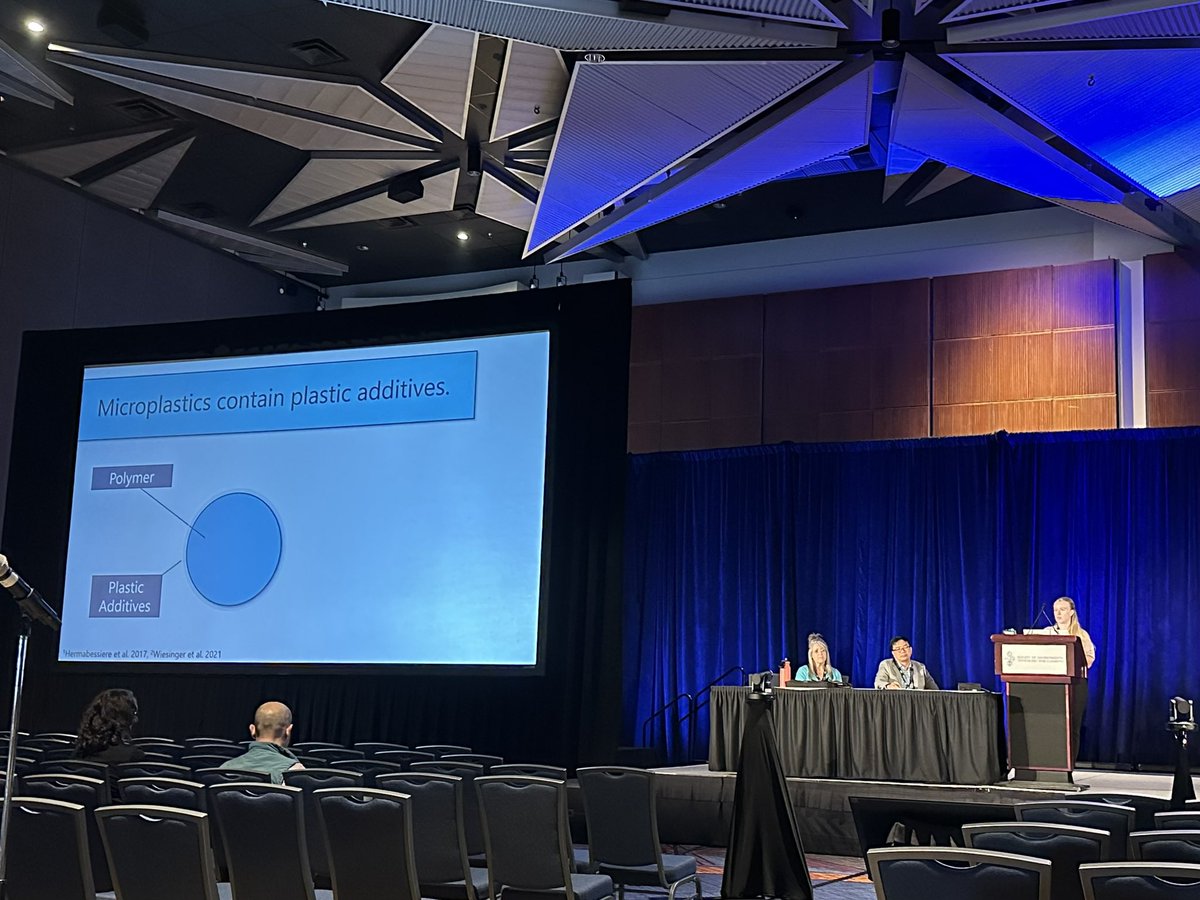
Had a great experience co-chairing a session with Meredith Seeley and Zhanfei Liu this past week at the #ASLO25 Aquatic Sciences Meeting in Charlotte, NC! Thanks to everyone who came to my talk, gave me feedback, and chatted with me about their cool aquatic science research!
Check out this SETAC Globe article by Bonnie Ertel (@ErtelBonnie), Katie Mayer, Adam Wronski (@adam_wronski), and yours truly on the student experience at the SETAC North America meeting this past October!
https://t.co/oHXBtD4CF8
New research found that PFAS concentrations above regulatory thresholds in municipal wastewater could affect the downstream drinking water supplies of up to 23 million Americans.
Via PNAS: https://t.co/92KHan4aVo
Chagrined to read that an agreement was not reached on the UN Plastics Treaty, but I agree with the majority of nations that capping plastic production is absolutely essential. A treaty without this inclusion would be far less effective.
https://t.co/HLq1dkIk6l
TIL that there are fungi that feed on radiation, which were discovered at the site of the Chernobyl disaster! Even better, they may be useful for remediating harmful radiation. This would have a variety of applications, including space travel!
https://t.co/slErTT6PcK
Had a fantastic time presenting, reconnecting, and making new connections at #SETACFortWorth this past week! Thanks to the meeting organizers for another great conference and to everyone I talked to for the wonderful conversations!!
#SETACFortWorth is off to a great start! If you're around, come see my talk about the contribution of plastic additives to microplastic toxicity for nitrogen-cycling bacteria on Wednesday at 3:50 PM in Ballroom B!
Exciting discovery of a method to recycle plastic more energy-efficiently! This article points out that the path from lab discovery to industrial application is daunting, but I would counter that some discoveries are worth that effort.
https://t.co/YoEIGPxJYQ
📣 Call for abstracts related to #microplastics and #plasticpollution!
Please consider submitting an abstract for the session I am co-chairing at #ASLO25 entitled "SS12 Identifying, measuring and responding to plastics in the aquatic environment"!
https://t.co/Zxx1TA4f7k
One of my advisors, Rob Hale, is currently seeking a postdoctoral research associate! The postdoc will work on a project investigating microplastics, plastic additives, and emerging organic contaminants in a variety of environmental matrices.
Contact [email protected] for more info!
Loved this interesting article by @RudyMolinek!
The Long, Strange History of Teflon, the Indestructible Product Nothing Seems to Stick to https://t.co/X7jRmq5lHv @smithsonianmag
These researchers finding so many microplastics in the human brain is one of the scariest things I've read about in a while. I'm convinced that investigating the human health impacts of microplastics needs to be elevated to a top research priority.
🚨 Important Pre-Print!!! 🚨
The first study to measure microplastics in the human brain found concentrations of 0.3% to 0.5% by weight on average. These concentrations are higher than those measured in the liver or kidneys.
https://t.co/XEpYCISz9r
Did you know a single tire releases between 2 and 14 pounds of particles over its lifetime?
Or that if you stacked the tires produced globally in one year, they would reach as high as twice the distance to the moon?
Sobering but interesting article! 👇
https://t.co/b8IKWSTQu9