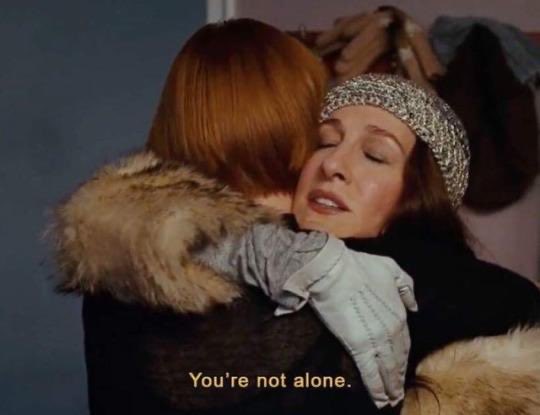
People defer harder to the AI answers the more polished they look.
Confidence in the output scales with the smoothness of the interface, not with the quality of what is underneath.
The smoother the tool, the less anyone checks.
The most fascinating part of designing AI products is building the shared language between the system and a human.
How do you capture intent in the easiest way for a human?
How do you collect enough data to produce the output closest to the ideal?
I've seen so many tweets in response to Paul Graham's post that I have to chime in.
Everyone who has replied to Paul's post misses an important dimension to taste: social relations.
Taste touches on everything — film, music, art, furniture, industrial design, cars, etc. For obvious reasons, I can't talk about all of these subjects, not just because I'm not an expert, but also because this is Twitter. Thus, I will stick to what I know, fashion, which happens to be the topic that sparked this conversation.
Everyone who has replied so far takes beauty as an objective variable, like scientific laws or mathematical truths (which, if you dig deep enough, turn out to be conditional, but we'll set that aside). In this regard, a person's taste is their ability to identify some objective truth in beauty. It's asserted that a person who has good taste in fashion must have good taste in furniture and art. So on and so forth.
In reality, our judgments of taste are not neutral or objective. They are extensions of our social relations. We know this because the suit spread around the world on the back of the Second British Empire. By any reasonable measure, elite men's dress in regions stretching from France to China was obviously superior in cut and styling. But as the British Empire spread around the world, this colorful, extravagant garb was slowly pushed aside by the austere, drab clothes once promoted by Beau Brummell.
We can also see this relationship happen within English society. In the early 20th century, elite Guardsmen commissioned Edwardian-style suits from Savile Row tailors. But when lower, working-class youths started to buy ready-to-wear imitations of these clothes — wearing them while causing a ruckus on the streets — the elites dropped the style and moved on.
This gets back to a very simple dynamic that German sociologist Georg Simmel wrote about in his 1902 essay "On Fashion." As he observed, fashion is often a game of imitation, with people copying their supposed "social betters." When they succeed, those at the top of the hierarchy move on to distinguish themselves. French sociologist Pierre Bourdieu put it more succinctly when he said that our notions of "good taste" are often nothing more than the preferences and habits of the ruling class.
In response to Paul's tweet, @nntaleb wrote yesterday: "Your sense of aesthetics is best reflected in the way you dress & the way you organize your surroundings. [...] Without aesthetics (elegance in both looks and behavior), a human is no human."
But what does it mean to "dress elegantly?" Most people assume this means wearing upper-class British dress. Critical theorist Max Horkheimer would have described this dynamic as a kind of internalized repression — a way of "inserting social power more deeply into the very bodies of those it subjugates."
I love tailoring and elegant dress, but I would caution someone who puts too much weight on them. I disagree that a person is less of a person if they don't dress elegantly. It's just clothes.
There are lots of people who don't have to learn "good taste." Their taste is simply the collection of objects and mannerisms that make up the natural way of being in their social circle. Yet, we admire their taste because they have cultural capital.
Before stylists dressed him, Rocky's outfits were just his version of how people in his social group dressed. Similarly, people often post images of JFK Jr.'s outfits on style inspiration boards, even when the outfits are objectively not that great. The dark suit with a collar gap, a backpack, and square-toed shoes shown above could have been worn by anyone in the 1990s. But this photo gets posted everywhere because you're not admiring the outfit — you are admiring JFK's cultural, political, and economic capital. You are admiring status.
Most of us don't have much cultural capital. My guess is that you're a pretty average middle-class person who works a desk job. Your life is probably not that glamorous. You are not part of any cool social groups. Thus, if you were to let your taste naturally manifest, it would express itself as the boring person you are.
Thus, to develop good taste, you have to figure out the visual language of culture as shaped by history, and play around with different identities until you figure out what works for you. Are you a nerd? Maybe you can try different variations of the "intellectual" stereotype, such as Ivy Style. Are you a rugged guy? Maybe you can try different identities around that, such as the laborer (workwear) or soldier (military surplus). Are you artsy? Look at how musicians and artists dressed in the past.
Paul's post fundamentally assumes that dressing well takes a lot of time and effort. I agree with this. Unless you have a lot of cultural capital, you have to invest time into this project, as you have to learn a new language.
Albert Einstein could walk to any old store around the corner and be told how to dress by a clothier. The scope of choices was much narrower because clothing was defined by time, place, and occasion. The world has changed dramatically, and you can't even easily find a tailor anymore.
IMO, this is also true for almost every area of aesthetic life: interior design, art, music, etc. People I know who have great taste in these areas invest tremendous time and energy in them. This is why people should be very careful about assigning too much moral weight to taste. No one would think that someone is good or bad just because they happen to know a lot about physics or sunflower seed production. The same should be true concerning whether someone dresses well or not.
3. Don't overshare the context.
Respect people’s time. Focus on the last outcomes, needs and future steps. Reflection is useful but endless rumination is detrimental. Limit context sharing to the bits that matter for the current discussion points and goals. Leave the rest out
9 months at Amazon. My key learnings 🔥
Communication matters more than you think. A few ways to improve:
1. Do the job for the receiver of your message. Do not just share the data, the concept, the plan. Present your concise TLDR; opinion at the beginning.
2. Emotional aspect of the message.
Think what feelings the message would evoke. Do you focus on the progress and opportunities rather than minor issues? Do you make it optimistic and goal-oriented? Not everything is a win but you can find wins in everything.
I generated this Social media creator in 15 min. Used AI Studio from Google. Totally free.
I can generate poetry from prompt, use my text, edit the fonts, colors, styling, backdrops, light.
It has never been easier to build custom tooling for your needs.
AI systems are so much like humans.
We may come with expectations, have them broken, lose trust, and shy away.
Or we may come with expectations, calibrate them as we interact with the interface, gradually build trust, and stick to the product.
"Don’t do things that you know are morally wrong. Not because someone is watching, but because you are. Self-esteem is just the reputation that you have with yourself. You’ll always know."
@naval
If I want to improve my style, I add more images I have approved and create a new style. Later, I can create more graphics in no time.
Done! I store all of this art in Recraft, too.
After that, I vectorize all graphics for convenience. I may edit them a bit, remove small elements, or change colors.
All of this takes me at least 5 times less time than coming up with ideas myself.


![dieworkwear's tweet photo. I've seen so many tweets in response to Paul Graham's post that I have to chime in.
Everyone who has replied to Paul's post misses an important dimension to taste: social relations.
Taste touches on everything — film, music, art, furniture, industrial design, cars, etc. For obvious reasons, I can't talk about all of these subjects, not just because I'm not an expert, but also because this is Twitter. Thus, I will stick to what I know, fashion, which happens to be the topic that sparked this conversation.
Everyone who has replied so far takes beauty as an objective variable, like scientific laws or mathematical truths (which, if you dig deep enough, turn out to be conditional, but we'll set that aside). In this regard, a person's taste is their ability to identify some objective truth in beauty. It's asserted that a person who has good taste in fashion must have good taste in furniture and art. So on and so forth.
In reality, our judgments of taste are not neutral or objective. They are extensions of our social relations. We know this because the suit spread around the world on the back of the Second British Empire. By any reasonable measure, elite men's dress in regions stretching from France to China was obviously superior in cut and styling. But as the British Empire spread around the world, this colorful, extravagant garb was slowly pushed aside by the austere, drab clothes once promoted by Beau Brummell.
We can also see this relationship happen within English society. In the early 20th century, elite Guardsmen commissioned Edwardian-style suits from Savile Row tailors. But when lower, working-class youths started to buy ready-to-wear imitations of these clothes — wearing them while causing a ruckus on the streets — the elites dropped the style and moved on.
This gets back to a very simple dynamic that German sociologist Georg Simmel wrote about in his 1902 essay "On Fashion." As he observed, fashion is often a game of imitation, with people copying their supposed "social betters." When they succeed, those at the top of the hierarchy move on to distinguish themselves. French sociologist Pierre Bourdieu put it more succinctly when he said that our notions of "good taste" are often nothing more than the preferences and habits of the ruling class.
In response to Paul's tweet, @nntaleb wrote yesterday: "Your sense of aesthetics is best reflected in the way you dress & the way you organize your surroundings. [...] Without aesthetics (elegance in both looks and behavior), a human is no human."
But what does it mean to "dress elegantly?" Most people assume this means wearing upper-class British dress. Critical theorist Max Horkheimer would have described this dynamic as a kind of internalized repression — a way of "inserting social power more deeply into the very bodies of those it subjugates."
I love tailoring and elegant dress, but I would caution someone who puts too much weight on them. I disagree that a person is less of a person if they don't dress elegantly. It's just clothes.
There are lots of people who don't have to learn "good taste." Their taste is simply the collection of objects and mannerisms that make up the natural way of being in their social circle. Yet, we admire their taste because they have cultural capital.
Before stylists dressed him, Rocky's outfits were just his version of how people in his social group dressed. Similarly, people often post images of JFK Jr.'s outfits on style inspiration boards, even when the outfits are objectively not that great. The dark suit with a collar gap, a backpack, and square-toed shoes shown above could have been worn by anyone in the 1990s. But this photo gets posted everywhere because you're not admiring the outfit — you are admiring JFK's cultural, political, and economic capital. You are admiring status.
Most of us don't have much cultural capital. My guess is that you're a pretty average middle-class person who works a desk job. Your life is probably not that glamorous. You are not part of any cool social groups. Thus, if you were to let your taste naturally manifest, it would express itself as the boring person you are.
Thus, to develop good taste, you have to figure out the visual language of culture as shaped by history, and play around with different identities until you figure out what works for you. Are you a nerd? Maybe you can try different variations of the "intellectual" stereotype, such as Ivy Style. Are you a rugged guy? Maybe you can try different identities around that, such as the laborer (workwear) or soldier (military surplus). Are you artsy? Look at how musicians and artists dressed in the past.
Paul's post fundamentally assumes that dressing well takes a lot of time and effort. I agree with this. Unless you have a lot of cultural capital, you have to invest time into this project, as you have to learn a new language.
Albert Einstein could walk to any old store around the corner and be told how to dress by a clothier. The scope of choices was much narrower because clothing was defined by time, place, and occasion. The world has changed dramatically, and you can't even easily find a tailor anymore.
IMO, this is also true for almost every area of aesthetic life: interior design, art, music, etc. People I know who have great taste in these areas invest tremendous time and energy in them. This is why people should be very careful about assigning too much moral weight to taste. No one would think that someone is good or bad just because they happen to know a lot about physics or sunflower seed production. The same should be true concerning whether someone dresses well or not.](https://pbs.twimg.com/media/HBVxNNMbcAMlLlJ.jpg)
![dieworkwear's tweet photo. I've seen so many tweets in response to Paul Graham's post that I have to chime in.
Everyone who has replied to Paul's post misses an important dimension to taste: social relations.
Taste touches on everything — film, music, art, furniture, industrial design, cars, etc. For obvious reasons, I can't talk about all of these subjects, not just because I'm not an expert, but also because this is Twitter. Thus, I will stick to what I know, fashion, which happens to be the topic that sparked this conversation.
Everyone who has replied so far takes beauty as an objective variable, like scientific laws or mathematical truths (which, if you dig deep enough, turn out to be conditional, but we'll set that aside). In this regard, a person's taste is their ability to identify some objective truth in beauty. It's asserted that a person who has good taste in fashion must have good taste in furniture and art. So on and so forth.
In reality, our judgments of taste are not neutral or objective. They are extensions of our social relations. We know this because the suit spread around the world on the back of the Second British Empire. By any reasonable measure, elite men's dress in regions stretching from France to China was obviously superior in cut and styling. But as the British Empire spread around the world, this colorful, extravagant garb was slowly pushed aside by the austere, drab clothes once promoted by Beau Brummell.
We can also see this relationship happen within English society. In the early 20th century, elite Guardsmen commissioned Edwardian-style suits from Savile Row tailors. But when lower, working-class youths started to buy ready-to-wear imitations of these clothes — wearing them while causing a ruckus on the streets — the elites dropped the style and moved on.
This gets back to a very simple dynamic that German sociologist Georg Simmel wrote about in his 1902 essay "On Fashion." As he observed, fashion is often a game of imitation, with people copying their supposed "social betters." When they succeed, those at the top of the hierarchy move on to distinguish themselves. French sociologist Pierre Bourdieu put it more succinctly when he said that our notions of "good taste" are often nothing more than the preferences and habits of the ruling class.
In response to Paul's tweet, @nntaleb wrote yesterday: "Your sense of aesthetics is best reflected in the way you dress & the way you organize your surroundings. [...] Without aesthetics (elegance in both looks and behavior), a human is no human."
But what does it mean to "dress elegantly?" Most people assume this means wearing upper-class British dress. Critical theorist Max Horkheimer would have described this dynamic as a kind of internalized repression — a way of "inserting social power more deeply into the very bodies of those it subjugates."
I love tailoring and elegant dress, but I would caution someone who puts too much weight on them. I disagree that a person is less of a person if they don't dress elegantly. It's just clothes.
There are lots of people who don't have to learn "good taste." Their taste is simply the collection of objects and mannerisms that make up the natural way of being in their social circle. Yet, we admire their taste because they have cultural capital.
Before stylists dressed him, Rocky's outfits were just his version of how people in his social group dressed. Similarly, people often post images of JFK Jr.'s outfits on style inspiration boards, even when the outfits are objectively not that great. The dark suit with a collar gap, a backpack, and square-toed shoes shown above could have been worn by anyone in the 1990s. But this photo gets posted everywhere because you're not admiring the outfit — you are admiring JFK's cultural, political, and economic capital. You are admiring status.
Most of us don't have much cultural capital. My guess is that you're a pretty average middle-class person who works a desk job. Your life is probably not that glamorous. You are not part of any cool social groups. Thus, if you were to let your taste naturally manifest, it would express itself as the boring person you are.
Thus, to develop good taste, you have to figure out the visual language of culture as shaped by history, and play around with different identities until you figure out what works for you. Are you a nerd? Maybe you can try different variations of the "intellectual" stereotype, such as Ivy Style. Are you a rugged guy? Maybe you can try different identities around that, such as the laborer (workwear) or soldier (military surplus). Are you artsy? Look at how musicians and artists dressed in the past.
Paul's post fundamentally assumes that dressing well takes a lot of time and effort. I agree with this. Unless you have a lot of cultural capital, you have to invest time into this project, as you have to learn a new language.
Albert Einstein could walk to any old store around the corner and be told how to dress by a clothier. The scope of choices was much narrower because clothing was defined by time, place, and occasion. The world has changed dramatically, and you can't even easily find a tailor anymore.
IMO, this is also true for almost every area of aesthetic life: interior design, art, music, etc. People I know who have great taste in these areas invest tremendous time and energy in them. This is why people should be very careful about assigning too much moral weight to taste. No one would think that someone is good or bad just because they happen to know a lot about physics or sunflower seed production. The same should be true concerning whether someone dresses well or not.](https://pbs.twimg.com/media/HBVuQoPaoAEkWP_.jpg)
![dieworkwear's tweet photo. I've seen so many tweets in response to Paul Graham's post that I have to chime in.
Everyone who has replied to Paul's post misses an important dimension to taste: social relations.
Taste touches on everything — film, music, art, furniture, industrial design, cars, etc. For obvious reasons, I can't talk about all of these subjects, not just because I'm not an expert, but also because this is Twitter. Thus, I will stick to what I know, fashion, which happens to be the topic that sparked this conversation.
Everyone who has replied so far takes beauty as an objective variable, like scientific laws or mathematical truths (which, if you dig deep enough, turn out to be conditional, but we'll set that aside). In this regard, a person's taste is their ability to identify some objective truth in beauty. It's asserted that a person who has good taste in fashion must have good taste in furniture and art. So on and so forth.
In reality, our judgments of taste are not neutral or objective. They are extensions of our social relations. We know this because the suit spread around the world on the back of the Second British Empire. By any reasonable measure, elite men's dress in regions stretching from France to China was obviously superior in cut and styling. But as the British Empire spread around the world, this colorful, extravagant garb was slowly pushed aside by the austere, drab clothes once promoted by Beau Brummell.
We can also see this relationship happen within English society. In the early 20th century, elite Guardsmen commissioned Edwardian-style suits from Savile Row tailors. But when lower, working-class youths started to buy ready-to-wear imitations of these clothes — wearing them while causing a ruckus on the streets — the elites dropped the style and moved on.
This gets back to a very simple dynamic that German sociologist Georg Simmel wrote about in his 1902 essay "On Fashion." As he observed, fashion is often a game of imitation, with people copying their supposed "social betters." When they succeed, those at the top of the hierarchy move on to distinguish themselves. French sociologist Pierre Bourdieu put it more succinctly when he said that our notions of "good taste" are often nothing more than the preferences and habits of the ruling class.
In response to Paul's tweet, @nntaleb wrote yesterday: "Your sense of aesthetics is best reflected in the way you dress & the way you organize your surroundings. [...] Without aesthetics (elegance in both looks and behavior), a human is no human."
But what does it mean to "dress elegantly?" Most people assume this means wearing upper-class British dress. Critical theorist Max Horkheimer would have described this dynamic as a kind of internalized repression — a way of "inserting social power more deeply into the very bodies of those it subjugates."
I love tailoring and elegant dress, but I would caution someone who puts too much weight on them. I disagree that a person is less of a person if they don't dress elegantly. It's just clothes.
There are lots of people who don't have to learn "good taste." Their taste is simply the collection of objects and mannerisms that make up the natural way of being in their social circle. Yet, we admire their taste because they have cultural capital.
Before stylists dressed him, Rocky's outfits were just his version of how people in his social group dressed. Similarly, people often post images of JFK Jr.'s outfits on style inspiration boards, even when the outfits are objectively not that great. The dark suit with a collar gap, a backpack, and square-toed shoes shown above could have been worn by anyone in the 1990s. But this photo gets posted everywhere because you're not admiring the outfit — you are admiring JFK's cultural, political, and economic capital. You are admiring status.
Most of us don't have much cultural capital. My guess is that you're a pretty average middle-class person who works a desk job. Your life is probably not that glamorous. You are not part of any cool social groups. Thus, if you were to let your taste naturally manifest, it would express itself as the boring person you are.
Thus, to develop good taste, you have to figure out the visual language of culture as shaped by history, and play around with different identities until you figure out what works for you. Are you a nerd? Maybe you can try different variations of the "intellectual" stereotype, such as Ivy Style. Are you a rugged guy? Maybe you can try different identities around that, such as the laborer (workwear) or soldier (military surplus). Are you artsy? Look at how musicians and artists dressed in the past.
Paul's post fundamentally assumes that dressing well takes a lot of time and effort. I agree with this. Unless you have a lot of cultural capital, you have to invest time into this project, as you have to learn a new language.
Albert Einstein could walk to any old store around the corner and be told how to dress by a clothier. The scope of choices was much narrower because clothing was defined by time, place, and occasion. The world has changed dramatically, and you can't even easily find a tailor anymore.
IMO, this is also true for almost every area of aesthetic life: interior design, art, music, etc. People I know who have great taste in these areas invest tremendous time and energy in them. This is why people should be very careful about assigning too much moral weight to taste. No one would think that someone is good or bad just because they happen to know a lot about physics or sunflower seed production. The same should be true concerning whether someone dresses well or not.](https://pbs.twimg.com/media/HBVtlsTbIAAOp3q.jpg)



![dieworkwear's tweet photo. I've seen so many tweets in response to Paul Graham's post that I have to chime in.
Everyone who has replied to Paul's post misses an important dimension to taste: social relations.
Taste touches on everything — film, music, art, furniture, industrial design, cars, etc. For obvious reasons, I can't talk about all of these subjects, not just because I'm not an expert, but also because this is Twitter. Thus, I will stick to what I know, fashion, which happens to be the topic that sparked this conversation.
Everyone who has replied so far takes beauty as an objective variable, like scientific laws or mathematical truths (which, if you dig deep enough, turn out to be conditional, but we'll set that aside). In this regard, a person's taste is their ability to identify some objective truth in beauty. It's asserted that a person who has good taste in fashion must have good taste in furniture and art. So on and so forth.
In reality, our judgments of taste are not neutral or objective. They are extensions of our social relations. We know this because the suit spread around the world on the back of the Second British Empire. By any reasonable measure, elite men's dress in regions stretching from France to China was obviously superior in cut and styling. But as the British Empire spread around the world, this colorful, extravagant garb was slowly pushed aside by the austere, drab clothes once promoted by Beau Brummell.
We can also see this relationship happen within English society. In the early 20th century, elite Guardsmen commissioned Edwardian-style suits from Savile Row tailors. But when lower, working-class youths started to buy ready-to-wear imitations of these clothes — wearing them while causing a ruckus on the streets — the elites dropped the style and moved on.
This gets back to a very simple dynamic that German sociologist Georg Simmel wrote about in his 1902 essay "On Fashion." As he observed, fashion is often a game of imitation, with people copying their supposed "social betters." When they succeed, those at the top of the hierarchy move on to distinguish themselves. French sociologist Pierre Bourdieu put it more succinctly when he said that our notions of "good taste" are often nothing more than the preferences and habits of the ruling class.
In response to Paul's tweet, @nntaleb wrote yesterday: "Your sense of aesthetics is best reflected in the way you dress & the way you organize your surroundings. [...] Without aesthetics (elegance in both looks and behavior), a human is no human."
But what does it mean to "dress elegantly?" Most people assume this means wearing upper-class British dress. Critical theorist Max Horkheimer would have described this dynamic as a kind of internalized repression — a way of "inserting social power more deeply into the very bodies of those it subjugates."
I love tailoring and elegant dress, but I would caution someone who puts too much weight on them. I disagree that a person is less of a person if they don't dress elegantly. It's just clothes.
There are lots of people who don't have to learn "good taste." Their taste is simply the collection of objects and mannerisms that make up the natural way of being in their social circle. Yet, we admire their taste because they have cultural capital.
Before stylists dressed him, Rocky's outfits were just his version of how people in his social group dressed. Similarly, people often post images of JFK Jr.'s outfits on style inspiration boards, even when the outfits are objectively not that great. The dark suit with a collar gap, a backpack, and square-toed shoes shown above could have been worn by anyone in the 1990s. But this photo gets posted everywhere because you're not admiring the outfit — you are admiring JFK's cultural, political, and economic capital. You are admiring status.
Most of us don't have much cultural capital. My guess is that you're a pretty average middle-class person who works a desk job. Your life is probably not that glamorous. You are not part of any cool social groups. Thus, if you were to let your taste naturally manifest, it would express itself as the boring person you are.
Thus, to develop good taste, you have to figure out the visual language of culture as shaped by history, and play around with different identities until you figure out what works for you. Are you a nerd? Maybe you can try different variations of the "intellectual" stereotype, such as Ivy Style. Are you a rugged guy? Maybe you can try different identities around that, such as the laborer (workwear) or soldier (military surplus). Are you artsy? Look at how musicians and artists dressed in the past.
Paul's post fundamentally assumes that dressing well takes a lot of time and effort. I agree with this. Unless you have a lot of cultural capital, you have to invest time into this project, as you have to learn a new language.
Albert Einstein could walk to any old store around the corner and be told how to dress by a clothier. The scope of choices was much narrower because clothing was defined by time, place, and occasion. The world has changed dramatically, and you can't even easily find a tailor anymore.
IMO, this is also true for almost every area of aesthetic life: interior design, art, music, etc. People I know who have great taste in these areas invest tremendous time and energy in them. This is why people should be very careful about assigning too much moral weight to taste. No one would think that someone is good or bad just because they happen to know a lot about physics or sunflower seed production. The same should be true concerning whether someone dresses well or not.](https://pbs.twimg.com/media/HBV2y-UbcAE5txJ.jpg)