Education Founder | 2x Exit | Mentor Group | Oxford University AI for Business 2026 | Founder of the Afghan College for Girls | Building AI Ops in public
@harbricht@StuartKells@bodleianlibs Thank you for telling me as I did not know about this! It made me think about how historic libraries gradually become dual-purpose institutions, still places of scholarship, but also custodians of cultural objects.
Last week I visited Duke Humfrey’s library, part of the Bodleian in Oxford and one of the oldest libraries in Europe. I was delighted to find some classics favourites of mine, the complete works of Cicero in the top left had corner! @bodleianlibs
@StuartKells Thank you Stuart, I was completely mesmerised by the @bodleianlibs Have you ever been? I really like your posts about books and book history, so the repost means a lot.
In January 2022, I founded the Afghan College for Girls, a UK registered charity delivering free English-language education to girls in Afghanistan. We currently teach around 500 students twice a week, every week, across all 34 provinces.
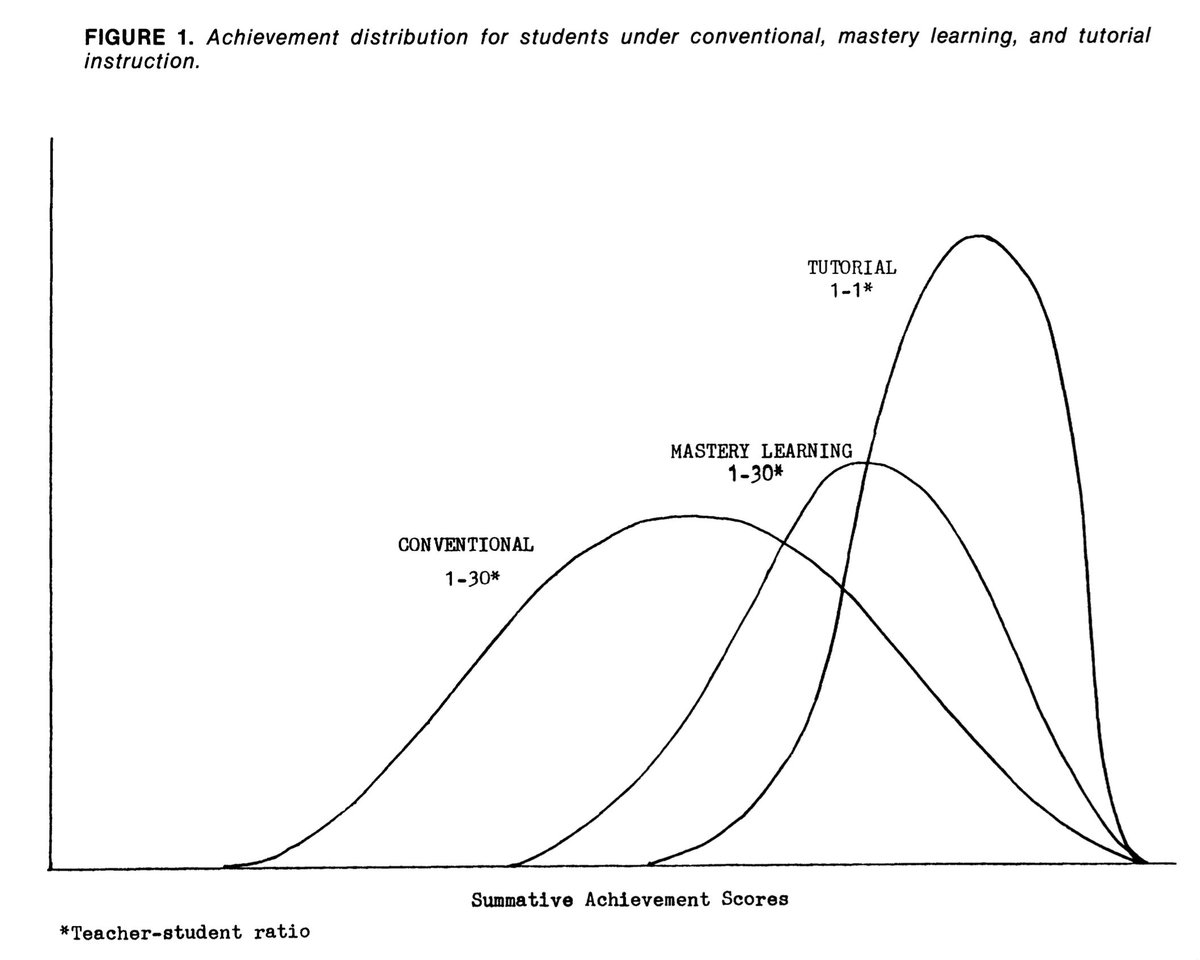
I would camp out overnight to buy a book-length sociological treatise about the broader influence of Bloom's 2-sigma paper on research, culture, education and technology.
Someone please write this book!
Leadership programmes are a luxury product sold to teenagers who are already ahead. One Oxford student decided that was a problem worth solving and I was lucky enough to mentor her to pitch her solution last week at Jesus College, Oxford. Her name is Jasmine Ye and the platform is https://t.co/bTAy4pdI5r. Worth a look.
Napoleon studied Caesar. Caesar wept before a statue of Alexander. Alexander wanted to be Achilles.
The greatest men the West ever produced were all trying to become the same Greek warrior...
Alexander the Great kept a copy of the Iliad under his pillow. His tutor Aristotle had personally annotated an edition for him. According to Plutarch, when Alexander arrived at the ruins of Troy in 334 BC, he sacrificed at the tomb of Achilles and ran naked around it. He told the priests offering to show him Paris's harp that he had no interest in seeing the harp of a coward. "I would far rather see the lyre of Achilles," he said, "which he used to sing the glories of brave men."
Three centuries later, in 69 BC, Julius Caesar was serving as quaestor in Spain when he stood in front of a statue of Alexander in the temple of Hercules at Cadiz. He was thirty-two: the same age at which Alexander had died, having already conquered most of the known world. Caesar wept. When his friends asked why, he answered, according to Plutarch: "Do you not think it is matter for sorrow that while Alexander, at my age, was already king of so many peoples, I have as yet achieved no brilliant success?"
Eighteen centuries after that, Napoleon Bonaparte sat for his coronation portrait wearing a golden laurel wreath, modelled on the wreath of Julius Caesar. He carried with him on campaign the works of Plutarch and Caesar's own commentaries.
Each of these men was reaching back, through the centuries, to the figure who came first. And that figure was a half-mortal Greek warrior who, when offered the choice between a long, quiet life and a short, glorious one, chose glory.
The Greek name Akhilleus is most plausibly derived from akhos, meaning grief, and laos, meaning people. The grief of the people. The greatest hero of the Western imagination is not named for victory or for strength. He is named for sorrow...
But that is the bargain: to choose greatness in the Achilles tradition is to choose a particular kind of suffering. Alexander died at thirty-two. Caesar was murdered by his closest friends. Napoleon ended his life on an island in the South Atlantic, looking at the sea. Each of them got what Achilles got: a name that has outlasted empires, and a life that was paid for in full.
What drove the men who built Western civilization was not happiness. It was something older, deeper, and harder to name. The Greeks called it kleos: the glory that survives death.
Achilles got there first. Three thousand years later, men are still trying to follow him...
-- -- --
If you enjoyed this, I write a weekly newsletter read by over 50,000 people who love rediscovering the beauty of the past. You can join us here:
https://t.co/hgJUdR0jlx
If you'd like to support my work, a paid subscription is what makes it possible.
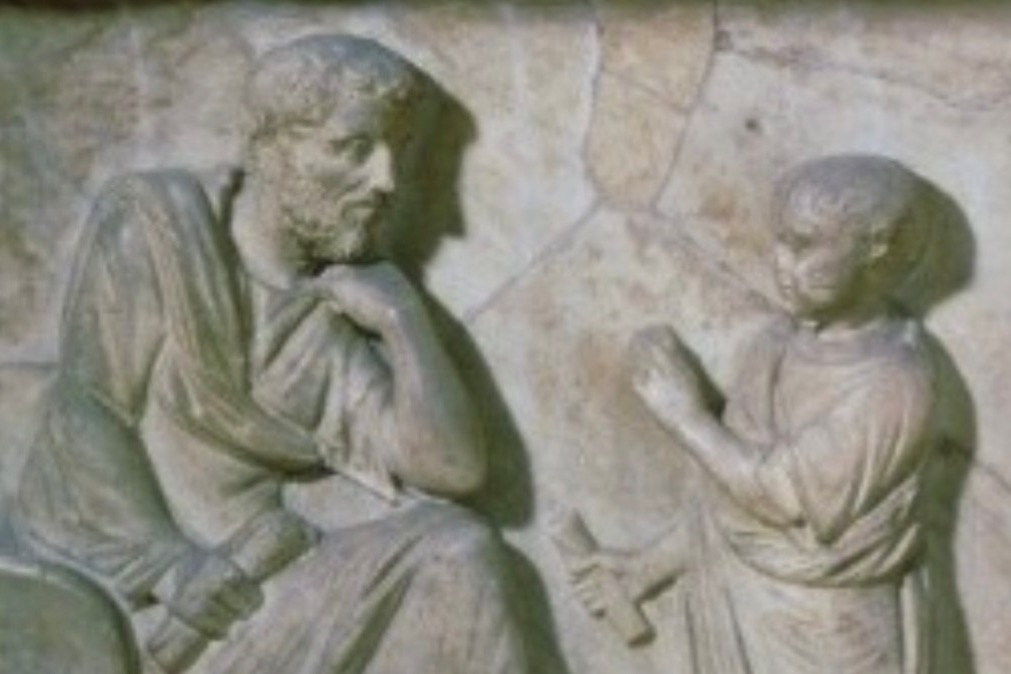
Rome conquered Greece in 146 BC. Within a generation, wealthy Romans were importing Greek slaves to teach their children, because they were better educated than their Roman masters. Education came with conquest. Private tutoring has always had its moral ambiguities.
@hselftax Yes I am but my first degree was English Lit. I love Shakespeare too and my New Year’s resolution each year is to see a Shakespeare play I haven’t seen before.
And that’s the first essay of my Master’s handed in. Not sure what I was expecting but it took it out of me. Can’t pull an all-nighter ln the pro plus these days!
Oxford's Divinity School was founded in 1427. There were no written exams. To earn a degree in theology you stood in this hall and defended your ideas out loud, in Latin, in front of a panel of masters specifically there to roast you in front of all your fellow students. This could go on for hours.
Now AI can pass any written exam and cheating is endemic, I think we should go back to the Medieval plan, how’s your Latin?