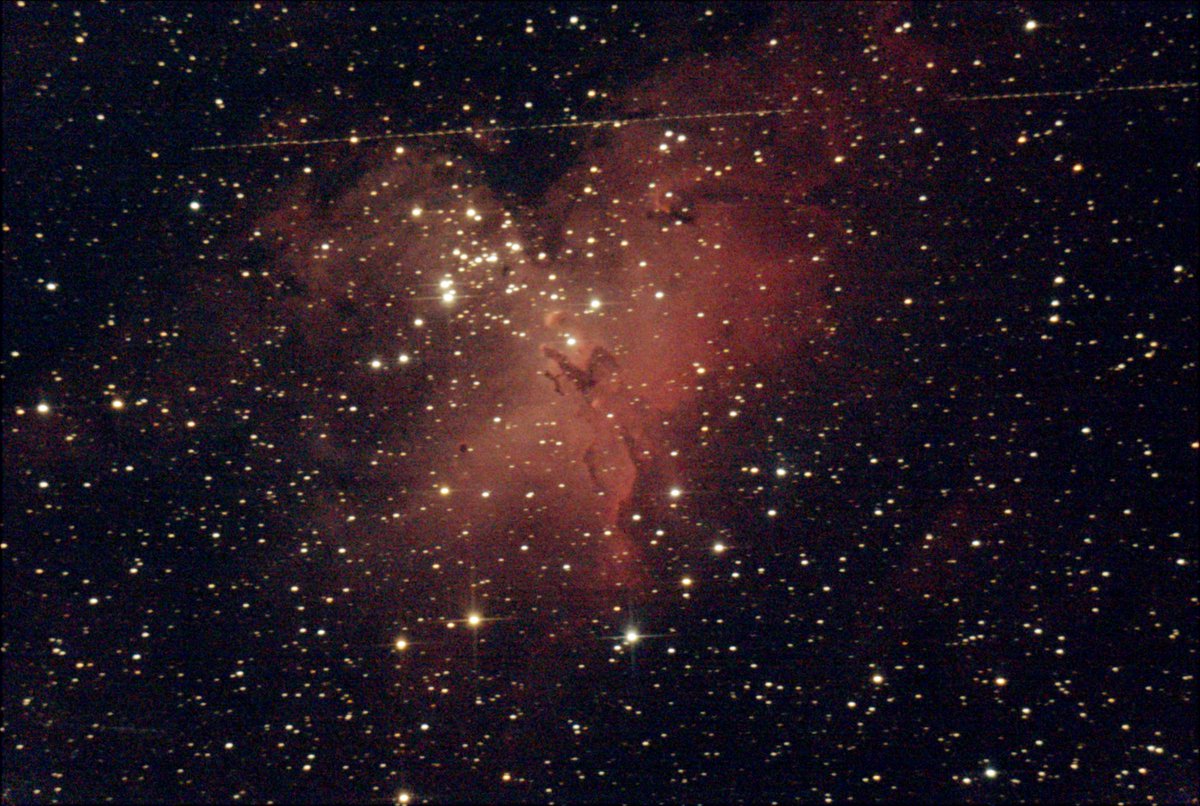
A true outer-space monster staring down at us on this Halloween! The Elephant's Trunk Nebula is a dense concentration of interstellar gas and dust located about 2,400 light-years away in the constellation Cepheus. It sits inside the larger emission nebula IC 1396.
@chucksastropho1 I have some Elon angst cuz of StarLink ruining our photos. If it weren't for PixInsight I wouldn't have any photos worth showing due to all the satellite trails. I get ya, Chuck.
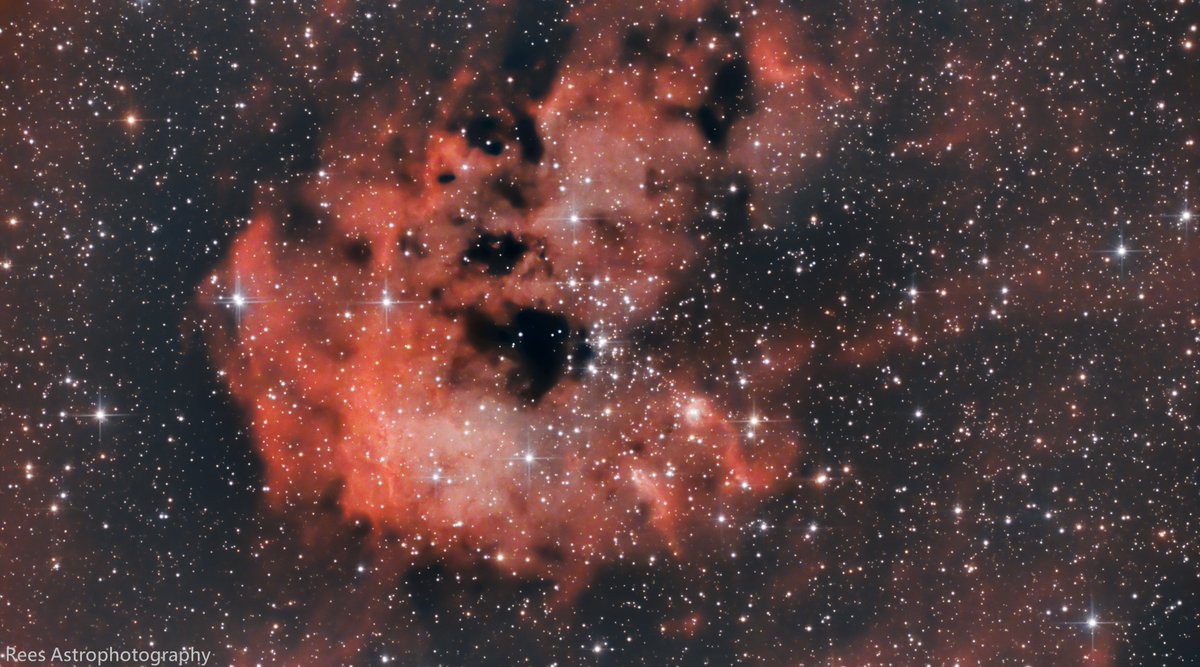
The Tadpoles Nebula (also called the Tadpole Nebula) is IC 410, a large emission nebula and star-forming region in the constellation Auriga. It's an H II region—a cloud of ionized hydrogen gas lit up by young, hot stars—spanning more than 100 light-years across.
@OwenShroyer1776 Can't believe what a raw deal you got from InfoWars. You literally went to prison for that cause. Pretty shitty you got treated like that. God Bless, Owen!
The Pac-Man Nebula, officially NGC 281 and cataloged as an H II region, is a glowing emission nebula located approximately 9,200 light-years away in the constellation Cassiopeia. It earned its popular nickname due to the distinctive shape.
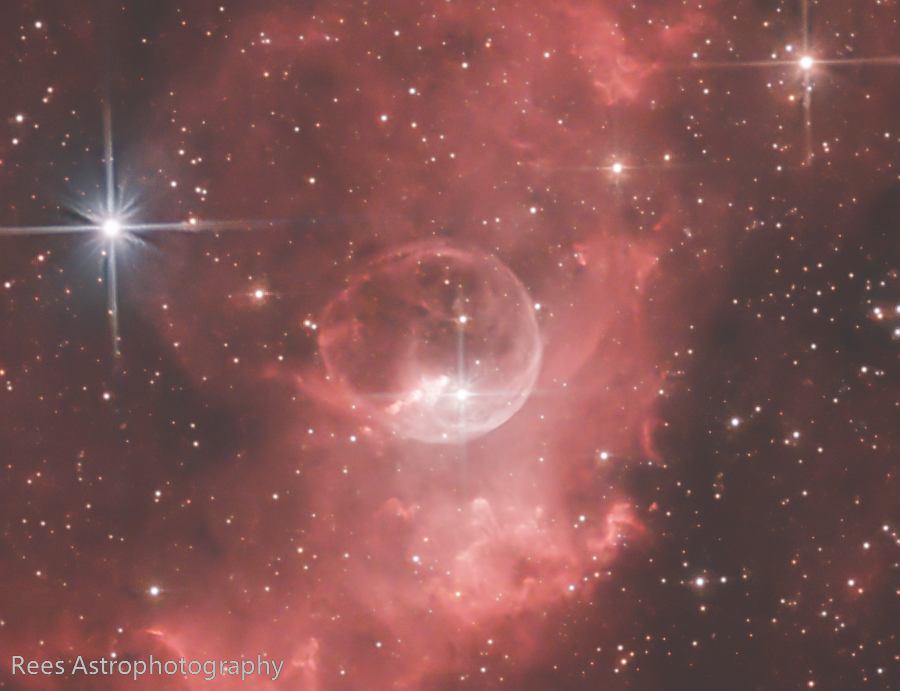
The Bubble Nebula (NGC 7635) is an emission nebula in the constellation Cassiopeia, known for its spherical shell of gas. This "bubble" is created by the intense stellar wind. It is about 7 light-years across and lies roughly 7,100 to 11,000 light-years from Earth.
The bottom half of the Wizard Nebula NGC 7380. It is an emission nebula about 8000 light years away in the constellation of Cepheus. Surrounding a young open star cluster forming new stars at a rapid rate. Done in the HOO pallet with the red in hydrogen and blue as oxygen.
NGC 7331 is a galaxy 40 million light years away in the constellation Pegasus often referred to as the Deerlick Group, due to the other galaxies in the frame. It is analogous to our own Milky Way galaxy in size and shape but has a monster lurking at it's core. A massive supernova
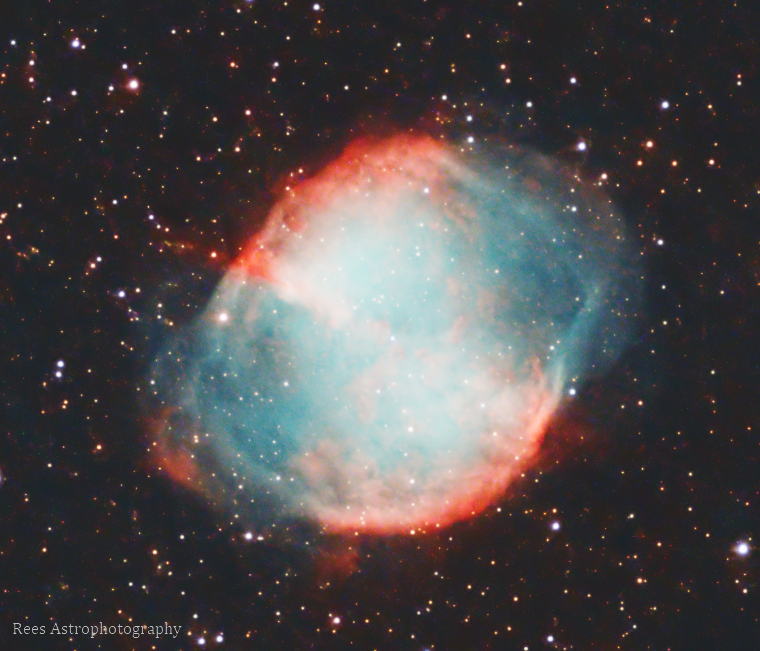
The M27 nebula, at 1200 light years away, is a star shedding it's outer layers in a nova leaving behind a super dense white dwarf star at the center. This is what will happen to our own star system billions of years from now. The entire structure is 2 light years across.
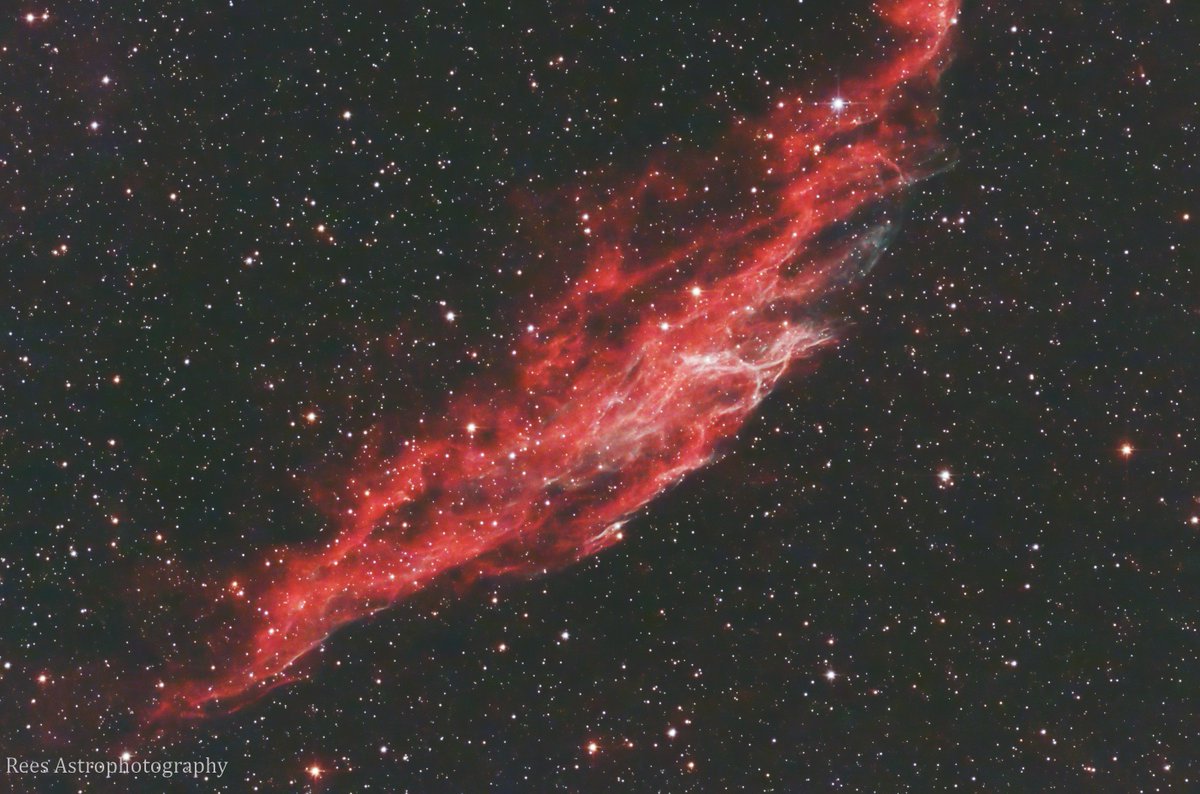
Part of the Veil Nebula complex about 2100 light years away. It is part of the bow shock from a supernova explosion that happened 8000 years ago as expanding gas clouds race into interstellar space. Shot from Cherry Springs Dark Sky Site.
M20 the Trifed Nebula is an active star-forming region located in our Milky Way Galaxy about 5,200 light years away in the constellation of Sagittarius. M20 is both an emission nebula with hydrogen in red, a reflection nebula with oxygen glowing blue. Shot from Cherry Springs.
@epaleezeldin@EPA This is the key chemical compound causing Geoengineering from jet aircraft. Sulfur Dioxide is not taken out of jet fuel like it is every other fuel we use. Please read this article carefully it explains it all. https://t.co/pzHiU4kjm6
@JackPosobiec This is the key chemical compound causing the "chemtrails" from jet aircraft. Sulfur Dioxide is not taken out of jet fuel like it is for car fuel.
https://t.co/pzHiU4kjm6
@DrBeaVillarroel This is a timelapse of an object that took 29 minutes to pass my very small field of view. Moving very slowly it was definitely not a satellite in low Earth orbit. Is this the type of object you are looking for? I have several examples.
@RealAlexJones To 86 someone comes from the mob from the old Las Vegas days
It mean 8 miles outside the city and 6 feet under in the desert
Comey got some explaining to do!