Putting things in order is always a good thing.
K-Mean #Clustering is one of the many methods available. It is something I found really interesting mostly because it is conceptually easy.
Have a look if you are interested!
https://t.co/ZkcnZGUGSG
This approach allows us to quantify how strong is the relationship between each feature and the target outcome.
Although easy, it is very helpful, so maybe you want to have a look!
https://t.co/oTWe9j0hpp
Most of the methods I found in literature for detecting gait events were excruciatingly convoluted. However, we had the opportunity of developing a stupidly easy method for consistently extracting them from a foot-mounted gyroscope.
Have a look here! https://t.co/EpxvaM30hz
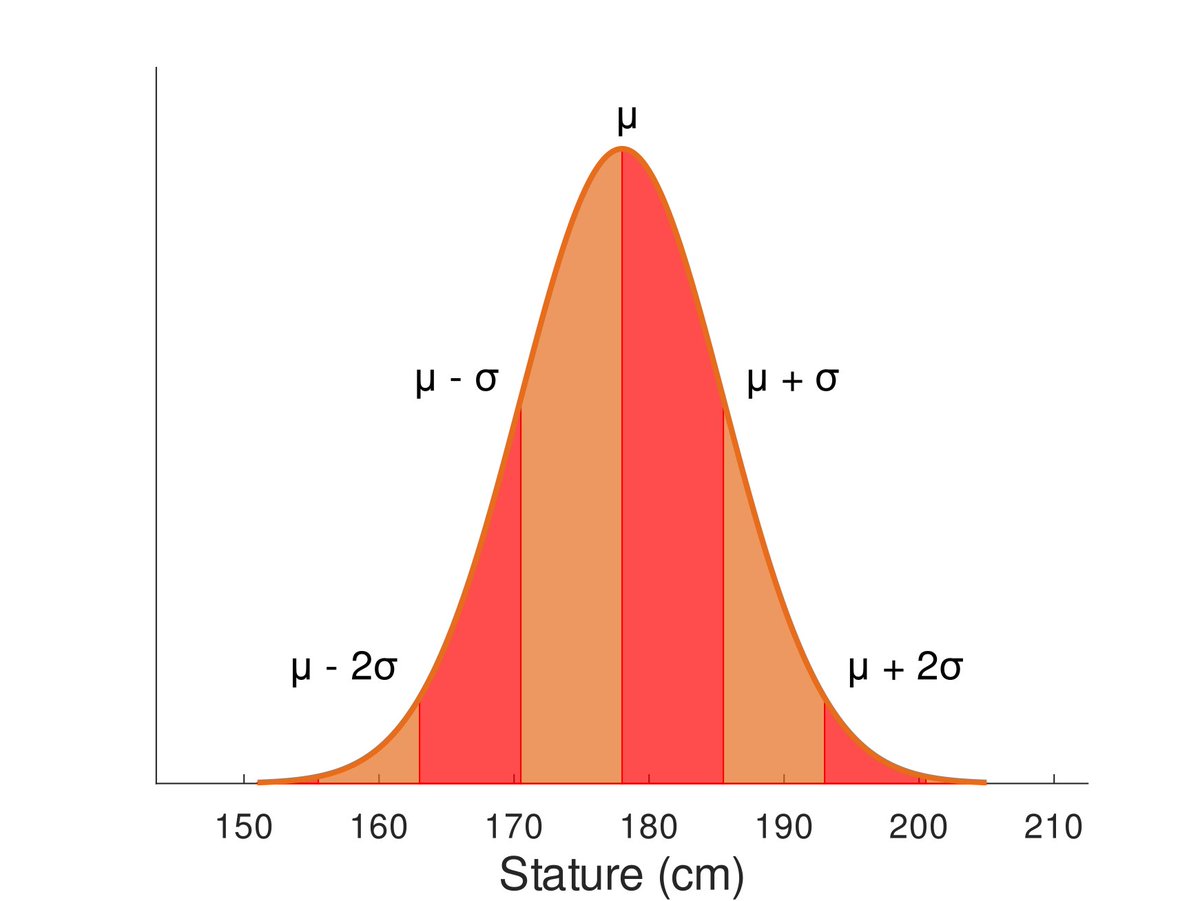
A brief description on how to easily #normalize a variable, and on which are the implications of not doing it in #MachineLearning.
https://t.co/NIcIkKJcPa
Testing runners! Here our current project in collaboration with #diadora to evaluate footware comfort perception and running biomechanics #running#ergonomics#biomechanics
I added a little entropy to the scientific production. Really proud of my first paper as main author! It was a long journey, but it was worth it.
Check it out at following the doi: 10.1016/j.jbiomech.2022.111202
@BiomechFOROIT@VCamomilla
Really happy for participating to the 7th #BoHNes Colloquium in 🇪🇦 #Valencia 🇪🇦. Sharing knowledge and expertises makes everybody a better person. To the next one! @BiomechFOROIT
Testing Friday 🔍 Developing MLR to predict #jump parameters from #wearable. Moving from lab to the field, but with proper statistical cover-up🏃🏻♂️
#sportbiomech#inertialsensor
Proud to be part of an exciting ISBS2021 conference.
I presented a work (https://t.co/VP5GVIcurB) stressing out the limitations brought by IMUs and correcting for them, using Multiple Linear Regression models. More content available at GitHub repo (https://t.co/b2WoN58yXE).