Everyone from Weber to Mokyr puts culture at the center of the rise of the West. But nobody has had a long-run cultural series you could drop into a growth model.
So I built one: LLMs read 23,000 books from the Western canon, scoring what each endorses.
Year 0–1920, one chart:
Literally any skyline photo from your window is giving away your exact address.
Check out these photos I took around Austin, precisely geolocated by matching pixels against a 3D scan.
The most insane match was a photo I took inside a high rise looking down. It nailed the exact balcony.
The Coast Guard, in cooperation with Taskforce Southern Spear and the US-israeli backed narco president Noboa are picking up shipwrecked survivors of American drone strikes, and torturing them. The Ecuadorian prosecutor who sought to investigate these abuses was assassinated by a gunman in broad daylight. She was killed in the same city that DHS and DoD have just recently deployed personnel, and it's also where they seek to build a large military base.
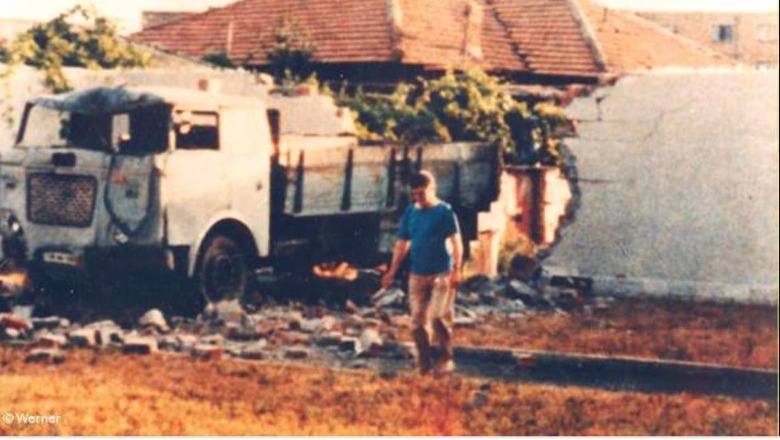
Ylli Bodinaku is an Albanian national hero who, after serving a 10 year forced labor camp sentence as a political prisoner, purposefully crashed his Skoda Liaz through the walls of the West German embassy under sniper fire, securing asylum for his family as well as 3,200+ Albanians who ran in behind him. Internal secret police documents blamed his actions for the chain reaction that led to the implosion of the communist government and the introduction of democratic elections in Albania.
36 years later he is a construction project manager on LinkedIn talking about masonry.
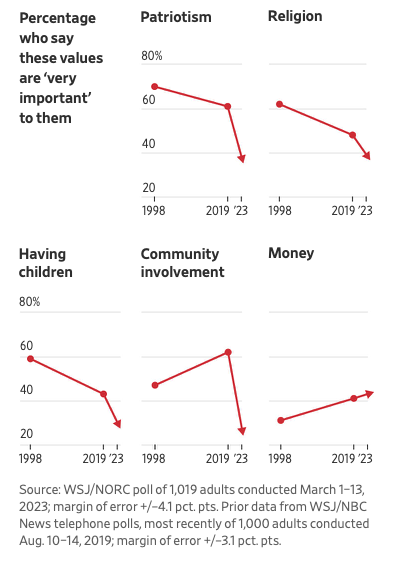
The Economist: "Talkie, a model trained only on text from before 1931, thinks God is extremely important and is “very proud to be a citizen of Great Britain”. It is a bigger believer in law and order than any frontier model we tested."
i'm obsessed with what's happening in AI reforestation right now
this Franco-Brazilian startup called MORFO took a patch of land in Brazil that was rock-hard and compacted from years of cattle farming. they replanted it using a single drone. months later the ground was covered in grass, bushes, and small trees. the land came back to life.
here's how the whole thing works.
1. drones scan the terrain with high-resolution cameras and sensors
2. AI analyzes the imagery alongside soil samples, moisture levels, slope, and surrounding vegetation
3. the system picks from a catalog of 300+ native species, deciding exactly which plants will thrive in which specific spot
4. the drone fires biodegradable seed pods packed with seeds, nutrients, and moisture at 180 capsules per minute
5. satellite and drone imagery monitors regrowth over time, with AI tracking vegetation cover and biodiversity
6. two people and one drone cover 50 hectares a day. a person planting by hand manages about one hectare.
and MORFO isn't alone. AirSeed in Australia drops 250,000 seed pods per day into bushfire-scarred koala habitat, replanting swamp mahogany that koalas depend on to survive. Flash Forest in Canada fires 50,000 pods daily into wildfire-destroyed boreal forest, planning the replanting alongside Cree Indigenous communities. re-green won Prince William's Earthshot Prize after planting 6 million seedlings across 30,000 hectares of Amazon and Atlantic Forest.
five companies across four continents built this same approach independently. nobody coordinated. the physics of the problem demanded it.
knowing which seeds belong in which soil used to require years of ecological fieldwork, manual planting crews, and budgets that made large-scale restoration nearly impossible. now two people with a drone and an AI model trained on local soil data can replant 50 hectares before lunch.
this is the AI work that'll still matter in 50 years.
We FOIA’d every San Francisco dog license from the last decade:
82,070 license events, 51,379 dogs, 13,525 names, 412 breeds, 26 neighborhoods.
Then we turned it into a data story: The Dogs of San Francisco.
Today we're launching Intercept: a $500M philanthropic initiative to make respiratory infections, like the common cold and flu, a thing of the past.
We treat respiratory infections as a minor nuisance, but that’s really not the case. Most of us will spend 5% of our lives (!) sick from these viruses, they kill 1M people a year, cost $600B annually in productivity, and periodically threaten civilization through pandemics.
So, if they’re such a big problem, why haven’t we dealt with them yet? Last year we convened ~40 leading scientists, pharma R&D leaders, biotech investors, and regulatory experts to better understand that.
We heard two main reasons:
(1) First, it’s just technically very challenging: respiratory viruses represent hundreds of distinct, mutating strains across several families. Fortunately, recent breakthroughs make this newly possible.
(2) Second is a lack of funding: broad-spectrum solutions have historically been underfunded, in part because they’re not a great fit for most philanthropic or commercial funding (and while COVID generated a burst of activity around preventing and understanding respiratory infections through an influx of new funding, that hasn't been sustained).
We think that with enough focus and funding, this might be solvable. Intercept is a $500 million philanthropic initiative that will take advantage of new tools to catalyze the development and deployment of two types of products: broad-spectrum preventatives and air cleaning technologies.
This problem is undoubtedly difficult. But it’s more tractable now than it’s ever been. We think we should give it our best shot.
We’re enormously grateful to our anchor funders: @stripe, @AnthropicAI, @TheFluLab, @FoundationOAI and individuals from Jane Street.
And, I’m very excited to be building this with @incredutility and the rest of the team.
How men feel when they go out fishing on a saturday is the same as how women feel when they stand in line for an hour for yogurt.
It's a meditative state. The end result is not really the point. You are just removing yourself from the time constraints you have to adhere to rigorously during the workweek.
The population density map below helps to illustrate why they are doing this. It really can't be emphasised enough that Russia is essentially a vast resource-extraction empire created to service two European megacities - Moscow and St Petersburg. Nothing matters more than them.
I think I see what's going on here. Anthropic is negotiating with a regulator without realizing it.
When you submit something risky to a regulator, you have to (1) describe what the risk is, and (2) show how you're going to mitigate that risk. Importantly, you have to properly estimate the scope of the risk. If you scope the risk too broadly, then you place extra burden on your mitigation. If you scope too narrowly, then you run the risk directly. But you must commit to an estimation to the regulator.
What happened here is that Anthropic scoped too broadly. And when it was shown that their mitigation was insufficient for the stated risk scope, they responded by trying to narrow it. This is a huge red flag to any regulator (for good reasons), so regulatory action followed.
Anthropic: "this could be a cyber-weapon, but we have these guard-rails to prevent that, so it's safe"
Government: "we accept your plan"
Amazon: "we broke the guard-rails"
Anthropic: "yeah but this particular jailbreak won't make it a cyber-weapon so it's fine"
Government: "that's not what you committed to"
Anthropic: "we didn't commit to any plan, only to safety in general"
Government: "we can't trust you with that"
They invented an analogue to aspartame for fat called EPG that follows the same idea (bind to taste receptors, but can't be metabolized for calories). Actually insane lol, kind of want to try it!
the current director of national intelligence is a guy who two years ago received a trophy declaring he “Fucks Only The Young” at an (oddly dildo focused) event he organized dedicated to the conspiracy that Bed Bath and Beyond never actually went bankrupt