Aluminium was once the most expensive metal on Earth - costlier than gold
Not because it was rare (it's the most abundant metal in Earth's crust, ~8% of it), but because extracting it from its ore was incredibly difficult
The Hall–Héroult process, invented in 1886 by two 22-year-olds, changed that — and with it, aluminium went from a luxury metal to something you wrap your sandwich in
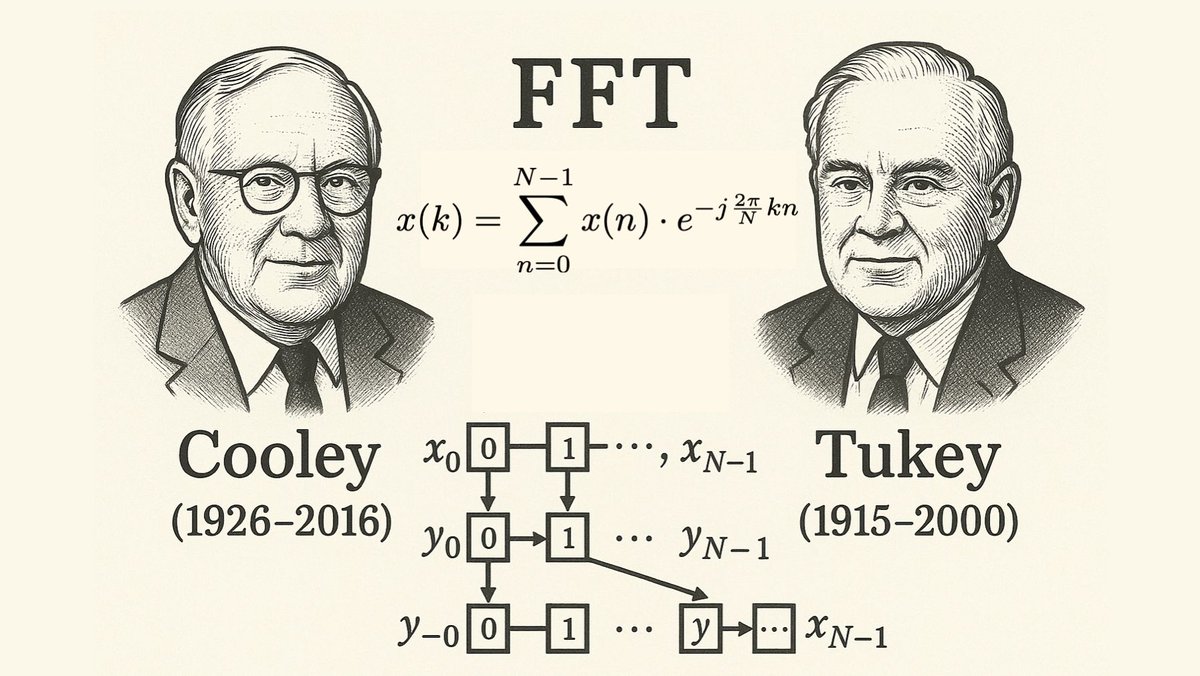
60 years ago this month, the Fast Fourier Transform (FFT) was introduced by Cooley & Tukey (1965) - one of the most important algorithms in signal processing and data analysis.
In 1805, Gauss - studying the orbits of asteroids Pallas and Juno - came up with a method to interpolate their trajectories from discrete samples. What he came up with was mathematically very close to the modern FFT but Gauss never published that work, and didn’t analyze its computational complexity. It predated even Fourier’s 1822 work on heat diffusion - but without the framing or generalization that Cooley & Tukey would bring 160 years later.
In 1965, Cooley & Tukey published their now-famous algorithm that reduced the cost of computing a Discrete Fourier Transform from 𝑂(𝑛²) to 𝑂(𝑛 log𝑛). This leap made real-time signal processing and digital media compression feasible.
From radio telescopes to JPEGs, from audio codecs to quantum mechanics - the FFT is everywhere. It’s one of the most important (and elegant) algorithms of the 20th century - rooted in the genius of Gauss, but brought to life in the computer age.
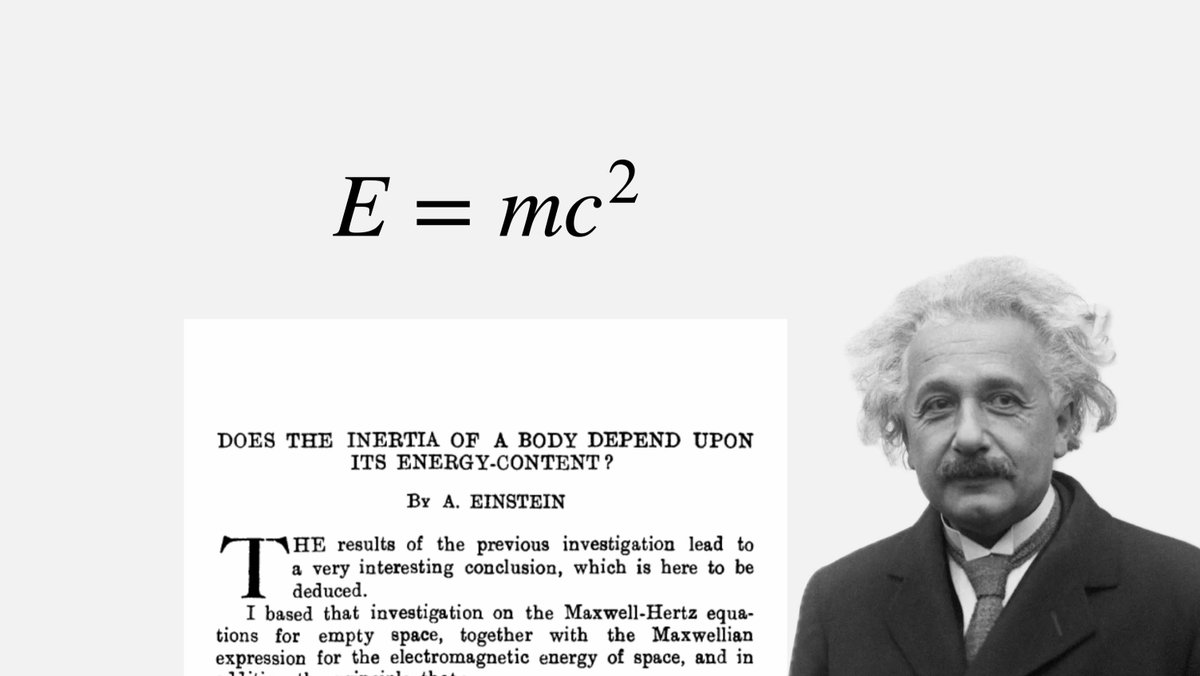
In 1905 Einstein wrote a paper where he asked: "Does the inertia of a body depend upon its energy content?"
From this question, he wrote a 3 page paper where he derived the now-famous 𝐸=𝑚𝑐^2
He proved that energy and mass are interchangeable. This simple equation revolutionized our understanding of physics.
A paper worth reading: https://t.co/6yWmsMqGN2
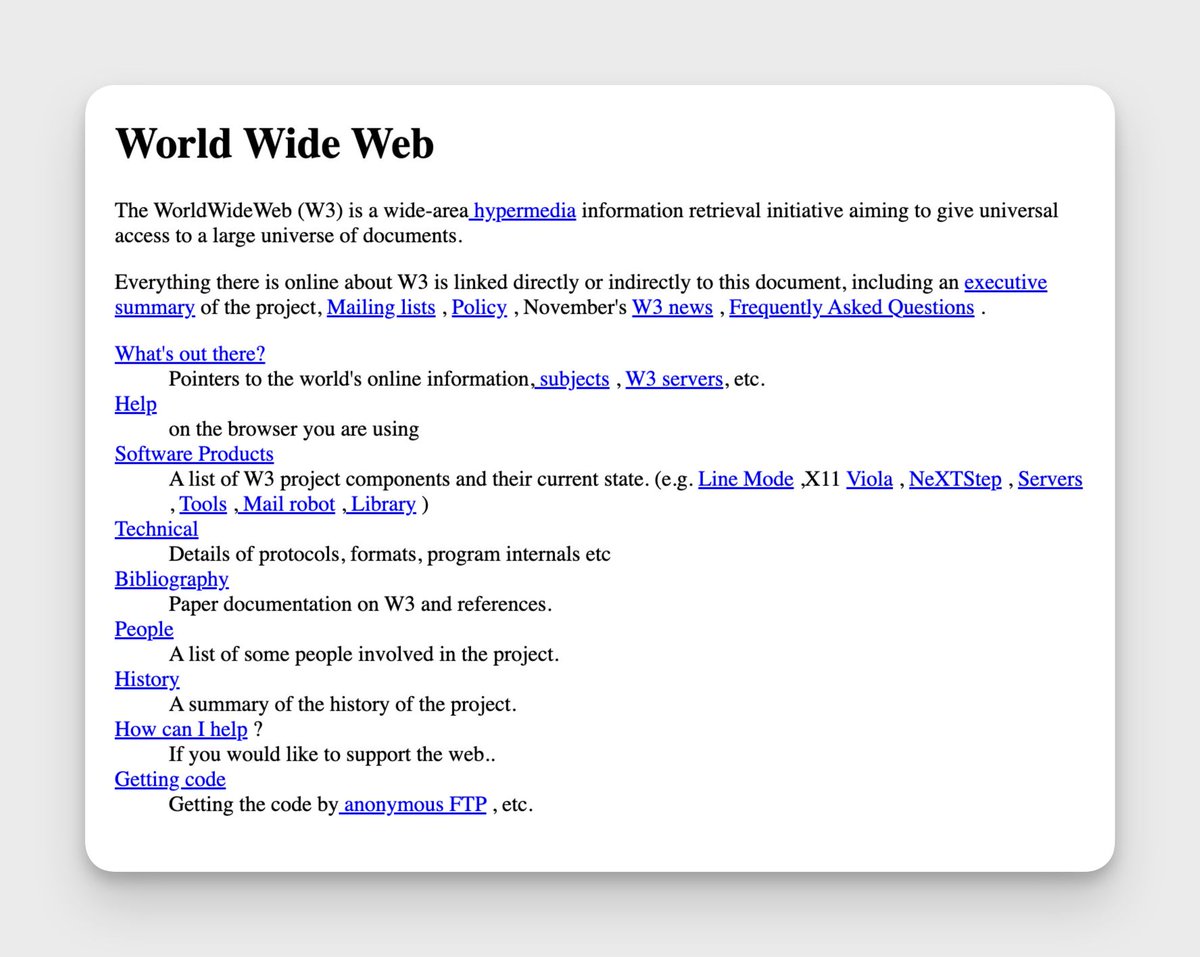
The first website was created by Tim Berners-Lee created in 1991. It was hosted on Berners-Lee's NeXT computer at CERN and was dedicated to information about the World Wide Web.
It is still accessible today (snapshot from Nov 1992): https://t.co/OOmnpgo9n0
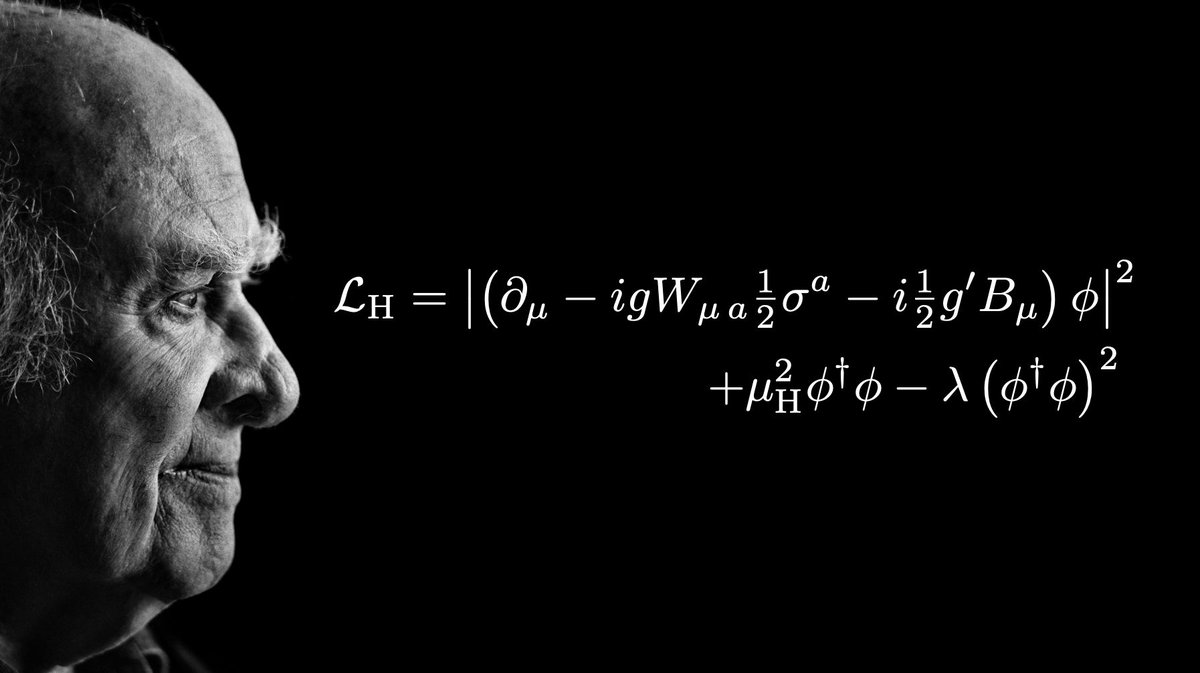
"Nobody else took what I was doing seriously, so nobody would want to work with me. I was thought to be a bit eccentric and maybe cranky"
Peter Higgs, the physicist who discovered the theoretical mechanism explaining the origin of mass in the universe, has passed away today.
'Tis but a small step from the tentative detection of dimethyl sulphide on a planet 120 light-years away to the absolute certainty that aliens built the pyramids. https://t.co/1LP3e6C9YT
In reference to the phrase ‘billions and billions’ associated with astronomer Carl Sagan, a ‘sagan’ has been defined as a unit of measurement of any large quantity.
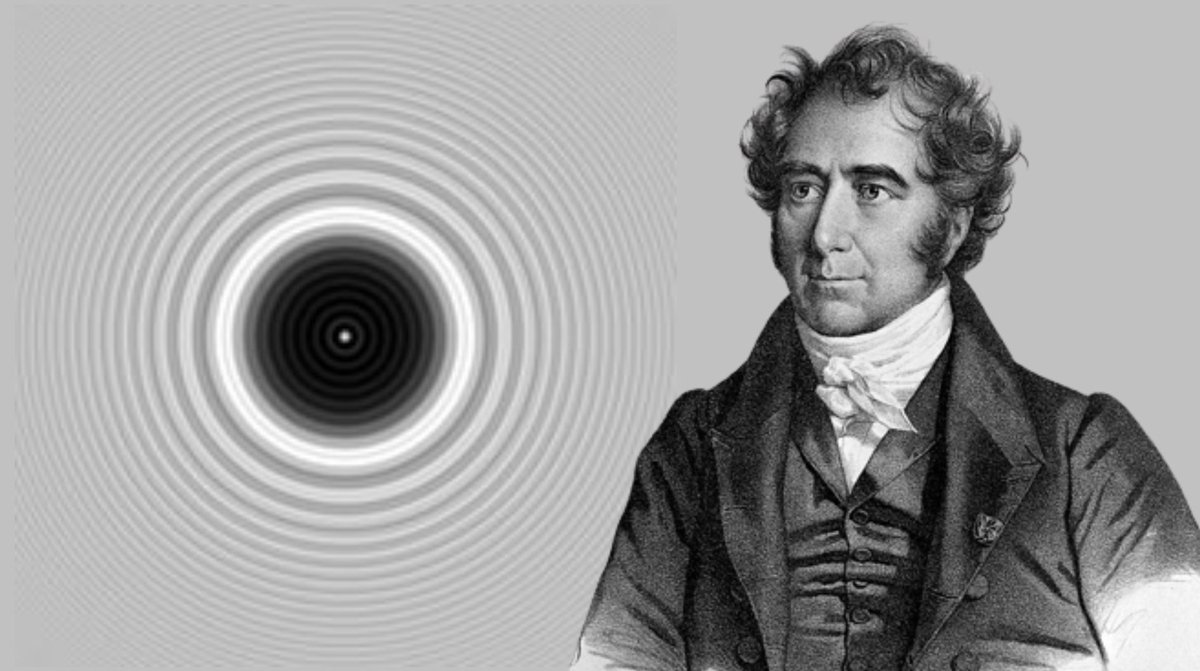
Arago's spot is a classical example of a beautiful mathematical theory anticipating a beautiful physical fact. Back in the 1800s, the scientific community was debating between defining light as a particle or a wave. Young's experiments, which demonstrated the wave-like characteristics of light, paved the way for Fresnel to formulate a mathematical wave theory. When Fresnel presented his theory in a competition, it came under scrutiny by Poisson, an advocate for the particle theory.
In his eagerness to debunk Fresnel's work, Poisson delved into the mathematics and discovered a prediction by the theory which he thought was inconsistent with experiments: shining light on an opaque disk should yield a bright spot at the center of its shadow.
Remarkably, no one had tested this prediction before. Motivated by Poisson's finding, Arago executed the experiment, and indeed, the spot manifested. What was intended as Poisson's rebuttal to the wave theory unexpectedly became a powerful testament to light's wave-like behavior.
Taking into account the amount of water required to cool data centres and generate electricity to power them, asking between 20 and 50 questions on ChatGPT uses 500 ml of water.
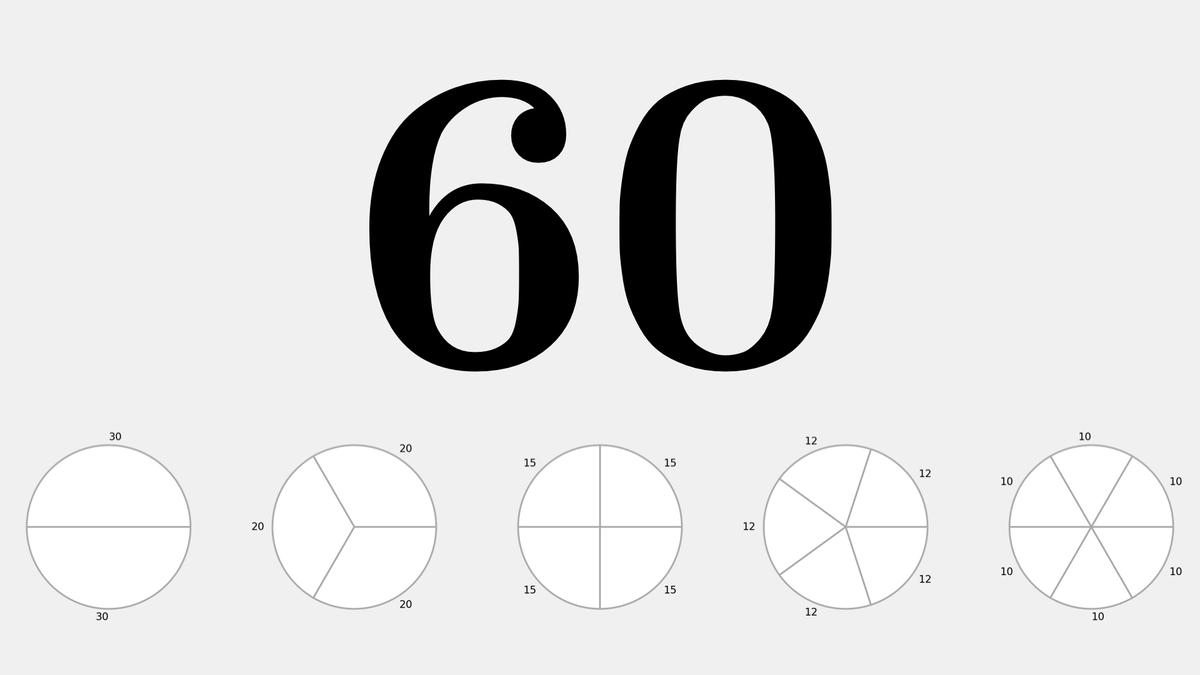
60 is the smallest number that is divisible by 1, 2, 3, 4, 5, and 6.
This is partly why the Babylonians used a base-60 numeral system, as it was convenient for a number of calculations, such as dividing weights and measures into halves, thirds, fourths, sixths, etc.
Mount Everest was named after Sir George Everest (against his own wishes) who actually never saw the mountain
Incidentally the family name was pronounced not "EVER-rest" but "EVE-rest"
A great summer ☀️ read:
https://t.co/jYPvdNbELz
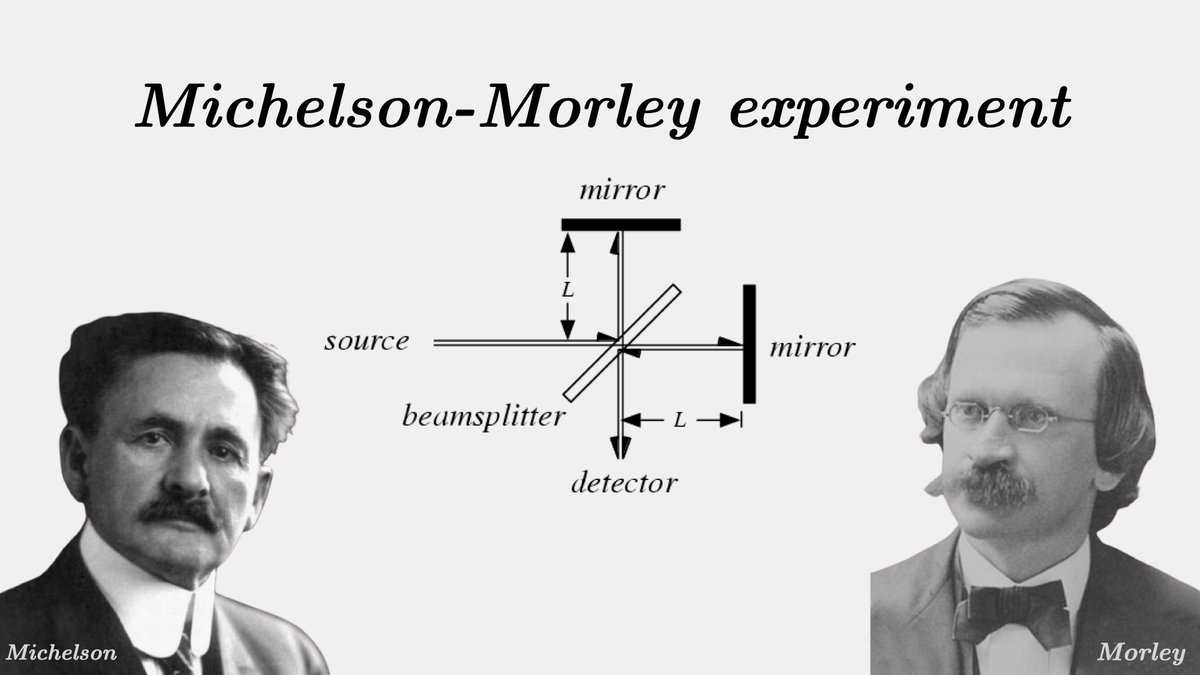
One of the most famous experiments in the history of physics was, in fact, a "failure". In 1887, Albert Michelson and Edward Morley set out to measure the difference in the speed of light when it traveled with vs against the motion of the Earth.
All efforts failed; they could find no difference. Attempts to explain the failure ended with Einstein's theory of relativity.