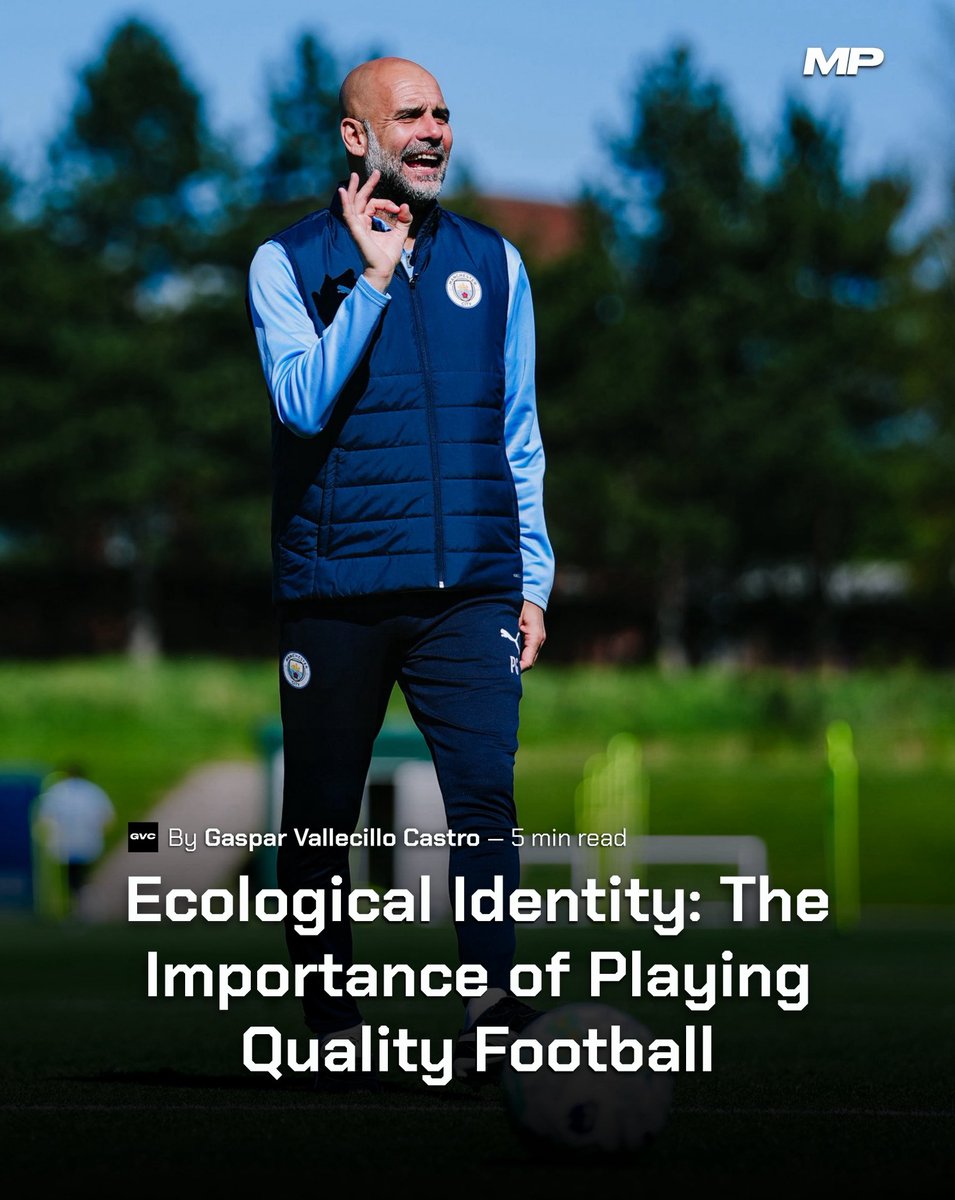
England showed outstanding qualities in both aspects of the game. Their performance embodied a collective principle I’d describe as travelling together: moving forward and recovering the ball as a connected structure.
🔗 https://t.co/aMIUfIHBIk
@stirling_j [1/2] Hi Jamie,
This comes up especially when discussing “Portuguese terminology.”
I also think they “generalize” the term “positional attack”—it’s part of their culture.
Although, speaking of Fonseca, knowing his methodology and ideas, his model is based on purely
[2/2] to operating in such a complex playing structure, stressing the importance of time, work and adaptation in helping them understand and embrace the new demands.
[1/2] In his introductory press conference as the new @SportingCP head coach, @PFonsecaCoach discusses his intention to implement a positional play approach and the different challenges involved in this process.
He particularly highlights the players who are not accustomed
The Tuchel’s decisions may appear counterintuitive, but they possess an internal coherence.
With these premises established, where exactly does England stand? How does one of the favourites for the upcoming World Cup play?
🔗 https://t.co/6NBTe12SVc
The initiative signals a coaching staff concerned with details and open to incorporating methods from other sports to optimise processes and help players memorise set-piece routines.
🔗 https://t.co/lryssbCGcS
[3/3] attacking interactions through a clear plan and a well-defined organisation.
➕ Access exclusive content dedicated to the tactical and methodological development of coaches, analysts, and football professionals https://t.co/YVs7wpAgEe
[1/3] Thomas Tuchel, speaking after the match against New Zealand, said he was much more satisfied with his team’s second-half performance. According to him, the team played more within their positions and moved the ball with greater speed, unlike in the first half, when players
[2/3] were often out of position and there was a bit more “freestyle” football.
His comments highlight the importance that coaches like Tuchel place on positional structure and on the order created through proper spacing and distances between players. It is a way of fostering
We will always remember those who tried to play football beautifully as a sign of identity, belonging to a constructive process that does not alter and whose essence of play can remain intact despite existing within highly variable contexts.
🔗 https://t.co/kmFkUsiExs
More than a sporting achievement, this title represents the success of a project. PSG stopped relying exclusively on star players and instead placed its faith in a collective footballing idea.
🔗 https://t.co/2lxs4252D4
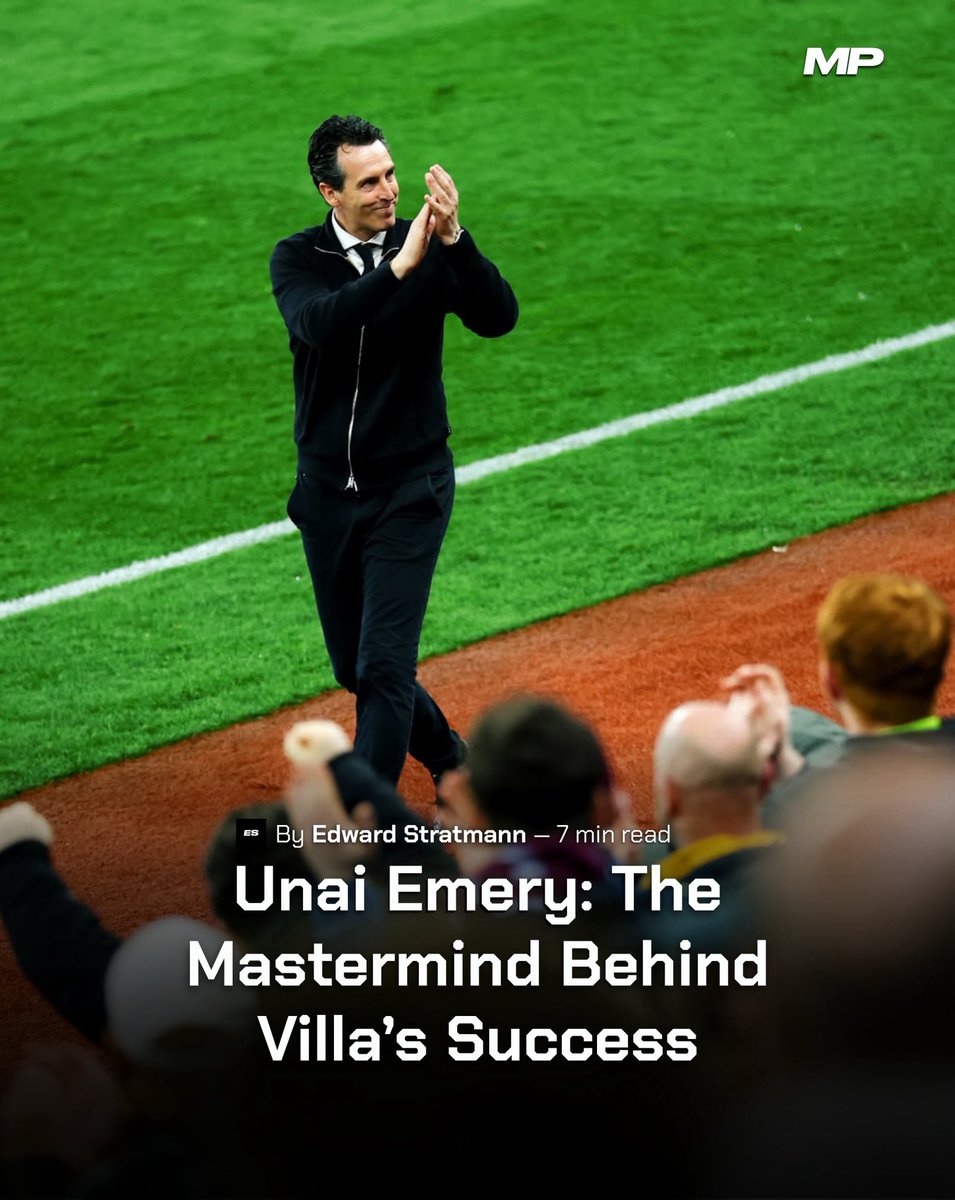
How Unai Emery has turned Aston Villa into a fully fledged European force has been nothing short of remarkable, a far cry from the side he inherited three and a half years ago when they were hovering just three points above the relegation zone.
🔗 https://t.co/ibF333pHzt
[3/3] strategic approach that combines functions and positions, starting from a structure designed to reduce uncertainty before attempting to exploit the opportunities that uncertainty itself can offer.
[2/3] negative factor to be reduced, but rather an opportunity to be seized.
In the search for advantage, Catanzaro adopts a dynamic occupation of space through positional rotations, overlapping runs, and forward projections (see Cassandro in the action leading to the goal): a
[1/3] Catanzaro under Alberto Aquilani continues to offer tactical insights that lead us to reflect on the complexity of the game and on how it can be controlled, while at the same time opening itself up to the game’s intrinsic uncertainty, which no longer becomes merely a
New nuances within positional play continue to emerge: more individual pressing without cover, more compact teams organised to recover possession immediately and initiate another attacking sequence.
🔗 https://t.co/4wCLFhDvpd
[1/2] The ability to adapt in a positional system is an important theme. Unlike other proposals, uncertainty and the game's variables are always controlled through order. For us, it is the structure that allows you to find initial advantages or self-organize
[1/2] A positional system is a system that has the ability to self-organise through the continuous search for advantages. Structure is essential as a starting point, to establish order, control, and reduce uncertainty. However, uncertainty is an integral part of