Nyinau gempa (volcano, tectonic), seneng mrogram (Fortran, Matlab, Python) but live in Java, nate nyantrik ting @LMU_Muenchen, ~ mountains of the archipelago ~
Puppies waiting loyally is a deeply moving sight. No matter how late someone returns, they are always met with warm anticipation and greetings. Giving freely brings even greater rewards.
Wandering aimlessly through the streets helps release life's trivial troubles. By focusing on the walk and the scenery, one can temporarily forget life's pressures and worries, allowing for a deep sense of self-love.
Ignite hope within every despairing soul. Each breeze in the sea of flowers tells a tale of seasonal evolution, sweeping through blossoms to transmit the vitality of life and leaving soft seasonal traces upon the world.
Optimism draws wonderful and kind outcomes into your life. Design a life you genuinely adore with all your heart. The opening of the cavern is narrow, barely wide enough for me to squeeze through on all fours. I lower myself, aiming my phone's light into the darkness, and begin
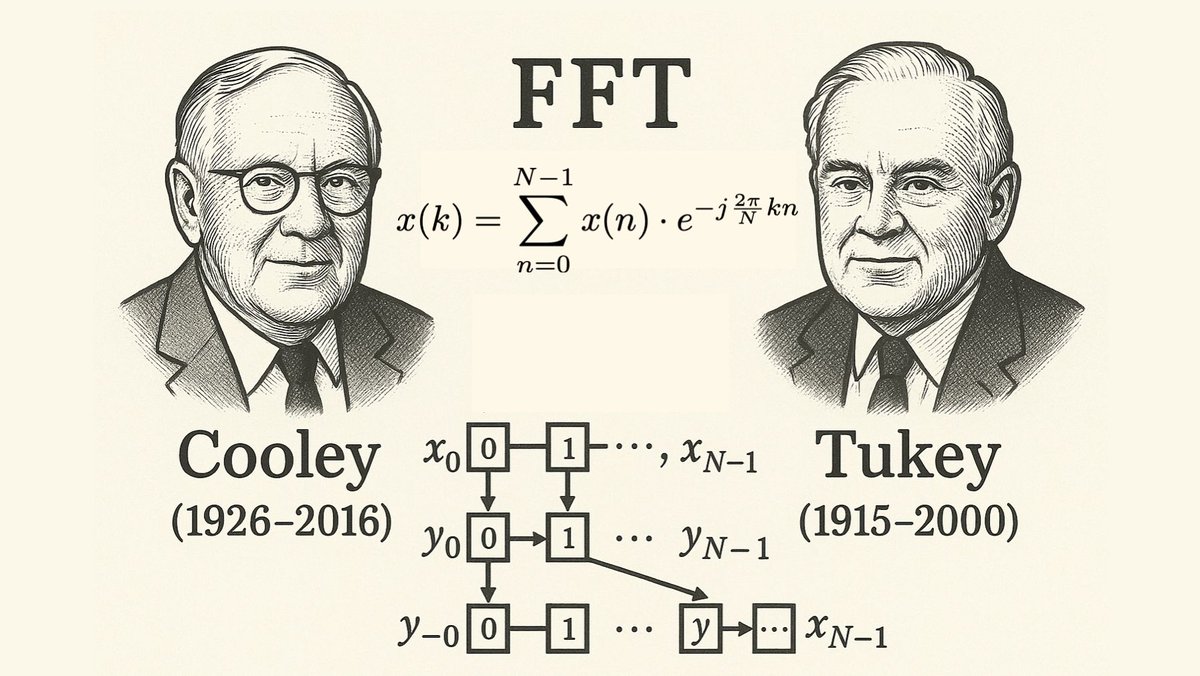
60 years ago this month, the Fast Fourier Transform (FFT) was introduced by Cooley & Tukey (1965) - one of the most important algorithms in signal processing and data analysis.
In 1805, Gauss - studying the orbits of asteroids Pallas and Juno - came up with a method to interpolate their trajectories from discrete samples. What he came up with was mathematically very close to the modern FFT but Gauss never published that work, and didn’t analyze its computational complexity. It predated even Fourier’s 1822 work on heat diffusion - but without the framing or generalization that Cooley & Tukey would bring 160 years later.
In 1965, Cooley & Tukey published their now-famous algorithm that reduced the cost of computing a Discrete Fourier Transform from 𝑂(𝑛²) to 𝑂(𝑛 log𝑛). This leap made real-time signal processing and digital media compression feasible.
From radio telescopes to JPEGs, from audio codecs to quantum mechanics - the FFT is everywhere. It’s one of the most important (and elegant) algorithms of the 20th century - rooted in the genius of Gauss, but brought to life in the computer age.
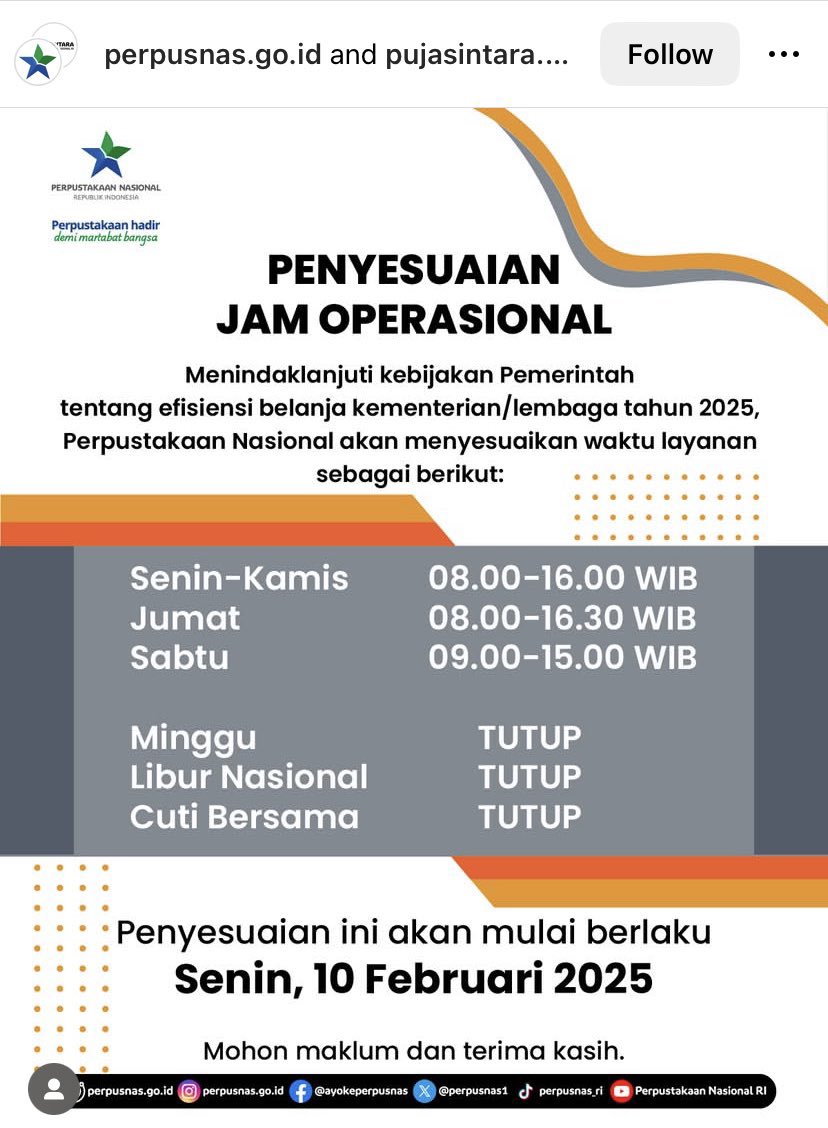
Kita mungkin tidak pernah membayangkan bahwa negara kita akan sampai pada era di mana perpustakaan nasional sampai “dipaksa” untuk mengurangi jam operasionalnya karena efisiensi belanja kementerian.
Negara ini bukannya gagal menjadi cerdas, tapi memang tidak mau.
ART China yang Gagal Beroperasi Otonom di IKN Dikembalikan Februari 2025. Terima kasih sudah dipinjami... 🙏
Klik untuk baca: https://t.co/YC8Iy4fsYD
Kompascom+ baca berita tanpa iklan: https://t.co/wS7EBu7YJr
Download aplikasi: https://t.co/Tpex82JsOr https://t.co/YC8Iy4fsYD
Most academics who do well in industry work at least as hard (and often much harder) & encounter many more and varied challenges in industry than they did in academia. And unsurprisingly, they're well compensated for their efforts.
8/n
Marks of success in applied research aren't papers/citations -we do these too- but it's largely how much we improve & innovate on products, impact users, and enhance the company's reputation and bottom line. It's rarely -if ever- the case that you can do all this part-time
6/n