🧵Marco Rubio to Fox News: "If you look, the Russians are losing five times as many soldiers a month as the Ukrainians are."
What does the data and research show?
1/20
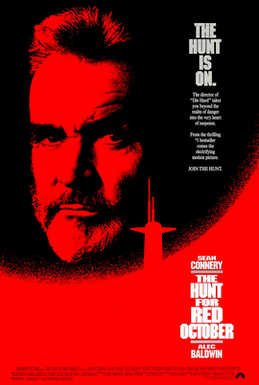
"I present you the Soviet Ballistic Missile Submarine Red October" - A line from a superb movie. In reality the CIA knew far more about the Soviet TYPHOON class from the mid 1970s than Clancy could have guessed.
Thread on the CIA, Typhoons and spying on the Soviets...
UPDATE: i just shared this note with my colleagues:
"To my incredible colleagues at CBS: I want to personally let you know that my work will soon no longer appear on CBS News. This is my decision, and I appreciate the bosses at CBS for understanding it.
I will always value the opportunity I had to work alongside the talented and committed professionals here. I'm proud to have had the words 'CBS correspondent' next to my name - always will be.
For the next phase of my career, I look forward to some independence and finding new spaces to share my work in line with my personal goals. I thank you all. The work will not stop, and I'll always be a call away"
“The main thing we took away from all of this was that we need to work with worst-case scenarios much more than we did before.” A war foretold: how the CIA and MI6 got hold of Putin’s Ukraine plans and why nobody believed them. https://t.co/Rnknp2XOH0
It annoys me that so many people are under the impression that this guy, Steven Bradbury, is some subpar goober who lucked his way into gold.
That could not be further from the truth.
This is one of the most satisfying victories in the history of the Olympics if you know the full backstory.
This medal final was during his fourth Olympics, in Salt Lake City in 2002.
Earlier in his career, he was among the best athletes in the world in this specific event, the 1000 meter short-track men's speed skate.
But despite his talent, he just had some of the shittiest luck in the sport. We're talking a decade of shit luck.
In the '94 Winter Olympics, he was considered the odds-on favorite to take gold, but he fell in his heat after getting illegally pushed by an opponent (who was later disqualified). He didn't get a re-do. That was it. He got shoved by some asshole, and his Olympics was over.
Then in the '98 Winter Olympics, he was a favorite to at least medal in the same event but got caught up in a collision that wasn't his fault and failed to advance.
In 1994, he got his thigh sliced open by a competitor's skate during a race, which required 111 stitches and 18 months of recovery time.
In 2000, he broke his neck during training because a skater in front of him fell and tripped him up. That required a bunch of screws and plates being inserted into his skull and back and chest.
And doctors told him that he should stop skating. But he didn't wanna give up. It meant too much to him.
So, there he was in Salt Lake City in 2002, past his prime, a walking erector set, going up against opponents who were faster and younger and in their prime.
He manages to win his heat and advance to the quarterfinal but then has the shit luck (yet again) of having to go up against the best two athletes in the quarterfinal and only the top two advance.
He finishes third and thinks: "Damn, I gave it my best shot." But then, the second place finisher is disqualified, so Bradbury gets to advance to the semifinal.
Now, at this point, he's thinking: Well, shit, I'm not as fast as these younger guys, and I got a bad habit of getting taken out by crashes that aren't my fault.
So, he consults with the Australian national coach, Ann Zhang, and they decide that he should hang back from the pack and hope the pack crashes.
That is a perfectly valid strategy. If you crash, you lose, but speed skaters risk crashing to gain an advantage in order to win.
It may not feel exciting, but it is a valid strategy and just as risky: avoid crashes entirely and hope that pays off.
It paid off in the semifinal: the pack, including the defending Olympic champion, jostled too much and crashed. Bradbury wins and advances.
So, he's improbably in the final and takes the same approach, and it works: the entire pack jostles too much and crashes, and Bradbury's risk of hanging back pays off.
This victory was not some un-athletic schlub lucking his way into gold.
It was a journeyman athlete who never gave up and played smart after a career of shitty luck and finally got his due after it being snatched away from him so many times.
Hands down, one of my favorite Olympics stories.
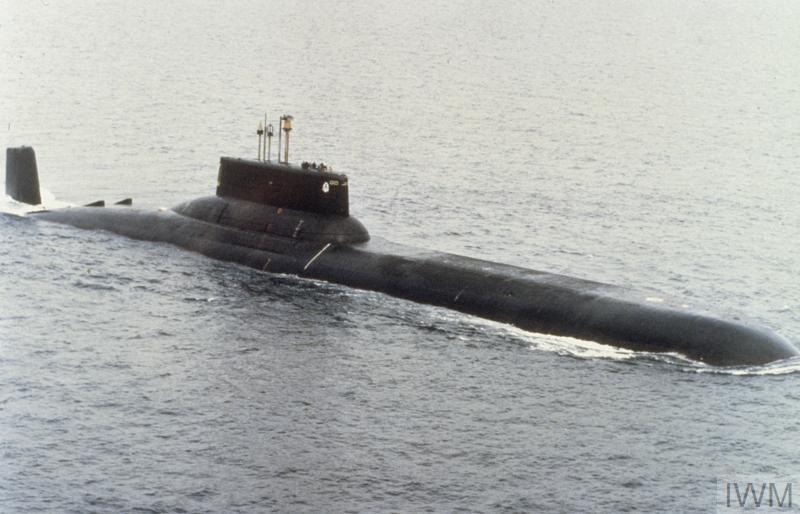
This is a Soviet Typhoon class submarine. In 1989, when a Royal Navy Lynx had flares fired at it while 'observing' a Typhoon while on a secret intelligence mission in the Barents Sea.
Short thread on Soviet / UK naval incidents and interactions in the late Cold War era...
Since January 6th, a lot has changed. I used to just spout off at the mouth about things based on not much else but feeling. Now that I’m older, more mature, and have gone to therapy, I can calmly reflect on things before giving my opinion. Such is the case with my thoughts on all the recent ICE tragedies.
Just trying to be a patriot and stand up for America, the country I love. Lord knows there’s people out there who don’t value our way of life! SKEEEWW
This thread is now being down ranked.
Please do your part in retweeting it.
It contains frame by frame analysis from ALL the videos we’ve seen today, showing how ICE murdered this man.
It is important people see the truth! 🫡
Just got off a Ryanair flight to Dublin.
On landing pilot announced “Elon Musk is a wanker”.
The whole plane clapped and whooped like Ireland won the World Cup.
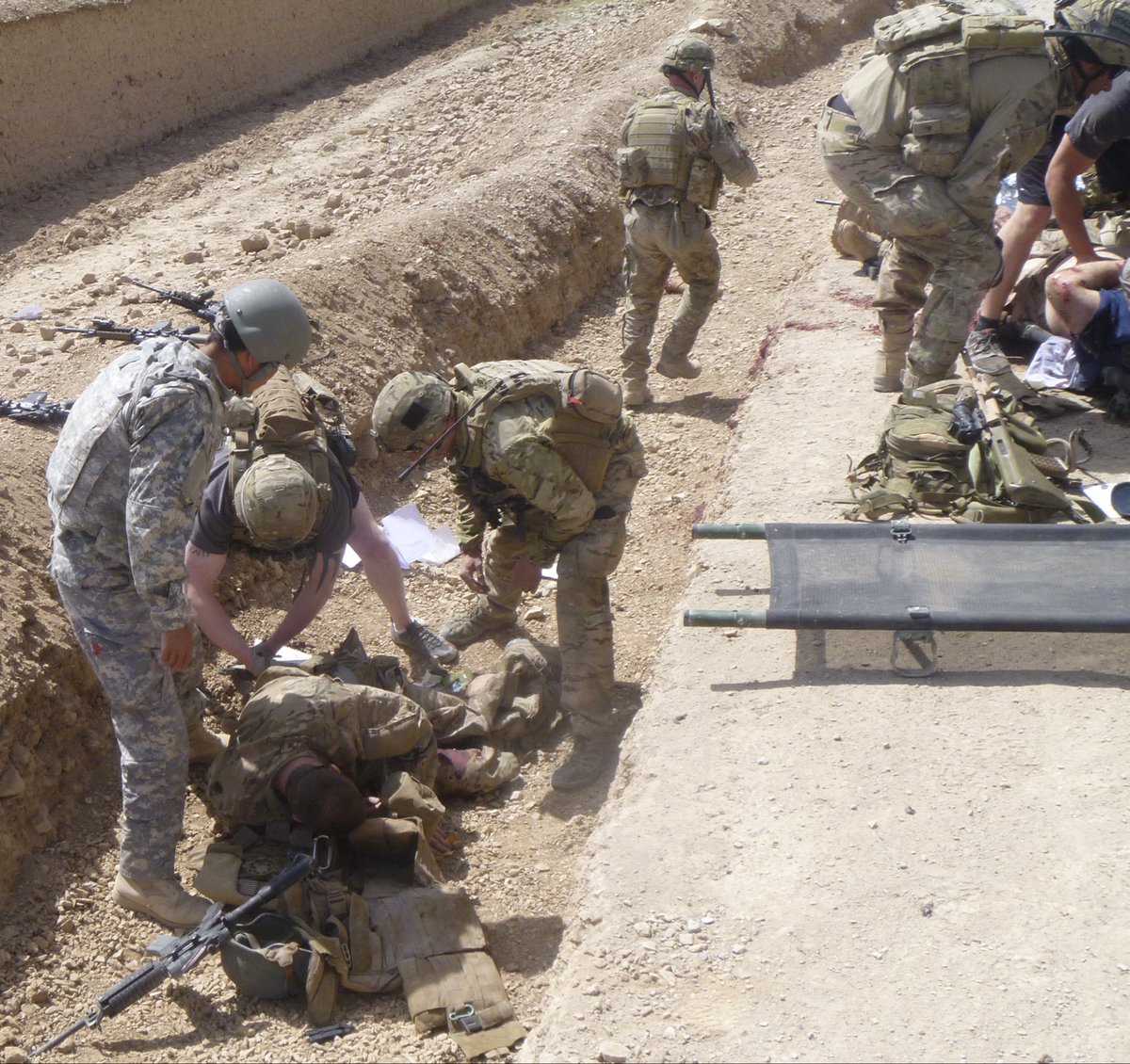
That’s me 🇦🇺 and my US 🇺🇸 army colleagues after I was blown up by a a Taliban child suicide bomber. Just another day in Afghanistan
“a little bit back from the frontline”
thanks Donald “Bonespurs” Trump 5 times coward and @POTUS shameful
Australia just recorded zero cervical cancer cases in women under 25 - for the first time since records began in 1982.
This is what happens when a country commits to HPV vaccination and screening. We protect our girls and save lives.
A Warning from History.
A year after WW1 ended, A French Pilot, Jacques Trolley de Prévaux, flew an Airship from the Belgian coast to the devastated battlefields of France where millions died.
Lost for decades this is part of what he saw remastered in color and HD.
They call it “lunch shaming.” I call it cruelty. For 38 years, I watched it happen from my history classroom. Then, one Tuesday, I decided to become a quiet criminal.
My name is Arthur Harrison. For nearly four decades, my world has been cinder block walls, the smell of old books, and the drone of the 2:15 PM bell. I teach American History. I’ve lectured on the Great Depression, on bread lines and poverty, trying to make the black-and-white photos feel real to kids who live in a world of vibrant color and constant noise.
But the most brutal history lesson wasn’t in my textbook. It was in the cafeteria.
It was a Tuesday when I saw it happen to Marcus, a quiet sophomore who sat in the back of my third-period class. He was a good kid, drew incredible sketches of Civil War soldiers in his notebook margins. I saw him at the front of the lunch line. The cashier, a woman I’d known for twenty years, said something to him. I saw his shoulders slump. He was handed not a tray of hot food, but a cold cheese sandwich and a small milk carton—the “alternative meal.” The IOU. The badge of shame.
He walked past his friends, eyes glued to the floor, and sat at an empty table at the far end of the cafeteria. He didn’t eat. He just stared at the wall. In that moment, he wasn’t a student. He was a statistic. His family’s bank account balance was on public display, served between two slices of cheap bread.
Something inside me, a part of my soul worn thin by years of budget cuts and standardized tests, finally snapped.
The next day, I walked into the main office before school. Linda, the cafeteria manager, was there sorting receipts.
“Art,” she said, not looking up. “Don’t tell me the coffee machine is broken again.”
“It’s fine, Linda,” I said, sliding a folded fifty-dollar bill across the counter. “I want to start a fund. Anonymously. For the kids who come up short. When it happens, just… take it from this. No cheese sandwiches.”
She finally looked up, her eyes lingering on the money, then on my face. She didn’t say a word. She just gave a slow, deliberate nod and tucked the bill into her apron.
I started doing it every week. A fifty, sometimes a hundred if my pension check had a little extra. I called it the “Invisible Lunch Fund.” Linda never mentioned it, but sometimes I’d see her give a real hot meal to a kid I knew was struggling, and she’d catch my eye from across the room with that same quiet nod. It was our secret conspiracy of decency.
This went on for a year. It was my quiet rebellion.
Then, one afternoon, Sarah, the sharpest student in my AP History class, stayed after the bell.
“Mr. Harrison?” she started, twisting the strap of her backpack. “I have a question. It’s not about the homework.”
“Go ahead, Sarah.”
“I know about the lunch money,” she said, her voice barely a whisper. “My mom works in the school office. She sees Linda’s accounting. There’s a line item she just writes in as ‘Donation.’ I know it’s you.”
My heart hammered against my ribs. I was caught. I imagined disciplinary meetings, being told I’d broken some obscure district policy.
But Sarah wasn’t angry. Her eyes were shining. “We want to help,” she said.
The next Monday, a group of students from my AP class set up a bake sale in the main hall. The sign, hand-painted on poster board, read: “BAKE SALE FOR BENEDICT ARNOLDS. (Because betraying your friends by letting them go hungry is treason.)”
By lunchtime, they had a shoebox overflowing with crumpled bills and coins. They placed it on my desk without a word. Over four hundred dollars. The administration, to their credit, looked the other way.
I’m retiring this year. The Invisible Lunch Fund is now just “The Fund,” and it’s run entirely by the students. They’ve made it their own.
For 38 years, I tried to teach kids that history is shaped by big speeches and epic battles. I was wrong. History isn’t just about the noise. It’s about the quiet moments, the unspoken acts of grace. It’s written not in textbooks, but on a lunch receipt when one person decides that another human being will not be shamed for being hungry. That’s the America I want to believe in. That’s the lesson I finally learned.
Thank you Carol Sacks Goldstein for sharing
OK all ye people depressed Judge Mehta didn't order Google broken into bits this week. I'm here to cheer you up. DOJ has its other remedies trial in 16 days and just posted its PFJ (Proposed Final Remedies) now 60+ pages of brilliant detail. Let me walk you through key terms. /1