***Plenary speakers***
A big thank you to all the keynote speakers, @matavca, @OrlyRazgour, @DinaDechmann, @WinifredFrick. All four women leading the latest in bat research and conservation!
Finally, the monumental work led by @SoniaFe02577409 is out, reporting on moth barcodes from Portugal, based on 2350 specimens from 1158 species.
The InBIO Barcoding Initiative Database: DNA barcodes of Portuguese moths https://t.co/P6l0uavqAJ
A work started in 2018, is finally out.
Our results reveal simplified bird-pest interaction networks with increased agricultural cover, where bird abundance emerges as the key predictor of species' importance in pest consumption.
https://t.co/XKiuJKjOqj
𝗡𝗘𝗪 𝗣𝗔𝗣𝗘𝗥📢
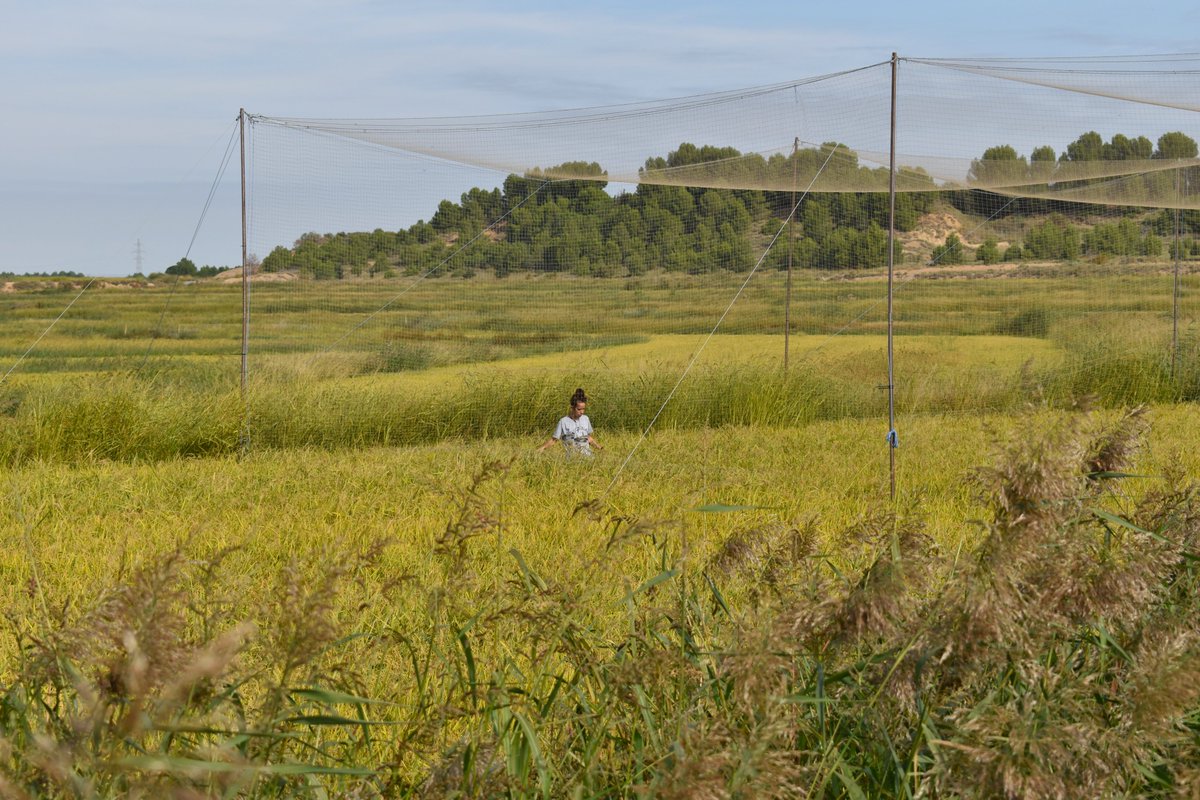
As part of my PhD, we quantify, for the 1st time in Europe, the #EcosystemServices of #bats as insect pest suppressors in #rice paddies🌾🦇. Bats halved plant damage, saving ∼70 kg rice/ha, which translates into 💸56€/ha
Read more👇
https://t.co/n8RFJ0cyIe
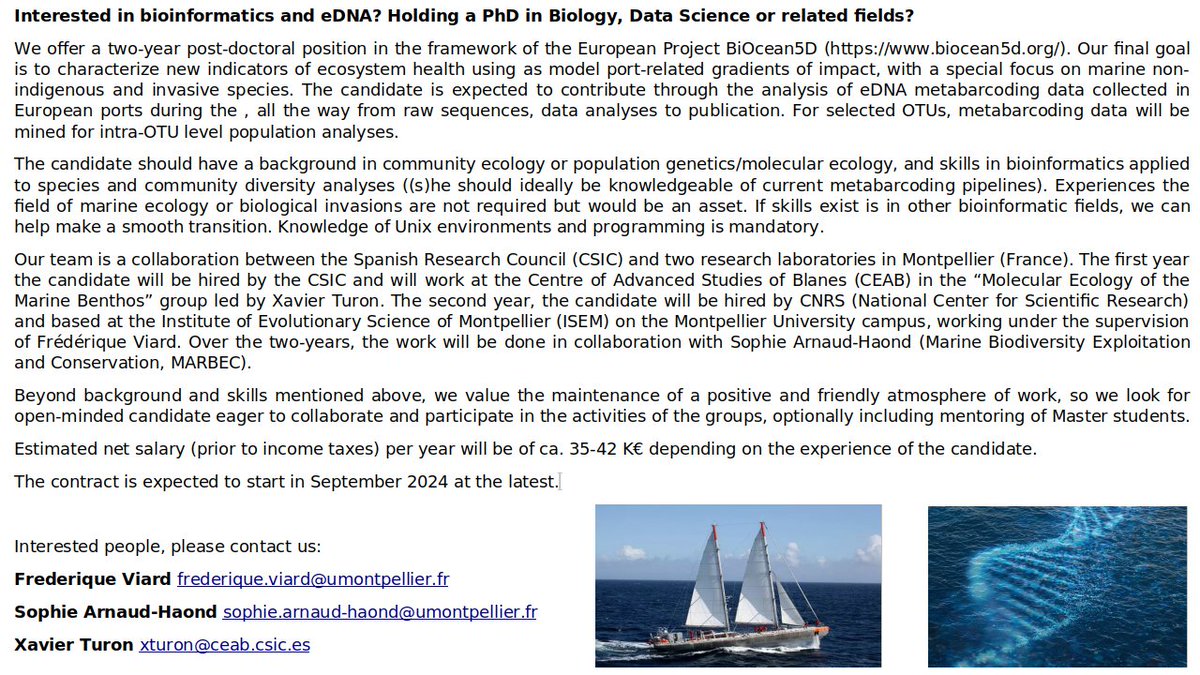
Join me @Naturalis_Sci for a PhD on taxonomic and functional meiofauna diversity! CT scanning, (meta)barcoding & transcriptomics, fieldwork in Indonesia, Japan & New Caledonia. Strong collaboration with @Ifremer_fr@Senckenberg@JAMSTEC_PR#PhDPosition https://t.co/VTS9K5eJ0d
This study was a brilliant work led by Daniel Velarde and supervised by @LuisPascoalSil1@PedroBeja12 and myself 🙃 All scripts and data used for analysis are provided! 😉
Right on time for christmas 🎄, our newest article is out! 😍 @CIBIO_InBIO@molecology
We used DNA metabarcoding and beta diversity partitioning to test the Optimal Foraging Theory (OFT) and Niche Variation Hypothesis (NVH)! 🧶👇
https://t.co/wn7GjA984w
Instead, it appears that the population became a mixture of specialist and generalist individuals, which may reflect OFT mechanisms on individuals with differential competitive ability to access better food resources.