It's official. The Word Mapping Project website is up, and the curriculum is now available for purchase. A big thank you to everyone who supported me during this process. Let's do right by kids.
https://t.co/2DSOadhO8i
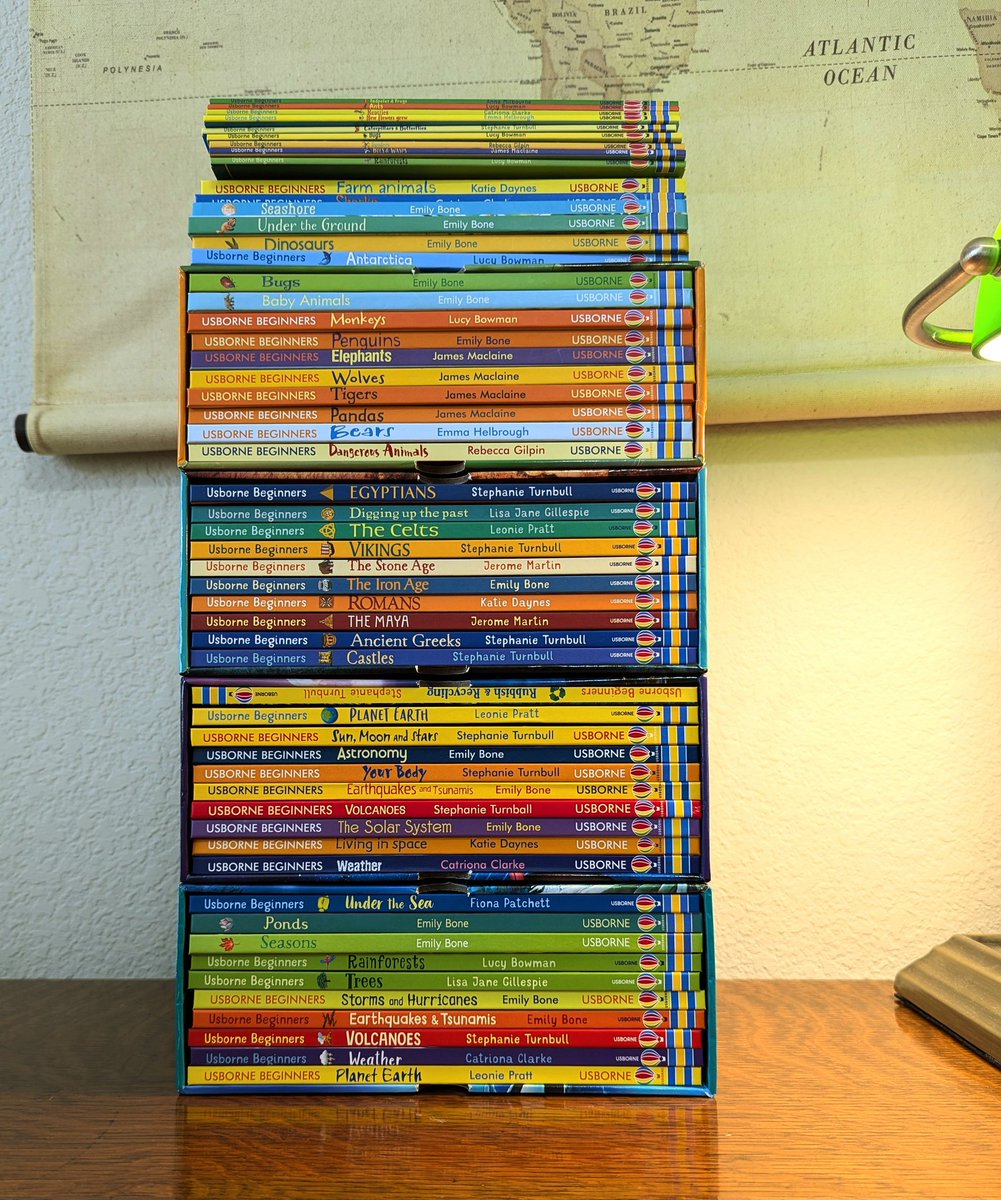
These books are the first things my kids read independently after 120 phonics lessons. One book a day. They're unbeatable for building background knowledge in just about every domain for early readers. My kids are so proud after finishing this stack!
3/4 A close study of 200-400 pg books can take months, stalling curriculum coverage. Do you advocate for prioritizing shorter texts or is there a specific pacing strategy to keep "Whole Class" momentum without losing depth?
2/4 Why is this type of reading not addressed more explicitly? Is this a "deliberate narrowing of scope" or do you see the same principles applying equally to standalone content-area and expository texts?
**New** chapter on “Literacy” just published in the Open Encyclopaedia of Cognitive Science. The whole series is super, accessible chapters and no paywalls, a great resource for teaching. https://t.co/u7qnk0tXrk
Hi @Booktrust, have you removed the Poetry Prompts lesson guidance PDFs from your site? They were online just a few months ago. Could you please reupload or share a link? Many thanks!
https://t.co/qBEFyGiIZu
@smorrisey@TeresaCremin Thanks for the book title suggestions! Do you allow/ban/partially ban graphic novels? I feel it might be giving a bad message to ban but like I said, some students will use all indepedent reading for graphic novels otherwise!
In independent reading sessions, I alternate weeks: graphic novels allowed one week, not the next. Otherwise, some students read only graphic novels. Too harsh? Or a fair way to broaden their reading diet? @TeresaCremin
@smorrisey Thanks Sean. In a podcast, Craig says he doesn't recommend teachers to spend time creating sequences (apart from expert teachers) as they are already made - does he provide ones that can work for the elementary grades?
Any primary teachers out there who have read "Reflect, Expect, Check, Explain: Sequences and Behaviour to Enable Mathematical Thinking in the Classroom" from Craig Barton. Does it work well in the primary setting and are there sequences available for primary?
Campaign groups in the US, UK and India claim that TV subtitles will help children learn to read. But our new research led by @a_lopukhina shows that children don't even look at subtitles until they can already read at around 1 word per second.