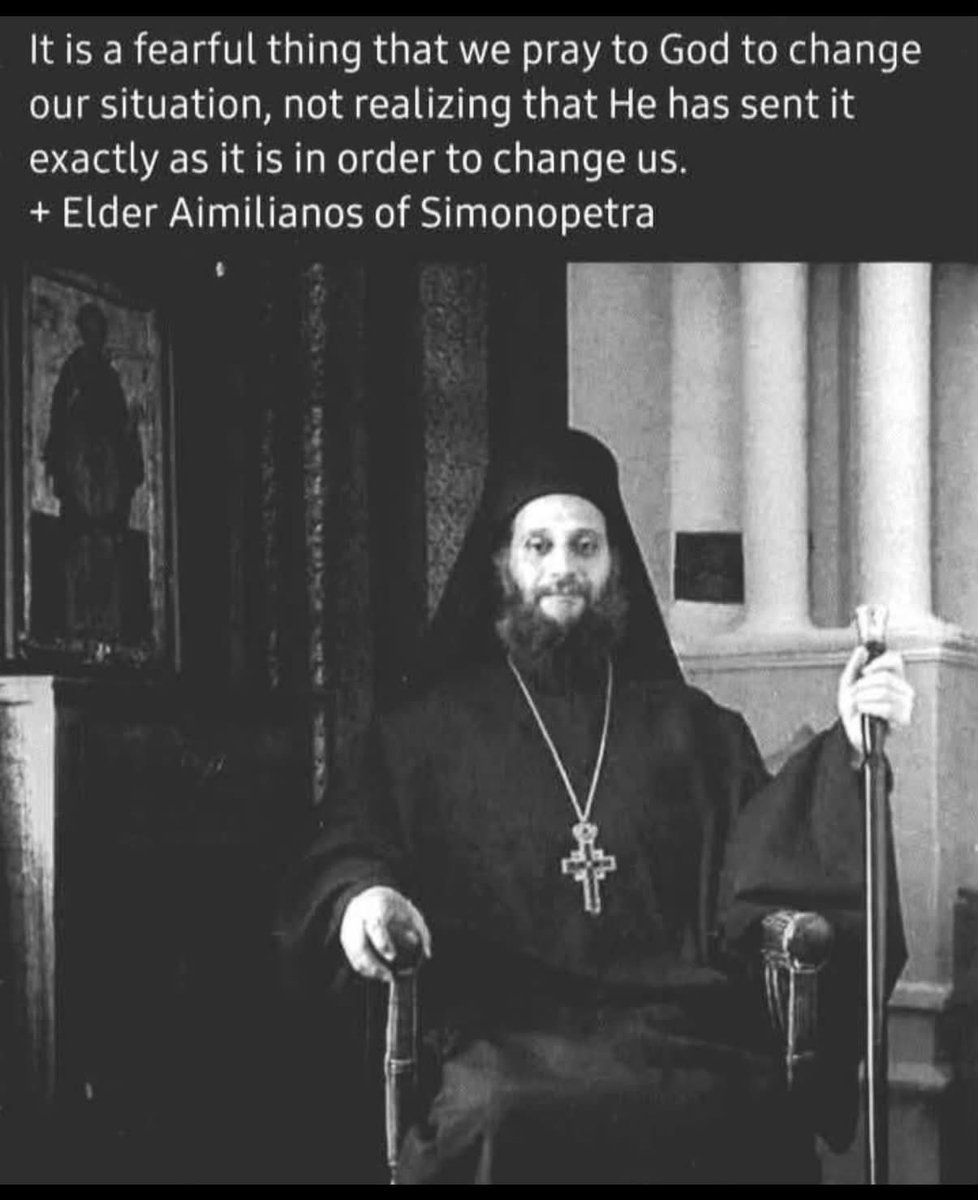
Every Christian is called to be a theologian—not in the academic sense, but because every Christian is called to know God.
We come to know Him not merely by reading about Him, but by living with Him in prayer, worship, repentance, and love.
@Nicholai_Korea@C2Antiquity@Alex_Ortodoxie This is my parish. The guy recording the video said he was there to bring awareness to abortion. But in reality, just wanted to debate orthodoxy and call it heretical.
I appreciate your question. For me, it’s because the truth is the truth regardless of the actions of other individuals. Personally, I have enough passions to deal with that it brings no benefit to spend time focusing on the actions of others, their intentions, and if they are even real or some troll.
It’s easy to say “look at all these people right now, look at the fruit!” But really, the question in my eyes is, is it true? And does the fruit, over the totality of history show? Personally, I believe the answer to those are, Yes and Yes. The lives of the saints are incomparable to anything else. In my little time at my parish, the people have been nothing short of wonderful and the experience with my priest has been like no other pastoral experience. Obviously this is subjective, but I put it forward to say, respectfully, get out of the echo chamber and go see for yourself. If you come to the same conclusion, at least you’ve given it a fair shake.
Let’s play that logic out then. During that account, they were referring to OT. I’m sure you’re not saying we should check everything against OT alone.
Is your claim that they were holding to some sort of scripture alone? At any point in the history of the Bereans, can you show me their churches or writings proving they held to this belief in the manner that you believe?
You mention apostasy and false teaching, you just made an objective claim. Can you show me their churches and writings historically to validate this claim? At what point did they apostatize?
If the answer is no, then you’re merely putting forth rhetoric that is closer to fiction in nature than historical truth.
Instead, we see the reality of the situation. Backed by scripture, and history. The Bereans heard Paul, they checked the OT scriptures, and they joined The Church, which they still remain with today. Otherwise, you’re just trying to argue an interpretation of a verse against another interpretation of a vs and that is fruitless.
Tommy, Orthodox is not the same as Roman Catholic. Respectfully, the Bible wasn’t mysteriously dropped fully completed from the sky, it was compiled by The Orthodox Church 100s of years after the apostles had reposed. It wasn’t 66 books. If you have enough faith in The Holy Spirit within His Church to receive your Bible, The Trinity, and various other things, it shouldn’t be that hard to have enough faith that He could keep His promise when he said the gates of hell would not prevail.
Arguing Theology vs Theology is fruitless, it regresses into subjectivity on its own without the historical grounding and the Fathers’ writings. I’ve found that the question really boils down to: do you dare to call God a liar? Because the way I see it, if He couldn’t preserve His Church from the beginning, we have no hope of knowing objectively what’s true and what’s false.
@C2Antiquity@Alex_Ortodoxie@Michael__Garten Sadly, it gets much crazier than this overseas in Africa. Check out John Anosike when you have some time. Snarling, eyes rolling back, spazzing out, “traveling to other realms”, “aquatic spirits”, and much more. I saw somewhere that his net worth was estimated at 65 mil.
Yep. Very confusing back and forth in positions. He had a recent post claiming the church fathers belong to no one and Protestants can claim them in their lineage, now here railing against everything they’ve said. I hit this point in my journey as well. Any argument used against Orthodoxy destroys everything after it if we’re being intellectually honest and holding everything to the same standard. Caused me quite the cognitive dissonance as an ex-charismatic 😅
Against The Fundamental Epistle of Manicheaeus 5.6
“Let us see then what Manichæus teaches me; and particularly let us examine that treatise which he calls the Fundamental Epistle, in which almost all that you believe is contained. For in that unhappy time when we read it we were in your opinion enlightened. The epistle begins thus:— "Manichæus, an apostle of Jesus Christ, by the providence of God the Father. These are wholesome words from the perennial and living fountain." Now, if you please, patiently give heed to my inquiry. I do not believe Manichæus to be an apostle of Christ. Do not, I beg of you, be enraged and begin to curse. For you know that it is my rule to believe none of your statements without consideration. Therefore I ask, who is this Manichæus? You will reply, An apostle of Christ. I do not believe it. Now you are at a loss what to say or do; for you promised to give knowledge of the truth, and here you are forcing me to believe what I have no knowledge of. Perhaps you will read the gospel to me, and will attempt to find there a testimony to Manichæus. But should you meet with a person not yet believing the gospel, how would you reply to him were he to say, I do not believe? For my part, I should not believe the gospel except as moved by the authority of the Catholic Church. So when those on whose authority I have consented to believe in the gospel tell me not to believe in Manichæus, how can I but consent? Take your choice. If you say, Believe the Catholics: their advice to me is to put no faith in you; so that, believing them, I am precluded from believing you — If you say, Do not believe the Catholics: you cannot fairly use the gospel in bringing me to faith in Manichæus; for it was at the command of the Catholics that I believed the gospel;— Again, if you say, You were right in believing the Catholics when they praised the gospel, but wrong in believing their vituperation of Manichæus: do you think me such a fool as to believe or not to believe as you like or dislike, without any reason? It is therefore fairer and safer by far for me, having in one instance put faith in the Catholics, not to go over to you, till, instead of bidding me believe, you make me understand something in the clearest and most open manner. To convince me, then, you must put aside the gospel. If you keep to the gospel, I will keep to those who commanded me to believe the gospel; and, in obedience to them, I will not believe you at all. “
Against The Fundamental Epistle of Manicheaeus 5.6
“Let us see then what Manichæus teaches me; and particularly let us examine that treatise which he calls the Fundamental Epistle, in which almost all that you believe is contained. For in that unhappy time when we read it we were in your opinion enlightened. The epistle begins thus:— "Manichæus, an apostle of Jesus Christ, by the providence of God the Father. These are wholesome words from the perennial and living fountain." Now, if you please, patiently give heed to my inquiry. I do not believe Manichæus to be an apostle of Christ. Do not, I beg of you, be enraged and begin to curse. For you know that it is my rule to believe none of your statements without consideration. Therefore I ask, who is this Manichæus? You will reply, An apostle of Christ. I do not believe it. Now you are at a loss what to say or do; for you promised to give knowledge of the truth, and here you are forcing me to believe what I have no knowledge of. Perhaps you will read the gospel to me, and will attempt to find there a testimony to Manichæus. But should you meet with a person not yet believing the gospel, how would you reply to him were he to say, I do not believe? For my part, I should not believe the gospel except as moved by the authority of the Catholic Church. So when those on whose authority I have consented to believe in the gospel tell me not to believe in Manichæus, how can I but consent? Take your choice. If you say, Believe the Catholics: their advice to me is to put no faith in you; so that, believing them, I am precluded from believing you — If you say, Do not believe the Catholics: you cannot fairly use the gospel in bringing me to faith in Manichæus; for it was at the command of the Catholics that I believed the gospel;— Again, if you say, You were right in believing the Catholics when they praised the gospel, but wrong in believing their vituperation of Manichæus: do you think me such a fool as to believe or not to believe as you like or dislike, without any reason? It is therefore fairer and safer by far for me, having in one instance put faith in the Catholics, not to go over to you, till, instead of bidding me believe, you make me understand something in the clearest and most open manner. To convince me, then, you must put aside the gospel. If you keep to the gospel, I will keep to those who commanded me to believe the gospel; and, in obedience to them, I will not believe you at all. “
Against The Fundamental Epistle of Manicheaeus 5.6
“Let us see then what Manichæus teaches me; and particularly let us examine that treatise which he calls the Fundamental Epistle, in which almost all that you believe is contained. For in that unhappy time when we read it we were in your opinion enlightened. The epistle begins thus:— "Manichæus, an apostle of Jesus Christ, by the providence of God the Father. These are wholesome words from the perennial and living fountain." Now, if you please, patiently give heed to my inquiry. I do not believe Manichæus to be an apostle of Christ. Do not, I beg of you, be enraged and begin to curse. For you know that it is my rule to believe none of your statements without consideration. Therefore I ask, who is this Manichæus? You will reply, An apostle of Christ. I do not believe it. Now you are at a loss what to say or do; for you promised to give knowledge of the truth, and here you are forcing me to believe what I have no knowledge of. Perhaps you will read the gospel to me, and will attempt to find there a testimony to Manichæus. But should you meet with a person not yet believing the gospel, how would you reply to him were he to say, I do not believe? For my part, I should not believe the gospel except as moved by the authority of the Catholic Church. So when those on whose authority I have consented to believe in the gospel tell me not to believe in Manichæus, how can I but consent? Take your choice. If you say, Believe the Catholics: their advice to me is to put no faith in you; so that, believing them, I am precluded from believing you — If you say, Do not believe the Catholics: you cannot fairly use the gospel in bringing me to faith in Manichæus; for it was at the command of the Catholics that I believed the gospel;— Again, if you say, You were right in believing the Catholics when they praised the gospel, but wrong in believing their vituperation of Manichæus: do you think me such a fool as to believe or not to believe as you like or dislike, without any reason? It is therefore fairer and safer by far for me, having in one instance put faith in the Catholics, not to go over to you, till, instead of bidding me believe, you make me understand something in the clearest and most open manner. To convince me, then, you must put aside the gospel. If you keep to the gospel, I will keep to those who commanded me to believe the gospel; and, in obedience to them, I will not believe you at all. “