@letsquitteachin@JamesAFurey I would also add that engagement is connected to motivation. Med school student probably already have motivation for learning so the engagement piece is inherent whereas our k12 student may need some help with that.
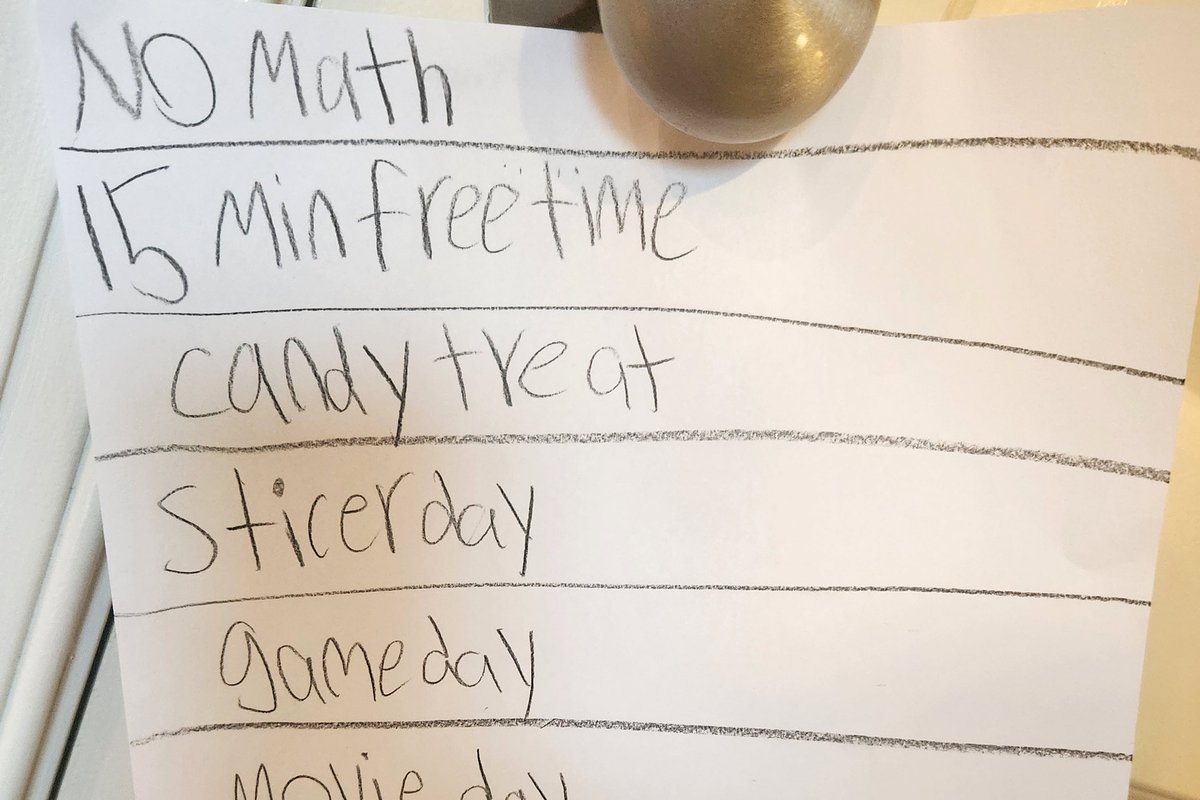
Listening to kids play “school” can be eye-opening. Kristina Fulton's daughter and her friends (3rd grade) created a list of rewards for their “students,” and the first item on the list was “no math.” https://t.co/sRolLinAx8 #edchat
We expect (sometimes demand) student engagement in learning,
BUT
How much time have we spent teaching learners what active engagement looks/feels like?
We assume a LOT & get upset about unmet expectations.
Many unmet expectations are often unspoken & untaught in the 1st place
The traditional mathematics curriculum is a series of disconnected skills that often feel irrelevant and uninspiring. What does this mean for us and our students? @math_fulton discusses integrating #curriculumstoryboards: https://t.co/Z7hDS12i6R #edchat
https://t.co/rMnuxZVPc1
I am excited to share this approach with more educators, helping to design coherent and connected curriculum that engages students in meaningful learning experiences. @CurriculumStory
Engaging in this kind of reflection can transform our classrooms into spaces where understanding is prioritized over memorization, and where mistakes are embraced as valuable learning opportunities.
"Correct answers can mask confusion, just as incorrect answers can hide understanding." — Marilyn Burns
This quote resonates with me and recently sparked a powerful discussion that I facilitated during an inservice session with a group of teachers. It made us pause and consider:
As educators, it’s crucial to reflect on our questioning practices. Are we asking questions that reveal student thinking, or are we stopping at surface-level correctness? When we dig deeper, we uncover the rich, often hidden layers of student understanding—or misunderstanding.
At a school today, teachers used a TOS (Table of Specification) to analyze a test and start revising. When constructing a test, we need to consider the content and cognitive level. It was eye-opening to see this data for one unit on the TOS, leading to fantastic discussions!
For me, thought partners (even virtual ones) are necessary in design work. As an educator, my only career experience is that of a teacher. I find it particularly difficult to design authentic and real-world mathematics tasks without thought partners.
I'm thrilled about this opportunity! It's truly special to be able to combine two of my passions: mathematics education and curriculum design. And, of course, I'm looking forward to discussing it with Allison. https://t.co/aKNPxD0zti