Math by James De Leo, formerly De Leo Tutoring Company, was
established on September 25, 2014, and offers supplemental
education services in the subject of math
Our amazing Nutrition Services team is getting ready for an incredible school year! 🍎 We can't wait to welcome students back with fresh, nutritious, and delicious meals that help fuel learning every day.
#Repost @sausdnutrition
#WeAreSAUSD#SAUSDBetterTogether
📚✏️ Our 4th grade mathematicians are mastering multiplication skills and building confidence every day! From multiplication facts to multi-digit problem solving, students are learning how math connects to the real world. 👏➗✨
#4thGradeMath#Multiplication#Mathematics#STEM #Education
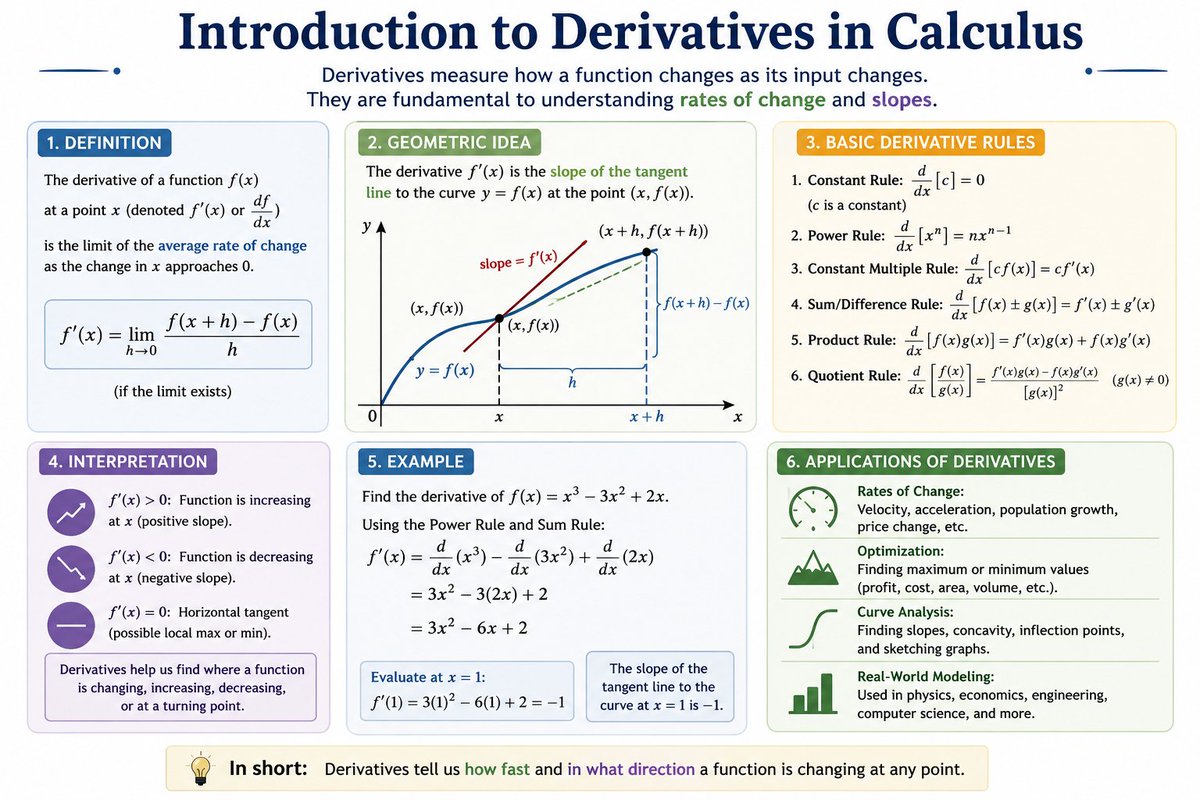
📘 Calculus starts to come alive with the Introduction to Derivatives! From understanding rates of change to finding the slope of a tangent line, derivatives help explain how things move, grow, and change in the real world. 🚀📈
#Calculus#Derivatives#MathEducation#STEM #LearningMath
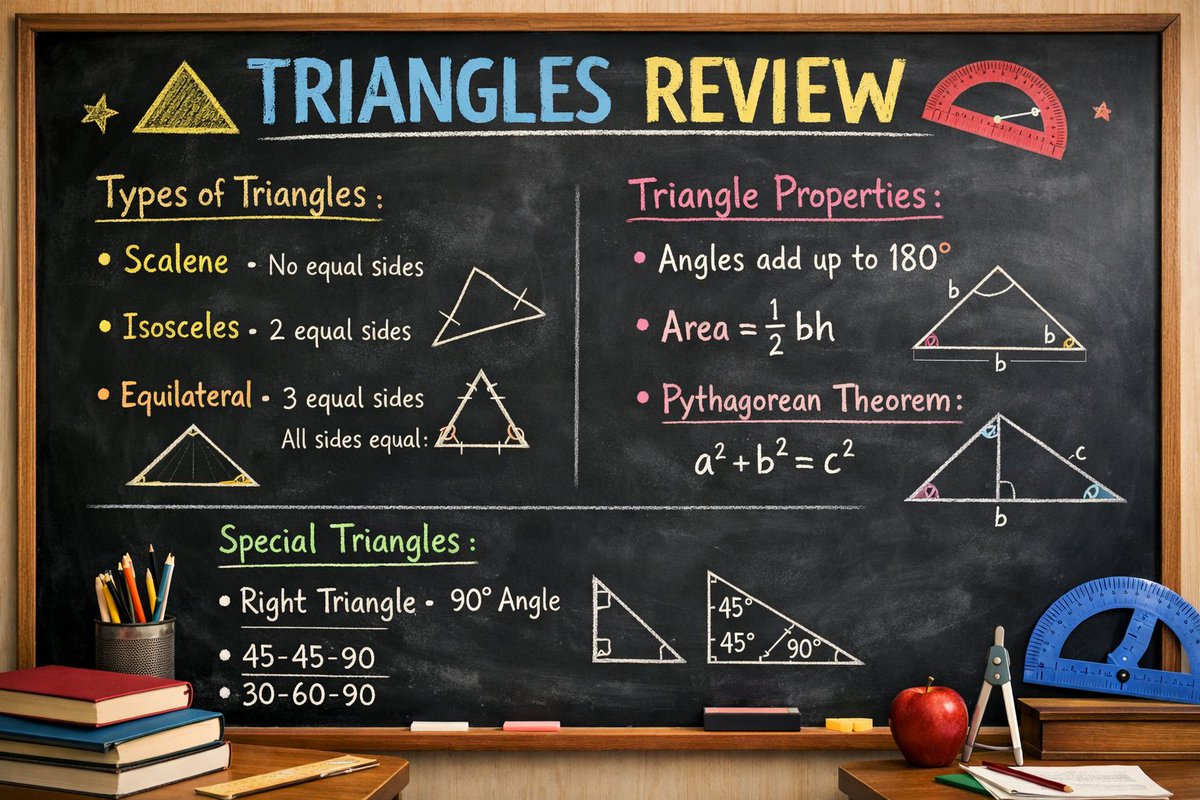
May the 4th be with you! 🚀📐
Today we celebrate the power of math in a galaxy full of possibilities. From angles to algebra, every problem you solve brings you one step closer to mastering the Force of Mathematics.
Keep learning, keep growing, and trust your process.
#MayThe4thBeWithYou #MathByJamesDeLeo #STEM #MathEducation
📈 Unlocking the power of logarithms in Precalculus!
Logarithms help us solve exponential equations, model real-world growth/decay, and make sense of massive numbers 🌍
Think:
logₐ(x) = y ⇔ aʸ = x
From pH levels to finance, logs are everywhere. Stay curious & keep solving! 🔍✨
#Precalculus #MathMatters #STEM
Mastering Two-Variable Linear Inequalities in Algebra 2 means graphing solutions, shading regions, and understanding real-world constraints. 📈
Solve systems, analyze boundaries, and think critically like a mathematician. Every graph tells a story!
#Algebra2#MathEducation #STEM #LinearInequalities #FutureReady
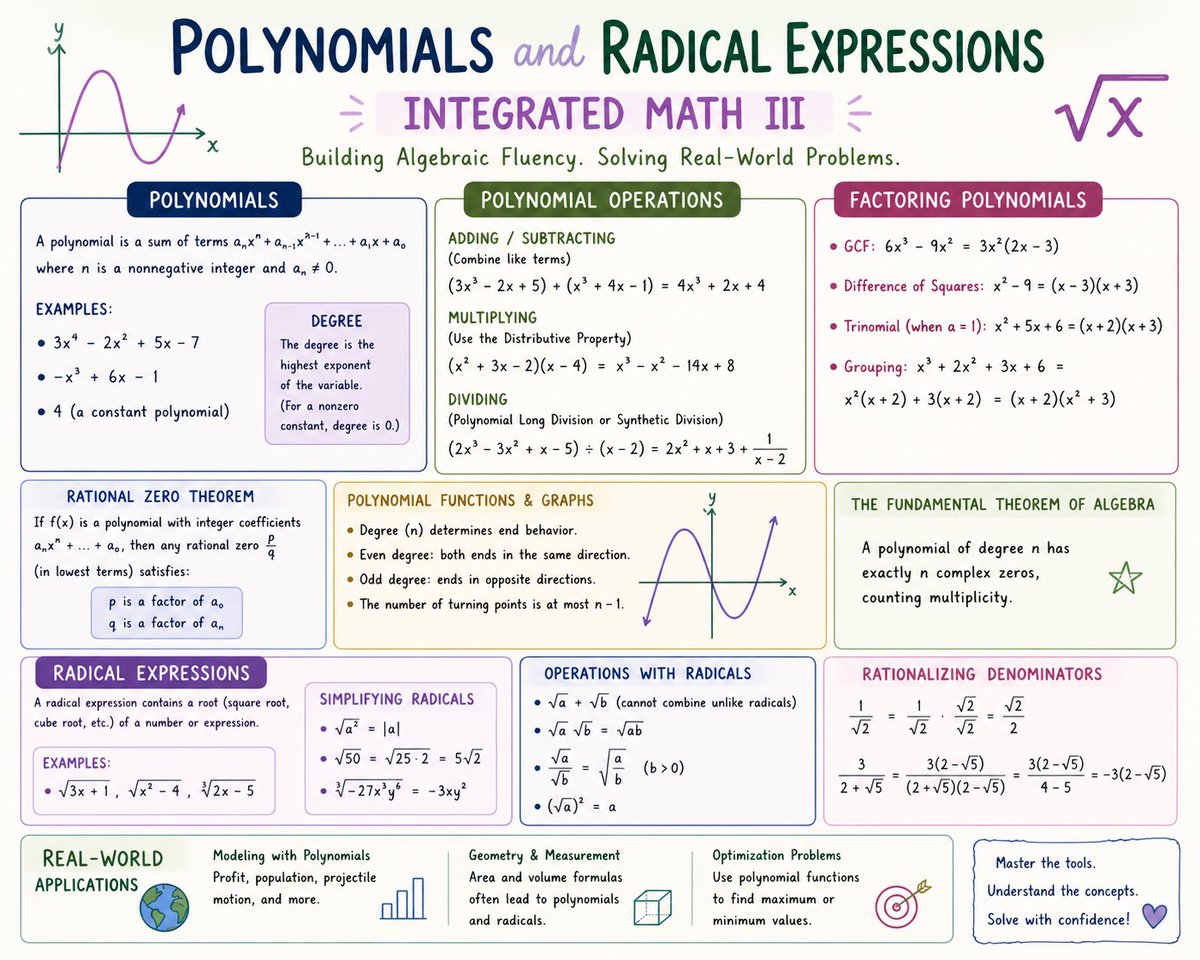
Polynomials and Radical Expressions are where patterns meet power in Integrated Math III! From simplifying radicals to solving polynomial equations, students build the algebra skills needed for higher-level math and real-world problem solving.
#Polynomials#RadicalExpressions
📊 Integrated Math II Spotlight: Function Operations & Transformations 📊
In Integrated Math II, students take their understanding of functions to the next level by exploring how functions can be combined and transformed to model real-world situations.
🔹 Function Operations
Students learn how to add, subtract, multiply, and divide functions, as well as explore function composition. These skills help build deeper connections between algebraic expressions and graphical representations.
🔹 Transformations of Functions
From shifts and reflections to stretches and compressions, students analyze how parent functions change. Understanding transformations allows students to quickly graph and interpret functions without starting from scratch.
✨ Why it matters:
These concepts are essential for modeling real-life scenarios, analyzing patterns, and preparing for higher-level math courses like Pre-Calculus and beyond.
💡 Classroom Tip: Encourage students to connect equations to graphs—seeing how a simple change in an equation impacts the graph builds powerful mathematical intuition!
#IntegratedMath2 #MathEducation #FunctionTransformations #Algebra #STEM #MathClass #DeLeoMath
🔍 What are Linear Inequalities?
Linear inequalities are similar to equations, but instead of an equals sign (=), they use symbols like:
< , > , ≤ , ≥
They represent a range of possible solutions rather than a single value.
🧠 Key Steps to Solve:
Simplify both sides (combine like terms)
Isolate the variable (just like equations!)
Flip the inequality sign if you multiply or divide by a negative
Graph your solution on a number line
🚨 Pro Tip:
Don’t forget—flipping the inequality sign is one of the most common mistakes students make. Practice makes perfect!
📈 Why It Matters:
Understanding inequalities builds a strong foundation for higher-level math and helps students apply math to real-world situations like budgeting, limits, and comparisons.
💬 Teachers, students, and families—let’s keep learning and growing together!
#Algebra1 #MathMatters #SolvingInequalities #MathTeacher #Education #STEM
📊 Exploring Sequences in Integrated Math I! 📊
In Integrated Math I, students are diving into the world of sequences—a foundational concept that helps us recognize patterns, make predictions, and build strong algebraic thinking skills.
From arithmetic sequences (adding the same number each time) to geometric sequences (multiplying by a constant factor), students are learning how to:
✔️ Identify patterns
✔️ Write explicit and recursive formulas
✔️ Solve real-world problems
✔️ Connect sequences to graphs and functions
Why does this matter? Because sequences show up everywhere—from saving money over time 💰 to population growth 🌱 and even technology patterns 📱!
Our students are building the skills they need to think critically, analyze trends, and prepare for higher-level math.
Keep up the great work, mathematicians! 👏📚
#IntegratedMath #MathMatters #Sequences #Algebra #StudentSuccess
📘 8th Grade Math Spotlight: Rational & Irrational Numbers 🔢✨
This week in 8th Grade Mathematics, we’re diving into the fascinating world of rational and irrational numbers—a key concept that helps students build a strong foundation for Algebra and beyond!
🔹 Rational Numbers are numbers that can be written as a fraction (like 1/2, -3, or 0.75). These numbers have terminating or repeating decimals.
🔹 Irrational Numbers cannot be written as a simple fraction. Their decimals go on forever without repeating—like √2 or π!
💡 Students are learning to:
✔️ Identify and classify numbers as rational or irrational
✔️ Convert fractions to decimals
✔️ Understand real-world applications of these number types
✔️ Strengthen critical thinking and problem-solving skills
📈 Why it matters:
Understanding rational and irrational numbers helps students prepare for higher-level math concepts like functions, equations, and real-world modeling.
👏 Proud of our students for embracing the challenge and growing their math confidence every day!
#8thGradeMath #RationalNumbers #IrrationalNumbers #MathMatters #FutureReady #STEMEducation #DeLeoMath
📘 7th Grade Math Spotlight: Fractions in Action!
Fractions are more than just numbers—they’re the foundation for real-world problem solving! In 7th grade mathematics, students dive deeper into understanding how fractions work and why they matter.
✨ This week, we’re focusing on:
➗ Adding & subtracting fractions (including mixed numbers)
✖️ Multiplying & dividing fractions with confidence
📊 Applying fractions to real-life situations like cooking, budgeting, and measurements
🧠 Strengthening number sense through visual models and problem-solving strategies
Our goal is to build not just skills, but confidence and critical thinking. When students truly understand fractions, they unlock success in algebra and beyond!
👏 Keep practicing, asking questions, and challenging yourself—growth happens when we stay curious!
#7thGradeMath #Fractions #MathMatters #MiddleSchoolMath #LearningInAction #MathConfidence
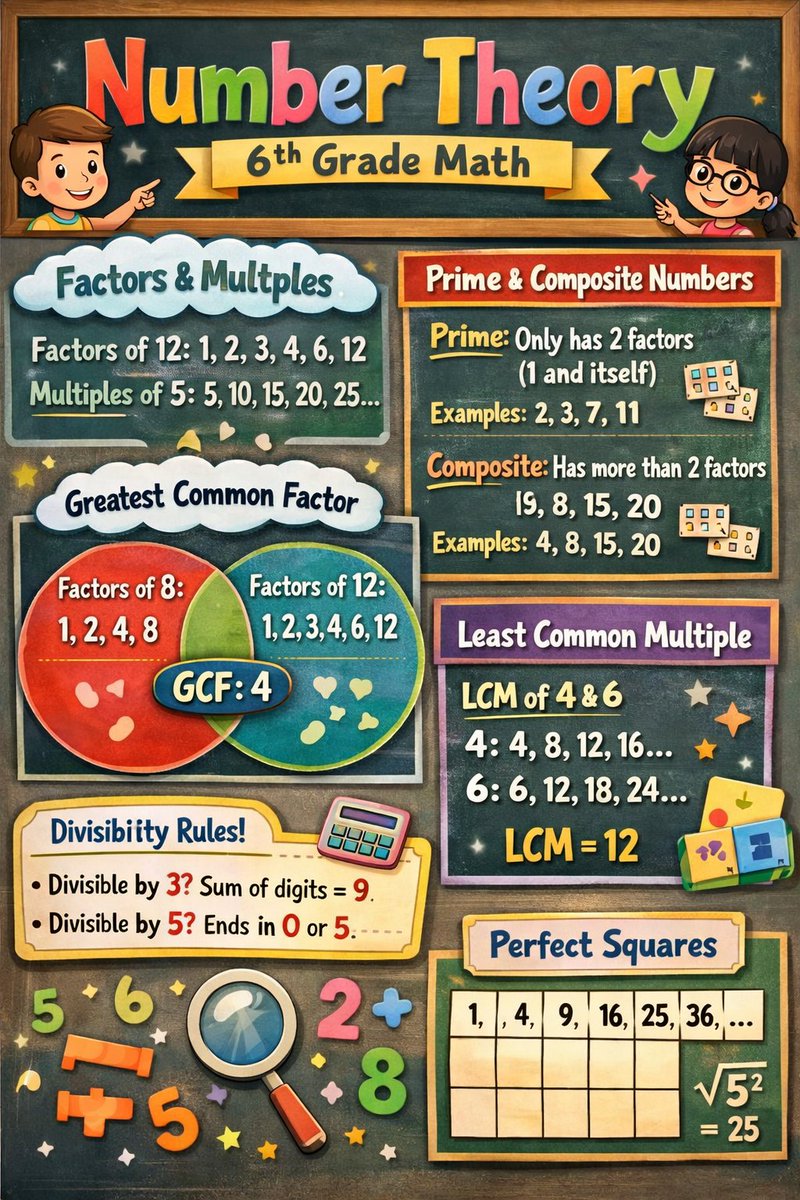
📚✨ Exploring Number Theory in 6th Grade Mathematics! ✨📚
This week, our 6th grade mathematicians are diving into the fascinating world of Number Theory—the foundation of so much of what we do in math! 🔢
Students are building their skills by exploring:
✔️ Prime vs. Composite Numbers
✔️ Factors & Multiples
✔️ Greatest Common Factor (GCF)
✔️ Least Common Multiple (LCM)
✔️ Divisibility Rules
Through hands-on activities, collaborative problem-solving, and real-world applications, students are learning how numbers are connected and how these concepts help us solve complex problems with confidence. 💡
Number Theory not only strengthens computational skills, but also develops critical thinking, pattern recognition, and mathematical reasoning—skills that will support students in Algebra and beyond! 🚀
👏 Shoutout to our students for their hard work, perseverance, and growth mindset as they continue to become confident mathematicians!
#6thGradeMath #NumberTheory #MathMatters #FutureProblemSolvers #DeLeoMath #StudentSuccess
🔢 This week in 5th Grade Mathematics, students are diving into the building blocks of numbers: factors, multiples, and divisibility rules!
👩🏫 What are we learning?
Students are exploring how numbers are connected and how they can be broken apart and built back together:
Factors: Numbers we multiply together to get another number (e.g., 3 × 4 = 12 → 3 and 4 are factors of 12)
Multiples: The results of multiplying a number by whole numbers (e.g., multiples of 5 are 5, 10, 15, 20…)
Divisibility Rules: Quick strategies to determine if one number can be divided evenly by another
🧠 Why it matters:
Understanding these concepts helps students:
✔ Strengthen multiplication and division skills
✔ Build a foundation for fractions and algebra
✔ Develop problem-solving and number sense
🎯 Classroom Activities Include:
Finding factor pairs using arrays and models
Identifying common multiples
Applying divisibility rules (2, 3, 5, 10, and beyond!)
Real-world problem solving
💬 Ask your student:
👉 “What are the factors of 24?”
👉 “What are the first 5 multiples of 6?”
👉 “Is 45 divisible by 5? How do you know?”
Let’s keep building strong mathematicians one concept at a time! 💡📊
#5thGradeMath #MathMatters #FactorsAndMultiples #Divisibility #NumberSense🔢 This week in 5th Grade Mathematics, students are diving into the building blocks of numbers: factors, multiples, and divisibility rules!
👩🏫 What are we learning?
Students are exploring how numbers are connected and how they can be broken apart and built back together:
Factors: Numbers we multiply together to get another number (e.g., 3 × 4 = 12 → 3 and 4 are factors of 12)
Multiples: The results of multiplying a number by whole numbers (e.g., multiples of 5 are 5, 10, 15, 20…)
Divisibility Rules: Quick strategies to determine if one number can be divided evenly by another
🧠 Why it matters:
Understanding these concepts helps students:
✔ Strengthen multiplication and division skills
✔ Build a foundation for fractions and algebra
✔ Develop problem-solving and number sense
🎯 Classroom Activities Include:
Finding factor pairs using arrays and models
Identifying common multiples
Applying divisibility rules (2, 3, 5, 10, and beyond!)
Real-world problem solving
💬 Ask your student:
👉 “What are the factors of 24?”
👉 “What are the first 5 multiples of 6?”
👉 “Is 45 divisible by 5? How do you know?”
Let’s keep building strong mathematicians one concept at a time! 💡📊
#5thGradeMath #MathMatters #FactorsAndMultiples #Divisibility #NumberSense
📚✖️ Multiplication in 4th Grade Mathematics ✖️📚
In 4th grade, multiplication becomes more than just memorizing facts—it’s about building deep understanding and real-world application!
Students are learning to:
✅ Multiply multi-digit numbers using strategies and standard algorithms
✅ Understand place value when multiplying (ones, tens, hundreds)
✅ Solve real-world word problems involving multiplication
✅ Use area models and partial products to break down problems
✅ Build fluency with multiplication facts for faster problem-solving
We encourage students to explain their thinking, show their work, and make connections between different strategies. This helps strengthen both confidence and accuracy! 💡
💬 Try this at home:
Ask your student how they solved a multiplication problem—they might surprise you with a strategy you’ve never seen before!
Let’s keep growing strong mathematicians, one problem at a time! 💪📊
#4thGradeMath #Multiplication #MathMatters #StudentSuccess #LearningTogether
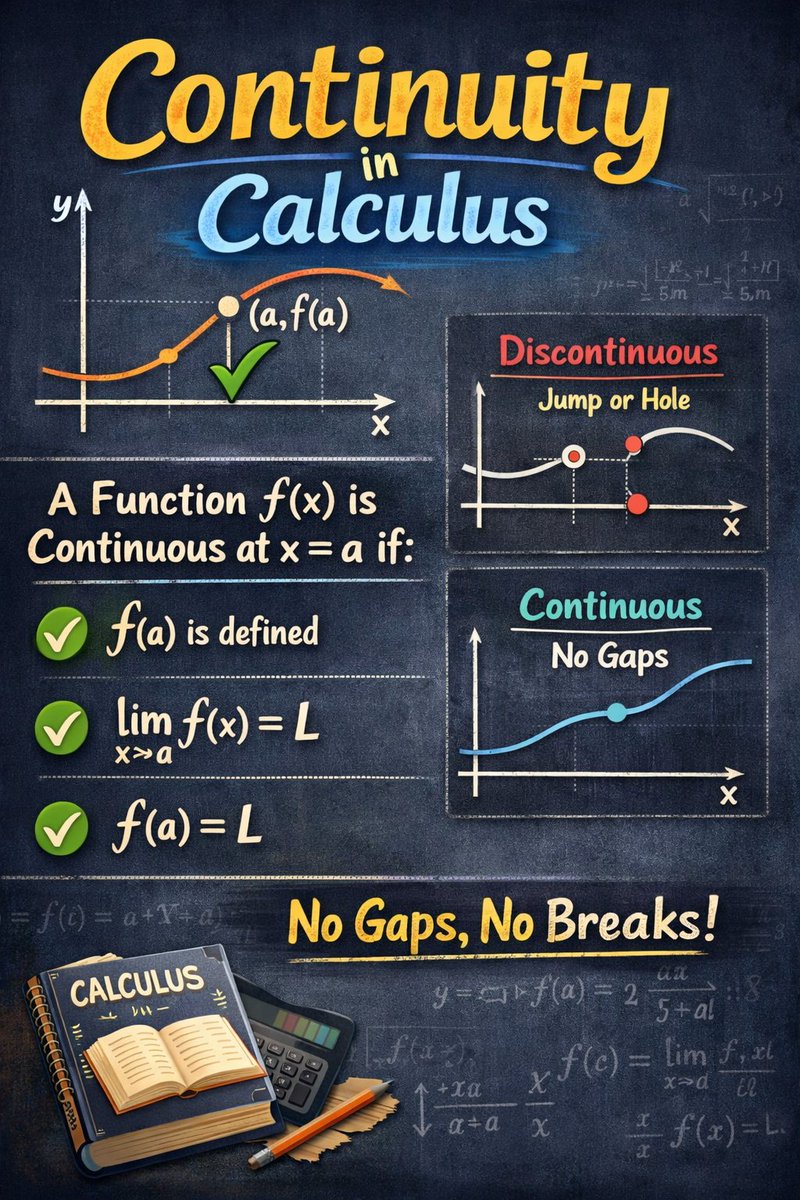
📘 Continuity in Calculus: Keeping It Smooth!
Ever wonder what it means for a function to be continuous? In calculus, continuity is all about smoothness—no jumps, breaks, or holes in the graph.
A function is continuous at a point if:
✔️ The function is defined at that point
✔️ The limit exists as you approach that point
✔️ The limit equals the function’s value
In simpler terms… you can draw the graph without lifting your pencil ✏️
Why does this matter?
Continuity is the foundation for understanding key concepts like limits, derivatives, and real-world applications such as motion, growth, and change.
💡 From tracking a car’s speed to modeling population growth, continuity helps us describe how things flow seamlessly in the world around us.
#Calculus #MathEducation #STEM #Continuity #MathTeacher #LearningMathematics
🚀 Mastering Rational Functions in Precalculus 📊
Rational functions might look intimidating at first, but they unlock a deeper understanding of how algebra and graphs connect in powerful ways!
A rational function is any function that can be written as a ratio of two polynomials, like:
👉 f(x) = (2x + 3) / (x - 1)
📌 Why they matter:
Help us understand asymptotes (vertical & horizontal behavior)
Build strong skills in graphing and transformations
Prepare you for advanced math topics like calculus
🧠 Key Concepts to Know:
✔️ Domain restrictions (what values of x are NOT allowed?)
✔️ Vertical asymptotes (where the function is undefined)
✔️ Horizontal/Slant asymptotes (end behavior of graphs)
✔️ Holes vs. asymptotes (removable vs. non-removable discontinuities)
💡 Pro Tip: Always start by factoring the numerator and denominator—it helps you identify holes and simplifies graphing!
🎯 Whether you're prepping for a test or building your math foundation, understanding rational functions is a BIG step forward.
📣 Need help or tutoring support?
Check out Math by James De Leo for personalized guidance and resources to help you succeed!
#Precalculus #MathHelp #RationalFunctions #MathByJamesDeLeo #STEMEducation #LearnMath
📊 Algebra 2 Spotlight: Systems of Linear Equations
In Algebra 2, students take their problem-solving skills to the next level by learning how to solve Systems of Linear Equations. A system of equations is a set of two or more equations that share the same variables, and the goal is to find the value that makes all equations true at the same time.
Students explore multiple strategies to solve systems, including:
✏️ Graphing – Finding the point where two lines intersect
✏️ Substitution – Solving one equation for a variable and plugging it into the other
✏️ Elimination – Adding or subtracting equations to eliminate a variable
These methods help students understand how different equations interact and how mathematics can model real-world situations such as economics, science, engineering, and data analysis.
In the classroom, systems of equations encourage critical thinking, persistence, and mathematical reasoning as students work through multi-step problems and interpret what their solutions mean in context.
Math is more than numbers—it’s about discovering patterns, making connections, and solving meaningful problems.
#Algebra2 #MathEducation #STEM #SystemsOfEquations #Mathematics #LearningMath #TeacherLife 📚✏️
At #SAUSD, students’ voices matter—even in the age of AI! 📷 Teachers at SAHS & Henninger Elementary are guiding students to use AI tools like Google Gemini while keeping their ideas and integrity front and center.
@sausdcareereducation
#WeAreSAUSD