A client got stuck in the filters last week.
Not because the feature was missing.
Because it wasn’t clear enough.
We watched how they used it, then rebuilt the whole thing to make it simpler.
Same power.
Less thinking.
The product got better the second someone else tried to use it without us in the room.
#buildinpublic
The scariest part of launching isn’t the code.
It’s shipping something that makes total sense in your head and realizing other people might not get it.
So you push the date.
Then you push it again.
Then you tell yourself it just needs one more feature.
I used to do that on previous projects.
The product felt obvious to me because I lived inside it every day.
That doesn’t mean it was obvious to anyone else.
What finally helped:
Ship the version that already solves one real problem.
Watch someone use it without you talking.
Fix what they don’t understand, not what you think is missing.
An imperfect product in someone else’s hands teaches you faster than a perfect one sitting on your laptop.
#buildinpublic
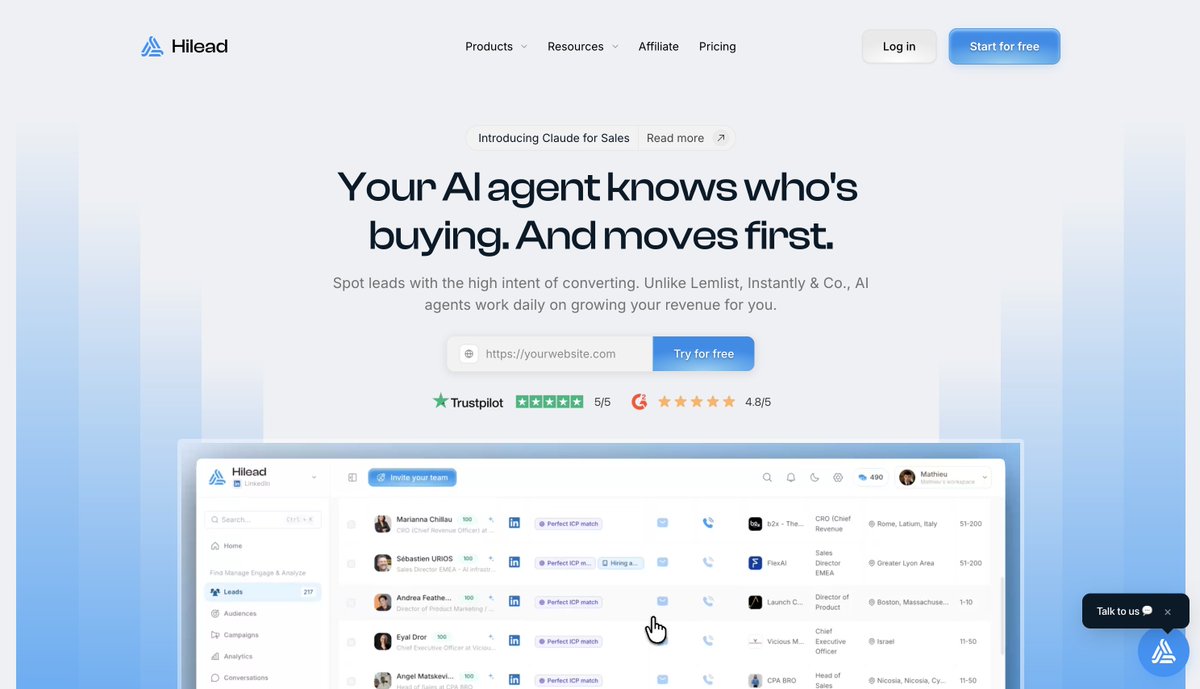
We run Hilead on ourselves.
Not as a demo.
As the actual system we use to find people and start conversations.
Some mornings the dashboard looks thin and I get the same feeling users get: is it the audience, the tool, or just a quiet day?
That’s when the product gets honest.
Hard to bullshit a tool you’re using to grow your own thing.
#buildinpublic
Some days building feels completely invisible.
No feedback.
No clear sign it’s going anywhere.
Then one call happens where the other person sees exactly what you’ve been trying to build.
Those days are the ones that make the quiet ones worth it.
#buildinpublic
Building in public is weird sometimes.
You spend weeks on small things nobody will ever notice, then one call happens where the prospect just gets it immediately.
That’s the part that keeps you going.
Not the features.
Not the roadmap.
The moment someone else sees what you see.
#buildinpublic
My agent found 3,000 leads this month.
This morning it gave me 6.
Instead of letting me think everything was fine, it wrote this:
"6 is thin for SaaS Sales Leaders, and I do not think that is normal. Nothing is blocking this audience. The matching pool was simply quieter than usual today."
By tonight: 76 more.
I've stared at plenty of dashboards showing a bad number with zero context.
No explanation. No flag. Just a low number and you're left guessing if it's the audience, the tool, or the market.
A system that tells you when its own output looks off is a different job entirely.
That's the part nobody builds, because it means admitting your product has quiet days.
"Outbound doesn't work" usually means "I ran it for 4 days."
200 emails, 2 replies, both no, so the channel is dead. Did exactly that for a year.
The sequences that ended up booking meetings were the ones I left running for 6 weeks, fixing one thing at a time
Cold outbound and intent-based outbound look the same on the surface.
Both send messages.
Both use LinkedIn or email.
But the results are completely different.
Cold:
- Start from a static list
- Message people based on title only
- Hope they care right now
- Reply rate usually 5-10%
Intent-based:
- Start from a real signal
- Message only people who showed interest recently
- Join a conversation that already exists
- Reply rates are often 3-4x higher
Most people still optimize the message.
Very few optimize who receives it and when.
Most satisfying parts of the day:
Opening the dashboard and seeing new leads with fresh signals.
No old lists.
No random people.
Just people who actually showed intent recently.
I’ve noticed something while building Hilead.
The features that get the most “thank you” messages are almost never the complex ones.
It’s the boring, practical stuff:
- Readable text
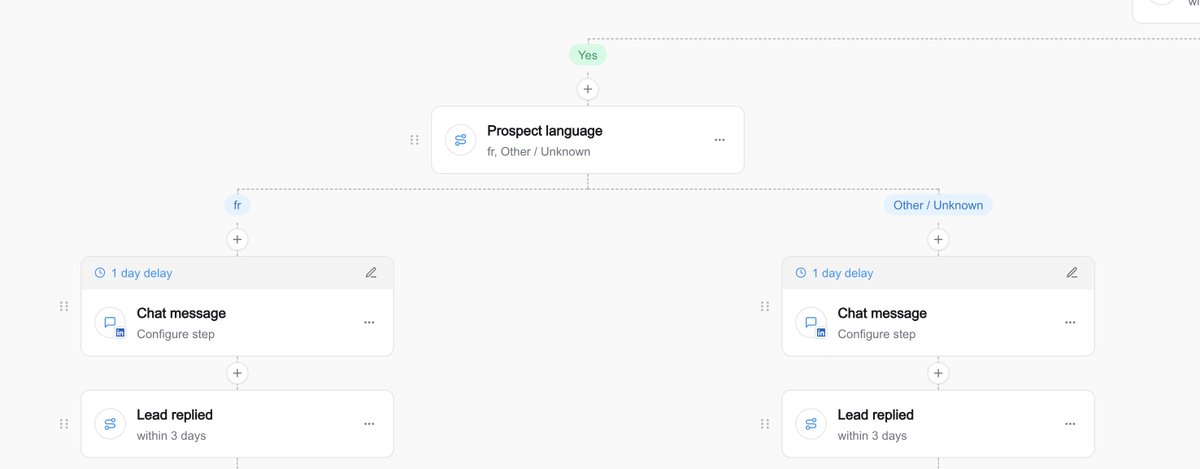
- Language-based conditions
- Simple sequence logic
The flashy features get attention.
The small ones get retention.
New feature we’re testing.
You can now set conditions based on the prospect’s language (works for every language).
French prospects get the message in French.
Everyone else gets it in English (or whatever language you set).
Most of our users want to sell internationally but still feel more comfortable writing in their native language.
This makes it much easier. #buildinpublic
Got multiple comments yesterday saying the text in the tool was too small and hard to read.
Did a quick audit → they were right.
Just increased the font sizes across the interface.
Small change, but it makes a big difference when you use it every day.
#buildinpublic
Had a call yesterday where the prospect spent 20 minutes just clicking around the tool.
No pitch.
No hard sell.
He just kept saying “wait, it does that too?”
Those are the calls that remind you why you’re building.
Here’s the simple system we run:
1. Find people showing real buying signals
2. Only enroll them when the timing is right
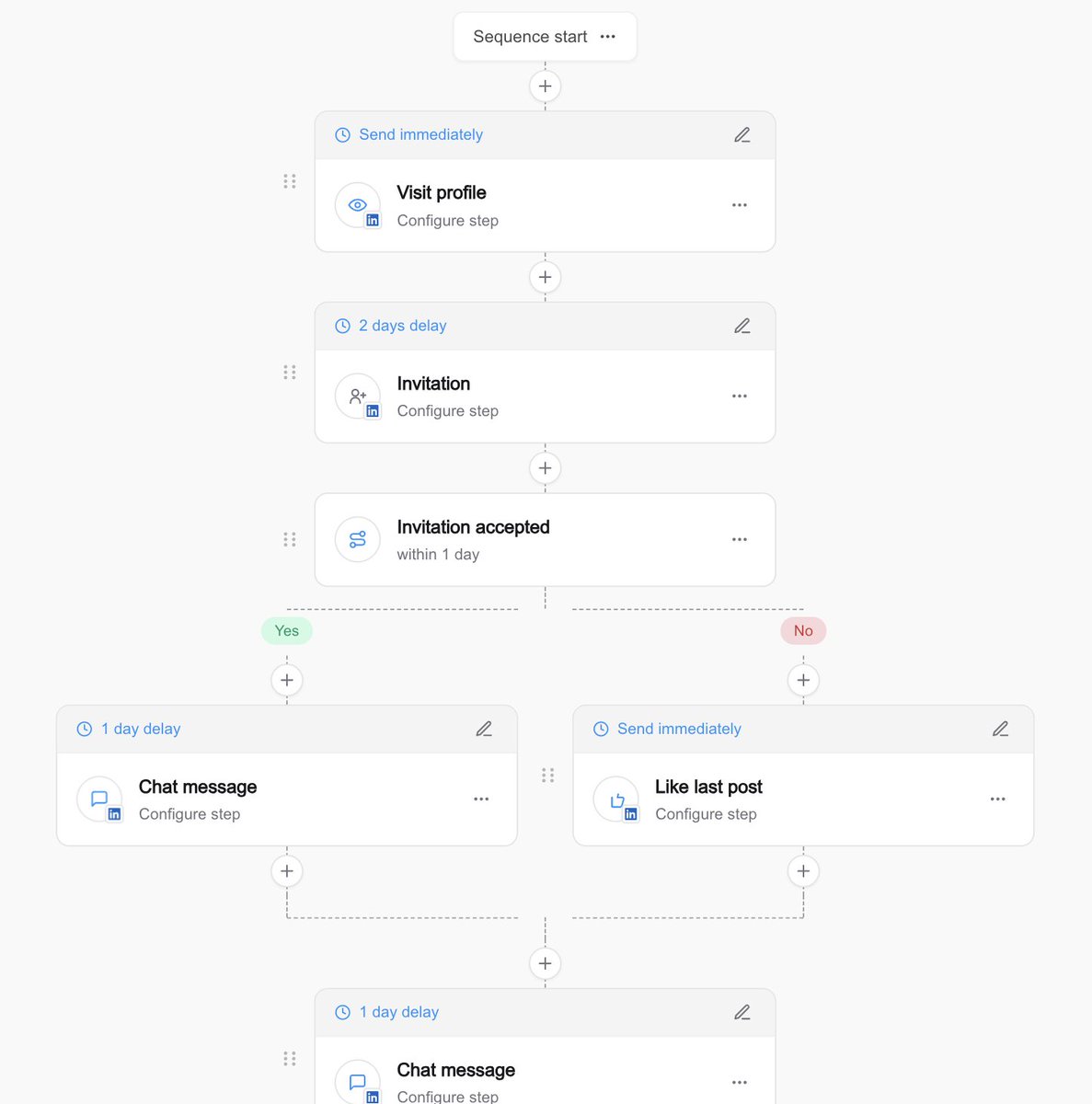
3. Keep sequences slow and conditional (visit → invite → wait → message)
4. Daily limits so accounts stay healthy
5. Let AI handle the copy and optimization
No spray and pray.
No giant static lists full of people who don’t care about your product.
Just better timing + cleaner sequences.
#buildinpublic
Most LinkedIn sequences get accounts restricted because they move too fast.
Here’s the simple logic we use:
Visit profile → Invitation → wait for acceptance → then message or engage
Daily limits + delays = accounts stay safe.
++ days running, zero issues so far.
Only builders shipping know how good that feels.
Just got off a demo call.
The prospect was testing the tool live and genuinely said “wow, insane" when he saw how it worked.
There’s a specific feeling only people who build and sell their own product know.
Hard to describe, but it hits every time.
#buildinpublic
Hilead notifying me like a personal assistant every morning:
→ 68 new matches on the audience
→ 20 prospects just finished the sequence
This is exactly why I’m building this tool.
#buildinpublic