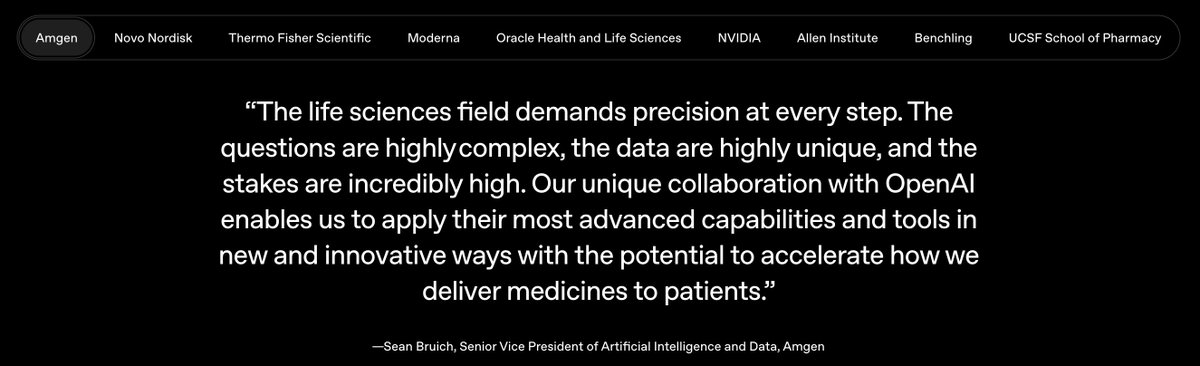
Announcing GPT-Rosalind, our frontier model for life science research.
This model is a step towards one of our most important goals — accelerating science and improving human outcomes.
Excited to work with many amazing partners on deploying and improving this model.
We've just rolled out a HUGE DeepPCB update!
🫡 Better AI Routing quality & differential pair support 💪 Support up to 2,200 pins and 1,000 components for AI Placement
👁️ New rendering with improved interactivity: select components, check net-classes, net priorities, and more
🌚 Dark mode
➕ Edit, add & delete diffy P's (differential pairs) in routing
💤 Improved Zuken support
🎨 Better constraint coloring for AI Placement
Ready to take your PCB design to the next level? Jump into DeepPCB now to experience AI Place & Route like never before at https://t.co/Tp7ZziE2WH🚀
Nucleotide Transformer is a series of genomics foundation models of different parameter sizes and training datasets which can be applied to various downstream tasks by fine-tuning. @instadeepai
https://t.co/R31y1UNU6w
Thrilled to announce Boltz-1, the first open-source and commercially available model to achieve AlphaFold3-level accuracy on biomolecular structure prediction! An exciting collaboration with @jeremyWohlwend, @pas_saro and an amazing team at MIT and Genesis Therapeutics. A thread!
🚀 We’re proud to announce Kyber, our near-exascale supercomputer, built to drive the next generation of AI research!
Powered by NVIDIA H100 GPUs and delivering ~0.5 exaFLOPs in FP16 performance, Kyber increases our computational capabilities tenfold.
Read about how we're pushing the boundaries of AI innovation https://t.co/qqUy1bXJLs
#AI #DeepLearning
Ai Day last week was a blast! I had a great time presenting alongside many colleagues from @instadeepai and @BioNTech_Group, some of our ongoing Bio+AI initiatives.
We made several announcements, introducing Kyber, our new supercomputing cluster (more on this soon), as well as BFN, our new paradigm for generative AI, with competitive results on protein and antibody generation.
During Ai Day we also delivered two live demos of Laila, our new AI agent, including one from BioNTech's TechLab in Mainz, Germany!
To our knowledge, this was one of the first demos of its kind featuring a GPT-4 level AI agent acting in the Lab, interacting with scientists and technicians and helping them enhance their productivity!
Ai Day was a significant moment for all of us, and it was exciting to see both the event and Laila featured by several publications including @FT (https://t.co/rhs9VSxDx3).
Curious to see it in action? Check out the recording of the Laila in the Lab demo below, worth watching and don't miss the end! 😉
🌱 As scientists wrestled with the mysteries of plant genomics, our #AI problem solvers had a daring question, "Can AI make a difference?" @Nature covered how our #research and AI #genomics teams teamed up to search for an answer, with AgroNT – our new #LLM. 📚Read more��� https://t.co/2G0hOZY6fP
🤗 Access our LLM #open-source on : https://t.co/dz7YOz0MTf
Sending a very large public thank you to @BennyChain and colleagues for the beautiful tidytcells Python library.
I wish this had been around a few years ago. Testing it out on a feature and will soon be replacing a lot of code.
https://t.co/2JPDyQKJuW
https://t.co/VZGQJ7d9ng
Thanks for organizing such an inspiring event! Great to connect with the immunology community and explore deep learning applications. The code of our work FrameDiPT for #TCR can be found at https://t.co/yrWTK7OWMZ!
Great turnout at the Hinxton Immunogenomics Day, organised by Wanseon Lee @WanseonL , @AniaLorenc and our own Lisa Dratva, around all things #TCR#MHC! @sangerinstitute @LoKretschmer @ioansarr@SCICambridge
https://t.co/Lwytef88Z7
🚨Call for reviewers!
Please consider serving as a reviewer for @MICCAI_Society - #ASMUS workshop 🔊🏥 and apply here: https://t.co/eHYmDq3FqB
More info: ASMUS ‘24 (https://t.co/5bQ2Zv1Xrz)
* Submissions until June 24
* Reviews due July 10
Honoured to be invited! 💟I will present "A Recycling Training Strategy for Medical Image Segmentation with Diffusion Denoising Models" https://t.co/KbhnMO1sUc (code at https://t.co/E9c0ULzoqS). Looking forward to discuss more about generative models at the panel discussion!
@liza_p_semenova A huuuuge thank you from everyone at @AiMSza for this wonderful course 🌊🇿🇦📈 and the amazing tutorials you also created for @DeepIndaba 🇬🇭!
PS. Please come back 🙏
https://t.co/ZMvOJIobiP
🔊 We have just updated our Patent and Literature Antibody Database (PLAbDab) and Therapeutic Antibody Profiler (TAP) web application.
New PLAbDab: https://t.co/BuctkY7ZP6
New TAP: https://t.co/KAlBa6uPmp
Descriptions of updates to follow... (1/4)
🚨 Upcoming MELBA Symposium on Generative Models (June 11)
Applying diffusion models for medical imaging❓
📢 Spotlight on talk #4 - @mathpluscode
1⃣ recycling approach for image segmentation with diffusion models;
2⃣ experiments on various medical imaging modalities (US, CT, MR)
Thanks for sharing! ❤️ In AI, managers often engage in technical discussions. They might see themselves as contributing members, but their suggestions can be perceived as orders. We need to clarify discussions vs decisions and encourage open dialogue and idea challenges.
I loved this podcast with @elonmusk. He’s just about right.
I especially liked his comment about micromanagement. I too have been told this, but I feel micromanagement is often confused with paying attention to engineering detail. In AI and tech, VPs should be able to sit with engineers and work with them. That’s when the real magic happens. I’m skeptic of “managers-by-slides”.
I also love the approach of setting meaningful goals and committing to them with a growth mindset which accepts mistakes as part of the learning process.
https://t.co/L93wHp0mff
(1/2) The webserver and GitHub for AntiFold, our antibody inverse folding model developed by @magnushoie and @AlissaHummer, have now been released!
Webserver: https://t.co/TIqyGrboVE
GitHub: https://t.co/P0f5nMyPfe
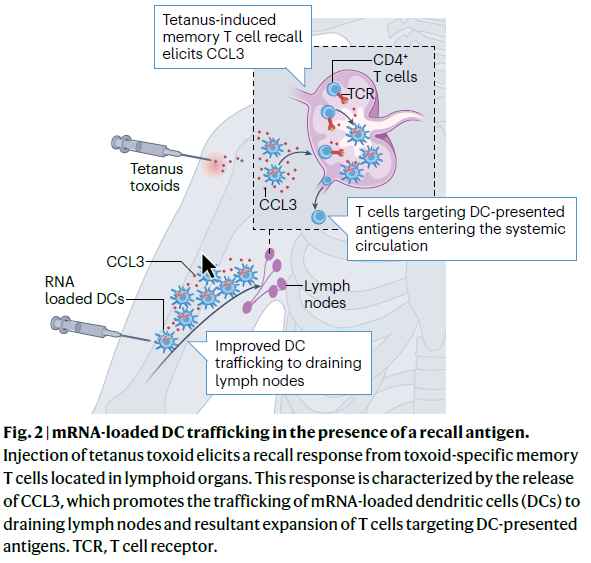
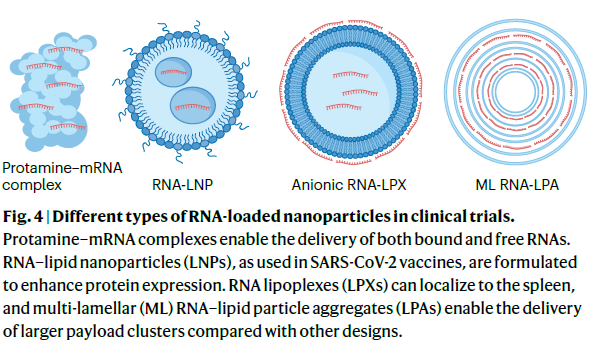
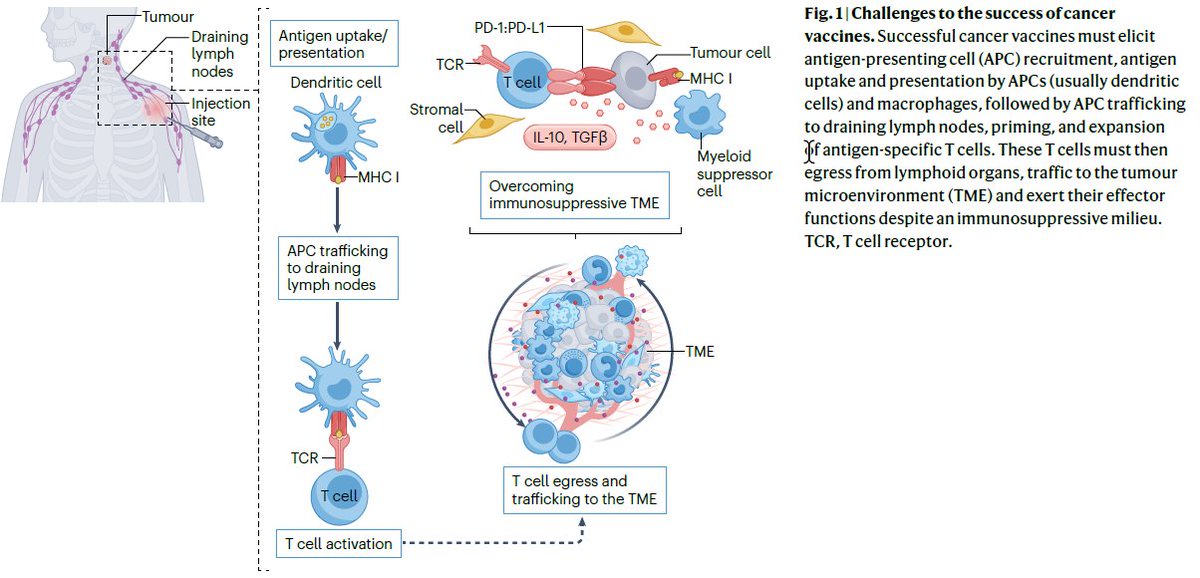
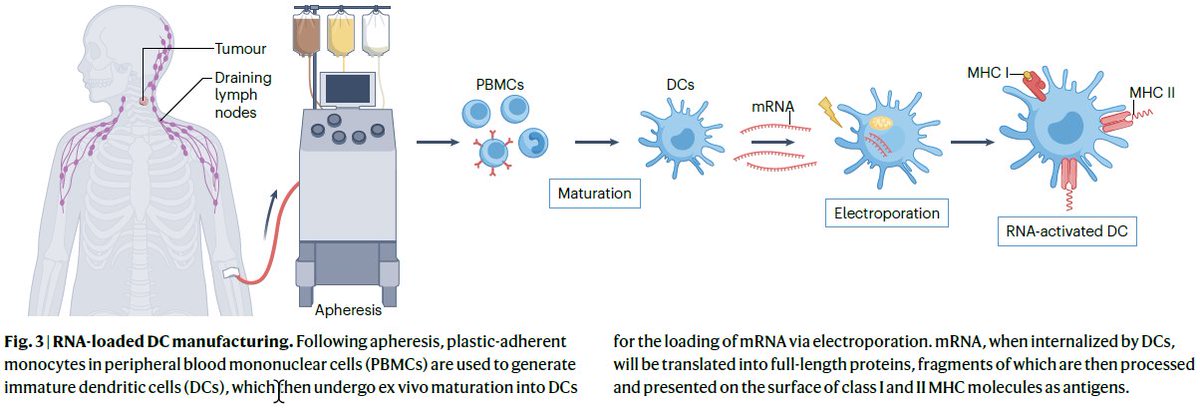
In this new Review, Smita Nair and co-authors discuss cancer mRNA vaccines, including their advantages and advances made in clinical trials using both cell-based and nanoparticle-based delivery methods, as well as future opportunities for optimization: https://t.co/DdVndmmxGW