@Kalshi hi, we would love a filter on notifications that supports limiting notifications by order size. No one wants to be pinged 77x a day that they traded one or two shares.
@PredMTrader Good afternoon, appreciate ur heads up on the mention mkt drops. Re: sports betting, losses are only deductible at 90% right? (With the new tax law). Seems like a tough monetary hurdle to overcome and nightmare if Kalshi doesn’t break it out from regular predictions. Thoughts?
@TheGreekTrader@Polymarket Literally 10x more ppl profitable in predictions than day trading. I can confirm its at least 10x easier. And probably 30x easier than options trading. This is a unique moment in time. I don’t think it lasts.
~97% of day traders lose money.
~85% of crypto traders aren't profitable.
~91% of retail futures/options traders lose money.
~90% of startups fail.
I turned $150 to $84,000 in one year on prediction markets.
I guess I just got lucky and I could do the same thing in a casino.
Because we invest in a company and expect the CEO and board of that company to act only in the best interests of shareholders to grow the company - not raid it like a personal piggy bank or consolidate power so that investors can't force course correction.
$TSLA has no focus, piss-poor execution, and rot from the top. It's a car company whose car sales are in the toilet; plus, they've missed every deadline they've set by themselves by at least half a decade. The Roadster is a decade late. Auto-summon (which was supposed to be solved by 2018) still won't work in most parking lots. They wasted money on getting into solar roofing and executed it like trash. Then they claimed they were an AI company for autonomous driving and ended up last to market and years behind their competition in what will be a commodity priced space. They get into power delivery - which remains their only interesting vertical to this day - but invest so little into it that it's just waiting for a Chinese company to come eat its lunch. And now they're sinking tens of billions on robots that are 15 years behind Boston Dynamics and numerous other companies, with pie-in-the-sky delivery dates for something that still can't even effectively walk itself.
Meanwhile, they've traded at a valuation more than just about every other car company in the world combined and still trade at a 400 multiple in spite of declining revenues and massive capex spend with no roadmap to ROI.
Oh, and did I mention in the midst of all of this that Elmo routinely commits fraud by taking $TSLA assets and giving them to his other, privately held companies with no value provided to shareholders for their lost property? Remember all those $NVDA GPUs Tesla had that he gave to xAI because "Tesla wasn't using them"? And all the while the only thing he's effective at is increasing his pay package in spite of the fact that, for all his "vision", he's an absolute shit CEO that all of his top talent flees the moment the golden handcuffs are off. Him getting cozy w/ MAGA is just icing on top of an already rotten cake.
I had $TSLA since IPO, dumped all my shares last year and never looked back. It's a company that trades on hopium and retail idiocy, not performance or fundamentals.
"But Bawnk, that's like, your opinion, man".
OK, how about this. 80% of profits come from corporate welfare. Remove the corporate welfare and their profit margin is < 1%. GROCERY STORES do 1.5. Once again, power delivery is the only bright spot with 21% margins. Source: Their own 10-K filing.
TL:DR: It's a worthless company.
HTH.
And another great documentary by ARTE.
This two-part ARTE investigation is a brutal reality check for anyone still clinging to the fantasy that Russia is somehow “isolated” or “running out of steam.” What the films show, methodically and with receipts, is that Russia’s war against Ukraine is not being sustained despite sanctions, but through a deliberately constructed global system designed to bypass them. This is not improvisation. It is industrialized, coordinated, and openly contemptuous of Western enforcement.
The first part dismantles the myth of Russian military self-sufficiency. Yes, the Kremlin is still drawing heavily on vast Soviet-era stockpiles, tens of thousands of tanks, missiles, and artillery shells inherited from the USSR. But that is only the foundation. On top of it, Russia has layered a modern weapons program that depends almost entirely on foreign technology. Hypersonic missiles like Kinzhal are paraded as symbols of invincibility, yet their real story is failure, interception, and paranoia. When these “wonder weapons” underperform against Western air defense, Putin does not adapt policy, he purges people. Scientists and engineers are arrested, publicly humiliated, or die in custody, not because they betrayed secrets, but because the regime cannot tolerate reality contradicting propaganda. Fear is not a side effect of the system, it is the system.
At the same time, the documentary exposes how sanctions are systematically hollowed out. Investigators trace Western-made microelectronics inside Russian missiles and drones, parts manufactured in the EU, the US, and Japan. These components do not magically appear. They travel through shell companies, fake transit routes, and permissive jurisdictions, especially via Central Asia and Turkey. Thousands of front companies exist for one purpose only: to keep Russian weapons flying. Sanctions increase cost and friction, but they do not stop the flow, because enforcement is fragmented, slow, and politically timid. The result is grotesque: European technology embedded in weapons that are leveling Ukrainian cities.
The second part widens the scope and shows that Russia is no longer acting alone at all. Iran is not just supplying drones, it has effectively exported a full weapons industry into Russia. The documentary reveals a secret drone factory on Russian soil, built with Iranian expertise, producing hundreds of Shahed-type drones per day. Even more damning is how this factory is staffed. Young women from Ethiopia, Tanzania, and Mali are recruited under false pretenses, trafficked into a militarized industrial zone, forced to work in toxic conditions without protection, and kept silent through confiscated passports and constant surveillance. This is not just a war crime supply chain, it is human exploitation at scale, baked directly into Russia’s military production.
North Korea completes another piece of the puzzle. The film documents, using satellite imagery and weapons forensics, how Pyongyang has supplied Russia with millions of artillery shells, ballistic missiles like the KN-23, and eventually troops. Tens of thousands of North Korean soldiers are effectively being used as disposable manpower to spare Russian urban elites from mobilization. In exchange, Moscow transfers military know-how and strategic technology. This is not desperation, it is strategic outsourcing of death.
Then there is China, the quiet enabler holding the entire structure together. The documentary is careful and devastating here. China does not send soldiers. It does not openly ship weapons. Instead, it allows Russia to survive. Roughly 60 percent of components found in Russian weapons now transit through China or Hong Kong. Chinese companies, often newly created or repurposed, move massive volumes of dual-use goods that keep Russian factories running. Without this permissive Chinese role, the film makes clear, the Russian war machine would stall. Beijing does not need to fire a shot to reshape the battlefield. It simply keeps the taps open.
Overlay all of this with Western political drift and internal division, and the warning becomes impossible to ignore. The documentary shows how Russia, Iran, North Korea, and China are not united by ideology so much as by shared hostility toward democratic constraint. They cooperate because none of them are accountable to voters, courts, or parliaments. The goal goes far beyond Ukraine. It is about forcefully rewriting the international order, proving that borders can be changed by violence, that sanctions can be mocked, and that democratic hesitation is a strategic weakness to be exploited.
Taken together, these films do something most coverage still fails to do. They stop pretending this is a regional conflict or a temporary crisis. They show it for what it is: a coordinated authoritarian war economy facing a fragmented democratic response. The conclusion is uncomfortable but unavoidable. If Europe and its allies do not close loopholes, enforce their own rules, and act like this is a systemic threat, not a talking point, then this axis will keep pushing until something breaks.
The Europeans are too stupid to grasp that it would be better to supply Ukraine with long-range weapons to destroy Russian production facilities—and now this:
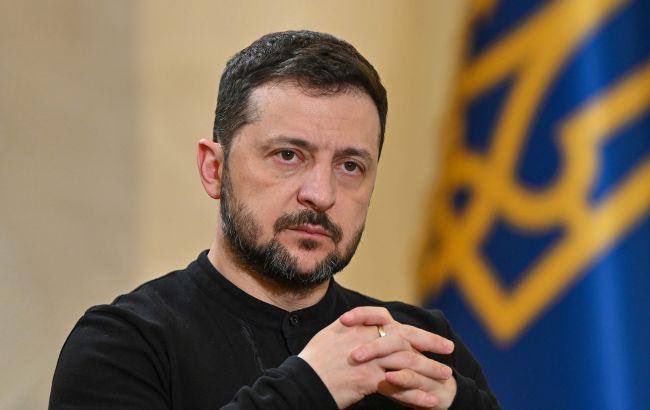
President Zelensky:
I'm negotiating for PAC-3 missiles, which are arriving one day after we almost had a blackout. I can publicly say that this is a delay. And why one day? They should have arrived a month earlier.
The US doesn't give us weapons for free. We may have different opinions on that. This is being paid for by Europe. One tranche for PURL wasn't paid for. The missiles haven't arrived. I'm simply stating what's happening.
I'm sure someone will say again that the Ukrainians should be more grateful.
No, they don't – they're fighting for their lives and, in doing so, defending all of Western Europe against those damn Russians.