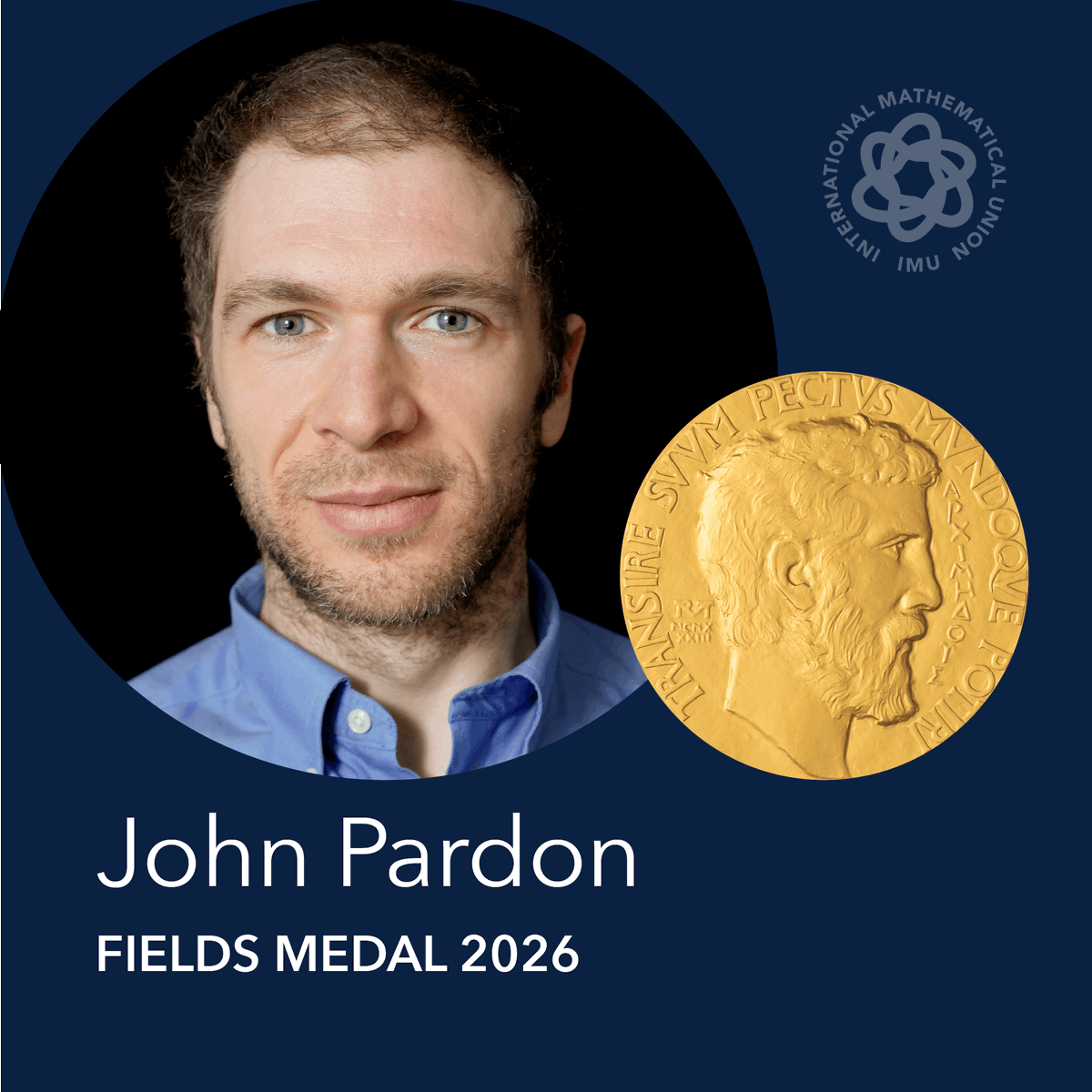
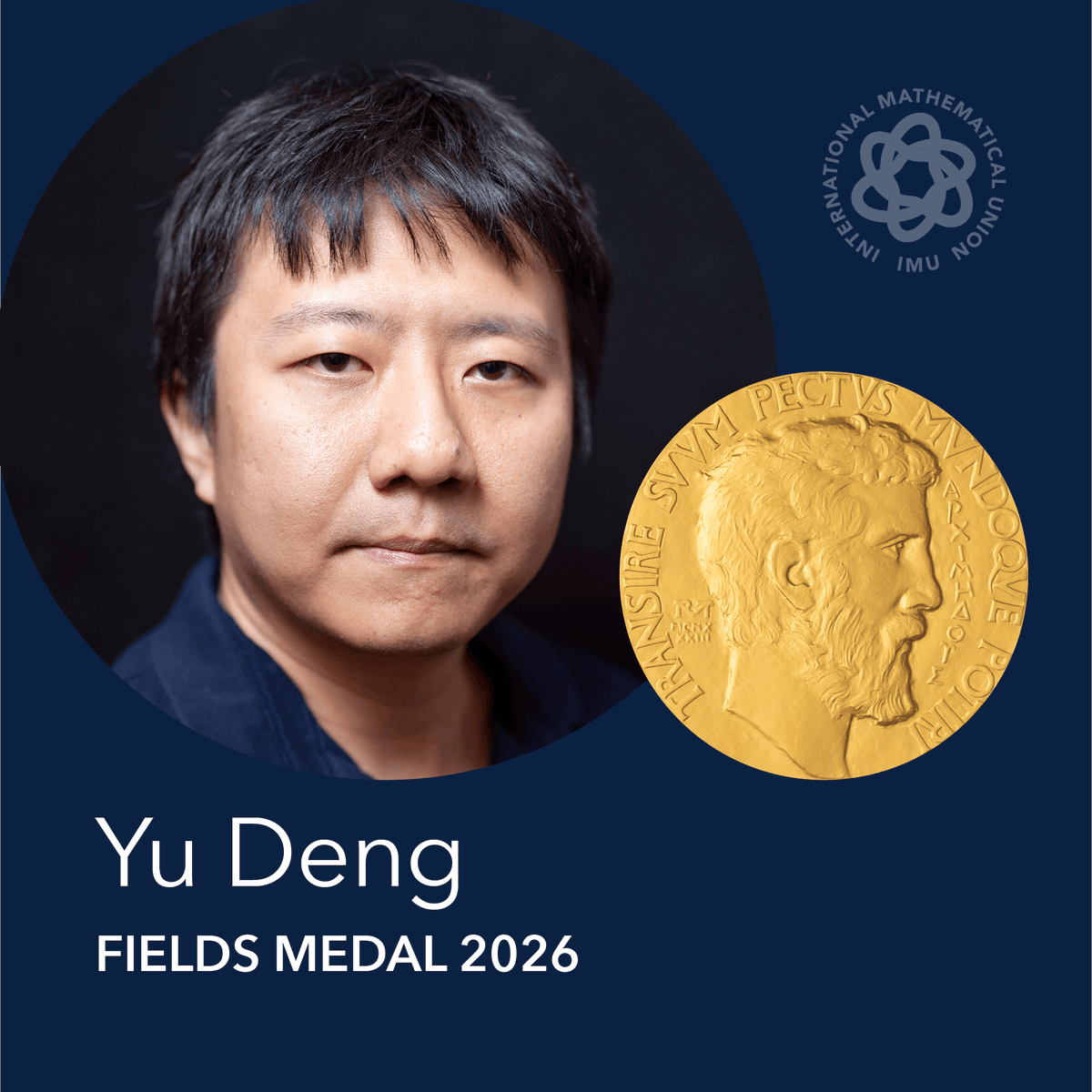
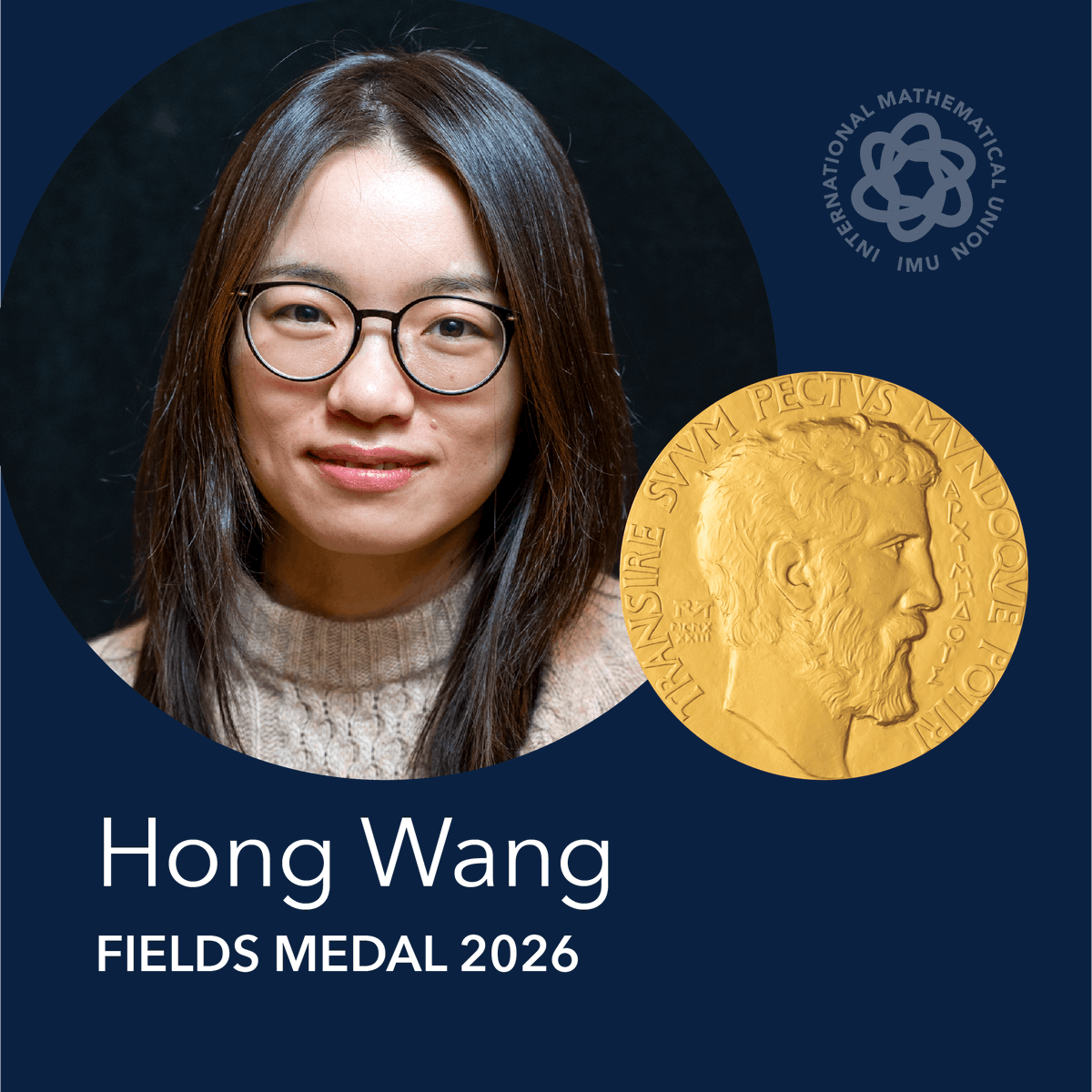
During today's #ICM2026 opening ceremonies, the IMU announced the 2026 Fields Medals recipients:
@UChicago's Yu Deng, @stonybrooku's John Pardon, @UofT's Jacob Tsimerman, and Hong Wang of @nyuniversity and @Institut_IHES.
Read more: https://t.co/oJARAI8I8j
No unlimited resources? No problem! This Friday, I’m delighted to host Prof. Yuxiang Yang from HKU for an in-person IAIC seminar. Come join us on 17 July, 14:00–15:00, at the Level 15 Seminar Room, Connexis North Tower. Online access is also available; details are in the poster.
Few ideas in science live long enough to see their own centenary. The uncertainty principle does — and somehow we are lucky enough to be at the party. Hope you enjoy the journey — and thanks to the 50,000 words limit, otherwise I might never have stopped writing.
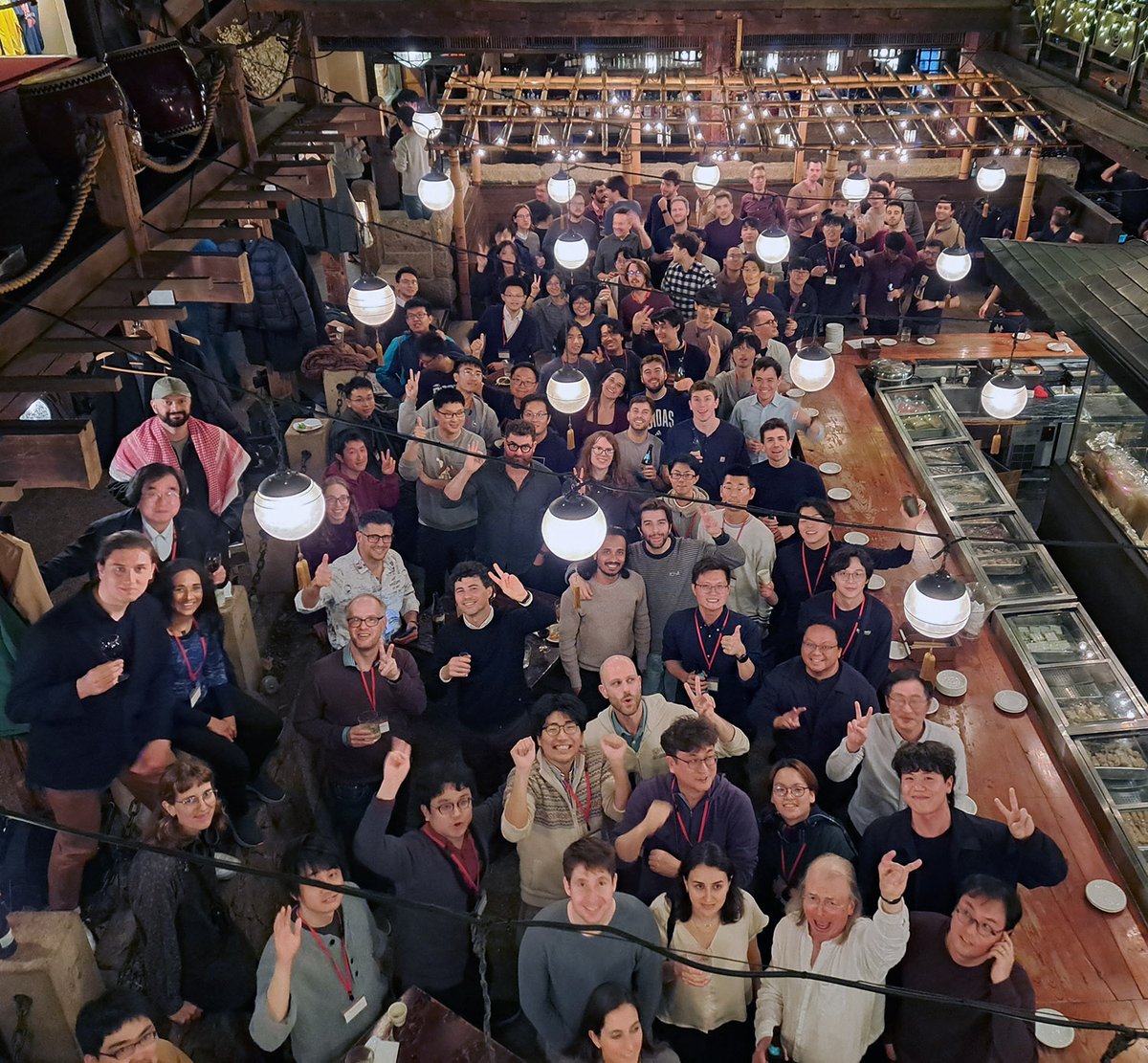
Thanks to all the participants of Quantum Resources 2026 for another successful edition of the workshop! With 140 participants and 5 days of fantastic talks by so many great speakers, it has grown far beyond what I had imagined.
A year ago, we put sample efficiency to the forefront of broadcasting. Now we extend this framework to both approximate and probabilistic regimes, deriving analytic expressions for their minimal sample complexity. (P.S. A paper from Nihombashi during Quantum Resources 2026!)
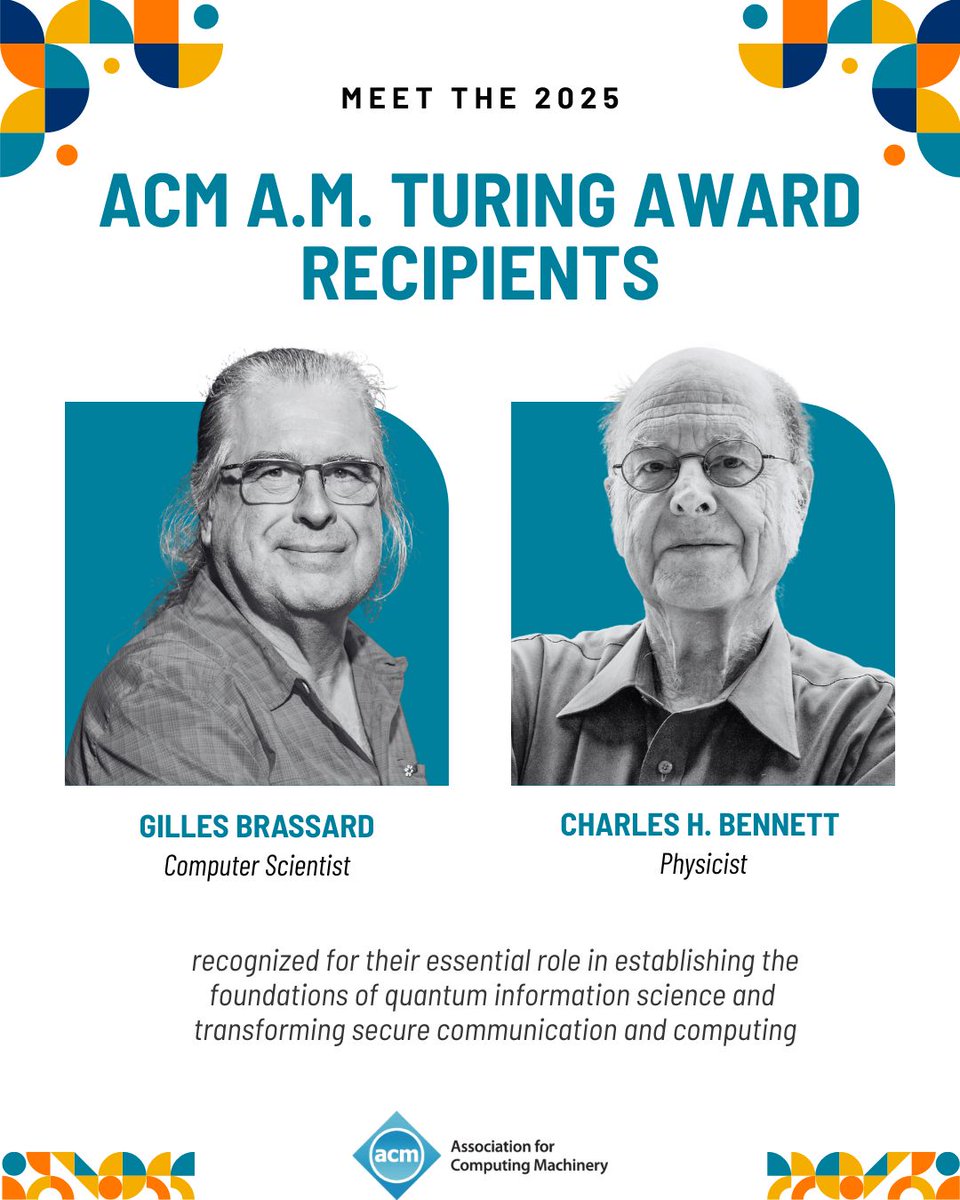
Congratulations to Charles H. Bennett (@IBMResearch) and Gilles Brassard ( @UMontreal) on receiving the 2025 ACM A.M. Turing Award!
🔗: https://t.co/UQ5C1K1kVT
This April, I was fortunate to receive the A*STAR Career Development Fund (CDF) as an independent PI, and as a small return, I set out to write this paper. For friends unfamiliar with high-order quantum theory, consider this a warm invitation to the wonderland of superchannels.
Prof. Chen Ning Yang, a world-renowned physicist, Nobel Laureate in Physics, Academician of the Chinese Academy of Sciences, Professor at Tsinghua University, and Honorary Director of the Institute for Advanced Study at Tsinghua University, passed away in Beijing due to illness at the age of 103. His life stands as a timeless chapter in human history—one that shines not only for China but for the global community of thinkers and innovators. His legacy will live on forever.
This year’s physics laureates’ experiments on a chip revealed quantum physics in action.
A major question in physics is the maximum size of a system that can demonstrate quantum mechanical effects. The 2025 physics laureates conducted experiments with an electrical circuit in which they demonstrated both quantum mechanical tunnelling and quantised energy levels in a system big enough to be held in the hand.
The transistors in computer microchips are one example of the established quantum technology that surrounds us. The 2025 #NobelPrize in Physics has provided opportunities for developing the next generation of quantum technology, including quantum cryptography, quantum computers, and quantum sensors.
Beyond being mathematically more general, why should we care about dynamical resource theories compared to static ones? Here, we address this question within entanglement theory, demonstrating that a dynamical perspective yields practical advantages. @PhysRevLett
The workshop Quantum Resources is back! The next edition will take place in Tokyo in March.
https://t.co/GwoNwzRtkw
Submission deadline: 31 October 2025
Workshop: 16–20 March 2026
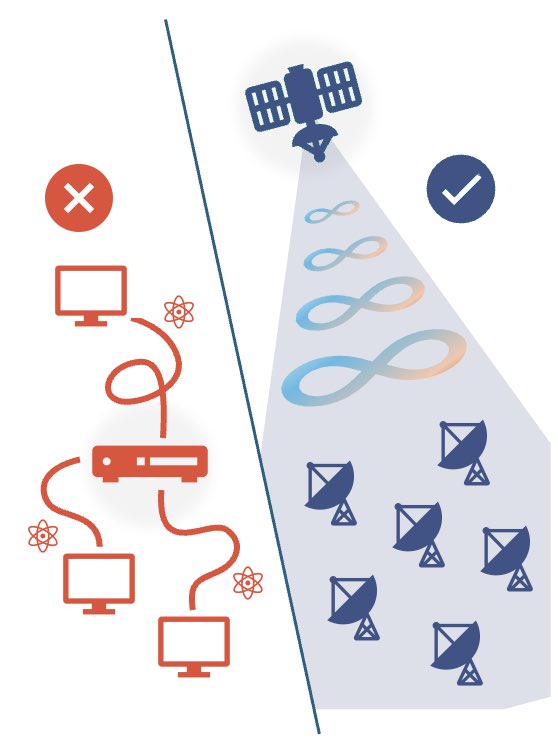
A quantum broadcasting system would end up sending slightly different information to every receiver – and efforts to sidestep this problem are too inefficient for practical use https://t.co/3NIfMrnEbQ
Big thanks to New Scientist @newscientist for interviewing us and covering our recent no practical broadcasting theorem. The version submitted to journals is quite different from our arXiv draft, so for those curious, we recommend checking out the published version.
This week, the University of Hong Kong proudly hosts the Asian Quantum Information Science Conference (AQIS 2025) — one of the world’s most respected annual events in the field of quantum computing, cryptography, and communication.
Running from August 4–8, the conference marks two major milestones: its 25th edition, and the first time ever in Hong Kong. It also coincides with 100 years since the birth of quantum physics, as recognised by UNESCO in 2025.
🔗 More at: https://t.co/xjerV5vBO7
#HKU #香港大學 #UniversityofHongKong
Our no-practical-broadcasting theorem has been accepted by @PhysRevLett and @PhysRevResearch , received scores of 7 from all three AQIS reviewers, and was selected as a long talk at AQIS 2025. If you're in Hong Kong, feel free to join where I’ll present it as the first long talk.
For decades, the no-broadcasting theorem has been a cornerstone of quantum information. Recent advances in virtual operations raised hopes of circumventing this fundamental constraint, but our latest work proves otherwise, even when considering all linear maps.