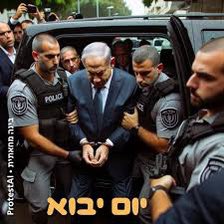
Toliko patnje na bliskom istoku zbog jedne male, iskompleksirane i ultimativno zle genocidalne države ;(
Po svemu sudeći, izvesti će "false flag" da amerika dobije izliku za ponoviti isti scenarij u Iranu kao s Irakom, Libijom, Sirijom... Nadam se da će osovina otpora izdržati!
In the past 15 months, Israel dropped the equivalent of nearly SIX HIROSHIMA NUCLEAR BOMBS over Gaza.
That exceeds the ENTIRE combined bombing over Dresden, Hamburg, London and Tokyo in WWII.
History will be unforgiving.
Divna zemlja, divni ljudi, bili smo tamo 2011. i ovaj tweet je u suštini najbolji kratki pregled situacije u Siriji. Ne vjerujte medijima i zapadnoj, hegemonijskoj propagandi koja "širi demokraciju" po svijetu s ciljem ostvarenja vlastitih geopolitičkih i ekonomskih interesa.
🇸🇾 Aleppo is among the oldest continuously inhabited cities in the world, with a history spanning over 7,000 years. Archaeological evidence of human settlement in Aleppo dates back to the 6th millennium BC, making it a living testament to the resilience of civilization through centuries of change and conflict.
In 1915, my grandparents fled the horrors of the Armenian Genocide and found safety in Aleppo. The city offered them a refuge, a place to rebuild their lives away from the persecution that devastated their homeland. This history is deeply personal for me because Aleppo was also where I was born and raised. I studied in its schools, wandered its historic streets, and absorbed its rich culture. Walking through Aleppo feels like stepping into a historic film. Its ancient walls and vibrant spirit breathe life into its remarkable story.
However, the Aleppo I know has often been misrepresented. Much of what you hear about the war in Syria—especially regarding Aleppo—has been shaped by manipulative narratives designed to manufacture consent for foreign intervention. Since 2011, NATO countries and their allies have engaged in a concerted effort to destabilize Syria under the guise of promoting democracy and human rights. But the real motivations behind their actions tell a different story.
In 2011, following the NATO-led intervention in Libya that resulted in the toppling of Muammar Qaddafi, Syria became the next target. Libya's descent into chaos, including the emergence of an open-air slave market, revealed the devastating consequences of such interventions. With Syria, the goals were strategic and multifaceted. The U.S. and its allies aimed to remove Bashar al-Assad to achieve several objectives:
🚨 Disrupt the "axis of resistance," in which Syria plays a crucial role.
🚨 Dislodge Russia’s presence in the Mediterranean by expelling its fleet.
🚨 Block China's Belt and Road Initiative from extending to the eastern Mediterranean.
🚨 Install a government in Damascus favourable to U.S. and Israeli interests while weakening Hezbollah.
🚨 Facilitate a Qatari pipeline through Syria to Turkey, undermining Russia's Nord Stream projects and securing Europe’s energy supply.
To achieve these ends, NATO, along with Qatar and Saudi Arabia, funnelled military support to radical groups in Syria. Operations were coordinated through two joint military rooms—MOK in Jordan and MOM in Turkey. Tens of billions of dollars worth of weapons was supplied to extremist groups such as ISIS and al-Nusra Front, the same groups often labelled as global threats to peace.
But Aleppo resisted. Unlike other regions, its people largely rejected joining the war against the government. The lessons of Iraq and Libya were fresh in their minds, and the residents of Aleppo recognized the foreign interference driving the conflict. They also had a reason to value stability: under Assad’s leadership, Aleppo had seen significant investment, particularly in advanced industrial cities that transformed the region into an economic powerhouse. This progress posed a threat to Turkey’s ambitions, and in response, Erdogan’s government opened the borders, allowing tens of thousands of foreign fighters to flood into northern Syria, including Aleppo.
In mid-2012, terrorists launched a major offensive on Aleppo. They occupied its suburbs before advancing into the city. During the years of occupation from 2012 to 2016, these groups dismantled Aleppo's industrial infrastructure, smuggling entire factories into Turkey. In 2014, I personally witnessed the devastation in one of Aleppo's industrial zones. The terrorists also imposed a brutal siege on the city's western neighbourhoods, cutting off food, medicine, and even essentials for newborns. Their actions caused immense suffering, leaving families like mine to endure starvation and daily shelling. Funerals became a routine occurrence, as mortars, sniper fire, and "hell cannons" claimed countless lives.
In 2016, the tide turned. The Syrian Army, supported by the Russian Air Force, Hezbollah, and Iranian commanders, broke the siege and liberated Aleppo. However, Western media portrayed this liberation as an “occupation by Assad’s militias” and framed the defeat of the extremist rebels as a loss for "democratic forces." Such narratives ignored the realities on the ground and the genuine relief felt by Aleppo’s people.
After the city’s liberation, reconstruction efforts began, and Aleppo experienced a period of peace. However, new threats have emerged. On November 27, militants in Idlib launched a massive offensive against western Aleppo, coinciding with a ceasefire agreement in Lebanon. The timing of the attack, just hours after Netanyahu’s warning to Assad about “playing with fire” for supporting Palestinian and Lebanese armed struggle, suggests a broader geopolitical strategy at play.
The goal of this offensive appears to be twofold: to overstretch Syrian forces geographically and pave the way for a potential Israeli incursion from the Golan Heights. In recent weeks, Israel has fortified its positions along the Syrian border, installing surveillance technology and mobilizing troops and tanks. While an outright invasion is uncertain, the pressure on Assad is clear. The demands are familiar: distance Syria from Iran, abandon Hezbollah, align with “moderate Arab” states, and normalize relations with Israel.
Despite these challenges, one thing remains certain: Aleppo will not fall again. The resilience of its people and the strength of its defenders ensure that the city will withstand whatever comes next. Aleppo's history is one of survival, and its future will be no different.
Video Credit: @Partisangirl
Julian is free!!!!
Words cannot express our immense gratitude to YOU- yes YOU, who have all mobilised for years and years to make this come true. THANK YOU. tHANK YOU. THANK YOU.
Follow @WikiLeaks for more info soon…