Je m’attendais à vous entendre porter un regard sur les refutations de Nassim Taleb concernant la base statistique qui sous tend les calculs de QI. Il semble conclure que le QI permet de detecter les Frank, mais que le haut QI ne révèle qu’une capacité à remplir des tests de QI… D’ailleurs il augmente quand on s’entraîne :)
Welcome to the most asymmetric trade in modern financial history.
The thread below lays out why. The opportunity exists because capital has chased the AI trade while ignoring the physical assets AI requires to run — assets that have quietly become the best-performing asset class of the decade. Since October 2020 when we first called for the commodity super cycle: QCI Total Return +217%, GSCI Total Return +205%, Gold +140%. NASDAQ trails at +130%. S&P 500 at +85%. The top three are all commodities. Yet oil cannot get out of its own way while copper and the broader atom complex prints fresh highs . That is the dislocation. That is the trade.
Get long. Buckle in. Hang on for the ride.
Forgive the longer posts in this thread — attempting to mimic my old 10-bullet commodity takes. On to it.
@KingBenBabar11@EchodeMayol Si le financier s'arrête, il va bien prendre le pas sur le sportif les amis... Même avec le succès de la délocalisation, les finances du club sont graves dans le rouge... Vous pensez qu'on aurait la même qualité d'effectif avec 25% de budget en moins ?
Ca prouve que les grandes années du RCT ont permis au RCT de former des joueurs qui ont servi l’EDF ensuite.
Maintenant c’est sûr que le RCT de proD2 il attirait moins les prospects en jeunes… Mais ne pas fournir des talents à l’EDF ne veut pas dire que l’EDF joue mal à cause de Toulon. C’est meme grace au niveau prix par le top 14 tous les weekends que notre generation actuelle dorée a tellement progressé par la suite.
@bipop987 Sympa pour Gros, Fickou, Jaminet, Villiere tous titulaires longtemps dans l’équipe qui s’est remise à gagner. Y’a longtemps eu 4 ou 5 joueurs du RCT ou formés au RCT dans le 15 de départ autour d’Ollivon des bonnes années. Nous ne sommes pas Toulouse ok mais pas la honte
Un très bon article prouvant que la subsidiarité n’est pas un trait culturel étranger à la France. C’est, depuis toujours, ce qui rend son armée si résiliente et imprévisible dans les conflits.
Cc @davidlisnard@A_Ardisson
Since some French followers are jumping on me re: my take on Camerone, it's a good time to re-up some of my more nuanced writing about French mil culture.
Try this: https://t.co/S7aVigW3cL
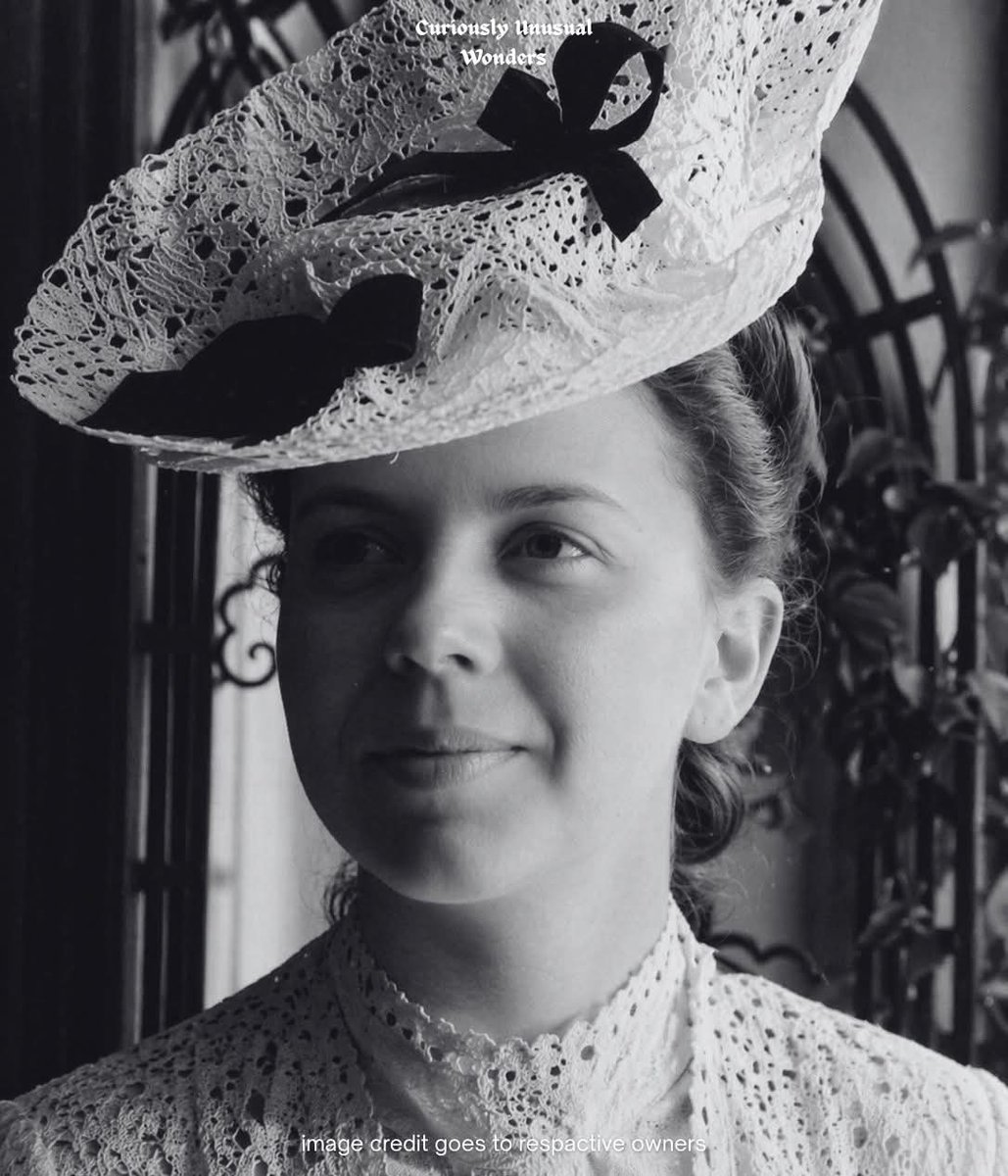
She was never meant to matter.
Just a pretty young translator in the room.
But in 1940, after German forces took control of France, Jeannie Rousseau’s father put his 21-year-old daughter forward to work as an interpreter for Nazi officers in Brittany. She spoke flawless German. She was elegant, warm, and disarming. The officers relaxed around her. Relaxed enough to speak openly, even when they shouldn’t have.
Jeannie listened.
At first, she kept everything in her head. Then she began passing along what she heard to the French Resistance.
In 1941, the Gestapo arrested her on suspicion of spying. Her case went before a military tribunal. But the German officers in Dinard who knew her defended her fiercely. They swore she was innocent. She was released, but ordered to leave the coastal area.
So she went to Paris. And got another job as a translator.
This time, she worked for a French industrial organization that regularly interacted with German military leadership. Then, during a chance encounter on a night train, she ran into an old university classmate named Georges Lamarque. That meeting changed everything. Through him, she joined a spy network known as The Druids. Her codename: Amniarix.
Lamarque remembered her from the University of Paris, where she had graduated top of her class and shown an extraordinary gift for languages. He asked her to work for the network.
She agreed without hesitation.
Her technique was brilliant because it seemed so harmless. She listened carefully. She asked innocent-sounding questions. And when German officers described things that sounded unbelievable, she acted doubtful.
In 1943, some of the same officers she had known in Dinard began discussing a terrifying new weapon. Rockets that could travel enormous distances. Faster than any aircraft. A weapon of terror that could reshape the war.
Jeannie widened her eyes and played the skeptic.
“That can’t be real,” she told them. “You must be exaggerating.”
They pushed back. Said it was true.
She kept doubting them. Again and again.
“What you’re saying is impossible,” she insisted. Over and over, maybe a hundred times.
And that worked.
They became so determined to convince her that one officer actually showed her technical sketches of the rockets. Full details. Plans. Information about the testing site — Peenemünde, on the Baltic coast.
Jeannie wasn’t an engineer. She didn’t fully understand the science.
But she had one gift the officers never suspected:
an almost photographic memory.
She memorized it all. The figures. The dimensions. The descriptions. Every important detail. Then she repeated everything, word for word, to her Resistance contacts. Those reports were passed to British intelligence in London.
What she uncovered was staggering.
Germany was developing the V-1 and V-2 rockets — weapons capable of striking British cities from hundreds of miles away. Weapons that could slaughter thousands of civilians.
British intelligence officer R. V. Jones received her reports. When he asked who the source was, he was told only that it came from “a young woman, the most remarkable of her generation.”
And her information changed the course of the war.
In August 1943, Britain sent 560 bombers to attack Peenemünde. The strike disrupted the Nazi rocket program. It slowed production. It interrupted testing. And it saved thousands of lives.
Jeannie kept working through 1944. She traveled deep into Germany with French industrialists, watching, listening, and reporting everything back. British intelligence was so impressed by her accuracy that they arranged to bring her to London for an in-person debrief. They called her a “human tape recorder.”
The extraction was set for spring 1944, from the town of Tréguier in Brittany. But the French agent assigned to guide the team through the minefields was captured at the rendezvous point.
The mission collapsed.
Her cover was blown.
The Gestapo arrested her and sent her to Ravensbrück concentration camp. Then to Torgau. Then to yet another camp, each worse than the one before. She spent the final year of the war being moved through three concentration camps.
And still, she said nothing.
She never revealed what she had done. Never gave up the intelligence she had gathered. Not as her body weakened. Not as tuberculosis consumed her. Not as starvation brought her close to death.
When the Swedish Red Cross liberated her in 1945, she was barely alive.
She slowly recovered in a sanatorium in Sweden. There she met Henri de Clarens, a survivor of both Buchenwald and Auschwitz. They later married and had two children.
After the war, Jeannie worked as a freelance interpreter for the United Nations and other organizations. She stayed away from attention. She avoided journalists. She avoided historians. For decades, most people barely knew her story.
In 1993, she accepted the CIA’s Agency Seal Medal. In 1998, she finally agreed to speak with Washington Post journalist David Ignatius. It was the first time she had truly opened up to a reporter.
He asked her why she had done it.
Why she had risked everything when so many others kept their heads down.
She seemed almost puzzled by the question.
“It wasn’t a choice,” she said. “It was what you did. At the time, we all thought we would die. I don’t understand the question. How could I not do it?”
France had already made her a member of the Legion of Honor in 1955. In 2009, she was elevated to grand officer. She also received the Resistance Medal and the Croix de Guerre.
Jeannie Rousseau de Clarens died in August 2017 at 98 years old.
For most of her life, she insisted her role had been small.
“I was one small stone,” she said.
But that small stone helped stop rockets from raining down on London.
That small stone helped save thousands of lives.
That small stone was a 21-year-old woman who pretended not to believe what she was hearing — and then remembered every word.
So if you’ve ever wondered what a person does when courage is the only path left, Jeannie gave the answer long ago:
You do what must be done.
You don’t stop to ask why.
You just do it.
Thread sur la leçon amère en IA et son application à la gestion de l’Etat.
1/15
En 2019, Richard Sutton, pionnier de l’apprentissage par renforcement, a publié « The Bitter Lesson ». Il y résume 70 ans de recherche en IA en une vérité inconfortable : les méthodes générales qui exploitent la puissance brute du calcul (recherche + apprentissage) sont de loin les plus efficaces.