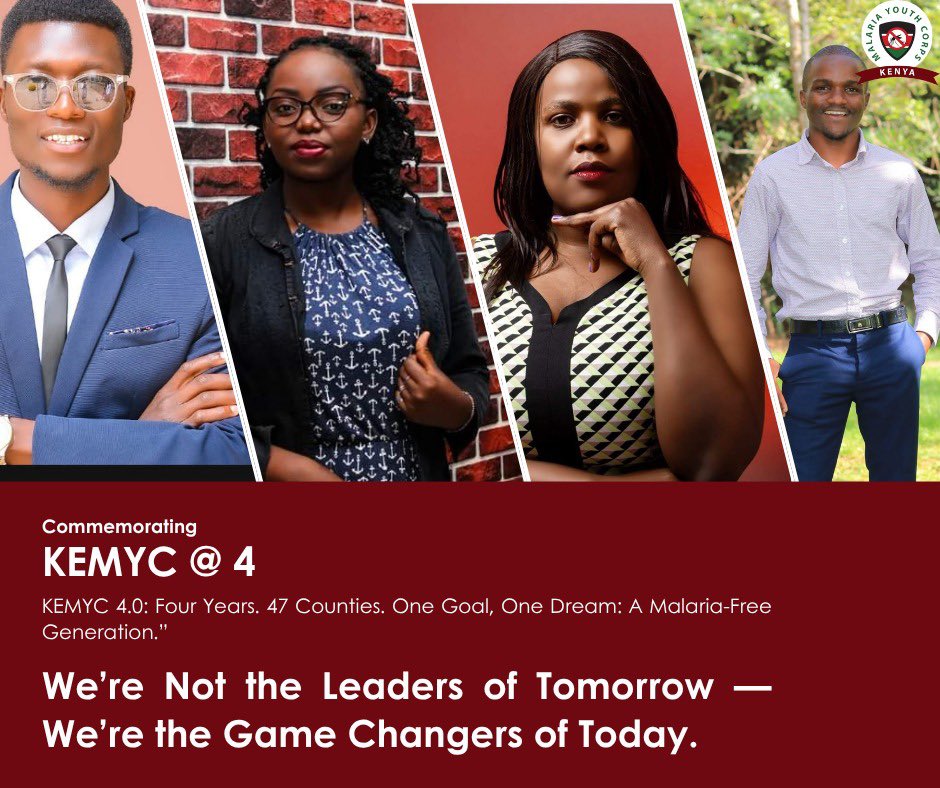
Marking 4 incredible years of youth-led action!
Across all 47 counties, united by one mission: ending malaria for good.
We’re not waiting for the future —
We are the change-makers of now. 💥🙌🏽
#MyKEMYCStory
We’re thrilled to kick things off by introducing you to Agrimatrix, a dynamic force in the agricultural sector dedicated to transforming the industry through upskilling, innovation, and opportunity creation. Our mission is to empower agri-minds—students, professionals, and businesses alike—by bridging the gap between talent and industry needs. Today, we’re excited to share who we are, what we stand for, and the incredible team driving our vision forward
Strong public health systems save lives. Commonwealth leaders, countries & communities must boost sustainable financing, especially for malaria & neglected tropical diseases. Together, we have #ThePowerOfEveryONE to achieve #ZeroMalaria#InvestInHealth#PowerUp
Young people are leading the way in health advocacy, but to make a lasting impact, we need the right resources. It’s time to include us in decision-making! #PowerUpHealth#CommonwealthDay#ZeroMalariaYouthKe
A common statement is made in all enerepreneurship communities. Entrepreneurship is all about risks. How accurate do you think this statement is? Lets look into it you can as well share your thoughts
Risk as a Central Component:
Financial Risk: Entrepreneurs often invest personal resources or take on debt to fund their ventures, with no guaranteed return. The risk of losing this investment is a real concern.
Market Risk: There's the uncertainty of whether there will be a market for the product or service, or if the market will evolve in a way that makes the business obsolete.
Operational Risks: These include risks related to supply chain disruptions, employee turnover, or scaling operations too quickly or slowly.
Beyond Just Risk:
Innovation and Opportunity: Entrepreneurship is also about seeing opportunities where others see obstacles. It involves innovation, creativity, and the ability to foresee or create market needs. While this involves risk, it's equally about vision and proactive problem-solving.
Management of Risk: Successful entrepreneurs don't just take risks; they manage them. This includes strategic planning, market research, risk assessment, and having contingency plans. Tools like SWOT analysis (Strengths, Weaknesses, Opportunities, Threats) are pivotal in this process.
Learning and Adaptation: Entrepreneurship often involves learning from failures. The ability to pivot or adapt business strategies based on feedback, market changes, or failures is crucial. This aspect isn't just about the risk but the growth mindset.
Risk Mitigation:
Diversification: Many entrepreneurs mitigate risk by diversifying their investment or business interests rather than putting all resources into one venture.
Collaboration and Networking: Building partnerships, seeking mentorship, or leveraging networks can reduce some risks by sharing knowledge, resources, or markets.
Lean Startups: Modern entrepreneurial approaches like the lean startup methodology advocate for building minimum viable products (MVPs) to test market fit with minimal initial investment, thus managing risk exposure.
Cultural and Contextual Factors:
Ecosystem Support: In places with strong entrepreneurial ecosystems (like Silicon Valley), the perceived and actual risks can be lower due to access to capital, mentorship, and a culture that supports failure as a learning step.
Risk Perception: Cultural attitudes towards risk, failure, and success can influence how entrepreneurs approach risk. In some cultures, failure is seen as a learning opportunity, reducing the fear factor of risk.
Conclusion: While risk is undeniably a core component of entrepreneurship, stating it's "all about risks" might be an overstatement. Entrepreneurship also involves opportunity recognition, innovation, strategic management, and resilience. A more accurate depiction might be that entrepreneurship involves navigating risks intelligently, balancing them with innovation, and learning from both successes and failures. Thus, the statement holds truth in its acknowledgment of risk but falls short in capturing the full spectrum of entrepreneurial activities and mindset.
Subject: New Year 2025 Message from the Executive Director
Dear Mision malaria Free Family,
As we step into the year 2025, I want to take a moment to celebrate the incredible achievements we accomplished together in the past year. Your dedication, resilience, and unwavering commitment to advancing malaria eradication have been truly inspiring.
This year presents a fresh opportunity to strengthen our resolve in addressing global malaria challenges. Let us continue to innovate, collaborate, and create impactful solutions that drive malaria Free society and protect our planet
On behalf of the entire leadership at MMF, I extend my heartfelt gratitude for your hard work and enthusiasm. May this year bring you good health, immense joy, and even greater success in all your endeavors. Together, we will make 2025 a year of groundbreaking progress and meaningful change.
Happy New Year!
Warm regards,
Ouko Reagan Jowi
Executive Director, MMF
As start of a new year, lets learn something
*Volatile Markets vs. Predictable Markets: Building a Product for Both*
Building a product for both volatile and predictable markets requires a thoughtful approach. Here are some key considerations:
Volatile Markets
1. *Flexibility*: Design your product to be adaptable to changing market conditions.
2. *Risk Management*: Implement features that help mitigate risks associated with market fluctuations.
3. *Real-time Data*: Integrate real-time data feeds to enable swift decision-making.
4. *Scalability*: Ensure your product can scale quickly to respond to sudden changes in demand.
5. *Scenario Planning*: Develop scenarios to anticipate potential market shifts and adjust your product accordingly.
Predictable Markets
1. *Efficiency*: Optimize your product for efficiency, as predictable markets often prioritize cost savings.
2. *Reliability*: Focus on building a reliable product that delivers consistent results.
3. *Long-term Focus*: Develop a product that can withstand the test of time, with a focus on long-term sustainability.
4. *Standardization*: Establish standardized processes and features to ensure consistency.
5. *Customer Loyalty*: Foster strong customer relationships, as predictable markets often reward loyalty.
Building for Both Markets
1. *Modular Design*: Design your product with modular components that can be easily adapted or replaced.
2. *Configurability*: Allow customers to configure your product to suit their specific needs.
3. *Data-Driven Insights*: Provide data-driven insights to help customers make informed decisions, regardless of market conditions.
4. *Agile Development*: Employ agile development methodologies to quickly respond to changing market conditions.
5. *Customer Feedback*: Continuously gather customer feedback to ensure your product meets the evolving needs of both volatile and predictable markets.
Good for both the environment and your (human) health. Plastic pollutes the environment but also causes cancer as it finds its way into human blood, food, air and fluids/drinks.
📣The RAIN Challenge phase III is now open!
Are you working to transform agriculture in East Africa? Submit your sustainable solution for a chance to receive tailored mentoring and a grant of up-to USD 50,000💰!
👉Apply Now: https://t.co/Mqam4H3CVf
*The Power of Knowing the Problem You're Solving*
In today's fast-paced business landscape, it's easy to get caught up in the excitement of launching a new product or service. However, in the rush to market, many entrepreneurs and business leaders overlook a crucial step: truly understanding the problem they're trying to solve.
*Why Defining the Problem Matters*
Knowing the problem you're solving is the foundation upon which successful businesses are built. When you deeply understand the pain points and challenges your customers face, you can:
1. _Create targeted solutions_: By understanding the root causes of the problem, you can develop solutions that address the specific needs of your customers.
2. _Differentiate yourself from competitors_: When you have a clear understanding of the problem, you can identify areas where your competitors are falling short and create a unique value proposition.
3. _Build a loyal customer base_: Customers are more likely to become loyal advocates for your brand when you demonstrate a deep understanding of their needs and pain points.
4. _Drive innovation_: A clear understanding of the problem can lead to innovative solutions that disrupt markets and create new opportunities.
*How to Define the Problem*
Defining the problem you're solving requires a combination of research, empathy, and critical thinking. Here are some steps to help you get started:
1. _Conduct customer research_: Talk to potential customers, gather feedback, and analyze data to understand their pain points and challenges.
2. _Empathize with your customers_: Put yourself in your customers' shoes and try to understand their thoughts, feelings, and motivations.
3. _Analyze the market_: Research your competitors, industry trends, and market analysis to gain a deeper understanding of the problem.
4. _Define the problem statement_: Based on your research, create a clear and concise problem statement that outlines the specific challenge you're trying to solve.
*Real-World Examples*
Companies that have successfully defined the problem they're solving include:
1. _Uber_: Identified the problem of inefficient and unreliable transportation options, and created a platform that connects riders with drivers.
2. _Airbnb_: Recognized the problem of limited and expensive accommodation options, and created a platform that allows individuals to rent out their properties.
3. _Warby Parker_: Identified the problem of expensive and inaccessible eyewear, and created a company that offers stylish and affordable glasses.
*Conclusion*
Knowing the problem you're solving is the key to creating successful businesses that drive innovation, customer loyalty, and revenue growth. By taking the time to deeply understand the challenges your customers face, you can develop targeted solutions that meet their specific needs and create a lasting impact in the market.
We need a radical shift towards sustainable
agriculture – practices that protect biodiversity,
conserve resources, and reduce greenhouse gas
emissions. What innovative agricultural
practices have you heard about that could help
feed the world sustainably?
#AgTech #RegenerativeAgriculture #PrecisionAgriculture #SustainableFarming
Ecology provides the scientific foundation for
addressing these challenges. It helps us
understand how ecosystems function, how they
respond to disturbances, and how we can
manage them sustainably. What's ONE
ecological principle you find particularly
important in addressing environmental
problems?
Ecology isn't just about plants and animals; it's
about us. Our health, livelihoods, and even our
cultural identities are deeply intertwined with the
natural world. What's YOUR favorite way to
connect with nature?
This isn't just about polar bears; it's about food
security, water scarcity, displacement, and
conflict. Climate change disproportionately
affects vulnerable populations. How can we
ensure climate justice and protect those most at
risk?