UK HOUSE BUILDERS YTD – PERSIMMON -18.57%, TAYLOR WIMPEY -27.44%, BARRATT REDROW -22.61%, VISTRY GROUP -54.22%, BERKELEY GROUP -10.99%, GALLIFORD TRY +13.46, CREST NICHOLSON -57.12%
Government's house building programme has not gone totally to plan?
Now today's out the way I'm sure we will be hearing a lot more about how:
- Labour's first two Budgets increased taxes on British workers by £36 billion and £26 billion respectively, pushing the tax burden to an historic high of 38.3% of GDP
- The OBR forecasts 240,000 more people will be unemployed in 2026 than it previously projected - it said this is largely attributable to Labour's employment policies
- The UK unemployment rate was 4.9% as of early 2026, up from 4.6% a year earlier, an increase of 124,000
- Total UK welfare spending this year is estimated at £333.7 billion - up from £315 billion
- The UK is spending £301 million per day just to service its debt interest on Labour borrowing
- Labour promised 1.5 million new homes this parliament. Between 9 July 2024 and 15 March 2026, it had build just 342,100, way off target
- More than 1 million young people aged 16-24 were not in education, employment or training in the first quarter of this year - up 89,000
- The NHS waiting list stands at 7.22 million cases
- When Labour took office in July 2024, just 58.8% of patients were treated within 18 weeks. The target is 92%. By March 2026 it had only reached 65.3%
- Around 100,000 patients are waiting over a year for NHS treatment
- Over the past year, approximately 1.56 million people waited more than 4 hours in A&E - a huge breach of the target
- The outstanding caseload in the Crown Court stands at around 80,200 - the highest level recorded since 2016 and more than double the pre-Covid caseload
- A quarter of all Crown Court cases have been open for more than a year
- There are currently 14,749 sexual offences cases waiting to go to the Crown Court - a 75% increase
- There were approximately 530,640 shoplifting offences recorded in England and Wales over the past year - the highest in the entire time series on record
- There were 41,000 small boat arrivals in 2025
- Of all people who have arrived by small boat since 2018, only around 7,500 (4%) had been returned from the UK by the end of 2025
- Last year the Home Office spent £4 billion on asylum support. This includes £2.1 billion on hotel accommodation alone - around £6 million per day
🚨NEW: The Reform UK-led Leicestershire County Council has paid off £26.9 million of debt inherited from the previous Conservative administration, reducing the council’s debt to its lowest recorded level in history
[@CharlieSimpsonA]
British economy snapshot over the last 4 years:
Gas: +94.1%
Electricity: +78%
Fuel: +49.3%
Airfares: +34.4%
Hotels: +37.8%
Groceries: +25.0%
Eating out: +26.5%
Baby food: +26.3%
Dog food: +58.1%
Rent: +25%
Used cars: +30.5%
Public transport: +18.7%
Real average weekly earnings: -2.8%
The UK population is being killed
Source: ONS
Taxes
OH …UNITED KINGDOM
This is very interesting.
If I give you £1 billion and you stand on a street corner handing out £1 per second, twenty-four hours a day, seven days a week, you would still not have handed out £1 billion after 31 years!
Now read on. This is true and rather hard to really understand.
The next time you hear a politician use the word 'billion' in a casual manner, think about whether you want the 'politicians' spending YOUR tax money.
A billion is a difficult number to comprehend, but one advertising agency did a good job of putting that figure into some perspective in one of its releases.
1. A billion seconds ago, it was 1959.
2. A billion minutes ago, Jesus was alive.
3. A billion hours ago, our ancestors were living in the Stone Age.
4. A billion days ago, no-one walked on the earth on two feet.
5. A billion Pounds ago was only 13 hours and 12 minutes, at the rate our present government is spending it.
We are charged:
· Stamp Duty
· Tobacco Tax
· Corporate Income Tax
· Income Tax
· Council Tax
· Unemployment Tax
· Petrol/Diesel Tax
· Inheritance Tax (tax on top of tax)
· Alcohol Tax
· G.S.T.
· Property Tax
· Purchase Property Tax
· Tax on Title Searches
· Tax on Building Inspections
· Tax on supplements
· Taxes on various food items
· Taxes on Dining out
· Tax on all utilities – Phone, hydro, water, waste disposal
· Service charge taxes
· Social Security Tax
· Vehicle License / Registration Tax
· Vehicle Sales Tax
· Workers Compensation Tax
· And now Carbon Tax
AND I’m sure you can think of more...
STILL THINK THIS IS FUNNY?
Not one of these taxes existed 60 years ago, and our nation was one of the most prosperous in the world.
We had absolutely no national debt.
We had the largest middle class in the world. A criminal’s life was uncomfortable. What on earth happened?
Hello Julia, sans aucune ironie, c'est top que tu prennes le temps de te renseigner. Mais le problème quand on lit Marx aujourd'hui, c'est qu'on prend pour acquis sa prémisse de départ, alors qu'elle a été démontée scientifiquement il y a plus de 150 ans.
Toute la pensée de Marx repose sur la théorie de la valeur-travail. L'idée que la valeur d'un bien vient de la quantité de travail nécessaire pour le produire. Si tu acceptes cette prémisse, alors oui, tout son raisonnement tient. Le capitaliste "vole" la plus-value du travailleur, l'exploitation est mathématique, la révolution est inévitable.
Sauf qu'en 1871, trois économistes (Menger en Autriche, Jevons en Angleterre, Walras en Suisse) découvrent indépendamment la même chose : la valeur n'est pas objective, elle est subjective et marginale.
Un verre d'eau dans le désert vaut une fortune. Le même verre à côté d'une rivière ne vaut rien. Le travail incorporé est identique. Donc le travail ne détermine pas la valeur. C'est le consommateur qui valorise un bien selon son utilité marginale dans un contexte donné.
Exemple concret : tu peux passer 1000 heures à tricoter un pull moche que personne ne veut. Selon Marx, ce pull a énormément de valeur (beaucoup de travail incorporé). Selon la réalité, il ne vaut rien. Parce que personne n'en veut.
À l'inverse, Bernard Arnault crée des milliards de valeur non pas parce qu'il "exploite" mais parce qu'il a su anticiper et organiser des désirs humains à grande échelle. La valeur est créée par la coordination, pas extraite par le vol.
Cette découverte (la révolution marginaliste) a invalidé tout l'édifice marxiste. Pas pour des raisons idéologiques, pour des raisons scientifiques. C'est pour ça que plus aucun département d'économie sérieux au monde n'enseigne Marx comme un cadre d'analyse valide. On l'enseigne en histoire de la pensée.
Maintenant, le truc important. Si ton intention en lisant Marx c'est d'aider les pauvres (c'est une intention noble), alors tu vas être surprise par ce qui suit.
Regarde les chiffres de la Banque mondiale. En 1820, 90% de l'humanité vivait dans l'extrême pauvreté. Aujourd'hui, moins de 9%. Cette chute historique ne s'est PAS produite dans les pays qui ont appliqué Marx. Elle s'est produite dans les pays qui ont libéralisé leur économie.
Chine post-1978, Vietnam post-1986, Inde post-1991, Pologne post-1989. À chaque fois qu'un pays libéralise, des centaines de millions de gens sortent de la pauvreté en une génération. À chaque fois qu'un pays applique Marx (URSS, Cambodge, Corée du Nord, Venezuela), c'est la famine et les goulags.
Ce n'est pas une opinion, c'est l'expérience la plus massive jamais menée en sciences sociales. Plusieurs milliards de cobayes humains, sur un siècle.
Donc paradoxalement, si tu aimes vraiment les pauvres, la position la plus cohérente n'est pas d'être marxiste. C'est d'être pour la liberté économique. Parce que c'est empiriquement la seule chose qui a jamais sorti massivement les gens de la misère.
Pour creuser, je te recommande trois lectures qui vont changer ta vision :
"La Loi" de Frédéric Bastiat (court, lumineux, gratuit en ligne)
"La Route de la Servitude" de Hayek
"Économie en une leçon" de Henry Hazlitt
Bonne lecture, et vraiment chapeau de chercher à comprendre plutôt que de rester dans tes certitudes. C'est rare.
There is no way of knowing how often Parliament votes against what the public actually wants. Until now.
https://t.co/QpJCcn3FBH tracks every bill going through Parliament. You vote. We compare it to how your MP voted. The gap speaks for itself.
UK government spending per person:
2004: ~£8k
Today: ~£18.6k
Even after inflation that’s ~40% higher.
Two decades of the internet.
Cloud.
AI.
Automation.
Yet public service productivity is still below 2019.
Where did the efficiency gains go?
Every immigrant should get an online gov dasboard with their current state they can look into
Their criminal record, contributions in tax and spending, and some gamified tier system where they get closer to being a citizen by hitting goals
And you can get to citizenship faster with great behavior
Like learning the language, passing exams, staying out of trouble, etc
Once it starts going negative, for example you do crime, you get warnings and once it gets to a low enough level, you failed and you can leave
As an immigrant myself for the last decade, I've been doing that in my head and I've stayed out of trouble, contributed to the societies I visited, spent millions, and learnt the language
There should be a responsibility tied to being a guest to a country
Some corrections:
You inherited 2% inflation. It doubled in 12 months after you became Chancellor. It is still 50% above the rate you inherited and 50% above target. It should fall to target 2% this summer. So two years to get back to where you started! What’s to boast about that?
Interest rates have been falling everywhere. UK cuts, which you don’t control, have been fewer and smaller because of your inflation record. We still have highest interest rate in G7. The Bank has made some cuts for the simple reason the economy is flat on its back. Well done.
Borrowing is slowly falling from a very high base. Almost six years after the pandemic-induced recession, we’re still borrowing around 4% GDP. And borrowing costs are the highest in the G7.
Retail sales are up in recent months. We’ll see how long that’s sustained. But the hospitality and construction industries are in crisis. Plus our massive services sector is stagnant.
UK fastest G7 economy? That’s simply a bare-faced lie. We grew by 0.1% in Q3 2025; and another 0.1% in Q4. End of.
Dear UK Government,
I'm sorry for being late with this apology, but I've been busy working my Monday-to-Friday job like a good citizen.
Turns out, according to the latest figures, I (and the average hardworking Brit) spend about 162 days of the year working just to cover all the taxes you take:
💷Income tax,
💷National Insurance,
💷VAT on everything I buy,
💷Council tax, and the rest.
That's basically until mid-June before I start earning anything for myself and my family.
So, on a standard Mon-Fri schedule, that means roughly 2½ to 3 full days every week are effectively me working for you, not for my own bills, savings, or that dream holiday.
Over a full year, it's like handing over more than 5 months of my labour straight to HMRC.
I'm truly sorry if the state has been inconvenienced by my grumble about frozen tax thresholds, rising employer NI contributions, or the general feeling that the tax burden keeps creeping up.
Please accept my deepest regrets and maybe consider letting me keep a few more of those Monday mornings for myself next year?
Yours apologetically,
A Tired Taxpayer Working Mon-Fri
#Labour #Tax #Makeworkpay
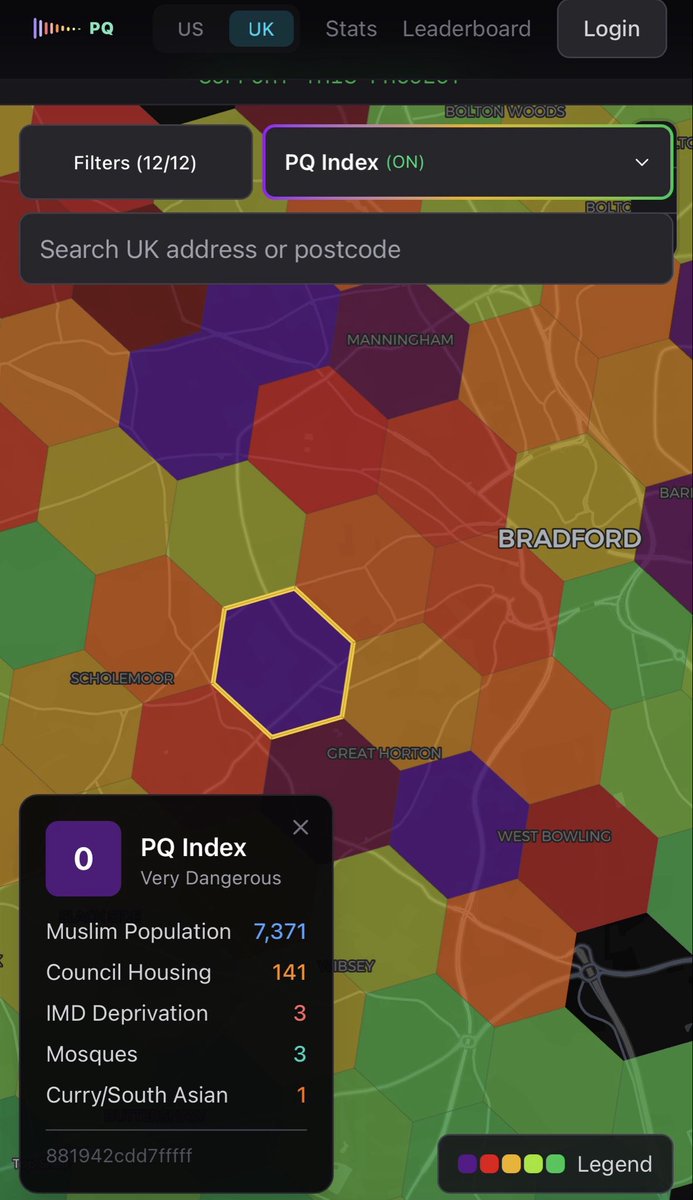
UK map is live
added
>12 weighted data layers
>38,841 scored hexagonal cells
coming soon
>user submissions: migrant/asylum facilities, anything your government doesn’t make public we’ll map it ourselves
i need suggestions & tips
Restore Britain 🇬🇧
https://t.co/99SmP6ax5X