Many ECoG proponents claim their modality is equivalent to intracortical when it comes to brain-computer interface (BCI) performance – but the science says otherwise.
Intracortical BCIs record single-neuron conversations, while surface-level ECoGs record the noisy, averaged activity of 50,000+ neurons. Even when using powerful AI signal processing downstream, ECoG devices simply cannot recoup the resolution that intracortical BCIs record in the first place.
This difference is apparent in speech restoration applications, where intracortical BCIs have demonstrated sub-1% error rates and real-time decoding from 125,000-word vocabularies. ECoG's best clinical results plateau at a three-year-old's vocabulary with multi-second delays.
ECoG certainly has its place in recording large sections of the brain, like in seizure and functional cortical mapping. But for advanced neuroprosthetics that demand high-fidelity data, you need access to rich, high-dimensional neural data – and that's only possible through intracortical BCI.
Our latest blog explores the neurophysiology, the physics of signal attenuation, and the clinical evidence that shows why intracortical is the leading modality for complex applications. Read on for more.
#BrainComputerInterface #Neurotechnology #NeuralEngineering #BCIresearch
https://t.co/rR0xIdNXSE
Imagine losing your ability to speak and move.
Paradromics just got FDA approval to test a brain implant that lets patients control computers and communicate through text or speech... using only their thoughts!
CEO Matt Angle joins us today for a TWiST 500 exclusive. Coming soon to X, YouTube, and your favorite podcast platforms.
cc: @Matt_R_Angle, @paradromics, @Alex, @Jason
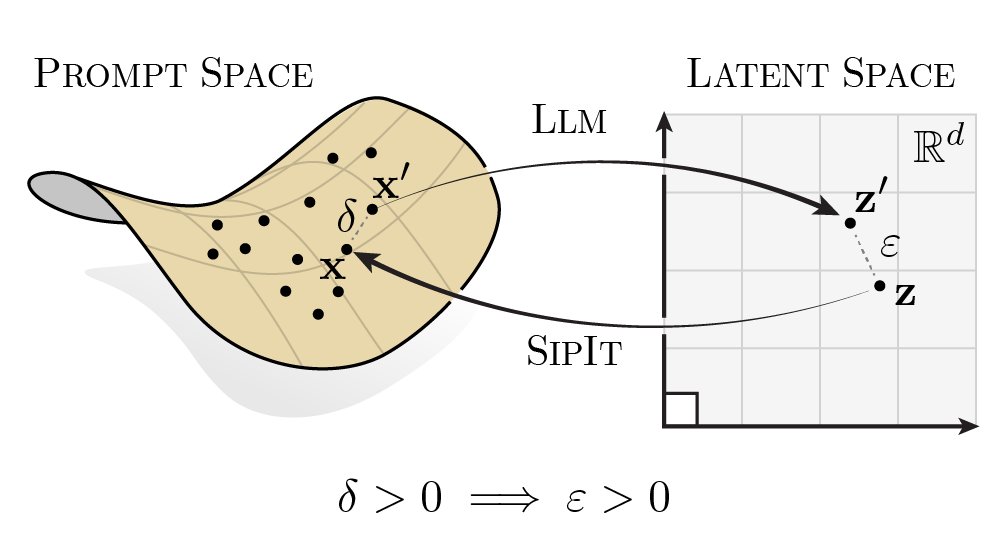
LLMs are injective and invertible.
In our new paper, we show that different prompts always map to different embeddings, and this property can be used to recover input tokens from individual embeddings in latent space.
(1/6)
Impressive (200+ bps) decoding speeds by Paradromics reported this month.
Plus updates from:
- E11 Bio
- Morgan Stanley
- Neuralink
- New England Journal of Medicine
- Precision
- Figure
- China and more.
Here's everything you need to know about BCIs this month and my opinions:
Another breakthrough has been showcased at GITEX Global, a technology that could enable paralysed individuals to speak again!
Matt Angle, Founder and CEO of Paradromics, the company behind an implant that translates neural activity into speech, explained how it will assist people living with paralysis.
#DubaiEyeLiveonDubaiOne #BusinessBreakfastonDubaiOne #DubaiOneTv
Brain–computer interfaces are no longer science fiction. Matt Angle, Founder and CEO of Paradromics, joins Omar Khateeb to discuss how his company is building the world’s highest data–rate BCI.
From his neuroscience roots at Stanford to raising capital in Austin, Matt shares how Paradromics is preparing for first-in-human trials in ALS patients, why data rate is the real bottleneck, how their platform stacks up against Neuralink, and why investors like Saudi Arabia’s NEOM are betting on this future.
This episode covers the technology, the business, and the ethics behind connecting brains and machines.
Episode Breakdown:
00:00 – What is a Brain-Computer Interface (BCI)?
01:02 – Introducing Paradromics and CEO Matt Angle
02:01 – Matt’s background: neuroscience at Heidelberg & Stanford
03:25 – Early BCI research and limitations of older systems
04:46 – Why Paradromics moved to Austin, Texas
06:28 – How Paradromics technology works: recording at the neuron level
09:50 – Surgical process for BCI implantation
11:08 – Paradromics vs. Neuralink: 10x higher data rates
11:53 – First application: restoring speech for ALS & paralysis patients
13:43 – Potential of BCIs in mental health and mood tracking
15:30 – Psychiatry’s challenge: lack of data vs. future of “brain work”
19:06 – Strategic partnership with Saudi fund NEOM
21:27 – Paradromics’ 3–5 year roadmap: hardware + applications
24:10 – Why BCIs could disrupt pharmaceuticals and drug dosing
26:09 – M&A potential in BCI: role of Medtronic, Abbott, Boston Scientific
29:03 – Why medical devices have staying power vs. drugs
30:12 – Market size: $400B+ opportunity for BCIs
32:16 – Cybersecurity and neural data protection
33:49 – The FDA BCI Collaborative Community
34:42 – Upcoming BCI Society meeting in Banff, Canada
35:11 – Closing thoughts & where to find Paradromics online
#Medtech #BCI #Neurotech #Neuralink #Paradromics #AIinHealthcare #StateofMedTech
Paradromics just rolled out SONIC, a new benchmark for BCIs. Their Connexus system reached an information transfer rate record of over 200+ bits per second (!) with ultralow latency.
To put this into perspective - speech runs at around 39 bps and reading up to 45 bps. 200 bits per second lifts the standard and is a huge leap in BCI development.
Congratulations @paradromics@Matt_R_Angle
https://t.co/eFkJulTs1a
The Connexus® BCI reached 200+ bits per second on the new SONIC benchmark. But data rates don’t tell the full story. In the animation below, you can see these signals transformed into text as quickly as a skilled reader reads. The difference in performance speaks for itself.
Congrats to Paradromics' BCI World Record, achieving an info transfer rate over 200 bits per second (bps) with negligible delay. This is over 20 times faster than the initial reported performance of other intracortical systems like Neuralink. https://t.co/8Tz6fwjRaj