A stream of salmon escaped from a fish farm in New Brunswick this summer, putting already-endangered Bay of Fundy wild salmon at risk should they interbreed. Yet advocates say the province and federal government are failing to act, @MoiraDonovan reports: https://t.co/a13YKj1t8s
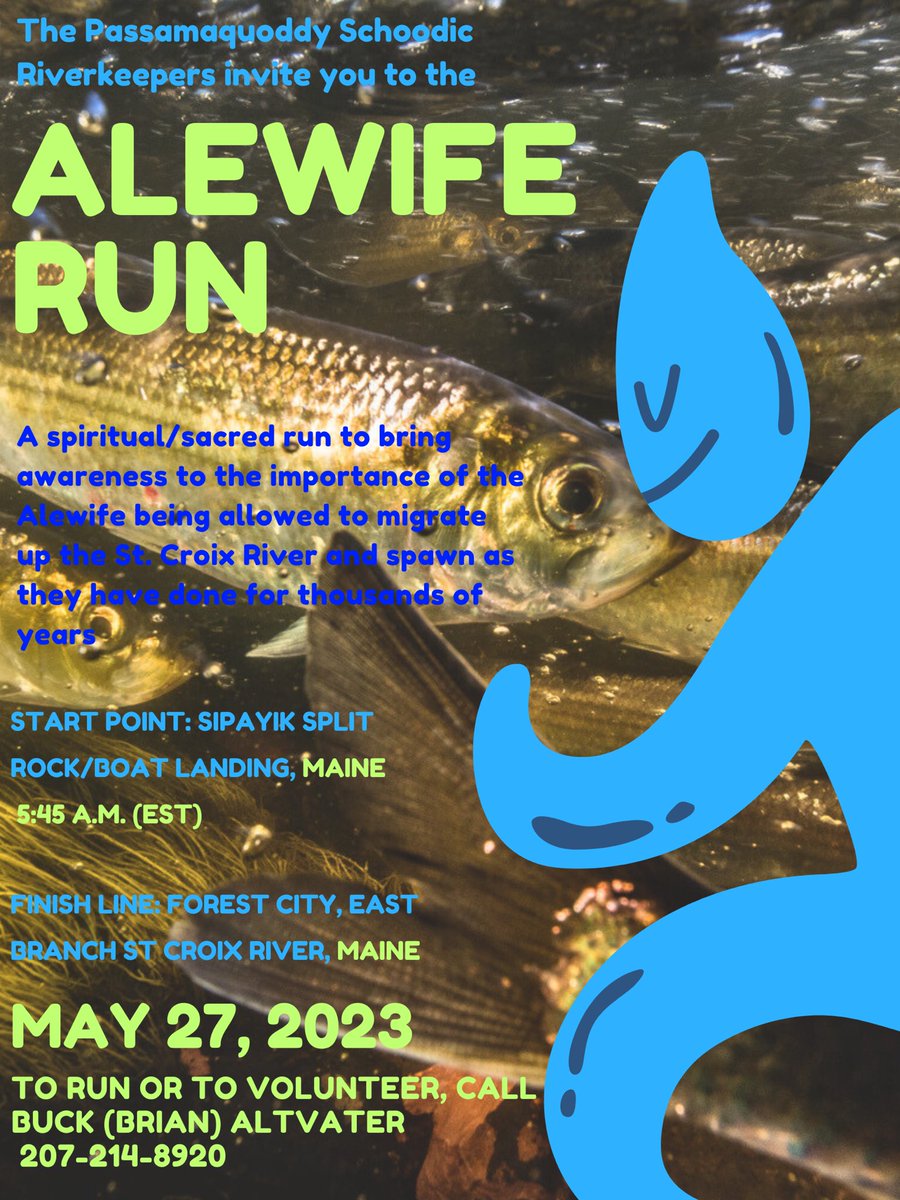
Join us on MAY 27, 2023 for a spiritual/sacred rub to bring awareness to the importance of the alewife being allowed to migrate up the St.Croix River and spawn.
START POINT: Sipayik Split Rock/Boat Landing, Maine 5:45AM (EST)
Call 207-214-8920 to run or volunteer!
#marathon
When you won’t state emphatically in 2023 that folks are born queer & you believe that teachers must out kids to their parents regardless of the harm that may come to them, it’s pretty clear that you believe they can be cured. #conversiontherapy#Policy713#kidshaverights
Join us on MAY 27, 2023 for a spiritual/sacred rub to bring awareness to the importance of the alewife being allowed to migrate up the St.Croix River and spawn.
START POINT: Sipayik Split Rock/Boat Landing, Maine 5:45AM (EST)
Call 207-214-8920 to run or volunteer!
#marathon
🌎Happy Earth Month🌎
To celebrate, we're offering a special gift to all our supporters. Donate to the Conservation Council of New Brunswick this month and receive a link to our set of Earth day E-cards and nature-inspired Colouring sheets for children.
🎁 Donate now and get your goodies ⤵️
https://t.co/U5jt2jczaF
#EarthDay2023 #NewBrunswick
🌳🌻🌾Are you tired of traditional burial options? Attend community meetings on April 22, 23, and 29 to learn about green burials and how we can make Charlotte County a greener and more sustainable place. It's a unique way to leave your mark on the world! #GreenBurialsNB #SustainableLiving #CharlotteCountyNB
A message from our Fundy Baykeeper, Matt Abbott, about lobster, the Bay of Fundy, and climate change:
Impacts of climate change, and other environmental degradation like pollution and damage to habitat, can have complicated effects on species and whole ecosystems.
The small, preliminary study detailed in today's CBC Nova Scotia article highlights how an individual species, lobster in this case, can adapt to one kind of change: temperature increases.
While this study suggests that lobster may be able to adapt to gradual temperature change, we know that changes in some areas can be quite fast. In 2012, the Gulf of Maine and Bay of Fundy experienced what is referred to as “an ocean heat wave.” Some areas may well continue to experience these heat waves. What will happen to the lobster in regions with rapid temperature change?
We also know that temperature is not the only factor affecting lobster and many other species. Acidification (when the ocean absorbs excess carbon dioxide from the air), pollution from consumer and industrial sources, and noise pollution add up and combine with warming waters to place additional stress on marine life.
The research scientist who led this study noted that while lobster showed some ability to adapt to warming water, they may be affected by “physiological stress and disease because of higher temperatures, northward expansion of warm-water predators, and lobster migration away from warmer water.”
This study is important. It is good to know more about lobster. But we can’t use a study like this to waiver in our resolve to address the marine impacts of climate change. While we now know more about how lobster handle gradual temperature change, our complex marine ecosystems remain under severe stress from climate change, the impacts of which we see daily—from changing ocean temperatures and currents disrupting migration patterns of fish, birds and marine mammals to acidification affecting the growth and survival of shellfish and other organisms.
We keep piling straws on the camel's back. And we don’t know when the pile will become too heavy, but we have reason to fear we’re getting close.
#lobster #climatechange
https://t.co/quHRLkjLcq
“We need a realistic energy plan for #NewBrunswick that delivers projects grounded in the reality of climate change, and that are fit for purpose in a decarbonized world. #LNG and #shalegas are not the answer,” says Dr. Louise Comeau as Repsol SA scraps Saint John export plans, citing no business case. More: https://t.co/w6LDQPAfen
“We know they're wealthy, we know their companies make a profit,” says @cc_nb's Matt Abbott “...why don't they just have the best pollution treatment system in the first place? And then when they're caught without it, why don't they just build it as quickly as possible?” #Irving
@nblynayaa One of my personal marine conservation heroes started university at 40, and ended up a with a PhD as a whale biologist and has been contributing important things ever since. Now in her 80's. You are participating in a proud tradition. You've got this!
We love dulse here at the Conservation Council, on its own or flavouring a soup or pan of roasted veggies. Read this important look at the complex impacts of climate change on this important coastal livelihood: https://t.co/cGOdt2u4e6
Dulse is important to the social and economic fabric of Grand Manan. It’s good to see some of the challenges facing the industry outlined and others (like invasive species like green crab) need to be included on the list.