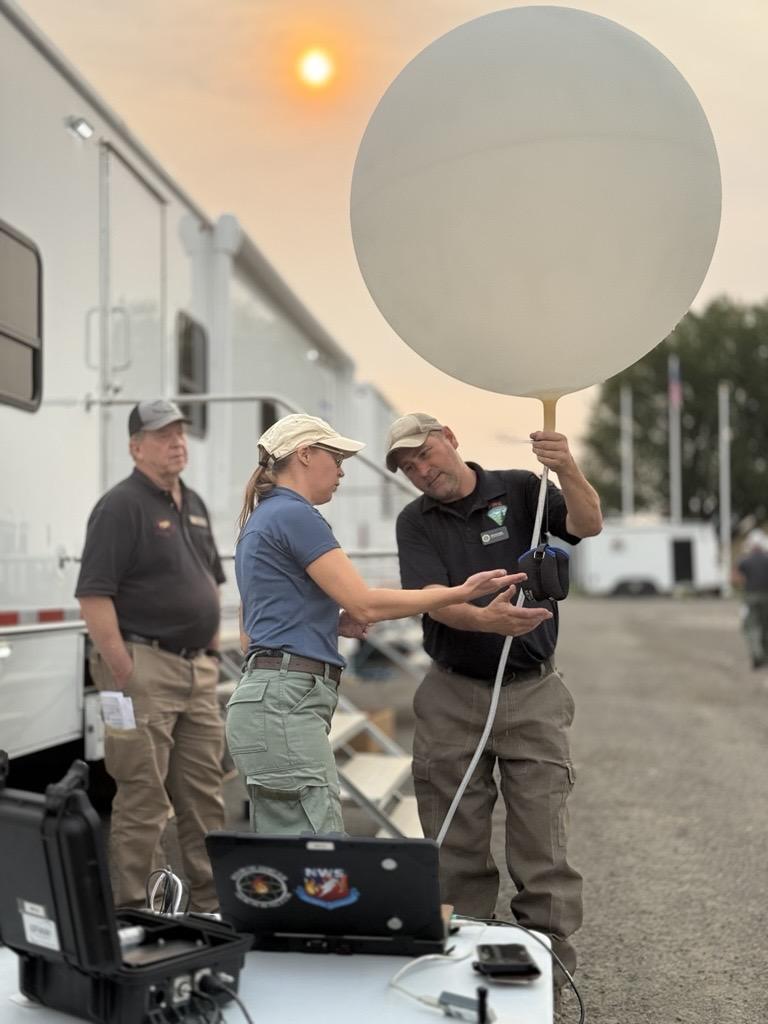
Congratulations to the men and women of the United States Wildland Fire Service. Chief Fennessy and the USWFS are working hard every day for the American People, the great public lands they serve and the communities they protect to establish a purpose built, mission driven Wildland Fire Service that every firefighter and the American People can be proud of. Today’s wildland fire environment and more importantly, the future wildland fire environment will demand it!🫡
🇺🇸🔥
The moment is finally here.
We're proud to introduce our official logo! This symbol reflects who we are today, the mission we carry forward and the people who make that mission possible.
We are the U.S. Wildland Fire Service.
Home away from home.
This year, thousands of wildland fire personnel have spent time away from their homes, families and everyday lives to support wildfire operations across the country.
From morning briefings to long days on the fireline, incident command posts become temporary homes for the firefighters and support personnel working together to manage an incident.
And while the fireline may get most of the attention, it takes an entire team to support an incident. From operations and logistics to safety, finance, planning and communications, these roles work behind the scenes to keep an incident moving safely and effectively.
We are deeply saddened by the loss of a crewmember on Sunday following a medical emergency while supporting incident response on the Frijoles Fire in New Mexico.
Our thoughts are with the family, loved ones, friends and crewmates, and with the entire wildland fire community mourning this loss.
https://t.co/r44SgHrtIe
After a long assignment in the Northwest, the Los Padres Hotshots stopped by the National Interagency Fire Center (NIFC) campus. Formed in 1948, this crew was among the first hotshot crews in the U.S. The crew was briefed on all aspects of operations at NIFC and was recognized at the daily National Multi-Agency Coordinating Group (NMAC) meeting.
Information and photos courtesy of @NIFC_Fire
Sometimes it’s the little things that mean the most.
Before long shifts and after days on the line, seeing signs of support from the communities we serve is a powerful reminder of why this work matters.
Thank you for supporting the firefighters and support personnel who spend days and weeks away from their loved ones to help protect communities across the country.
National Aviation Week is an annual observance celebrating aviation, aviation professionals, and the role aviation plays in the United States. Each year, Southern California forests host dozens of aerial firefighting assets that support wildfire response across the region and beyond. This week, we recognize the pilots, crews, mechanics, aviation managers, dispatchers, and support personnel who keep these critical resources mission-ready and safely in the air. #NationalAviationWeek
California Interagency Incident Management Teams are in motion, transitioning to several large incidents across the western United States.
Team 5 is deployed to the #LittleGiantFire in Washington State.
Team 2 is mobilizing to the #MP18Fire in Hoopa, CA.
Team 3 was recently activated to the #TimberFire in Big Sur, CA.
Remember that first USWFS-contracted Large Airtanker we told you about? 👀
Now you can see it in action. The C-130 is supporting wildfire incidents across the West, dropping fire retardant through rugged terrain and supporting the boots on the ground.
Video courtesy of @CoulsonAviation
America is facing a wildfire crisis. We cannot continue with a failed status quo that allows our cities to burn to the ground.
We owe the American people better prevention and an effective, aggressive response to these disasters. Let’s get it done.
@spencerpratt@firechiefanf@OCFAChief
Want to work in one of our nation’s beautiful parks? We’re hiring for two leadership positions supporting wildland fire suppression and operations in North Cascades National Park.
🔥Wildland Fire Module Lead – GW-8: https://t.co/1719b0hqas
Lead firefighters in suppression and fuels management operations, including prescribed fire, fireline construction, and tactical decision-making in the field.
Apply by 08/28/2026
🔥Engine Captain – GW-8: https://t.co/dgmUbgSLVj
Apply by 09/11/2026
Lead firefighters, direct suppression operations, oversee fuels projects, and manage fire engines and specialized equipment.
Both positions require experienced firefighters ready to lead crews, make decisions in dynamic environments, and take on greater responsibility.
📸 North Cascades National Park, photo by Jim Henterly
Nearly 250 fire specialists from Australia and New Zealand arrived in the United States this week to assist with wildland fire response, and we were ready to support them with engines ready to go.
In just one week, 24 of our Department of the Interior engines from 18 states were mobilized to Boise, Idaho at the National Interagency Fire Center, ahead of the international crews’ arrival. That includes 21 engines ready for staffing, plus three backup engines to help keep resources moving if a breakdown occurs.
Our Division of Fleet and Equipment had all hands on deck to inspect, repair, stock and prepare the engines for mobilization, with support from staff that traveled from fleet centers in Missoula, Montana, and Dulce, New Mexico.
And the support doesn’t stop when the engines leave NIFC. Four service trucks with technicians are traveling with the strike teams, providing inspections, maintenance and repairs along the way.
A lot of work happens behind the scenes to get resources ready. We’re proud of the teams making it happen in a moment's notice.
Wildfire response starts long before a fire begins.
In Boise, Idaho, @SecretaryBurgum and I met with the men and women on the front lines to discuss how we strengthen prevention, improve forest health, reduce hazardous fuels, strategically stage aviation assets, and ensure our firefighters have the resources they need.
As part of that effort, USDA and DOI are accelerating and improving fire prevention techniques to make our forests safer and less susceptible to uncontrolled wildfires through mechanical thinning, prescribed fire, and active forest management.
These proactive steps support the more than 30,000 federal firefighters, 400+ aircraft, and all our state and local partners working to protect communities across the country.
Under @POTUS, @USDA, @Interior, and @forestservice are working together to keep communities safe, protect our firefighters, and put fires out quickly.
God bless our wildland firefighters—and all those working behind the scenes to support them. 🇺🇸
We're hiring Smokejumpers for the 2027 fire season, with opportunities in Boise, Idaho at @NIFC_Fire, and in Fairbanks, Alaska.
These aren't entry-level fire jobs. Smokejumper positions require previous fire experience and an FFT1 qualification, and they take that experience into some of the most remote and challenging fire environments.
Applications are open through Sept. 25, 2026.
GW-5 | Rookie Smokejumper | https://t.co/XInJMO7HH8
GW-5/6 | Rookie Smokejumper | https://t.co/G1hJw9gqN6
GW-5/6/7 | Rookie and Current Smokejumpers | https://t.co/CsISO3MZG7
Yesterday we learned from Tom Clemo of California Interagency Incident Management Team 7, Maj. Gen. Gent Welsh of the Washington National Guard, and local fire chiefs that the Spokane fires could have been a lot worse.
We should be thankful for that, and for Team 7 and the firefighters who have continued to respond.
Lahaina, Palisades, and now Spokane. We're seeing these big urban events that can do so much damage in a short period of time. We discussed what policies need to change and the practices we need to improve to be better prepared.
One of County Fire's Rapid Extraction Module Support (REMS) teams remains deployed on the Coleman Creek Fire near Juntura, Oregon—now roughly 308,700 acres and 90% contained. Though fire activity has slowed significantly, the team stays committed to its REMS mission, ready to respond to any firefighter injury or medical emergency on the incident. They've kept up technical rescue training while helping with line medic duties and medical reconnaissance across the fire area, scouting access and extraction routes through remote locations.
REMS is a specialized rescue and medical team designed to reach, stabilize, and extract injured firefighters from terrain inaccessible to standard emergency vehicles. The team blends wildland expertise, advanced life support, and technical-rescue skills and includes an Engine Boss-qualified Captain, paramedic capability, a certified ARV operator, and rope-rescue specialists. They operate ARV305, an all-terrain rescue vehicle built for steep, remote ground.
Because wildland fires often put crews far from roads, REMS personnel must locate and reach patients, deliver ALS care, package them for movement, set up rope systems, and coordinate transport via ambulance or helicopter. Pre-positioning this capability shortens response times during emergencies.
San Bernardino County Fire is a proud participant in the Master Mutual Aid system with resources available to assist allied agencies with large or complex incidents.
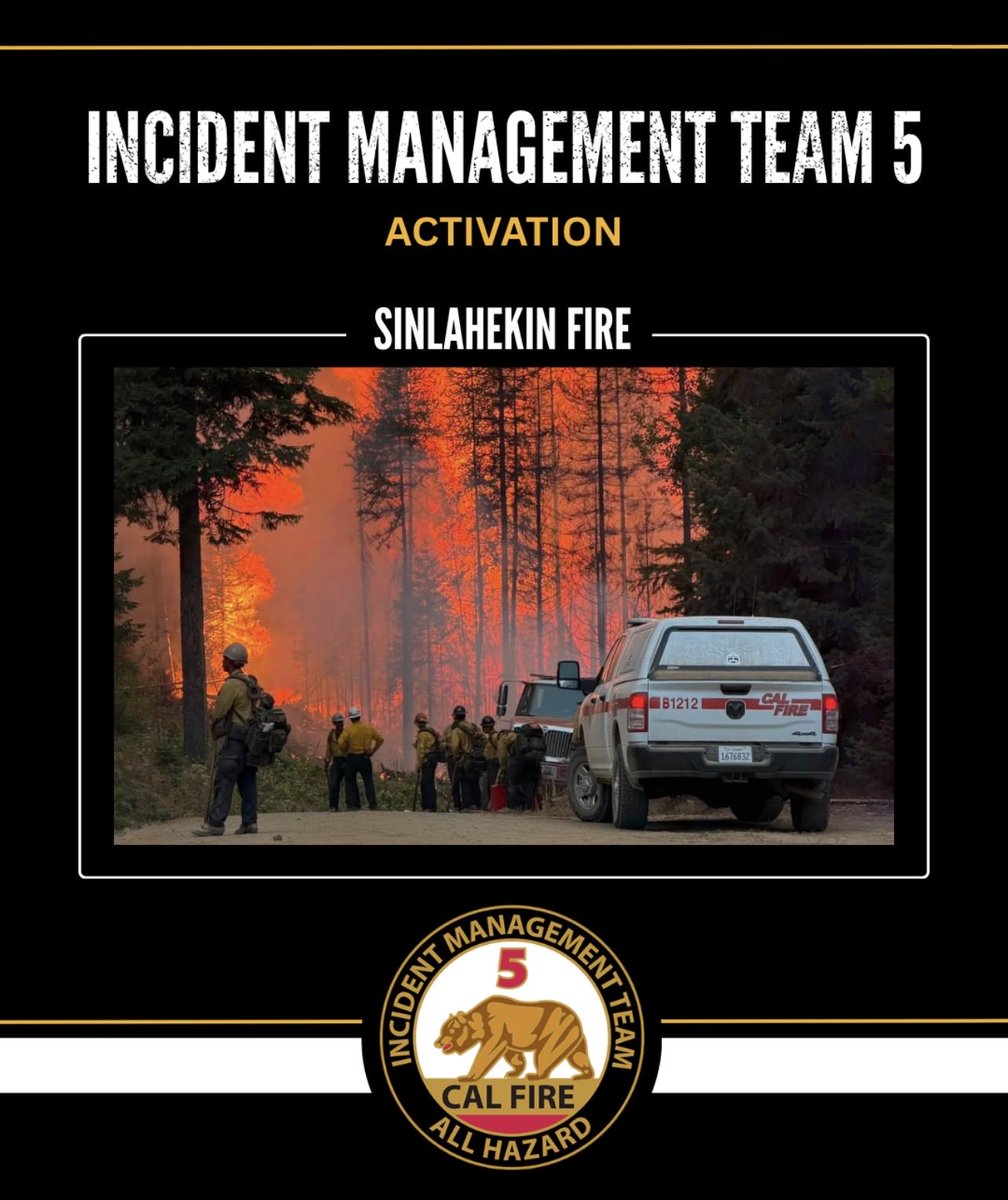
Today, #CALFIRE Incident Management Team 5 (IMT 5) will transition into Washington, replacing IMT 4, which has been supporting wildfire response efforts on the Sinlahekin Fire.
🔥 HISTORY IS BEING MADE.
For the first time, Kern County Fire Department bulldozers are operating out of state, assisting our brothers and sisters battling wildfires in Washington State.
Two KCFD dozers and their crews are on the fireline in the Northwest. Meanwhile, Kern County remains fully staffed, fully equipped, and ready to answer the next call here at home.
From Kern County to Washington — when the call comes, KCFD answers.
#KernCountyFire #KCFD #WashingtonFires #MutualAid #WildlandFire
Wildfire doesn’t stop at jurisdictional boundaries, and neither does the work to protect communities, landscapes, and important natural and cultural resources.
Across the Confederated Tribes of the Colville Reservation, Tribal, federal, state and local partners are working side by side on the Modrite, Kaiser Canyon and surrounding fires. Tribal resources from the local area are particularly vital to the operational response because they bring a depth of local knowledge and experience that informs decision-making across a complex landscape.
Tribal staff and resources are supporting everything from initial attack and fireline operations to structure protection and post-fire repair.
The work taking place across Confederated Tribes of Colville Reservation lands reflects something larger than any single incident: wildfire response is strongest when agencies, Tribes and communities bring their people, experience and knowledge together toward shared objectives.
Photos by Ryan Michelle Scavo/PIO