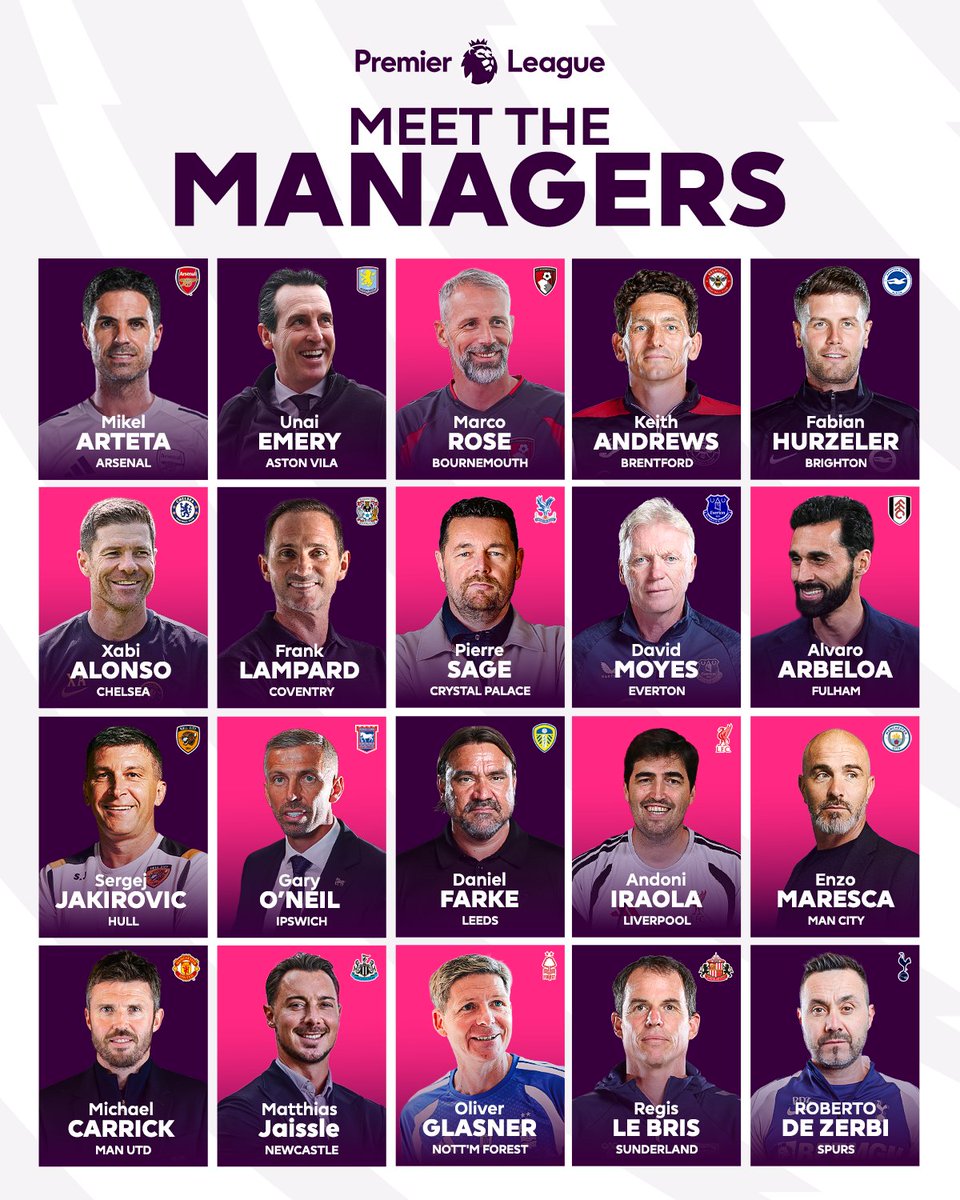
Did you know that NINE clubs will have new managers at the start of the Premier League season? That's the most ever for an opening weekend! 👔
Matthias Jaissle is the latest as he joins up with Newcastle ⚫️⚪️
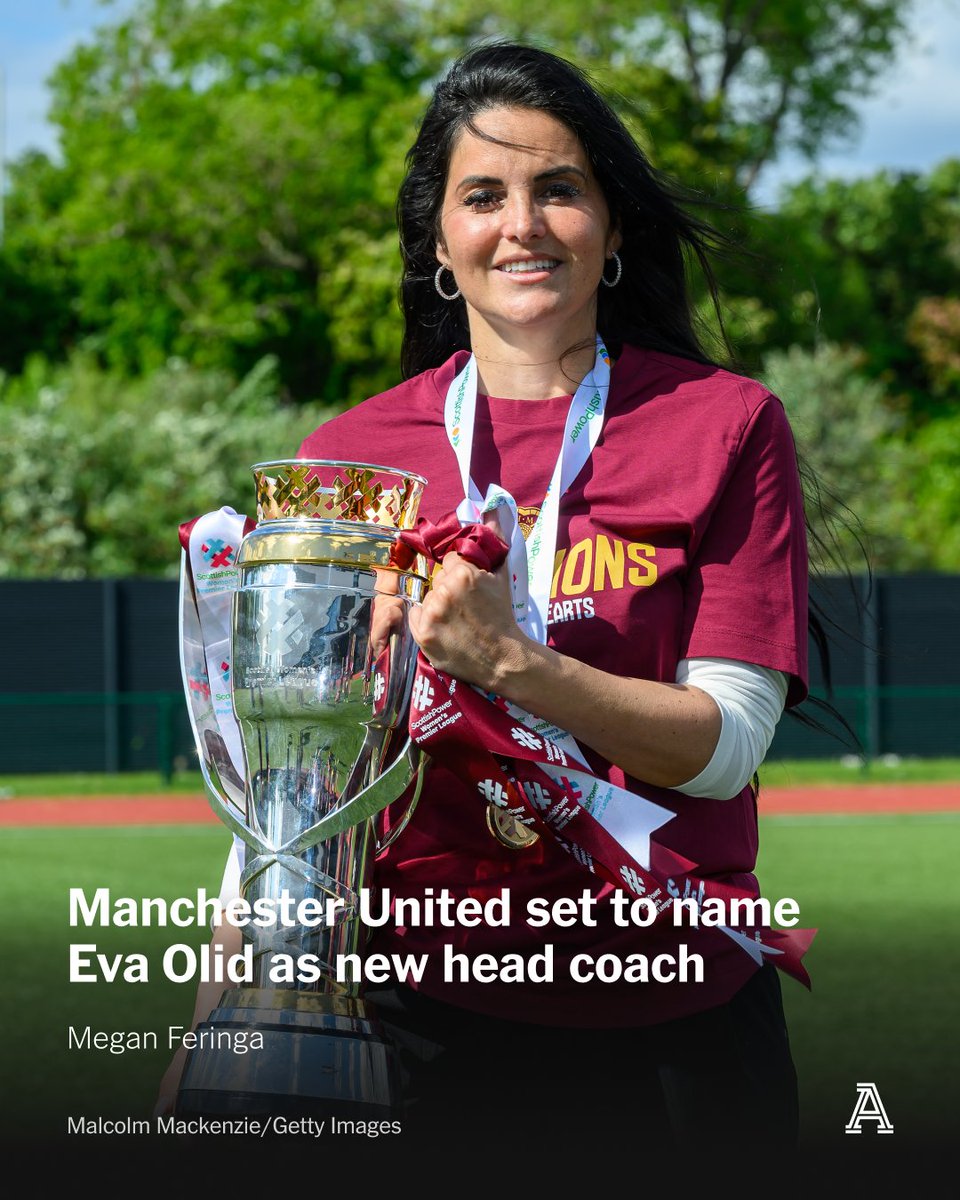
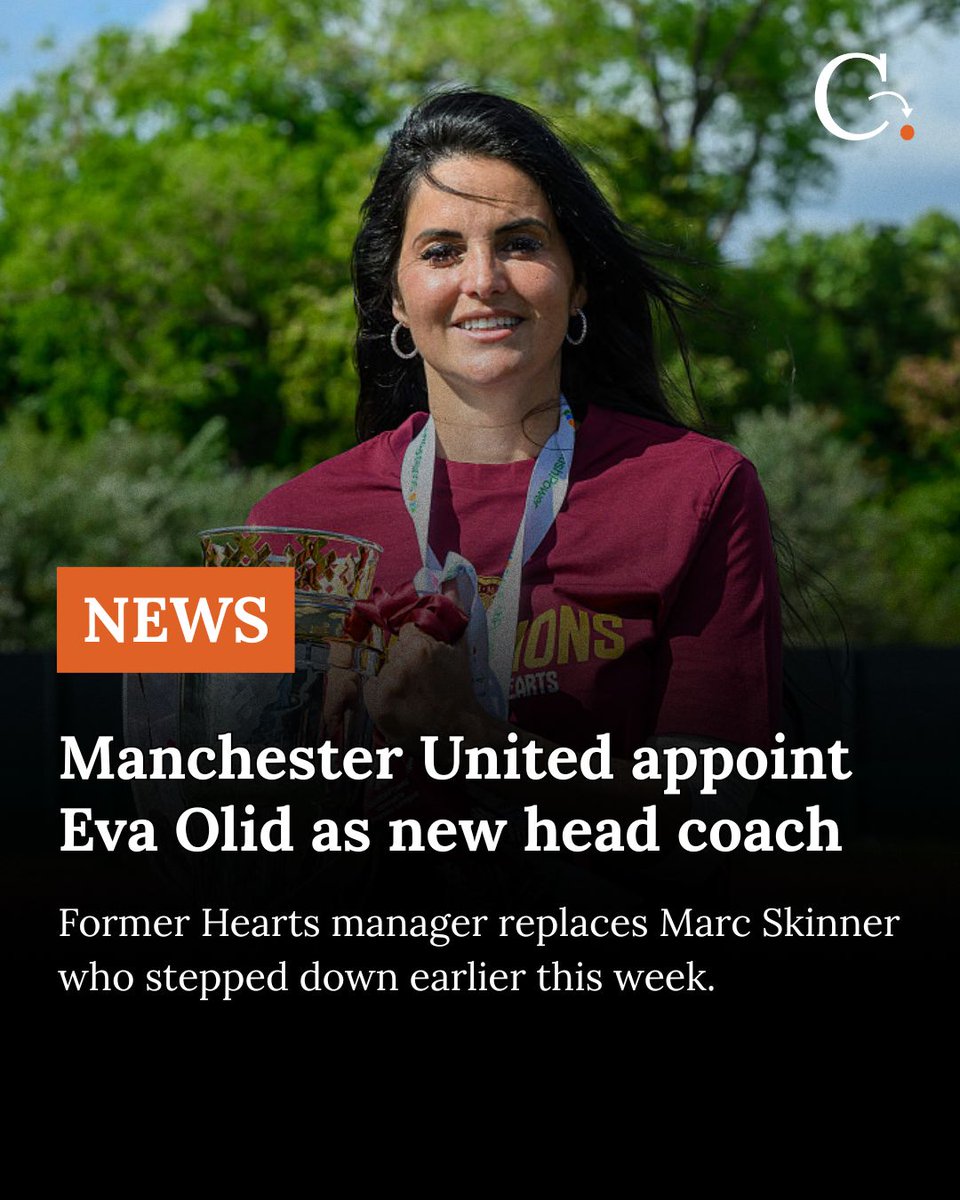
Manchester United have confirmed the appointment of former Hearts boss Eva Olid as their new head coach.
“Olid’s appointment marks the start of an exciting new era for Manchester United Women as the club embarks on a clear vision for long-term, sustainable growth and success,” a club statement read.
More from @megan_feringa
🔗 https://t.co/2w4tCSJ5Uh
Manchester United are set to appoint former Hearts boss Eva Olid as their new head coach.
The Athletic reported on Monday United and head coach Marc Skinner had mutually agreed to terminate his contract, bringing an end to his five-year tenure.
The club had been working on appointing a new head coach quickly, with the new Women’s Super League season just one month away, and are expected to name Olid as Skinner’s successor, according to sources with knowledge of the situation.
More from @megan_feringa ⬇️
🔗 https://t.co/2w4tCSJ5Uh
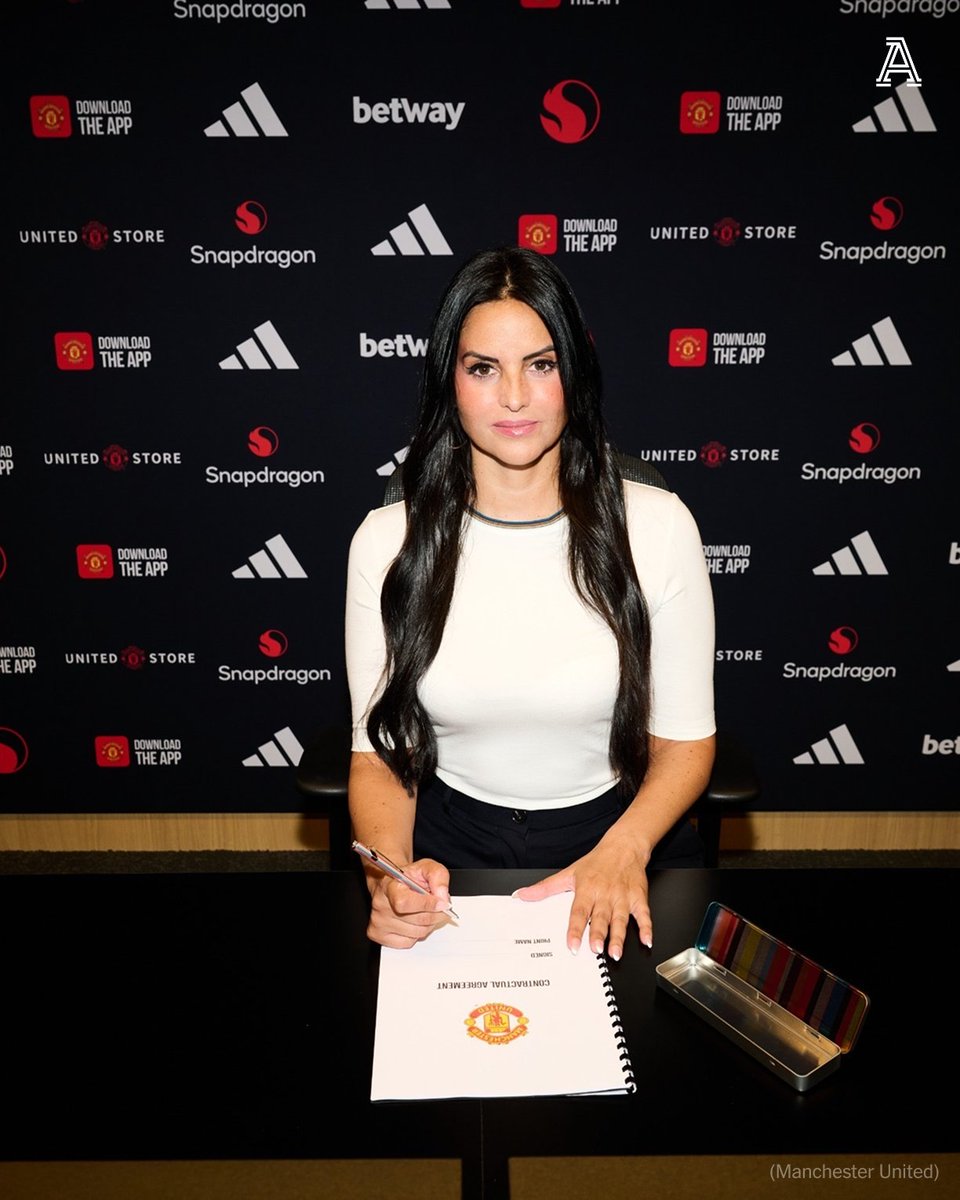
Manchester United have appointed Eva Olid as their new head coach. The former Hearts boss has signed a two-year deal, replacing Marc Skinner who left earlier this week after five years in charge.
Manchester United have appointed Eva Olid as new manager for the women’s team.
Olid signs a two year deal with the option of a further year with the club.
More on @The_Cutback soon.
#MUWomen
On becoming head coach
“The opportunity to become Head Coach of Manchester United Women is a dream come true. There is already so much talent within our squad and I am excited to work with the players to support them to fulfil their immense potential”
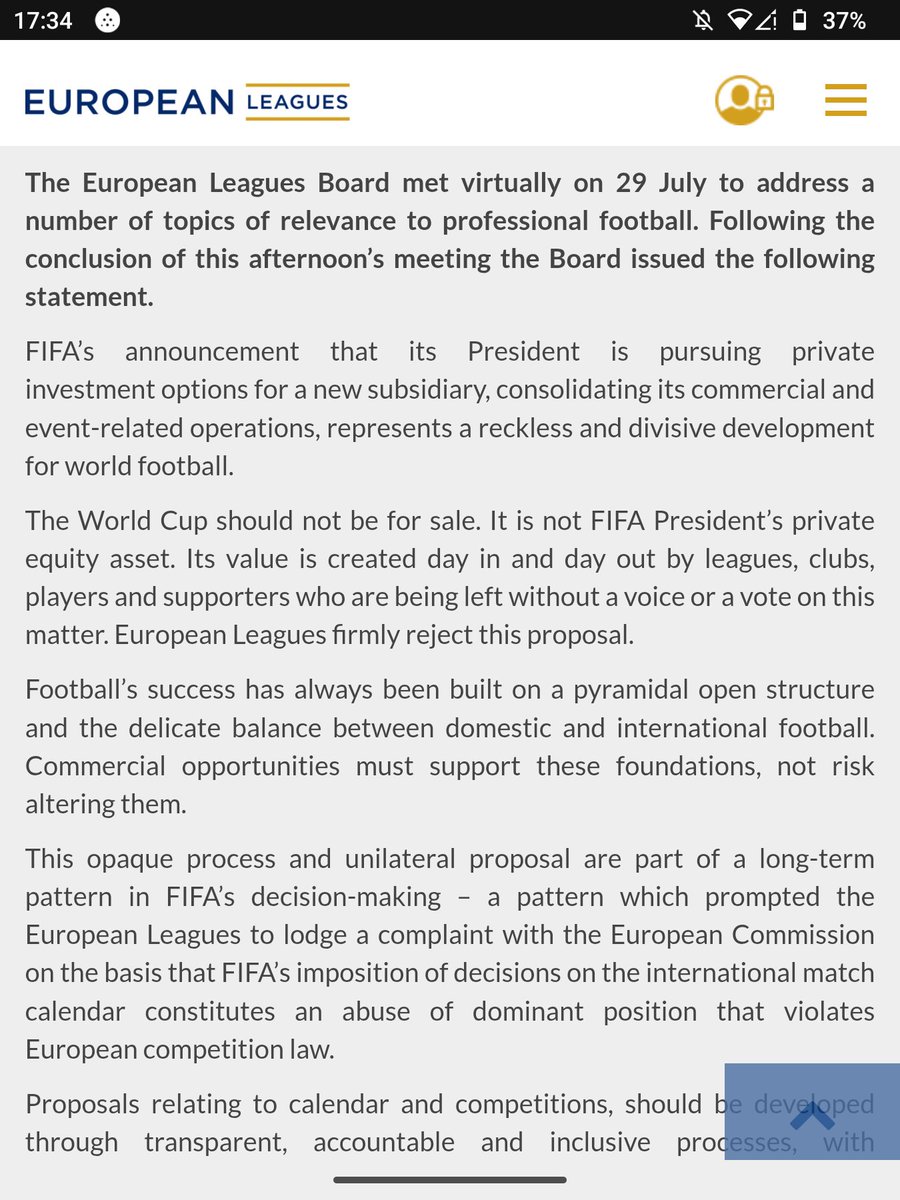
What Infantino is proposing is interesting. In principle, it makes sense to separate the commercial business of football from the regulation of the game. That is generally regarded as good governance.
The problem is that there is no independent regulator to insulate. FIFA is its 211 member associations. And those same members have been offered a share of the proceeds from the sale they are being asked to approve.
FIFA's defence is that investors will hold only a minority, non-controlling stake with no operational role. That may be true, but it misses the point. A fiduciary interest does not have to intervene to shape decisions. It constrains them. Every future decision on the calendar, competition frequency, tournament format, or even how much a safeguard is allowed to cost, will now have to account for a stakeholder whose financial interests carry legal weight. No direct interference is required.
Now consider who does not have standing. Not FIFPRO. Not the fans. Not the residents of host cities. Not even the players, who represent their countries for honour rather than as employees, cannot be transferred between nations, cannot negotiate the terms under which they play, and cannot realistically refuse selection. Yet it is their unmarketed commitment that is being valued at twenty billion dollars. This structure creates the only stakeholder in football with a legally enforceable claim on the game: American Investors.
Every other stakeholder has relied on representation rather than enforceable rights. FIFA represents its member associations, and the member associations are expected to represent the interests of the game. That chain has always been imperfect, but it was the closest thing football had to accountability.
Now that chain of representation has been priced. Forty million for a yes vote. Ten million for a no vote. The duty a federation owes its own players is placed in direct tension with a financial payment contingent on approving the transaction. That is not a conflict of interest FIFA must manage. It is one FIFA has deliberately created.
Finally, consider the sequence. The vote takes place at Congress in Morocco in March but the funding commitment must be made by September. A conflicted decision-maker is being asked to decide quickly. That should concern everyone.
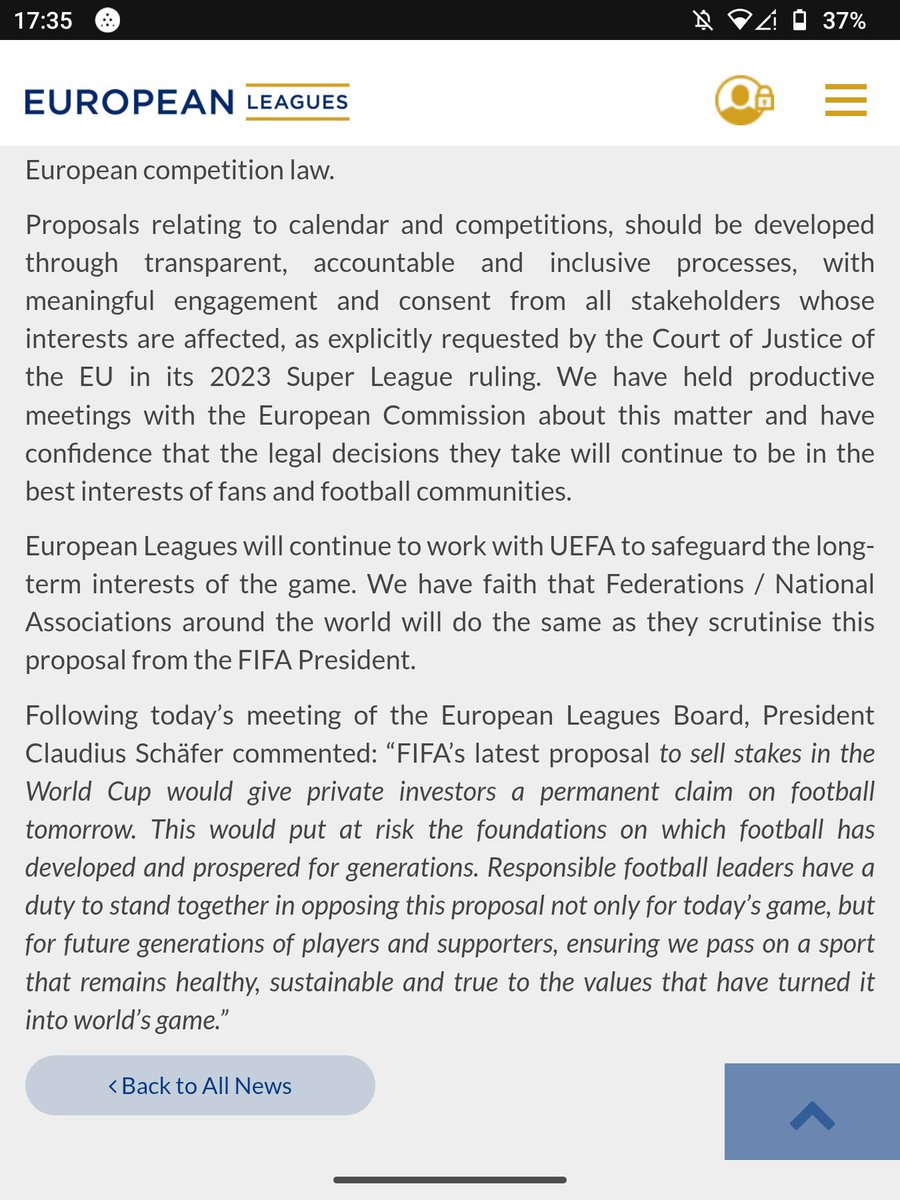
FIFA reportedly offered every member association up to $40 million to vote yes, and $10 million if they voted no. Today, all 55 European nations chose zero.
This afternoon, on an emergency call, every UEFA member approved a boycott of FIFA competitions, men’s and women’s, until the FIFA Forward Enterprise plan dies.
Now run the numbers on what each side is holding.
FIFA’s position: a $20 billion valuation on the new entity, a $4.2 billion raise this year through J.P. Morgan, Thrive as proposed lead investor, and a September 19 vote it needs 106 of 211 members to win. UEFA and Concacaf, which says it was never even informed of the plan, control 96 votes between them. The math was already tight. It just got worse.
UEFA’s position: the product itself. Europe has produced six of the last eight World Cup winners. Spain just won the 2026 tournament, and three of the four semifinalists were European. A World Cup without Spain, France, England and Germany is not a diminished World Cup. It is a different, much cheaper product, and every investor being asked to value this thing at $20 billion knows it.
And the 2030 World Cup is co-hosted by Spain, Portugal and Morocco. Two of the three host nations just voted to boycott the tournament they are hosting. There is no version of that event that survives its own hosts refusing to show up.
Here is why the threat is credible, and why Infantino knows it. In 2021 he proposed a World Cup every two years. UEFA threatened a boycott. FIFA abandoned the plan. This is the second time in five years Europe has pointed the same weapon at the same man, and the first time, it worked without a shot.
So look at what the $40 million offer actually was. FIFA cannot win this vote on the merits against the confederations that produce the product, so it priced the vote instead, aiming the money at the 150 plus smaller associations for whom $40 million is transformative and a European boycott is someone else’s problem. Infantino called it a democratic consultation process. It is a tender offer with a deadline.
The investor math is the part nobody is saying out loud. The $20 billion valuation assumes the World Cup as it exists, with Europe in it. Anyone wiring money into that raise is now buying a tournament that its champion, its finalists and two of its next hosts have publicly refused to play in. The asset changed materially between Tuesday’s announcement and Thursday’s call.
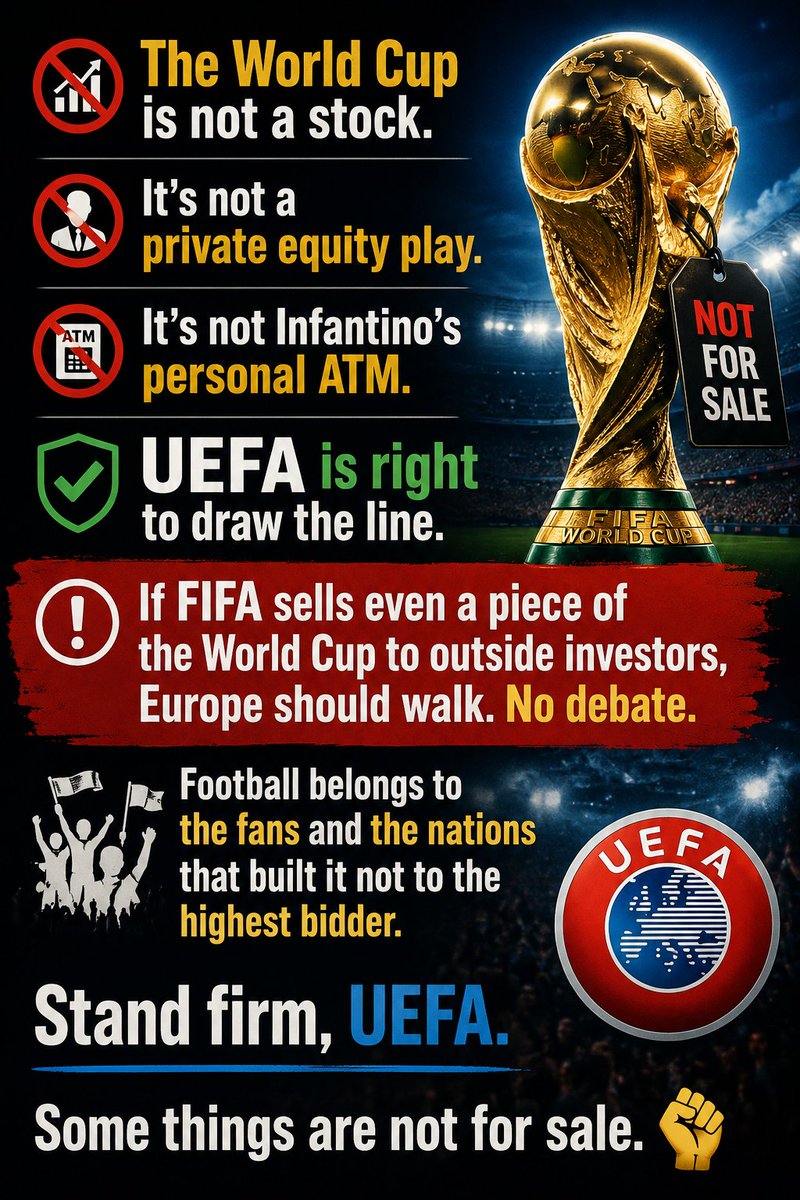
FIFA spent the week trying to sell the World Cup. UEFA spent one afternoon demonstrating who actually owns it.
The European qualifying play-offs for the Women’s World Cup take place in October. If UEFA plans to boycott the World Cup, those matches surely cannot take place, as they would be attempting to qualify for a tournament in which they would not plan to compete.
Those play-offs include reigning European champions England and 2019 finalists the Netherlands, as well as Wales, Italy, Sweden, Switzerland and Norway. Thirty-two teams in total would be impacted.
And if UEFA goes along with the boycott until next summer, it would mean reigning world champions Spain and reigning European champions England — both heavily fancied to lift the trophy next summer — would not be in attendance.
In fact, six of the top 10 nations would not be in Brazil.
📝 @megan_feringa
🔗 https://t.co/hhklnUjWne
Gianni Infantino has given FIFA’s 211 member associations 53 days: approve the partial sale of the World Cup’s commercial rights to private investors, or accept a sharp cut in the development funding most of them depend on.
53 days to decide the ownership in perpetuity and commercialisation of the world’s most loved tournament, now almost a century old.
He developed the scheme in secret, and is forcing individual associations to decide months before the next Congress meets next March.
No Congress debate. No Congress vote. No testing of the concept, financials, projections, people and organisations involved.
Just a time-limited, financially punitive choice imposed on each member separately.
Reports indicate a high-paid commissioner-style role at the new commercial entity could be created for him, potentially delivering a multi-million salary far beyond his current pay.
He is using the organisation’s own assets as leverage against its members, while positioning himself to benefit personally from the structure he is racing to lock in.
The President of FIFA exists to serve the organisation and every association equally. Not an external investment consortium. Not a selected group of compliant members. And not himself.
This is not democracy. It is not governance. It is not leadership.
It is coercion dressed as opportunity.
He should be removed.