Does anybody have an idea how long it usually takes for @ABRSM theory results to be released after the exam? I thought now they are online and computer based it would be quicker than before
@mymusictheory Thanks Victoria. It’s so annoying that the ABRSM don’t proof read before publication. Hopefully future prints will correct these errors @ABRSM
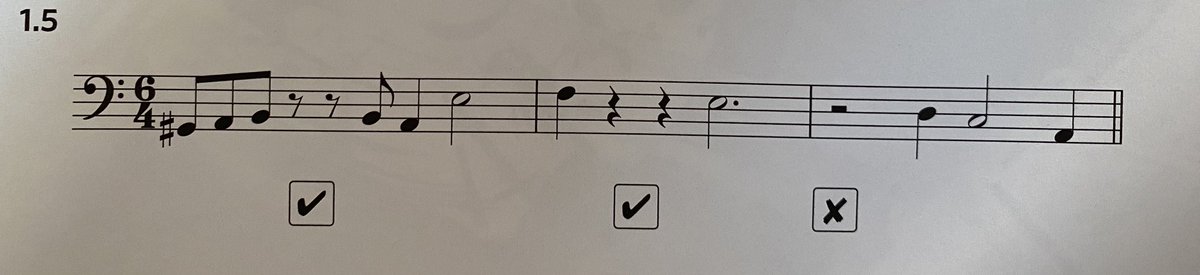
Does anyone know why starting the last bar with a minim rest is incorrect? 6/4 is a compound duple time signature but I thought you can start the bar with a 2 beat rest providing its on a strong beat?
@ScaleBoxApp @Ceinwenbran @mymusictheory But does anyone know the definitive rule regarding the use of minim rests in 6/4? I was under the impression that they could be used on the strong beat? The example above from Grade 5 ABRSM answer book is incorrect yet this example from the Grade 4 answer book seems acceptable?
@davidbartonmus Also, as the examiner has the facility to play back unclear sections and identify mistakes that may only be fleeting, the candidate is disadvantaged when compared to a live face to face exam.
@teachypiano@JazzFlautist Is it the grouping of the c quaver into the b crotchet? Perhaps it should be a c quaver joined to two b quavers (but the last quaver tied). Not sure though?
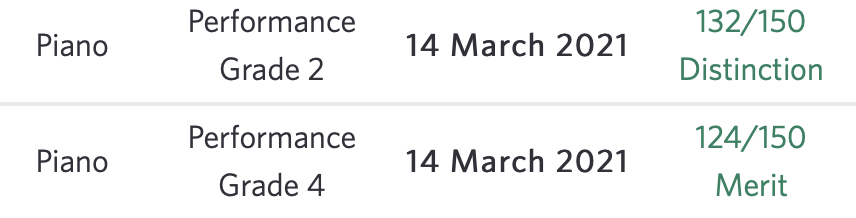
@teachypiano@ScaleBoxApp I think it’s harder to achieve the higher end marks in performance grades (particularly for younger players) The examiner has the option to replay when marking. However I don’t think the difference is enough to make a difference in terms of pass/merit/distinction categories.
@ScaleBoxApp Admittedly, anyone who struggles with scales/sight reading/aural could achieve higher marks in the performance version. But for a candidate who is equal across the board, I expect and have seen them score less in the performance grades equivalent.