I've spoken to many investors who want exposure to crypto via equities but are spooked, understandably, by portfolios full of pure-play miners and exchanges that have seen repeated blowups and bankruptcies.
If that sounds like you, we designed the VanEck Onchain Economy ETF (ticker: NODE) with you in mind.
NODE is an actively managed ETF that can hold global crypto ETPs up to a 25 percent weight, alongside companies with credible strategies to make or save money through bitcoin, digital assets, and the onchain economy.
The issue we’re trying to solve is managing downside volatility without losing exposure to the underlying growth drivers. Many pure-play stocks trade at two or even three times the volatility of bitcoin itself, driven by a combination of leverage, small market caps, and highly idiosyncratic business models. Historical data shows that adding bitcoin to these stocks has improved total returns and reduced overall portfolio risk. NODE will typically hold a core position in a regulated bitcoin ETF, providing clean exposure to BTC itself while allowing the rest of the portfolio to focus on compounding, correlation, and cash flow.
To complement this core, NODE holds both high-volatility pure-plays like miners and exchanges and lower-volatility sectors such as e-commerce, fintech, semiconductors, energy, infrastructure, and utilities. Each is selected based on measurable involvement in the onchain economy, whether through revenue, infrastructure, or strategic alignment.
These latter sectors can offer something critical: ballast. Many names here pay dividends, are less volatile, and can serve as risk-managing building blocks. In periods of stress or dislocation, that ballast can be jettisoned to lighten the load and take on more risk when a washout invites it.
Utilities in particular are starting to benefit from the same structural tailwinds that support bitcoin adoption, including pro-growth policy, more abundant energy, and a rethinking of the connection between energy and money. Combining these exposures may offer an appealing balance of offense and defense.
Companies across all 11 GICS sectors are now engaging with the onchain economy, expanding the opportunity set for equity investors and helping lay the groundwork for broader, more diversified crypto exposure.
We've designed NODE for investors who see the opportunity but want to maintain conviction through the cycle. We believe this thoughtful approach to portfolio construction can help investors stay the course, and we’d be honored to earn your trust.
Bitcoin’s Buying Window Closes In October - VanEck’s @matthew_sigel
0:00 Bitcoin Higher in One Year?
01:46 OpenUSD Challenges Circle & Tether
02:45 Circle Drops 17%; Stablecoins Are Easy to Copy
05:42 Why Consortiums Usually Fail
09:47 Fully Positioned by October
13:10 Zcash & Anthropic's Software Push
17:14 Alt Season Happened in Stocks
19:29 Node Outperformed Bitcoin by 100 Points
21:35 Bitcoin Hash Rate Stalls
25:57 Should Strategy Trade Above NAV?
27:36 DATs Need a Living Will
29:18 22 Countries Hold or Mine Bitcoin
"$AAPL seeks to buy Chinese-made memory chips with lobbying push": Reports
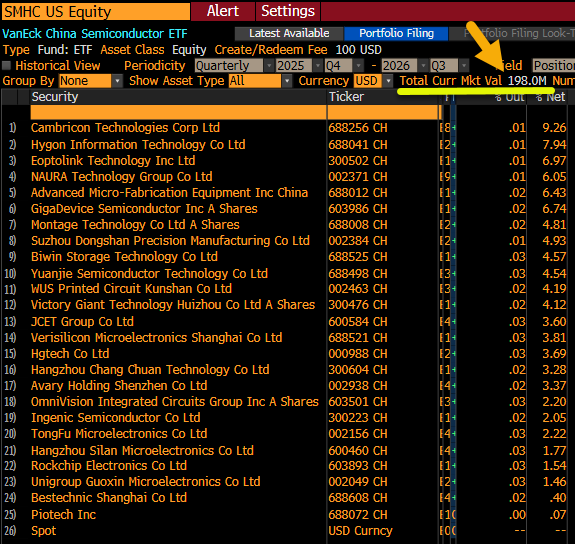
As an FYI, VanEck just launched the 1st US-listed China Semi ETF: $SMHC already +$200M inflows in 5 trading days.
Will be fun to watch this one as the 2 leading Chinese memory stocks may soon IPO 🍿
NEW: @FreeBeacon has the receipts on Ro Khanna’s obscene, oligarchic wealth:
—his 2 kids (under 10yrs old) own 3 private golf courses in Ohio (not kidding)
—his wife drives a $190,000 luxury Range Rover
—his house has a 4-story indoor elevator
And more:https://t.co/Bk6nS7WRwT
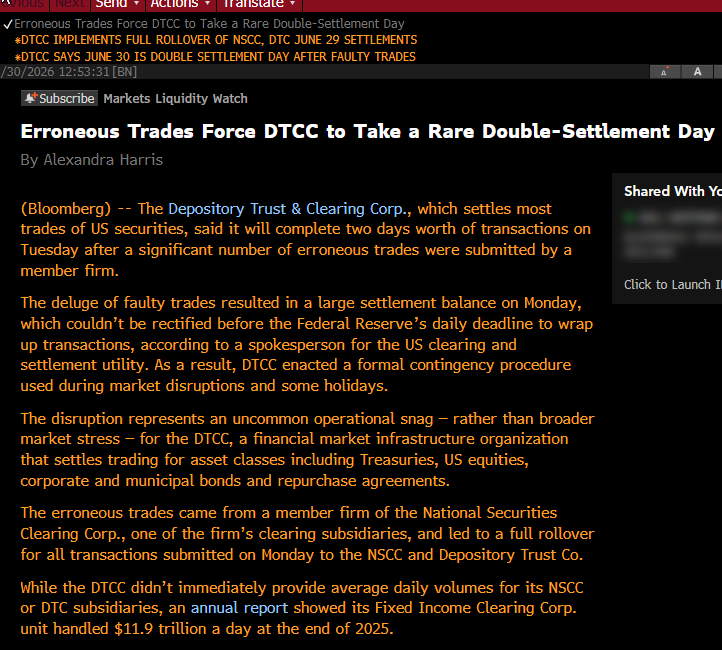
🚨DTCC invokes its version of a sequencer halt after one 'validator' (member firm) spammed bad trades past the cutoff.
Netting cycle deferred a day to a double settlement day, on the last day of the quarter. Hope no mistakes tonight.
PJM sees power demand rising to record 166.3 GW on July 2.
Largest grid regulator submitted request for DOE to authorize on-site power gen, batteries and other resources to meet demand and avoid rolling blackouts.
🚨 VALUATION GROUND FAULT
$DLR just paid $27M/MW at a 6.5% cap for three fully-leased AI data centers, with 3.6% escalators, 15-year leases. This is now the North Star for stabilized AI infra.
To refresh: Miners are converting Bitcoin infrastructure at $3-12M/MW. Same NOI economics (~$1.5M/MW). That's $15-24M/MW of value creation, if you can execute.
CIFR, and HUT are two public miners that have signed triple-net leases with investment-grade hyperscalers, the same lease structure as DLR's Northern Virginia portfolio.
To see what the market thinks of their remaining opportunity, take each company's disclosed stabilized NOI (net operating income), capitalize at DLR's 6.5% rate, and subtract net debt. That's the contracted book, valued at the clearing rate $DLR just paid. (The signed leases are already funded at the project level, so no additional equity is assumed to get there.)
Subtract that from the actual market cap. The residual is what you pay for everything uncontracted: the energized capacity sitting idle (or mining BTC) and the pipeline behind it.
The highest quality part of that residual is energized but unleased MW. Power on, interconnect done, substation built, no lease yet. Even if you attribute the entire residual to just these MW and give the pipeline zero credit, the implied values are roughly:
>$2.9M/MW for CIFR's ~313 MW >$2.1M/MW for HUT's ~443 MW.
Eight to fourteen cents on DLR's dollar for capacity that just needs a lease (not a permit).
And the gigawatts of development pipeline sitting behind all of that: Zero. The land is free.
There is no optimism in these valuations. In a market where plenty of stocks are priced off 2030 earnings, these companies cannot get any credit for powered land they already own.
The market is pricing the long-dated pipeline as if AI infrastructure demand stalls, lease rates collapse, and the opportunity never materializes.
Every lease signed, every MW energized, every quarter GPU rates hold is a step toward closing that gap.
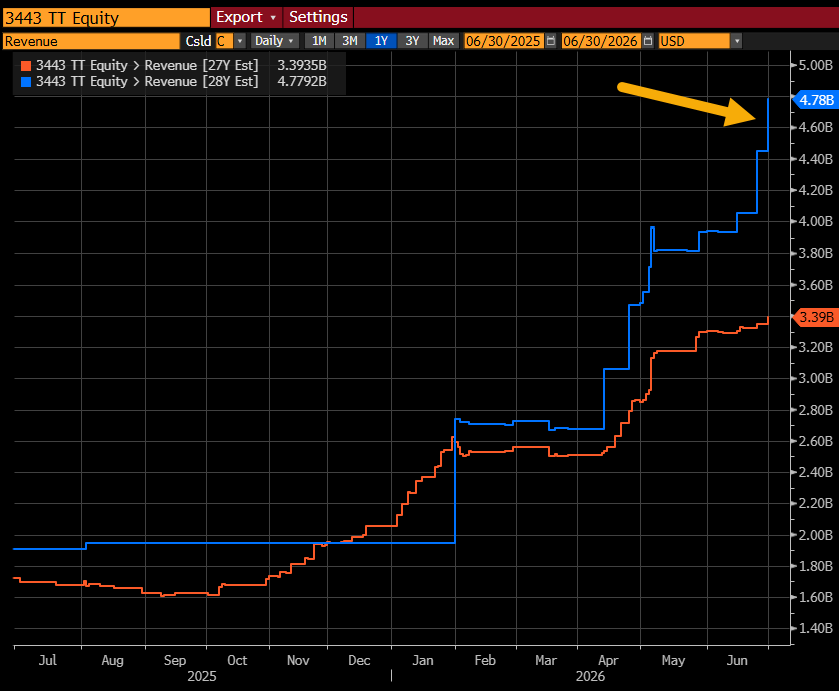
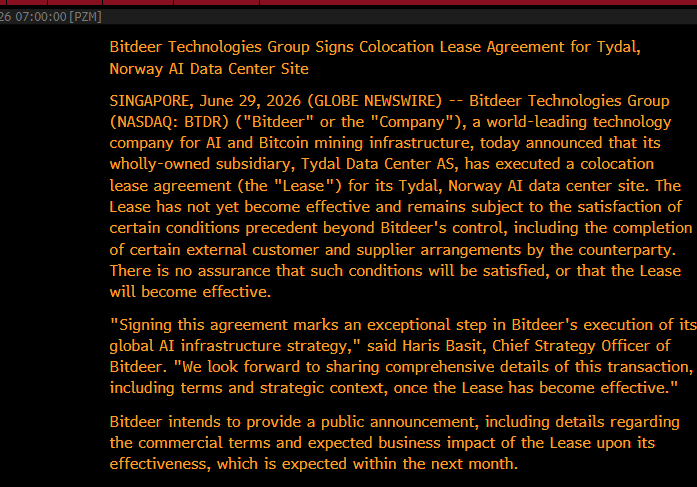
$BTDR announces colocation lease agreement for 225MW Tydal site in Norway; terms to be detailed upon effectiveness, expected within 1 month.
We guess phase 1 is 50 MW, worth $3.40/share (stock at $16).
Entire 225MW could be worth $15/share @ $6M/MW capex
"In one sign the administration wants to boost U.S. open-weight companies, the Pentagon recently announced a deal with one of the few domestic open-weight developers, Reflection AI, for use in classified settings."