Founder & CEO @ Skybound Medtech | Building the Physiological Backbone of the Space Economy | Dual-Use Medtech | Deep Tech for Space, Defense, and Longevity
Could Space Medicine Become the Forcing Function MedTech Innovation Needs? Matthew Kuhn of Skybound Medtech.
What happens when getting to space becomes easier than keeping humans healthy once they arrive?
I had a fascinating conversation with Matthew Kuhn(@matthewkuhn) , Founder and CEO of Skybound Medtech (https://t.co/rmJfjwbO7Z) , to explore one of the most interesting emerging categories in MedTech: space medicine.
Matthew’s thesis is that as launch costs fall and humans spend longer periods beyond Earth, human physiology becomes the next bottleneck.
That creates problems traditional healthcare was never built to solve.
Microgravity accelerates muscle and bone loss. Earth-based supply chains disappear. A medical emergency on Mars could involve a communication delay long enough that waiting for instructions from a physician on Earth is no longer practical.
That pushes medicine toward autonomous robotics, reusable medical devices, physical AI, local clinical decision-making, and entirely new approaches to human performance.
What I found especially interesting is that this is not only about astronauts.
Space can act as a forcing function for medical innovation because many physiological problems become dramatically accelerated in extreme environments.
Technologies developed to keep people healthy in space could eventually translate back into aging, rehabilitation, chronic disease, and healthcare on Earth.
Matthew also explains why Skybound is building at the intersection of space, defense, and clinical medicine, using a venture studio model designed to turn mission-critical problems into standalone companies.
The real opportunity may not be adapting Earth medicine for space, but using space to force medicine to invent what comes next.
Episode Breakdown
00:00 Why Space Medicine Could Change Healthcare Forever
01:07 Meet Matthew Kuhn, Founder of Skybound MedTech
02:24 From Johnson & Johnson to MedTech Entrepreneurship
03:30 How Lockheed Martin's Skunk Works Inspired MedTech Innovation
05:03 Could Removing Gravity Transform Modern Medicine?
06:11 Why Space Exploration Needs New Medical Technologies
07:53 How Manufacturing in Space Could Improve Medicine
09:09 Which Surgeries Could Benefit From Zero Gravity?
10:16 What NASA's Twin Study Revealed About Aging
11:19 Telomeres, Longevity and the Effects of Space Travel
12:43 Could Space Research Unlock Longevity Breakthroughs?
13:30 Market Engineering and MedTech Growth
15:28 What We Still Don't Understand About Space and Human Health
15:52 Why Osteoporosis Is a Major Challenge in Space
16:11 How Microgravity Accelerates Bone and Muscle Loss
17:23 What Happens to Astronauts After Long Space Missions?
18:46 Why Space Is So Dangerous for the Human Body
19:11 Is Space Medicine an Entirely New MedTech Category?
20:44 Why Space Medicine Could Accelerate Medical Innovation
21:17 How Space Research Could Transform Healthcare on Earth
22:18 Why MedTech Needs More Moonshot Innovation
23:23 Why Space Medicine May Require Autonomous Surgical Robotics
24:59 Why Disposable Medical Devices Won't Work on Mars
26:07 Could Space Accelerate Autonomous Surgery?
26:30 What Happens When Someone Has a Heart Attack in Space?
26:59 Why Mars Communication Delays Make Remote Surgery Difficult
27:40 How NASA and Space Companies View Space Medicine
28:48 Why the Space Economy Is Changing So Quickly
30:22 NASA's Moon Base Plans and the Future of the ISS
30:47 Why Private Companies Are Building the Next Space Stations
32:06 What the AI Boom Can Teach Us About Space Innovation
33:55 What Is Skybound MedTech's Business Model?
34:20 Why Skybound Focuses on Space, Defense and Longevity
35:26 How Skybound Makes Deep Tech Ventures Investable
35:58 Who Invests in Space Medicine Startups?
36:13 Why Traditional MedTech Venture Capital Is Challenging
37:01 How Space and Defense Funding Opens New Opportunities
37:33 Why Early-Stage Investors Are Demanding Revenue
39:18 What Silicon Valley Gets Right About Startup Investing
39:47 Why MedTech Investors Are Moving Toward Later-Stage Companies
41:20 Could Space Medicine Attract a New Class of Investors?
42:04 The Rise of Brain-Computer Interface Startups
42:28 Which BCI Companies Are Leading Innovation?
43:51 How Motif Neurotech Is Advancing Brain Stimulation
44:52 Why Colossal Biosciences Wants to Revive Extinct Animals
45:44 How De-Extinction Could Create Valuable New Technologies
46:43 What Skybound Can Learn From Colossal Biosciences
47:20 How Moonshot Missions Create Commercial Opportunities
48:39 The Unexpected Story Behind Skybound MedTech
50:35 How Reusable Rockets Inspired a New Healthcare Vision
51:07 Why Human Physiology Could Become Space's Biggest Bottleneck
52:14 How a Father's Curiosity Sparked a MedTech Idea
53:48 What Growth Hormones Reveal About Human Physiology
54:44 Could We Prevent Muscle and Bone Loss in Space?
55:19 How Skybound Chooses Which Technologies to Develop
56:08 The Challenge of Testing Medical Devices for Space
56:34 Could NVIDIA's AI Simulations Transform MedTech Discovery?
58:26 Why Medical Device Innovation Needs New Discovery Models
58:39 Can Digital Twins Simulate Human Biology?
59:45 Is Skybound MedTech a Venture Studio?
01:00:10 How Skybound Plans to Build and Spin Out MedTech Startups
01:01:27 Why Houston Could Lead the Next Space Medicine Revolution
01:02:06 Should Medical Innovation Start in Space or on Earth?
01:02:25 Why Skybound Starts With the Challenges of Space
01:03:01 Final Thoughts on Space Medicine and Breakthrough Innovation
01:04:00 End
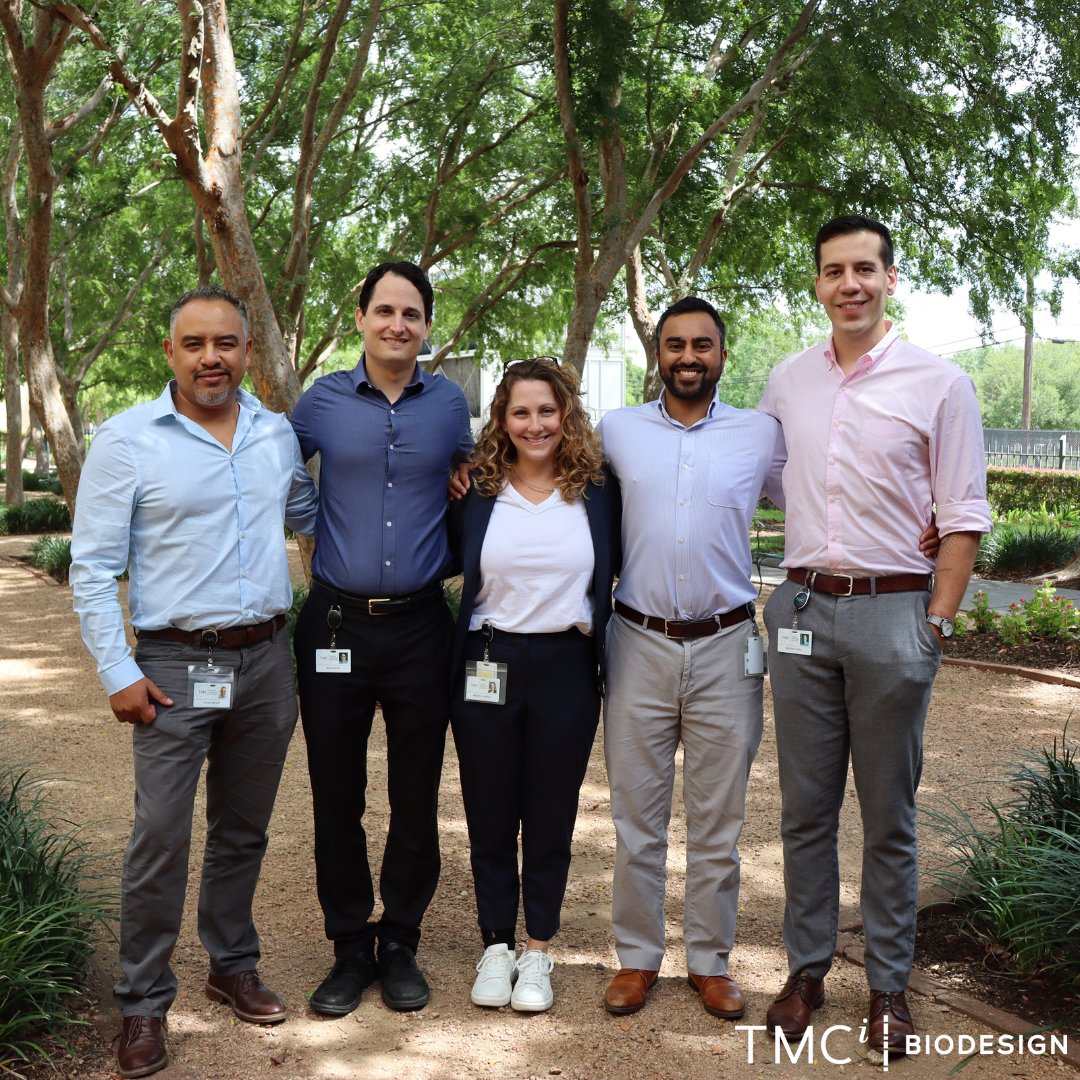
Welcome Aaron Glick, DDS, Ashish Gupta, Carlos Bernal, Melanie Lowther, Matthew Kuhn, and Dhini Nasution, our new 2022-2023 Biodesign founders! We are excited to support your company formation journey.
https://t.co/yd5ZepfHUw
Very thankful to speak with @kaytsukel at @ASMEdotorg for this great piece on how we're continuing to find creative new ways to foster innovation while working from home during the COVID-19 pandemic. #medicaldevices#innovation https://t.co/hQnPGN3DDD
Fifty years ago, humans took their first steps on the Moon and the world watched as we made history.
On July 19 at 1 p.m. ET, you can watch us salute our #Apollo50th heroes and look forward to our next giant leap for future missions to the Moon and Mars: https://t.co/ICdost7DT0
ICYMI: Bioengineers are on the path to 3D printing replacement organs.
The latest issue of @sciencemagazine features a breakthrough technique for bioprinting developed by Rice bioengineer Jordan Miller and colleagues: https://t.co/fDcmo6RJMU