… and a valid legal document then why would I accept the common language texts as being generated by “an intelligence”? It is, as pointed out out by @emilymbender, me doing the work interpreting the texts, where I can.
“When we encounter something that seems to be speaking our language, … we use the skills associated with using that language to communicate with other people. Those skills involve … joint attention so we imagine a mind behind the language even when it is not there.”
I refuse to be delegated to the "skeptics box" in someone else's framing of a debate. Here is my response to @stevenbjohnson 's NYT Magazine article about LLMs and OpenAI.
On NYT Magazine on AI: Resist the Urge to be Impressed https://t.co/XLmbYfkUjs
The only reason I’m willing to posit some “intelligence” to the LLM creating the language output is because those texts have a familiar context to them, broadly, the human experience. BUT, if I can’t differentiate between random legalese garbage from a LLM … /3
@dark_matter88_@tttthomasssss My team at Zalandoin Berlin is looking for applied scientists https://t.co/SdkRejp2zr. Zalando is also hiring applied scientists across Europe at least in Berlin, Helsinki, Dublin and Zürich
Quite simply the best talk I've seen about writing in an academic context: "your readers don't care about your problem, you need to care about theirs" https://t.co/NXsufGfNbD
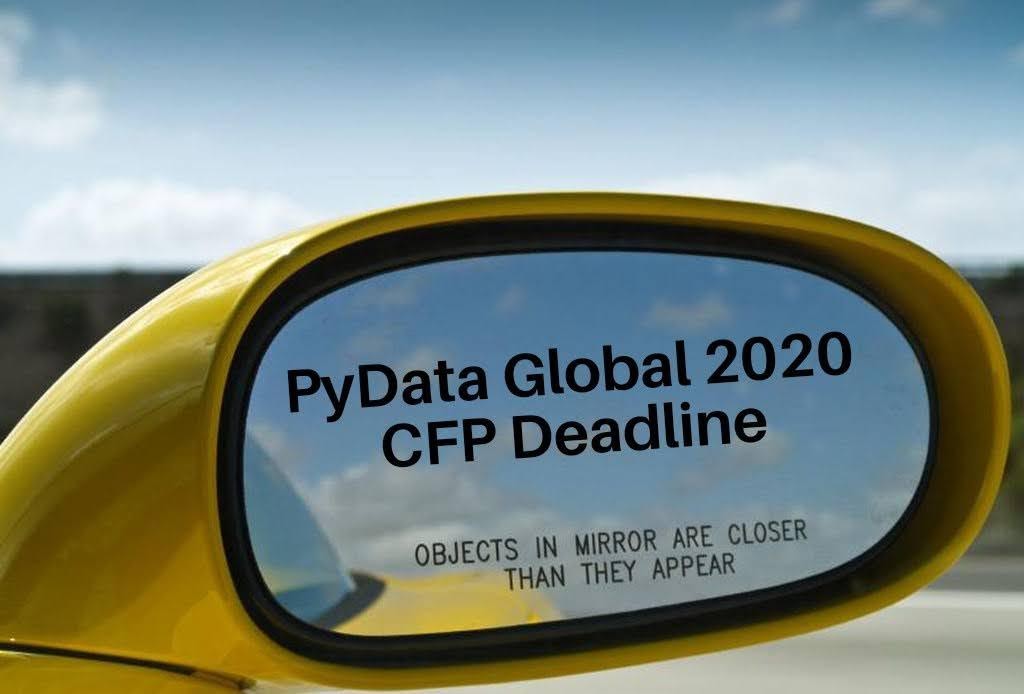
Love #PyData talks? Want to bring your vision to the the next biggest PyData? Sign up to review proposals for #PyDataGlobal2020! https://t.co/a2KxHUYM1U
Some folks over at @Rasa_HQ also got to play with GPT-3 so we wrote a blogpost about some of our first findings. There were impressive moments but algorithmic bias is definately a problem. Here's some careful first impressions.
https://t.co/nn4ctAN1aj
A "tell-all" account of why improving @SemanticScholar#search is not as simple as you might think...
Dealing with dirty data, feature engineering, proper evaluation, posthoc correction, and more in this article by @SergeyFeldman today on the AI2 Blog:
https://t.co/OrYrxOdUuC
@SashoSavkov As soon as you think about deploying ML. If you don't know what to measure from a business perspective then you haven't thought through what the system should be doing, which puts you in the research phase. That ought to be communicated to manage expectations.
Are you struggling with ML system monitoring after an initial deployment? This is one of the best articles I've seen on the topic (it's long though) https://t.co/ZIGDVWkxlI
@SashoSavkov Depending on the business somewhere between burning through your funding, losing customer trust and being fined or shutdown by a regulator for non-compliance.
Funding an ML team that's not measured against business metrics (unless their explicit purpose is to do research):
AI == compute. Here's a couple more in a similar vein https://t.co/35TNhHMeIk and https://t.co/EmlDIhFKsD. @Miles_Brundage has written quite a bit about measuring progress in AI.
The authors of this paper analyzed 1,058 arXiv papers and plotted various benchmarks against the increase in compute requirements, arguing that the current progress is largely driven by more compute and may become unsustainable soon: https://t.co/joWHnH3QXx