R1b-U152 Italo-Celtic. Glue of Europe.
East Bell Beaker, Unetice, Tumulus, Urnfield, Hallstatt, Proto-Villanovan, La Tene, Roman Republic, Venetia, Z56
@groypinghowler@BeardsonBeardly For some reason it somewhat lost me at "infiltrating the snowy fortress" sequence which seemed to drag in a way that made me think a bit less of it as whole.
@aledeniz Northwest Sicily seems to have considerable Z56 also. Though I wonder how much of this is from later emigration of NW Italians to the region. Could possibly be both.
@LordIxabert I admire that. Courage/boldness come first for an aristocrat. When disgraced they get back up, dust themselves off and carry on. That's not to say they don't learn from mistakes.
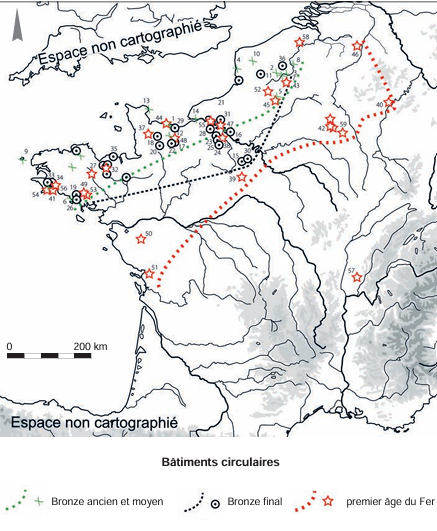
Distribution map of circular buildings in the Early/Middle Bronze Age (times signs), Late Bronze Age (black rings) and Early Iron Age (red stars)
Source: Maitay, Marcigny, Riquier "L’habitat rural du premier âge du Fer. Enclos palissadés de l’Atlantique à la Moselle"
@Michssspp82096 Would it have included certain Urnfield groups like RSFO, Knoviz, Velatice etc...? I'm confused by the Urnfield/Early Hallstatt distinction/overlap.
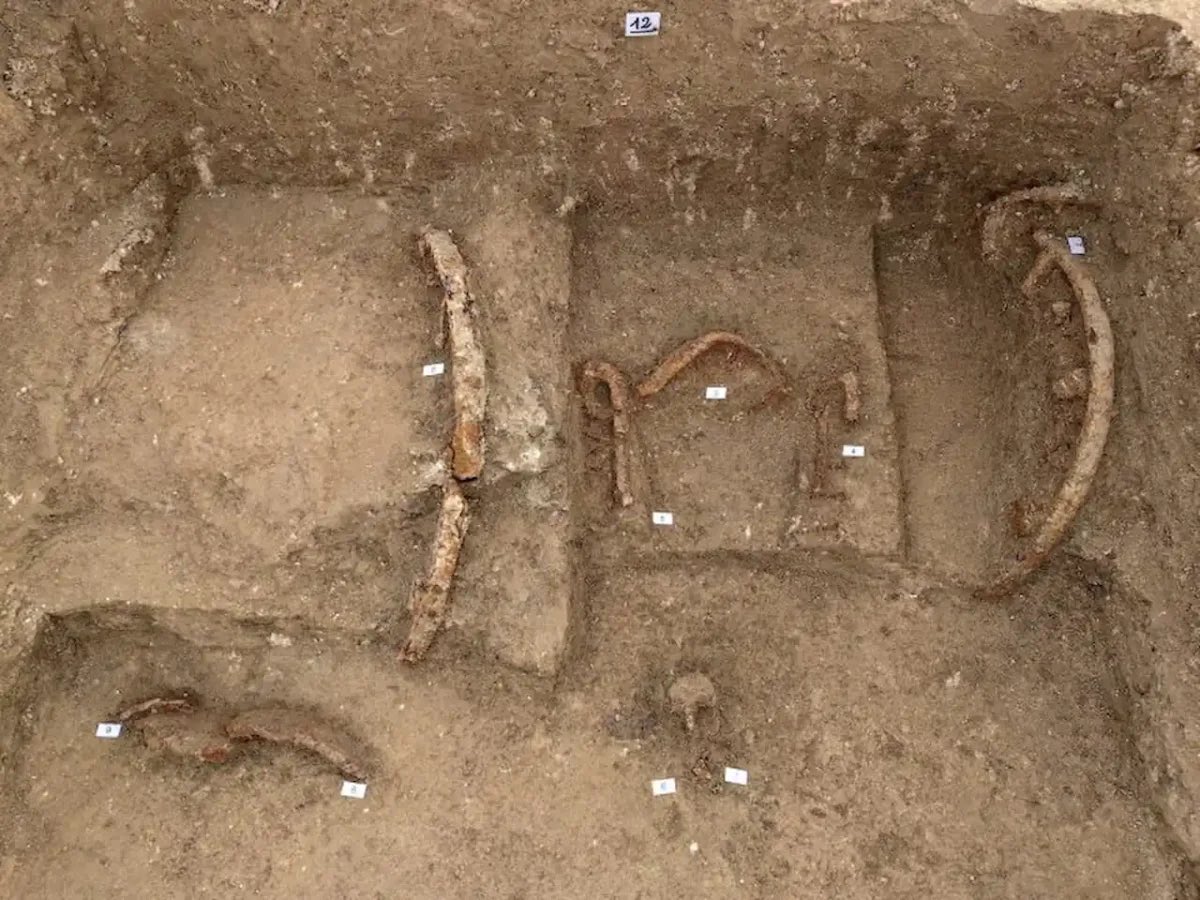
NEW: Princely chariot burial found at the Picene necropolis of Conero in Italy
The Picenes were an ancient Italic people who flourished on the Middle Adriatic side of Central Italy between the 9th-3rd centuries BC. This burial dates to the 6th century.
In addition to the chariot, the elite individual had been laid to rest with military equipment (weapons and a helmet), a bronze oinochoe (wine jug) of the Graeco-Etruscan tradition, and a folding stool that symbolized power in pre-Roman Italy. Bronze containers preserving traces of organic material, ceramics, and animal bones may have been food offerings or the remains of a banquet that accompanied the burial.
📸: Soprintendenza Abap Ancona Pesaro Urbino
The Urnfield Culture certainly had something to do with Mycenean collapse and the Sea Peoples. To what extent, and how directly so, remains uncertain.
This may or may not be a stretch, but an interesting exploration of the topic nonetheless.
Was the mysterious end of the Mycenaean civilization brought about by the Urnfield Culture? Some archaeological evidence certainly points in that direction.
Link Below 👇👇
@CanadianAitken@FortressLugh Oftentimes when people talk about "destroyed" they mean destroyed as a political entity, which the Myceneans certainly were. Not that the mass of people were slaughtered and replaced.
Split between Atlantic and Continental cultures, Bronze Age France experienced continual influences from the east. In chronological order:
-Early BA: Rhône culture
-Middle BA : Tumulus culture
-Late BA: Urnfield (RSFO)
In the time between 1 150 BC and 800 BC, the "Channel North sea" group started to shrink under pressure from the Northern Alpine group.
The era is marked by the appearance of grouped settlements, defence systems, ringforts and the development of defensive and offensive weaponry
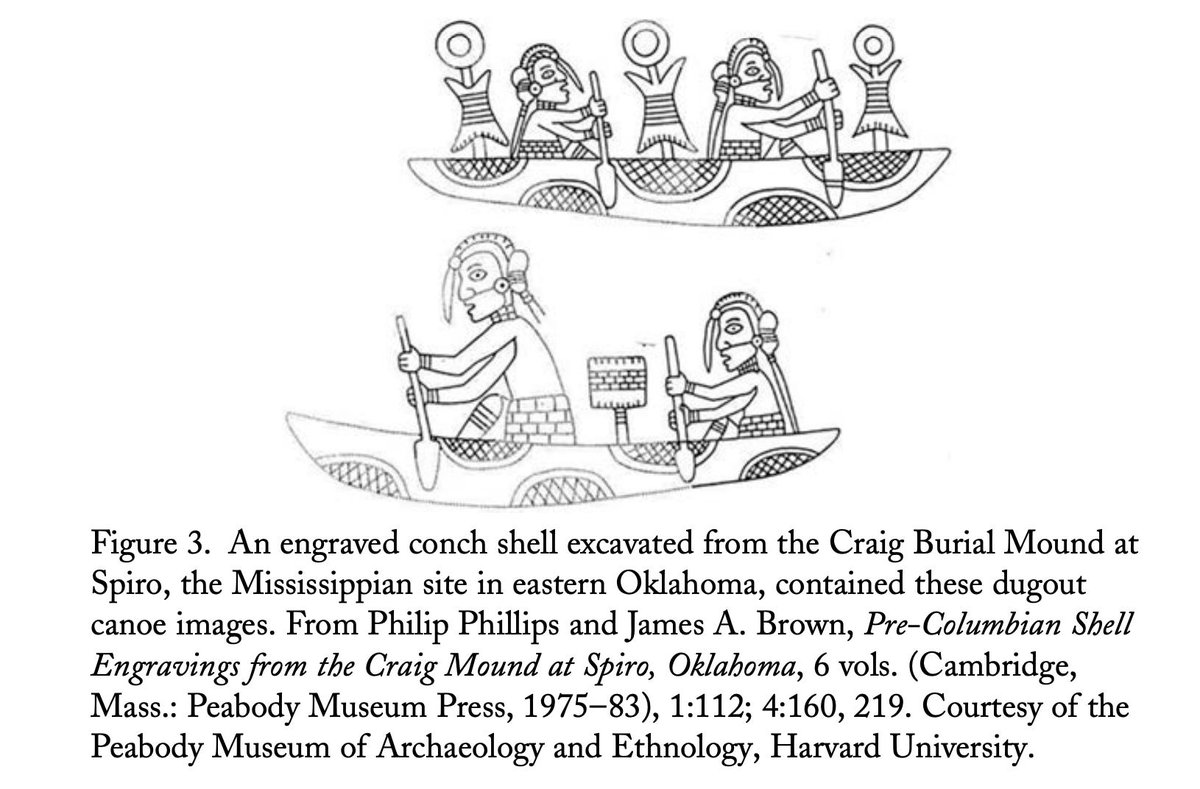
The fleets of the Mound Builders.
In 1541 and 1543, members of the De Soto expedition encountered vast fleets of hundreds of Mississippian war canoes on the Mississippi River. These vessels were noteworthy, with the largest capable of holding up to 70 men.