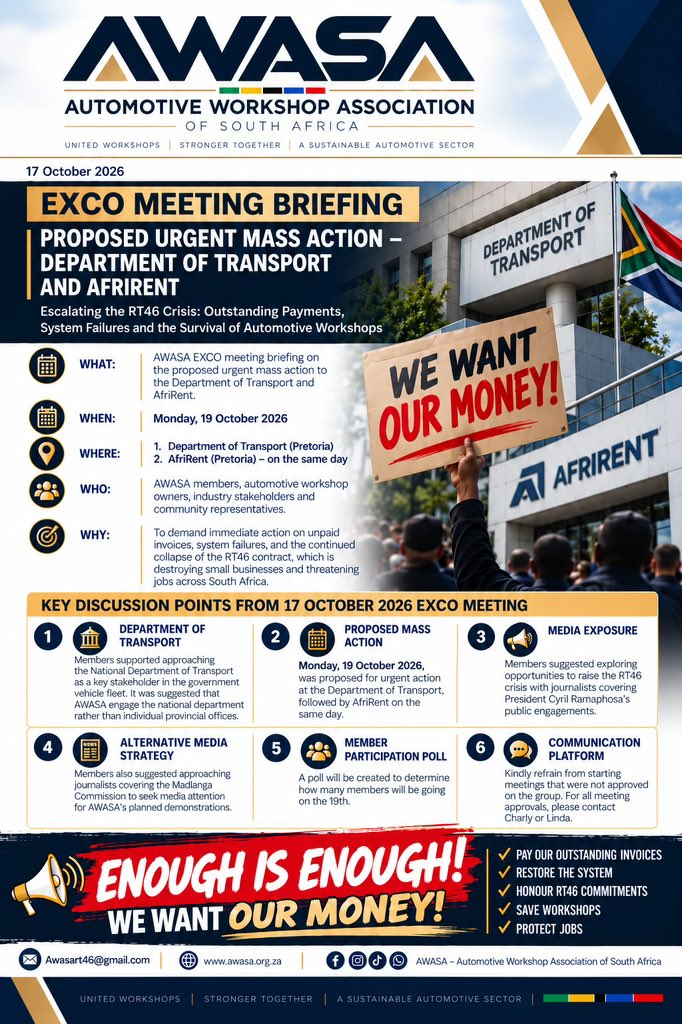
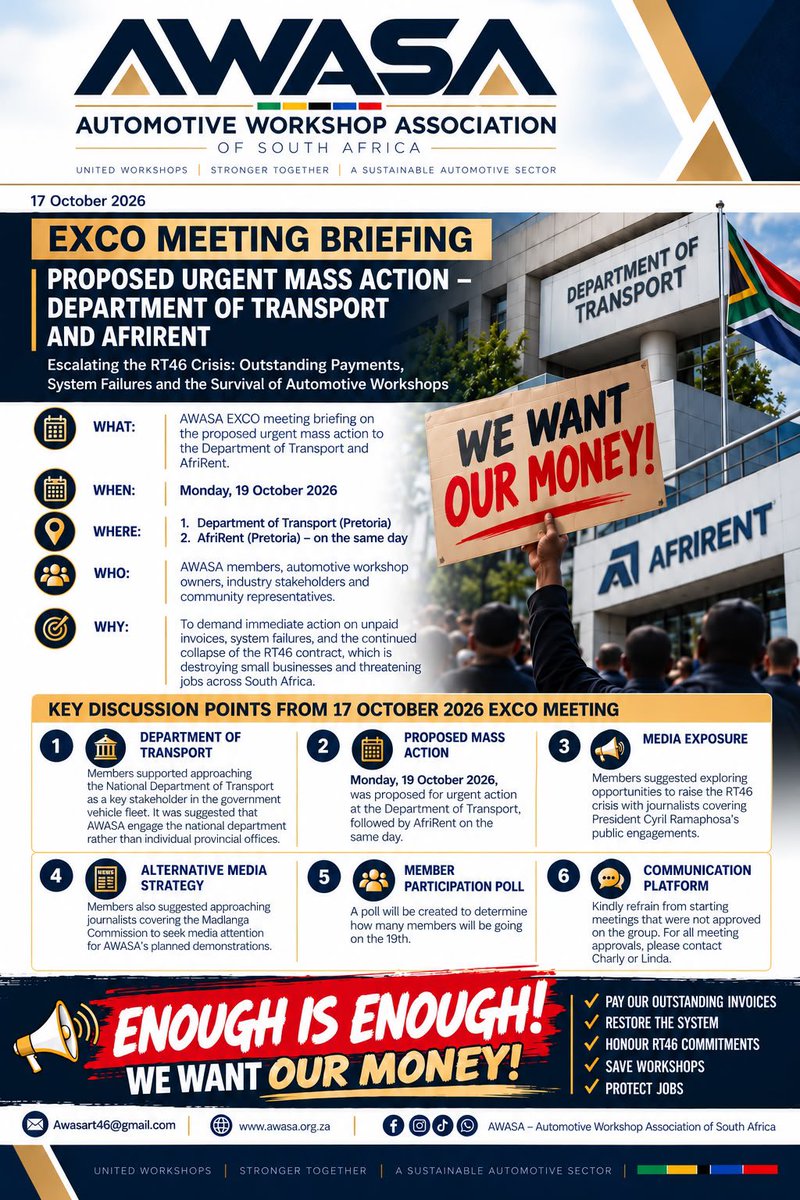
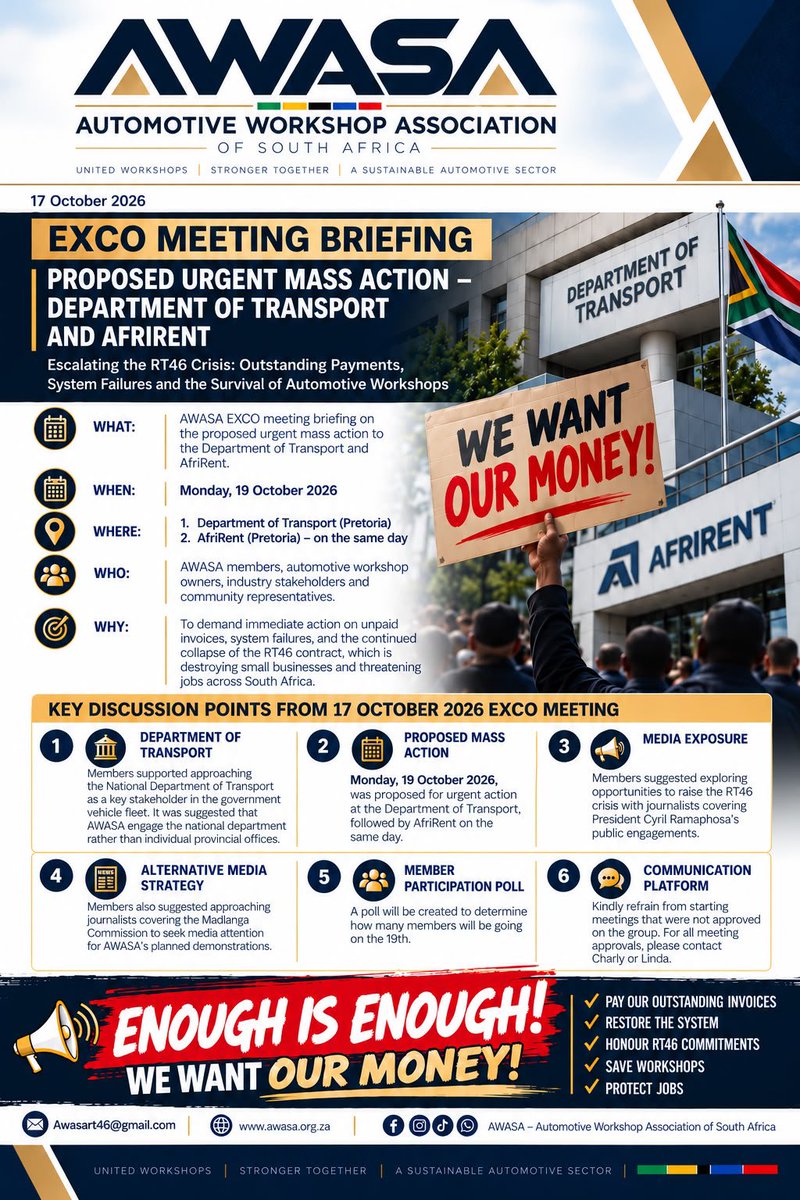
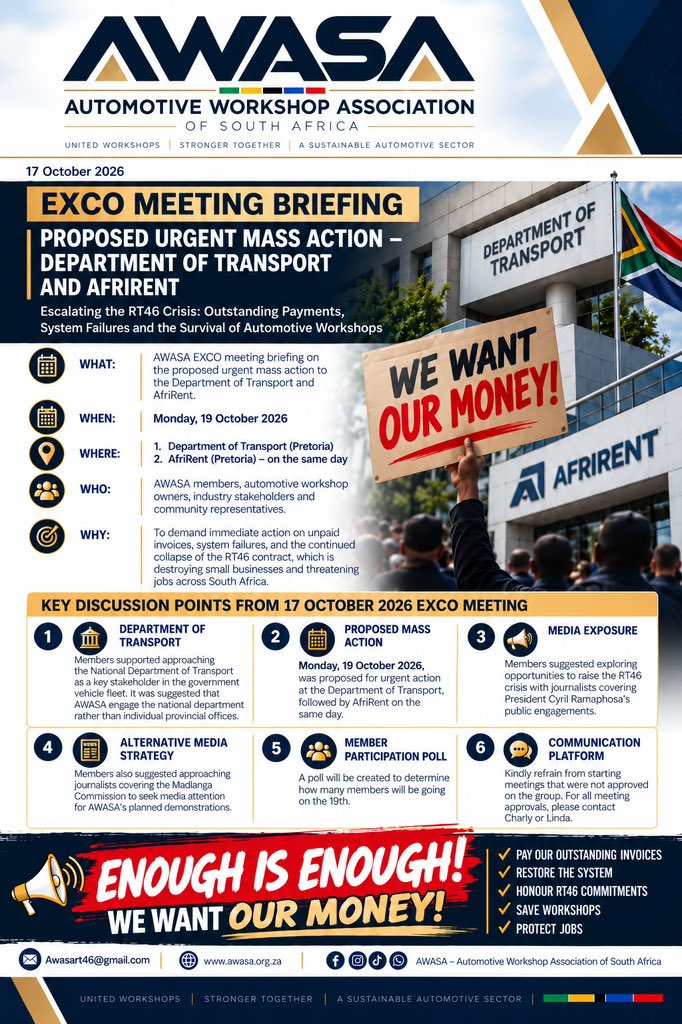
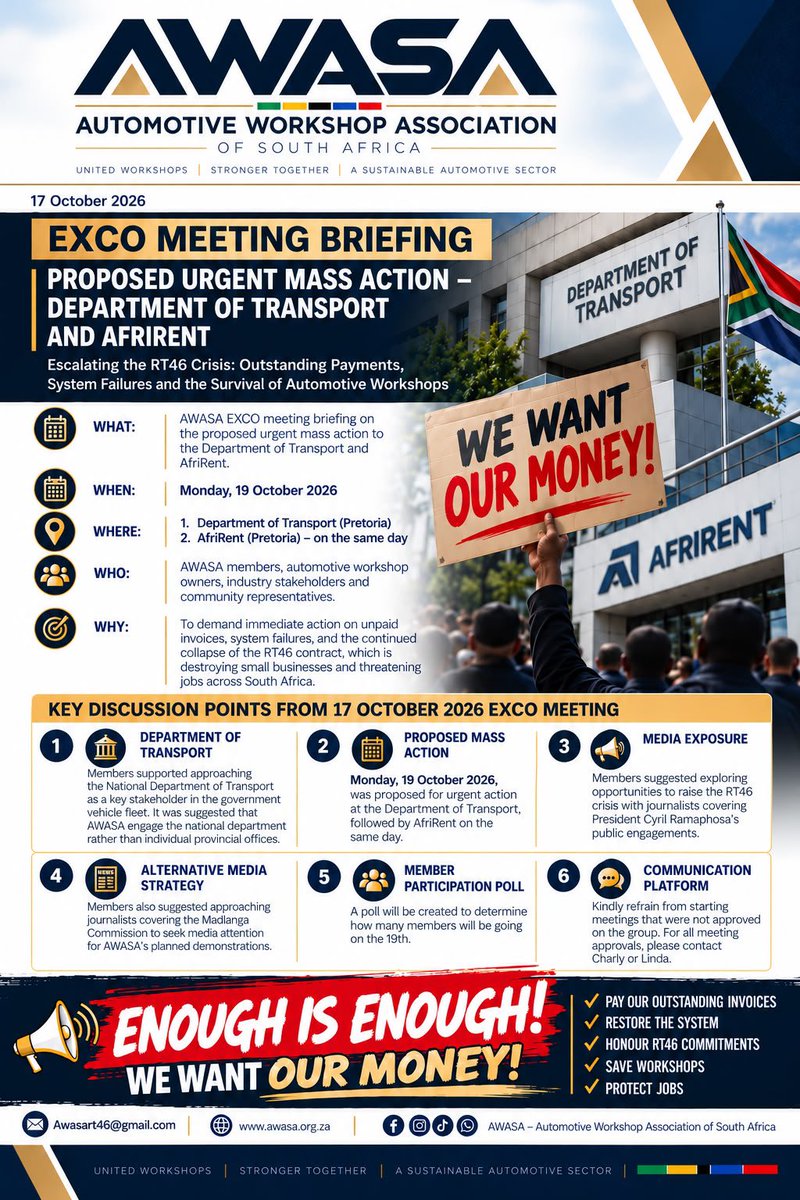
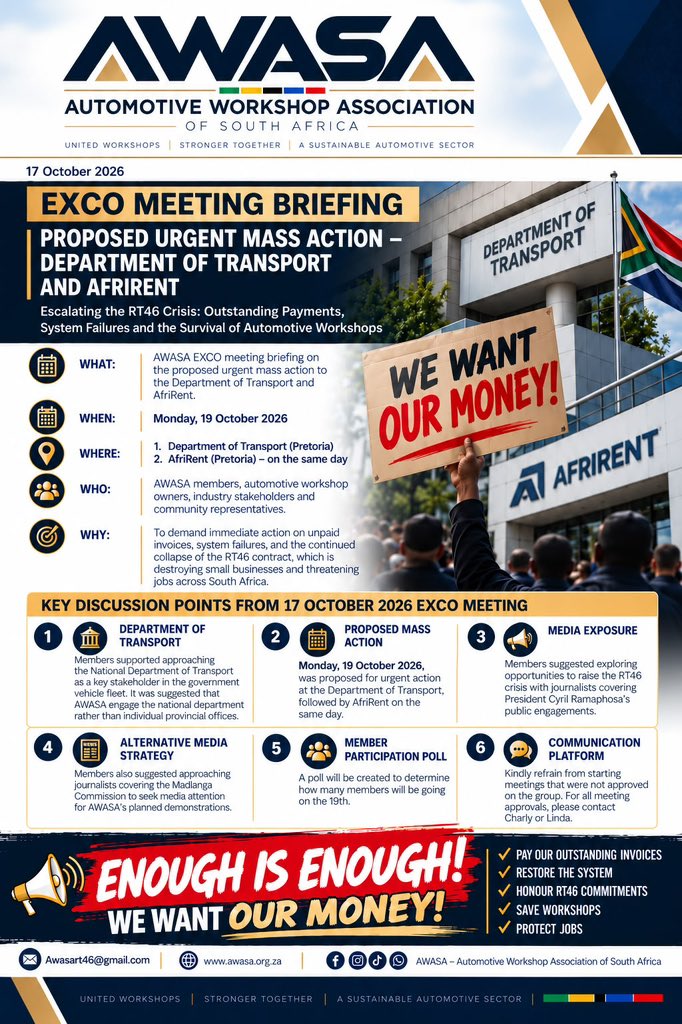
RT46-2026: A national fleet contract is failing the people it should serve
AWASA calls for urgent investigation as merchants report unpaid invoices, workshops closing and public-service vehicles waiting for repairs.
By the Automotive Workshop Association of South Africa (AWASA)
The Automotive Workshop Association of South Africa (AWASA) is raising the alarm over the condition of the RT46-2026 fleet maintenance programme. A contract designed to support the state’s vehicle fleet is, according to reports from affected merchants, leaving vehicles waiting at workshops, businesses short of cash and repair capacity unused.
National Treasury lists RT46-2026 as a 60-month state vehicle fleet management contract running from 1 July 2026 to 30 June 2031. Afrirent manages the maintenance and repair category within this programme. The scale and duration of the contract make effective oversight essential. (https://t.co/DjvH2SrYr5)
AWASA members report vehicles waiting at manufacturer-authorised dealerships and independent workshops for repair approvals, work orders, parts or payment. They say emergency-service and police vehicles are among those affected. Some workshop owners are reluctant to release completed vehicles while invoices remain unpaid. These reports must be urgently checked against fleet records by the relevant departments.
The payment record is a serious cause for concern. Afrirent’s 28 September notice advised merchants that payments would be delayed until 9 October. Its 6 October update said that a 30% part-payment had been made while the remaining balance was being reconciled. An RMI member update dated 13 October said some merchants were still unpaid and reported Afrirent’s commitment to pay outstanding RT46 invoices by 16 October, subject to complete documents being submitted by 14 October. As of 17 October, merchants reported that the outstanding amounts had still not been paid in full.
For small workshops, repeated payment delays threaten the ability to pay suppliers, rent and staff. AWASA members report that some businesses have closed or are at risk of closure, putting jobs and apprenticeships in jeopardy. This is not an abstract administrative problem. When a local repair business loses the cash to operate, the damage reaches workers, suppliers and the communities that depend on those businesses.
The work-allocation and onboarding process also requires urgent scrutiny. Capable workshops report that they remain unonboarded, while some that have completed onboarding say they receive little or no work. One AWASA member in Aliwal North reports that a vehicle was towed from Colesberg to the workshop, a journey of close to 200 kilometres, although a closer repair option may have been available. If confirmed, this raises questions about unnecessary taxpayer costs and avoidable time out of service.