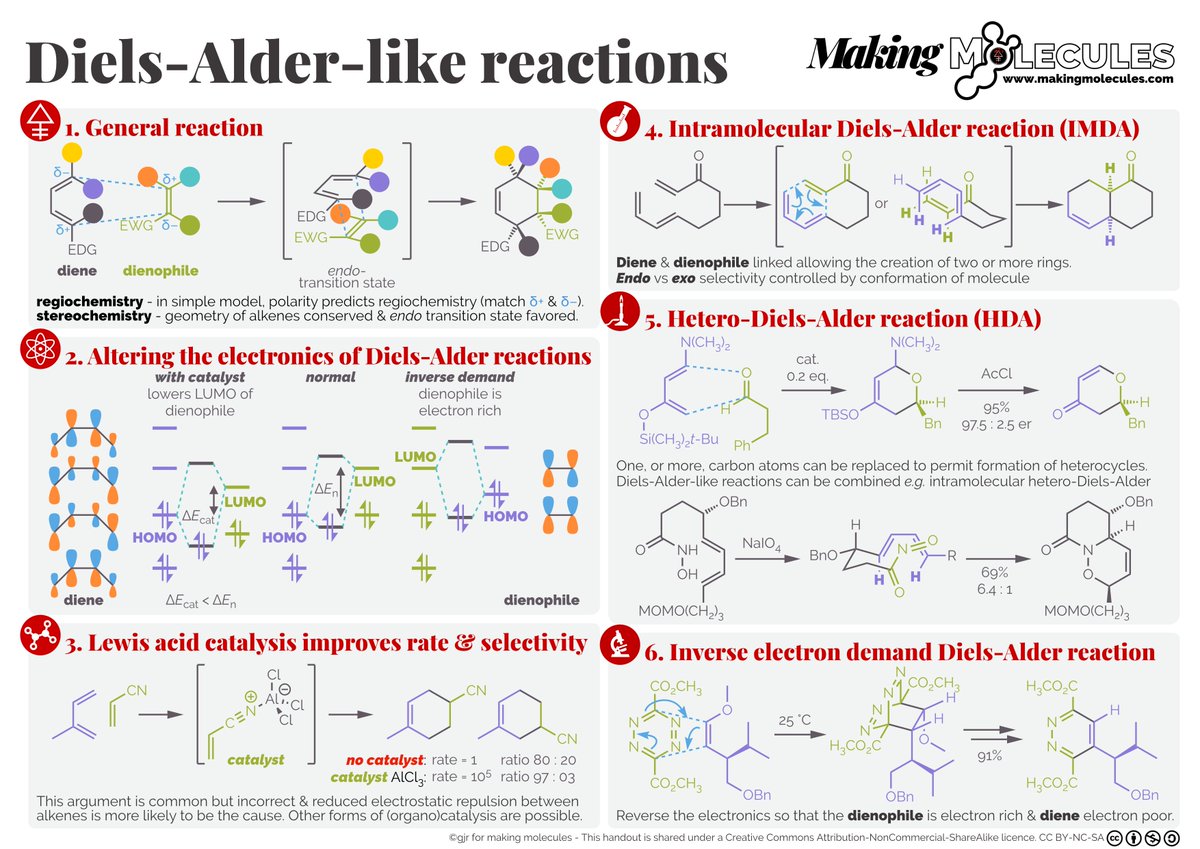
#ChemEd#Chemistry summary looks at modifications of the Diels-Alder reaction. It includes IMDA (tie the ends together), HDA (swap one (or more) carbons out) & IEDDA. It mentions the old explanation for LA catalysis (the more modern explanation is at https://t.co/lpz6IVXfgQ)
As promised, a #ChemEd#Chemistry summary introducing enamines as enolate equivalents. This is an #UG intro & only covers formation & 3 simple reactions. It doesn't include discussion of regio- and stereoselectivity.
As always, I hope this of use to someone. Enjoy.
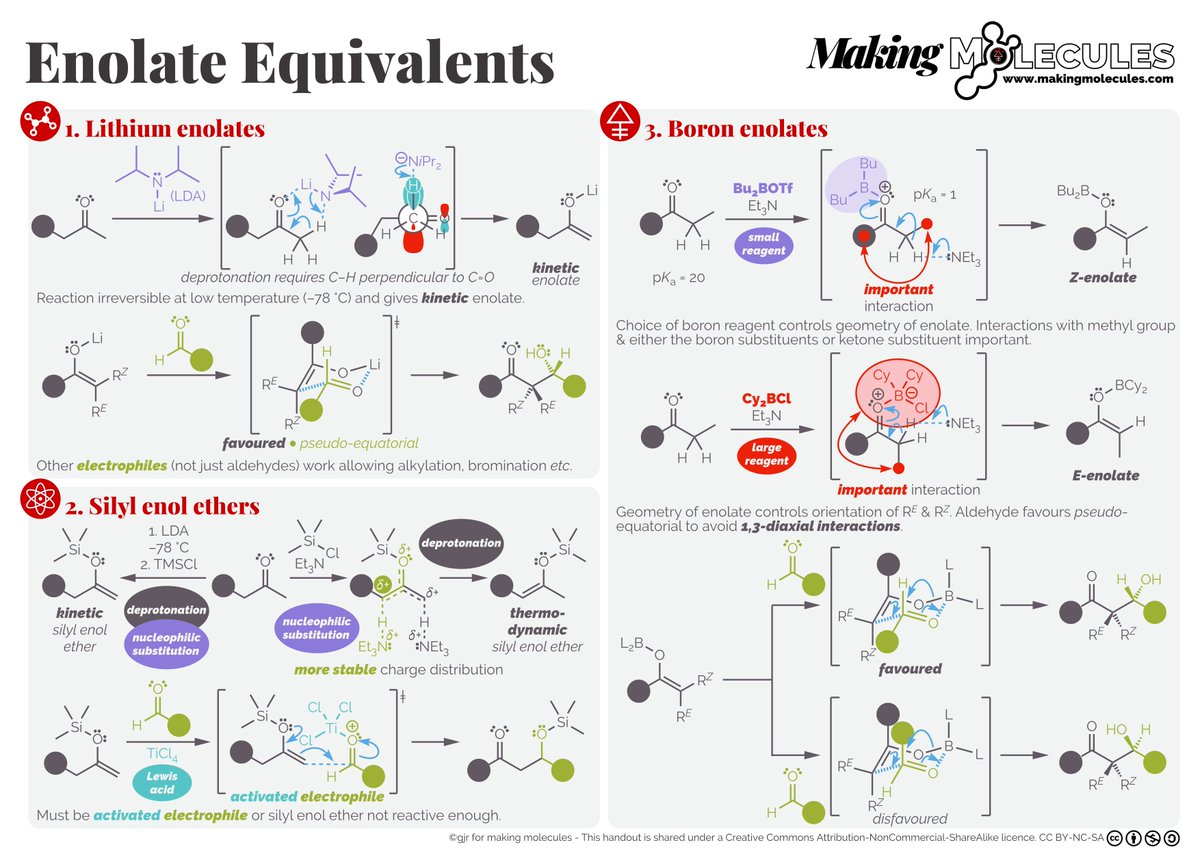
After looking at enols & enolates, here is a #ChemEd#Chemistry summary of enolate equivalents. These allow more control of selectivity than simple enolates. They are needed for stereoselective enolate chemistry (something I'll get to eventually). Enamines have their own summary.
Breaking radio silence with 2x #ChemEd#Chemistry summaries of aldol-like reactions. These are just lists of reactions. One tries to include mechanisms. More a stop gap than anything else (things have been hectic). Hopefully, someone will find them useful. Enjoy.
The 1st of many #ChemEd#Chemistry summaries related to enols/enolates/etc. This one covers keto-enol tautomerization & 2 reactions of enols. As always, it is just meant to cover the basics. It is a summary to refresh/support students' memories. As such, I hope it is of some use.
The obvious follow-up to SN1/SN2 substitution is a #ChemEd#Chemistry summary on E1/E2 elimination. This summary only looks at E1/E2 & not fun like E1cB. More detail is https://t.co/uouuXF3QiF. Enjoy (& yes a summary of which mechanism operates is coming next week). Enjoy
A #ChemEd#Chemistry intro to models for predicting diastereoselectivity in nuc addition to aldehydes with an α stereocentre. These are the common ones but not the only ones. https://t.co/6wPLA2epNq Enjoy (& yes I know there are exceptions/other models) ... this is just a start
A postdoctoral position, funded by the @LeverhulmeTrust for up to 36 months, is available to join my group @EdinburghChem. The project focuses on biomimetic approaches to natural product synthesis.
Deadline: 28th August 2025.
https://t.co/S5GelmP6Cv
The previous #ChemEd#Chemistry summaries provided the background for org rcts (except the acid/base 1 which is THE most important org rct). Here are curly arrows, the last thing I need before starting reactions! It's a summary, more details elsewhere https://t.co/i9IrL5GYb8
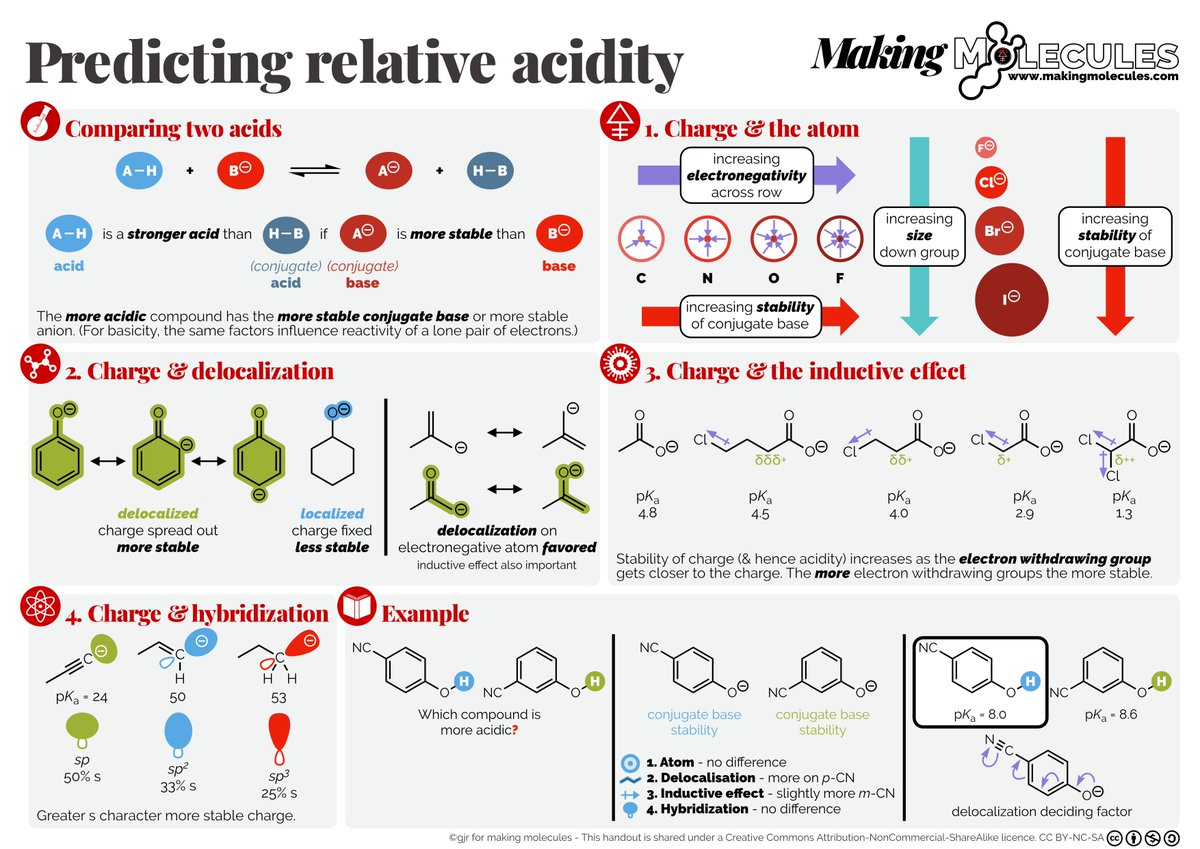
Following the pKa scales, here is a #ChemEd#Chemistry 1 page intro to predicting relative acidity based on stability of the conjugate base. It's a simple #UG look at a complex subject. Far too simple in retrospect. Here is a blog (https://t.co/pwB6aKNIYB) that gives more context
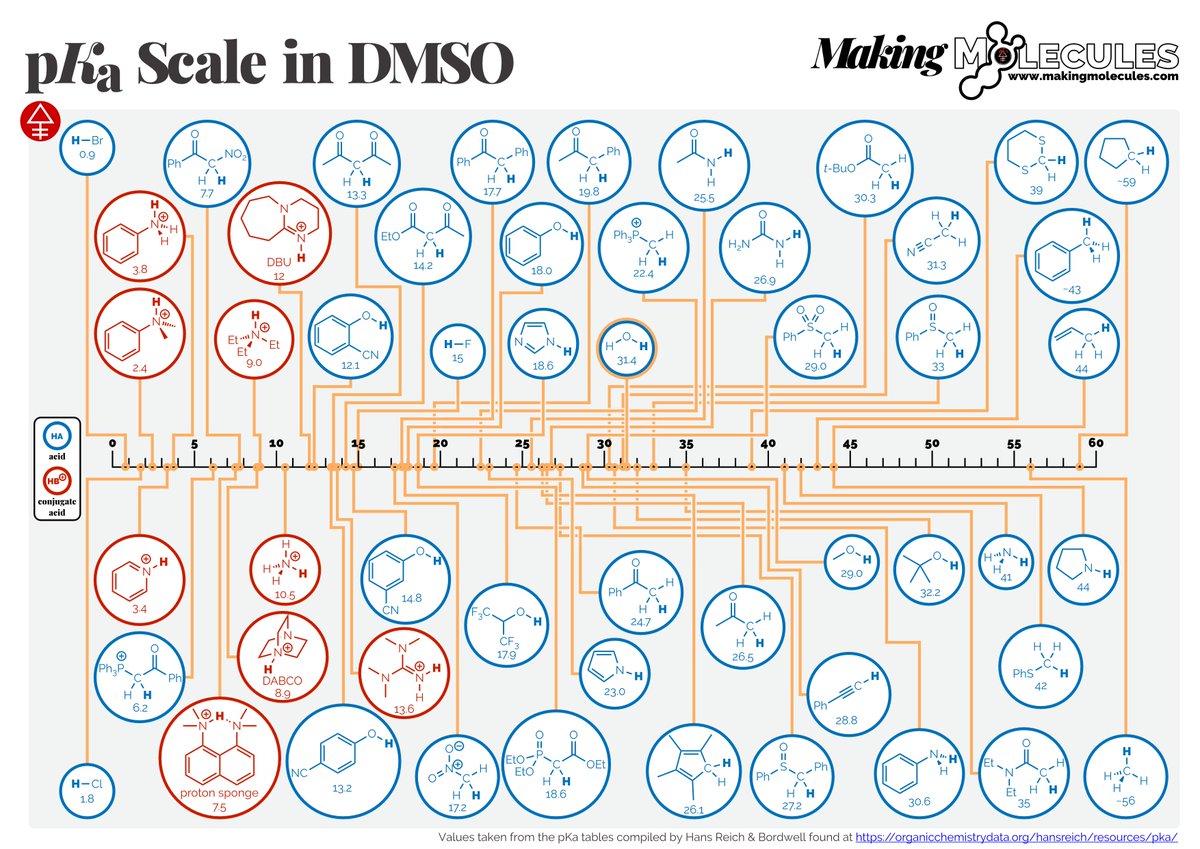
Occasionally, I take #ChemEd#Chemistry requests & after the pKa scale in H2O, I was asked for DMSO & MeCN versions. Here it is for DMSO. As before, it's nothing new. Values are taken from Reich & Bordwell (ref at the bottom of chart) & I've tried to make them more visual. Enjoy
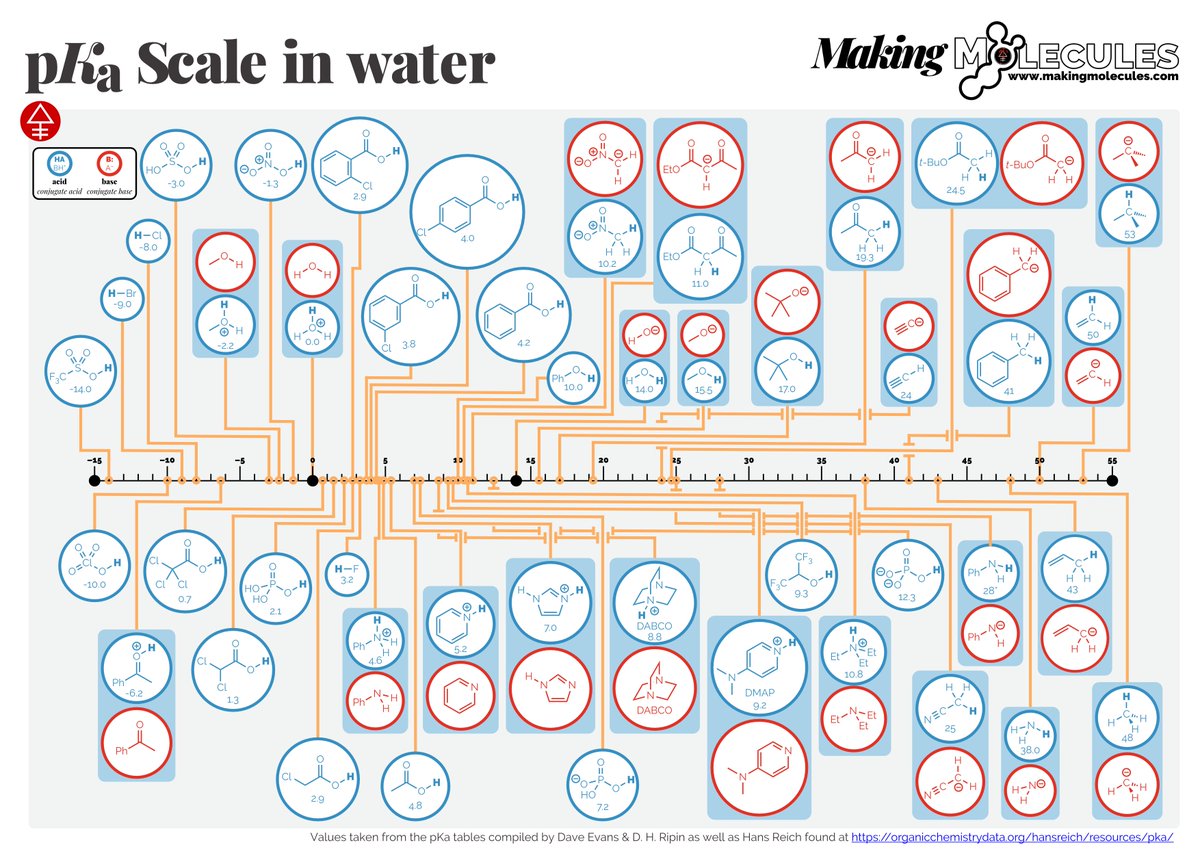
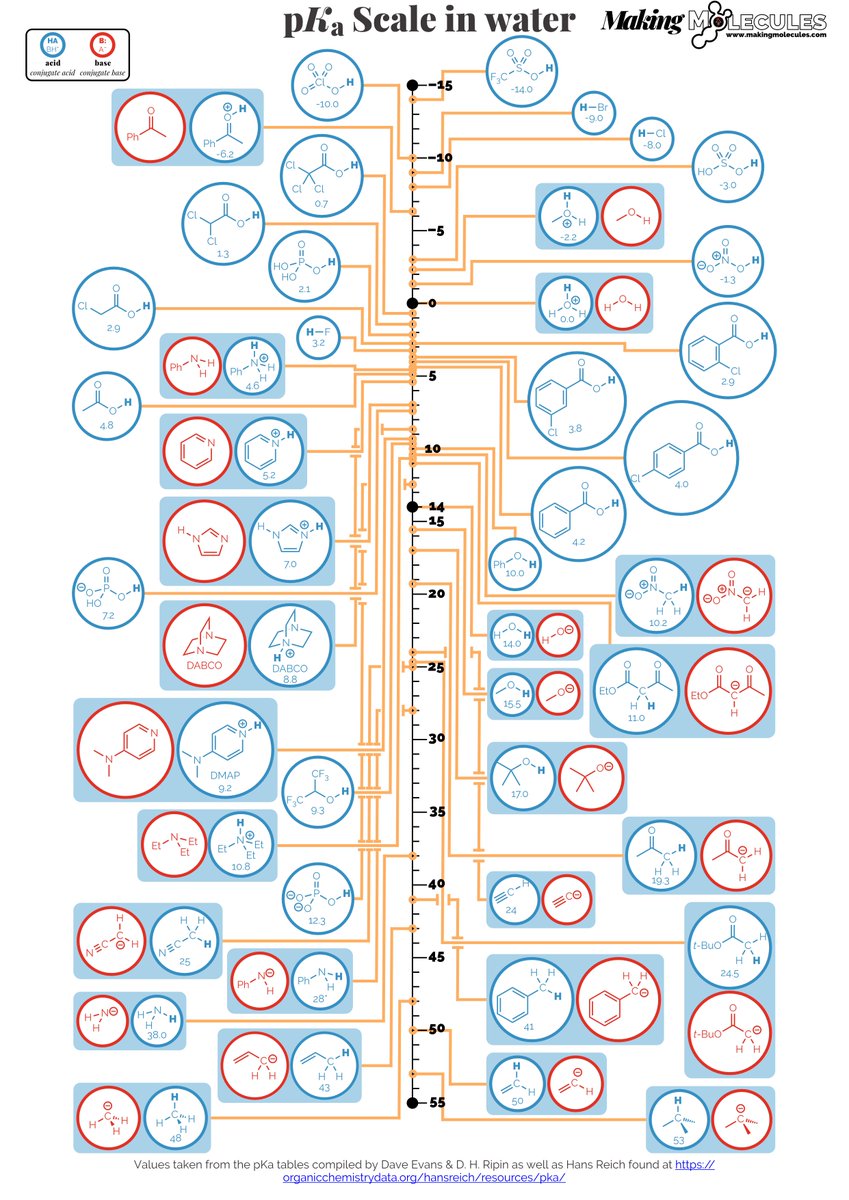
Re-inventing the wheel. Instead of a #ChemEd#Chemistry summary, here is my attempt at a pKa (in H2O) scale. Values are taken from the Evans/Ripin & Hans Reich resources. If you want a table, I recommend these. This was an attempt at a more visual representation of the same data.
Last update of our "useful link" website: we added a few computational tools and compound databases useful for organic chemists! (Just a start, happy to add more in the future)
https://t.co/QKs07QQCAv
The follow up to last week's #ChemEd#Chemistry summary on equilibria, this one looks at Le Chatelier's Principle & outlines the effect of common stresses on equilibria.
Inspired either by Roy Lichtenstein or Damien Hirst, there are lots of dots (joke ... Lichtenstein not Hirst)
Need to proofread a thesis or lengthy SI? 📄 Just drop your PDF into the SI checking demo on Hugging Face!
👉 https://t.co/l9MkQk8BPU
DM with feedback or suggestions and help making the tool better!
#Proofreading#AcademicWriting#HuggingFace#OpenScience#ChemTwitter