@BKSportsTalk With a lot of anticipated turnover in the rotation after this year — will there be an opportunity for Pallante to try and develop as a starter again?
@jprutherford I think his last statement goes to show just how bad some of our contracts are. They’re so bad that even other teams don’t want our players at their current production levels. We should be tanking but instead Army is trying to save face.
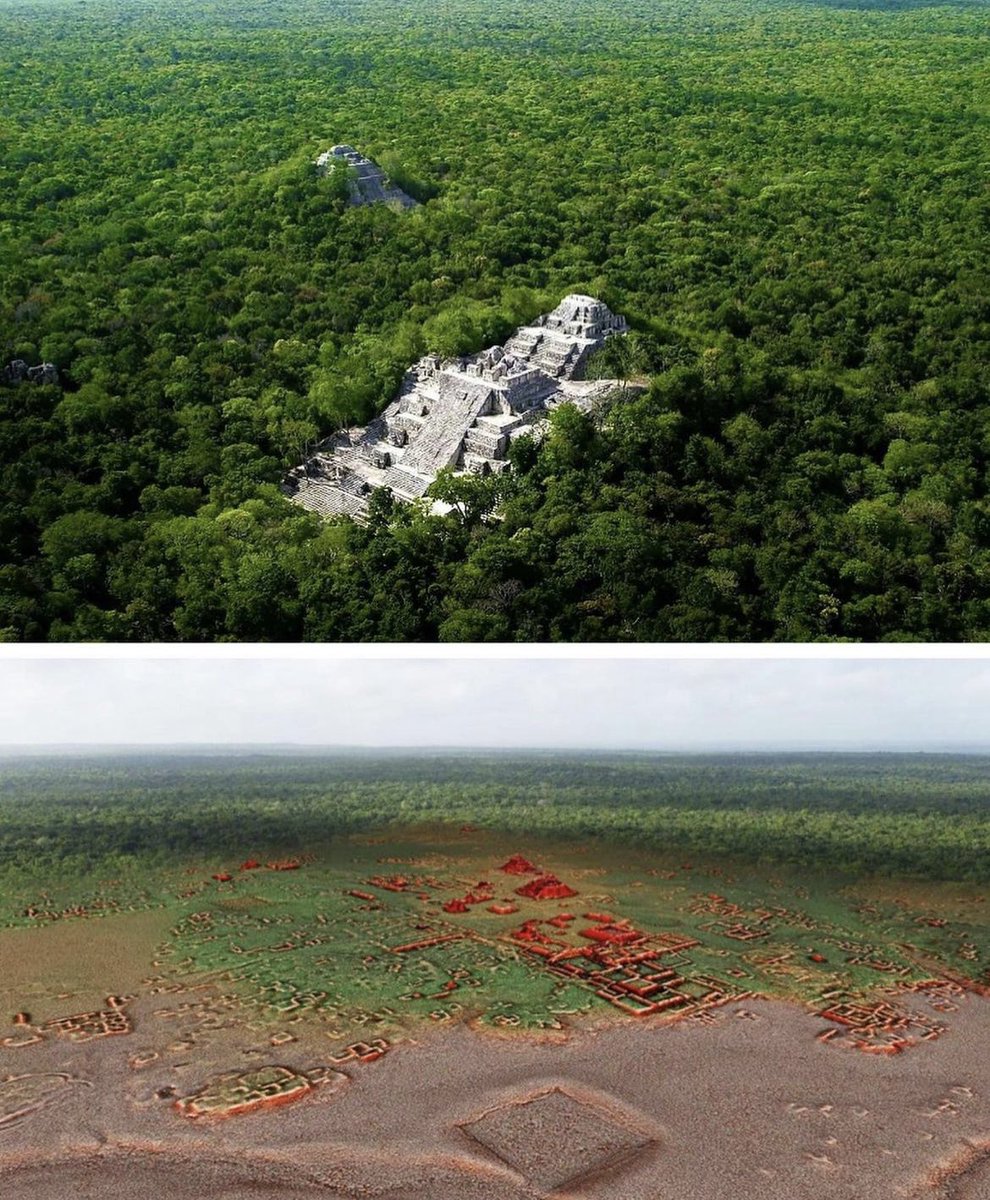
Archaeologists have utilized LIDAR technology to explore Calakmul, a vast urban area located in southern Mexico. By employing Light Detection and Ranging (LIDAR), scientists have been able to remove the dense rainforest cover and uncover the remnants of an ancient Mayan city, which is nearly twice the size of the City of Vancouver.
LIDAR, short for "Light Detection and Ranging," is a technology that allows researchers to examine the Earth's surface. This technology employs pulsed laser beams to measure variable distances, generating precise three-dimensional data about the Earth's shape and surface characteristics. By combining these laser pulses with other recorded information collected by airborne systems, LIDAR offers valuable insights into the examined area's topography.
The capabilities of LIDAR are remarkable. Kathryn Reese-Taylor, a professor at the University of Calgary, states, "You can be trying to survey and map sites in the rainforest, and what would take you years to accomplish, LIDAR can do in a couple of days of flying over these large areas."
The University of Calgary reports that an international team of researchers conducted a comprehensive LIDAR survey spanning over 36 square miles of forest canopy in southeastern Mexico, specifically in the Calakmul region. Calakmul served as a Mayan capital between approximately A.D. 635 and 850.
The survey findings unveiled an expansive urban settlement featuring extensive residential compounds concentrated around temples, shrines, and potentially marketplaces. The inhabitants of Calakmul relied on an advanced agricultural system supported by canals, terraces, walls, and dams. At its peak around A.D. 700, Calakmul was one of the largest cities in the Americas.
@FarmrHuntr We don’t but it would be great to be able to capture that along with the other two environments. Maybe that’ll go on the to do list for next year.
What appears to be a healthy crop from the road is actually showing a potassium deficiency. Next steps: tissue samples and soil samples to try and understand what’s happening.
@FarmrHuntr This is Southern Illinois. The probes are about 50 ft apart which is about as close as we could get them. It will be interesting to see how it develops through the next few weeks because it looks like we’re headed for a dry spell.