John Chibadura’s family has asked me to let you know that they are very grateful for the assistance and love his fans continue to show.
They have shared these two pictures so that his fans can choose which one they want to be on his tombstone. RETWEET for the first picture and LIKE for the second picture. Thank you.
"I needed to throw myself into something uncomfortable again. Honestly, I thought all my firsts were done"
Our very own @LewisHamilton on the cover of @TIME 💪
#F1
Stay away from baddies, date people who have something to lose, people who respect themselves, people with a reputation, and those who add something meaningful to your life.
It is important to be discerning when choosing who we allow into our lives.
A lowlife will deliver nothing but grief.
Yesterday I had lunch at my Harare home with my Asian friend who runs a big business in Zimbabwe.
She asked me why Zimbabweans complain about money yet they are always in churches instead of going to work when it is available.
I inquired for more information in order to understand what she meant, she explained that if she asks workers to stay behind for overtime work, they would rather rush to church than work.
She explained to me that many countries that have citizens who are obsessed with going to church also have poor citizens except for America which is an outlier and countries that have resources like oil.
She explained that China became what it is today because of hard work, and not going to church.
“You don’t become a superpower like China by going to church daily, God needs you to work,” she said
She added that she respects people’s rights to belief systems, but certain belief systems are the bedrock of poverty.
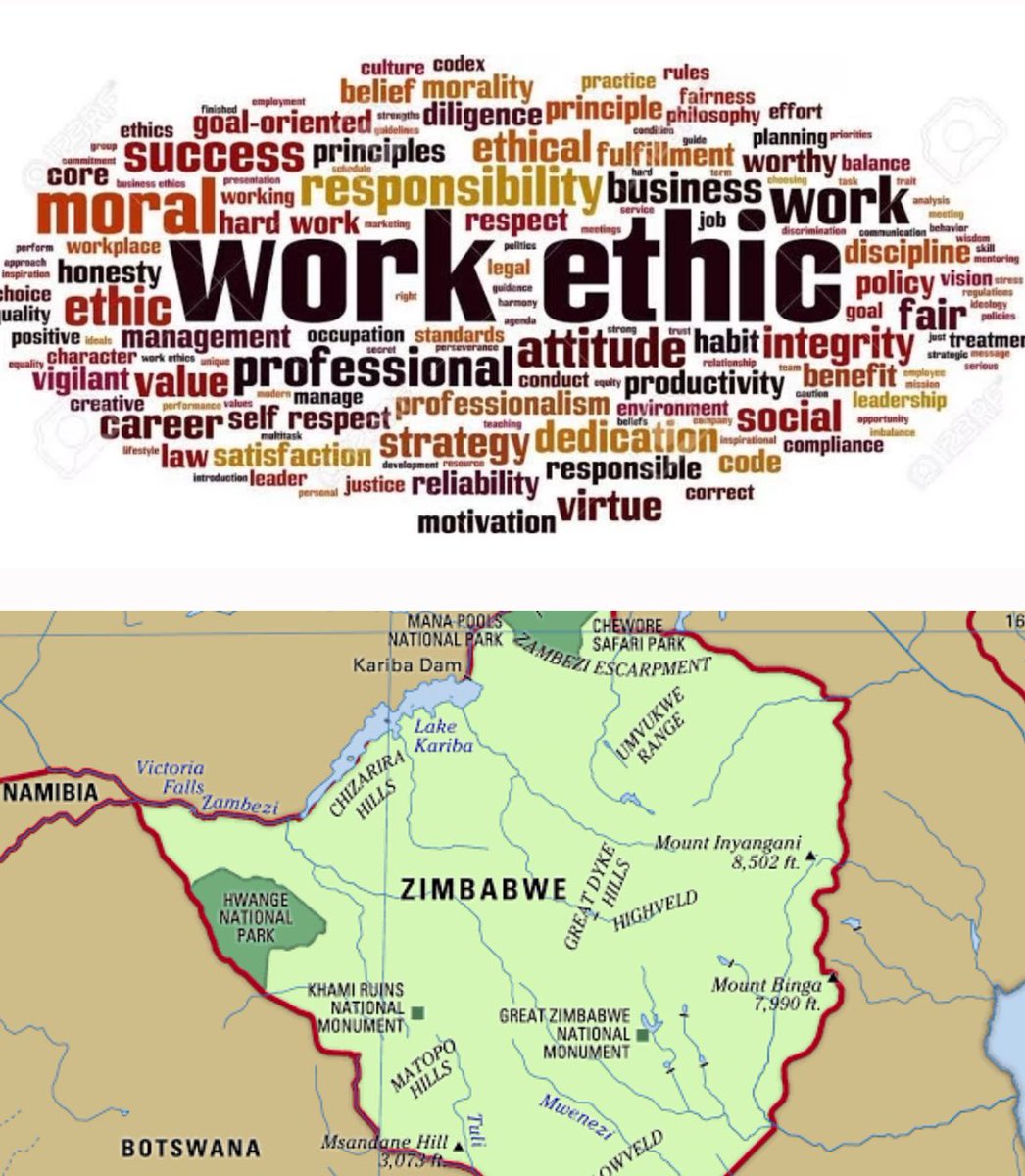
My friend was highlighting a perspective on the relationship between work ethic and economic prosperity, something that Tsitsi Masiyiwa said years ago on this platform, but unfortunately was driven off Twitter for saying that truth.
There is a direct link between certain cultural practices and their impact on productivity and economic prosperity.
People's beliefs and priorities influence economic outcomes, that is why I really appreciated my friend for bringing these things up.
Whenever I hire a Zimbabwean to do work for me in South Africa, invariably I get a sense that they take advantage of our Zimbabwean-ness.
They would never not turn up for work on account of going to church when they are hired by a white guy, but they will do that to a compatriot.
“Ahh mudhara nezuro taka zonwa stereki,” is another common one.
I think we should have a serious conversation amongst ourselves about work ethic, something that Tsitsi Masiyiwa correctly pointed out.
As a people, we have been let down by a corrupt government, but there is a line where government sins start and end, and where we must take responsibility for our successes or failures beyond corrupt rule.
I always make it a point to hire the marginalised, and those that have worked for me know that I pay very well, but they come late, they steal things, they overcharge, they do wrong quotations, they do shoddy work, they make false promises and more.
We should initiate this open discussion and figure out how we can have a shared commitment to professionalism and work ethics within our community both home and abroad.
This starts with having mutual respect for each other in the workplace whether you are at my home or at my work place, and acknowledging our individual responsibilities towards each other.
I will share more personal encounters with my compatriots both home and abroad, and how they can change their work ethic for the better.
You will never succeed in life if you don’t have a solid work ethic and restrict your professional behavior within reason.
What had been your experience?











![WaltJackman's tweet photo. WhatsApp Statuses that Zimbabwean Ladies post after a Heartbreak 💔 [Thread]
1. “My Son My Everything” https://t.co/6UPtNq8UP8](https://pbs.twimg.com/media/GGwy2QzWIAAtMgS.jpg)