Einstein's field equations, which describe how mass curves spacetime, naturally contain zero-point energy... Based on @NassimHaramein's paper we revisit the concepts of mass and space, including infographics! 👇
https://t.co/wOCdctPzaw
@intlspacefed
"Une fois qu'on est sorti de la caverne, on n'y retourne plus!"
Dans cet extrait, Charles Robin (Le Précepteur) explique en quoi consiste le concept de "réminiscence" pour Platon, quelle est l'idée centrale de son allégorie de la caverne, et ce qu'est la maïeutique de Socrate. Il explore les aspects plus ésotériques de la philosophie de la Grèce antique.
Vous aimez notre travail? Abonnez-vous à notre newsletter gratuite: https://t.co/wKIUlIER9Z
Does the universe have a refresh rate?
Nassim Haramein suggests that at sub-Planck scales, information could move through Planck-sized wormholes — refreshing the cosmos in 10⁻²³ seconds.
Are we inside a constantly updating cosmic field?
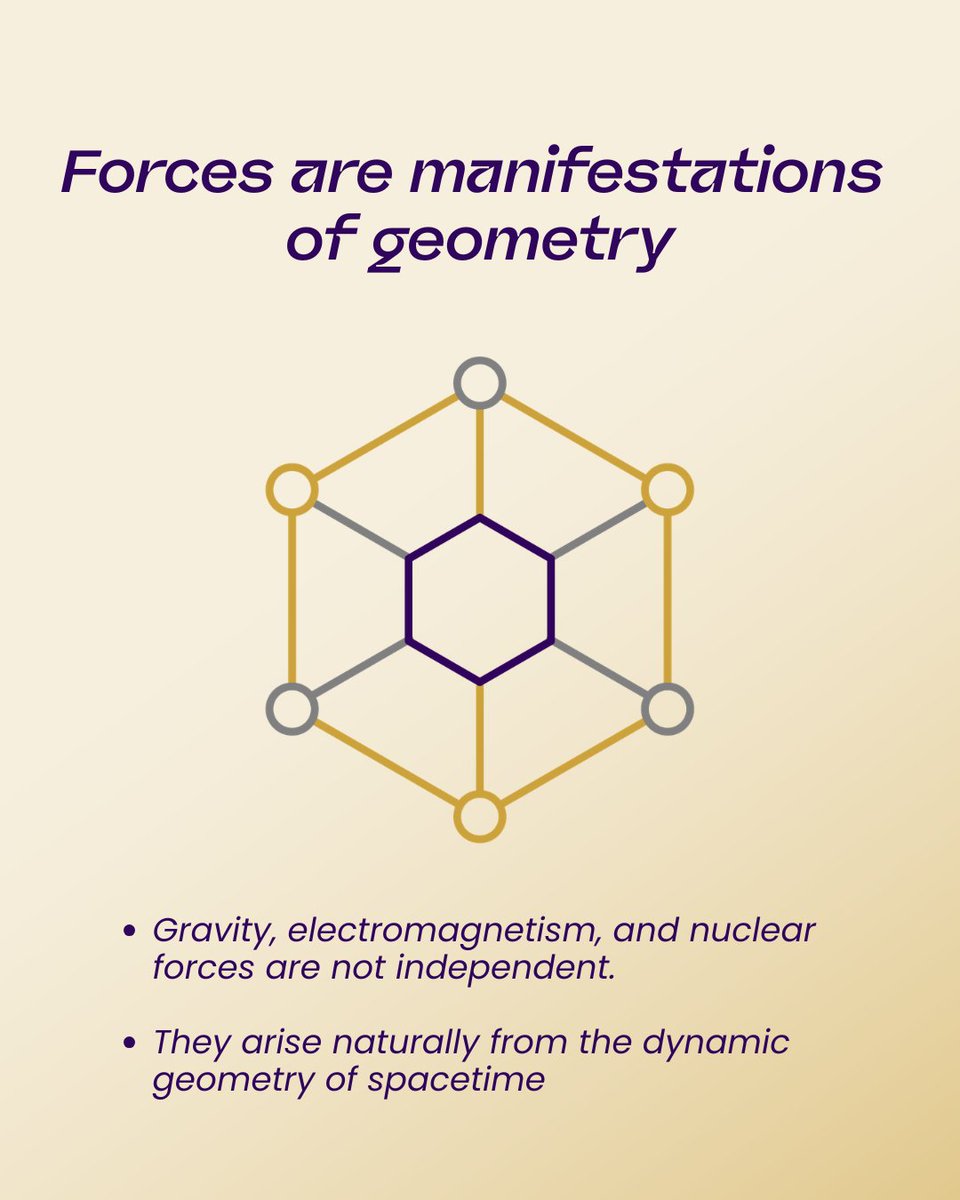
What if gravity, electromagnetism, and nuclear forces aren’t separate—but emerge from the geometry of spacetime itself?
Nassim Haramein’s holofractal model shows patterns repeating from protons to galaxies, revealing how every part of the universe encodes information about the whole.
This geometric perspective could reshape physics, explain fundamental forces, and point toward a unified theory of the universe. Share your thoughts below!
#UnifiedPhysics #Geometry #Gravity #NassimHaramein
Energy–Momentum Relation ✍️
This principle tells us that energy and motion are not separate ideas, but deeply connected aspects of the same physical reality.
In simple terms, the total energy of an object depends both on its motion and on its mass. Even if something is completely at rest, it still carries energy simply because it has mass. When it moves, its energy increases in a precise and predictable way.
This insight reshaped our understanding of matter and motion. We no longer see mass and energy as different substances, but as interchangeable expressions of the same underlying structure of the universe. Motion contributes to energy, mass contributes to energy, and together they form a single unified description of how objects exist and move through spacetime.
The proton keeps showing us ½.
Mass: only half the vacuum energy becomes observable.
Spin: exactly ℏ/2.
Same origin — pair creation at quantum horizons. One escapes. One falls in.
We're investigating whether the pattern goes deeper.
Share if this makes you curious.
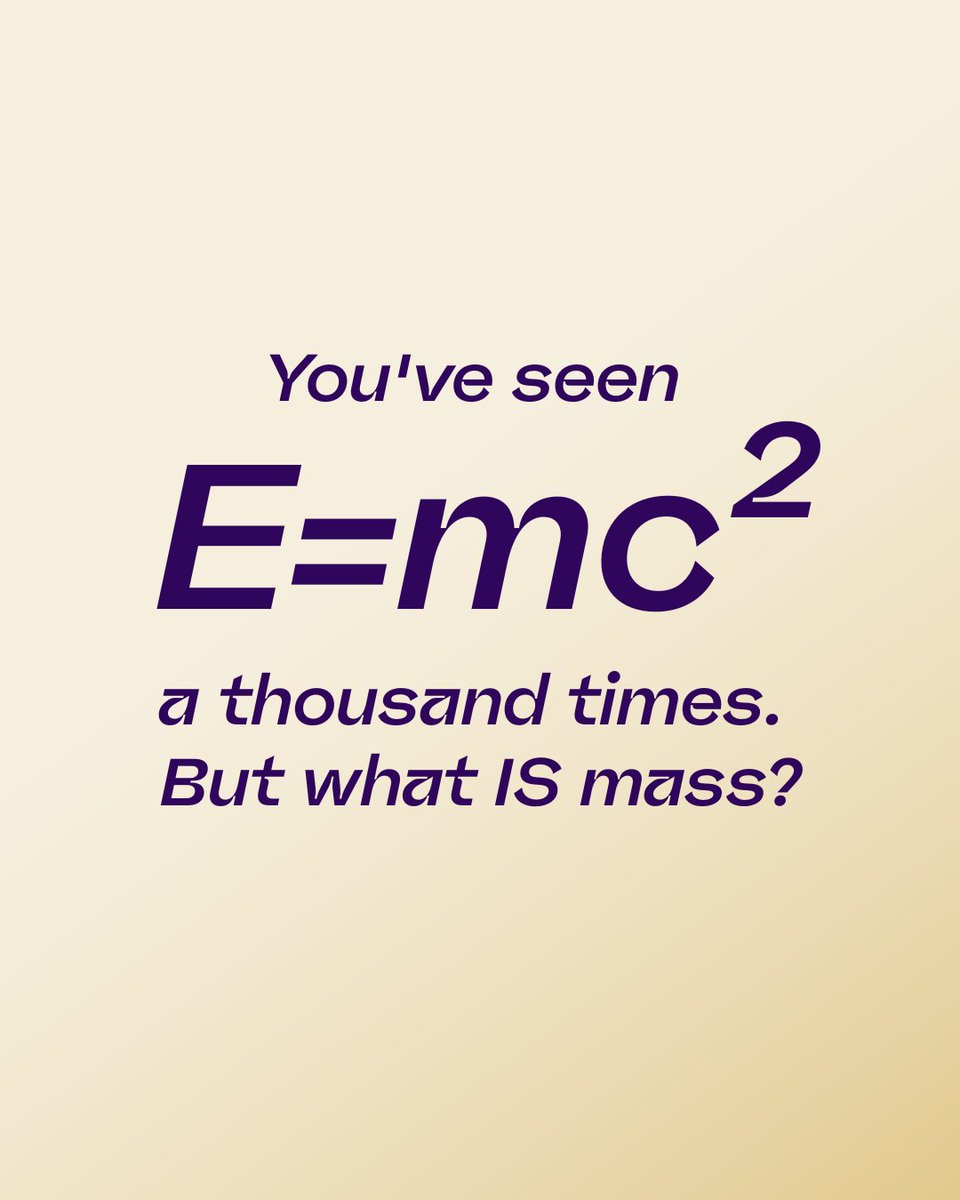
You've seen E=mc² a thousand times.
But what IS mass?
Einstein said mass equals energy. He didn't say where it comes from.
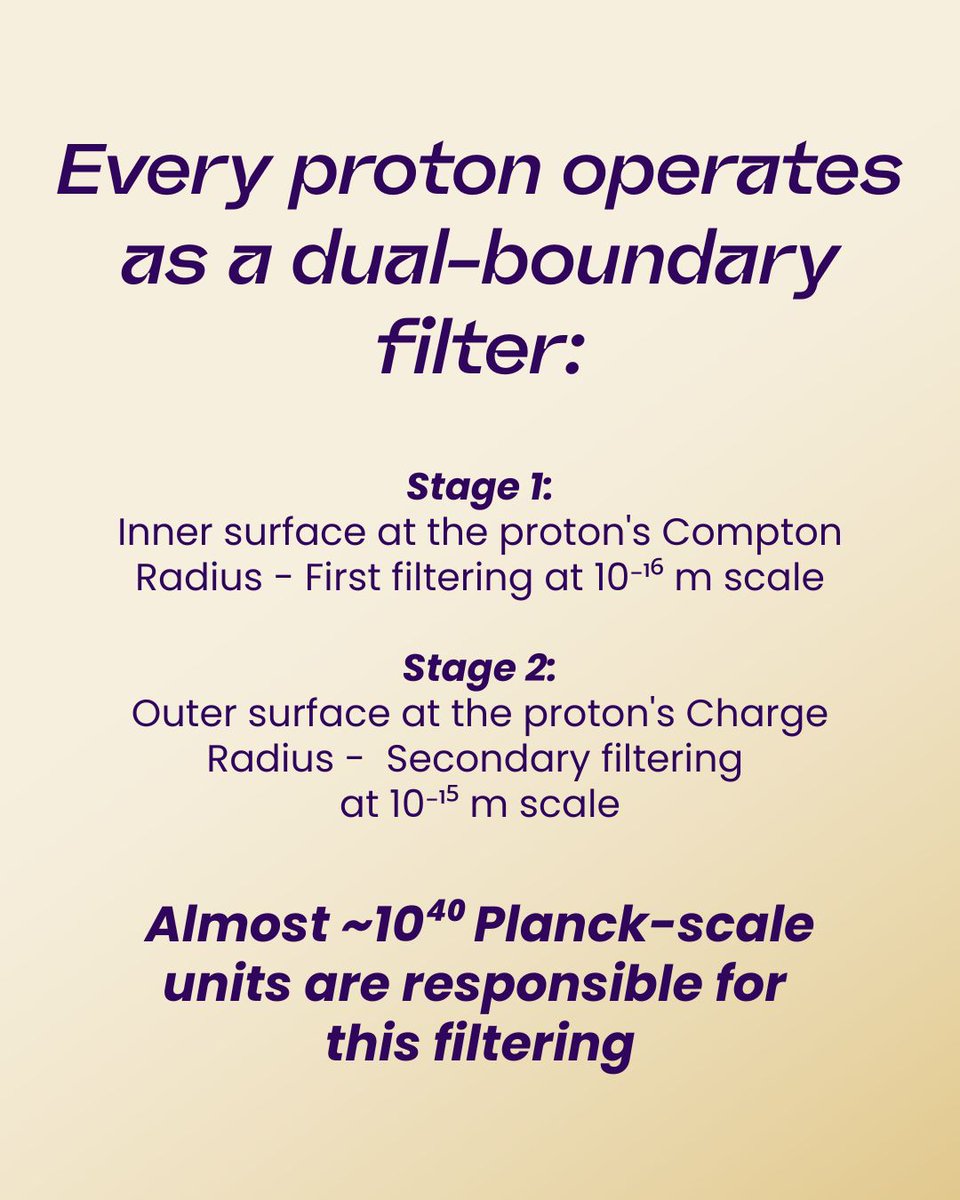
Answer: geometry. The proton filters vacuum energy through two horizons. What survives = its mass.
No free parameters.
Share if this lands.
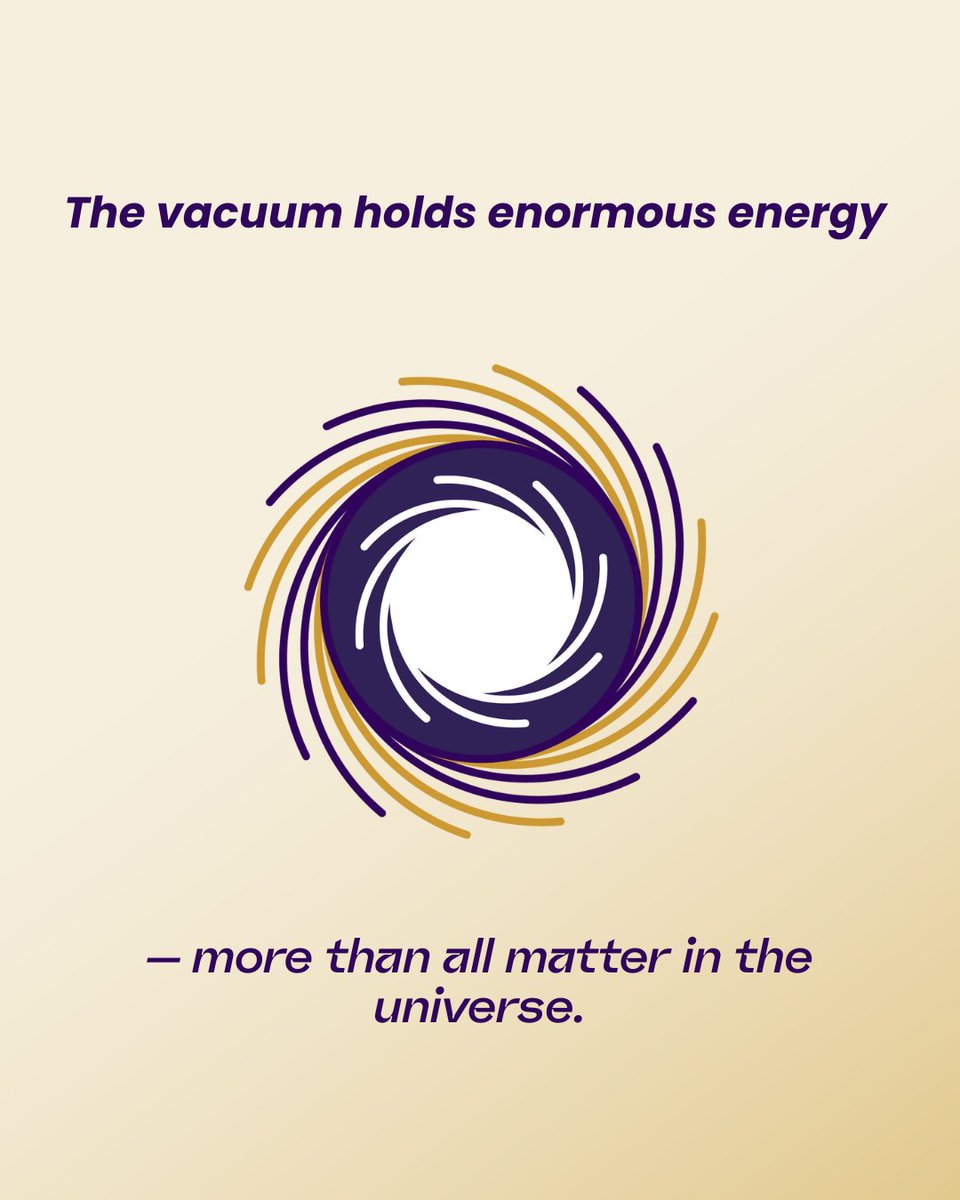
Everyone knows atoms are "mostly empty space." What they don't realize: that space contains energy density of ~10¹¹³ J/m³— one coffee cup could power 10⁵⁵ universes for billions of years. So why is matter stable? The answer lies in geometric screening at the proton level. Swipe to learn more.
@PerseusLeGrand L’extérieur est impressionnant de hauteur et de détails, et en entrant, j ai été saisie par l’émotion… surtout par la lumière, douce et chaude, qui pénètre à travers les vitraux… réussir à manifester un tel lieu, subtil et titanesque, sur cette planète est une prouesse.
@Cameron20370744 En effet, « le premier exemple dans la littérature scientifique réfutant le cœur en tant que pompe est apparu en Allemagne dans les années 30 à peu près en même temps que les premières discussions sur la physique des systèmes ouverts. »
https://t.co/OLcQqdIcoe