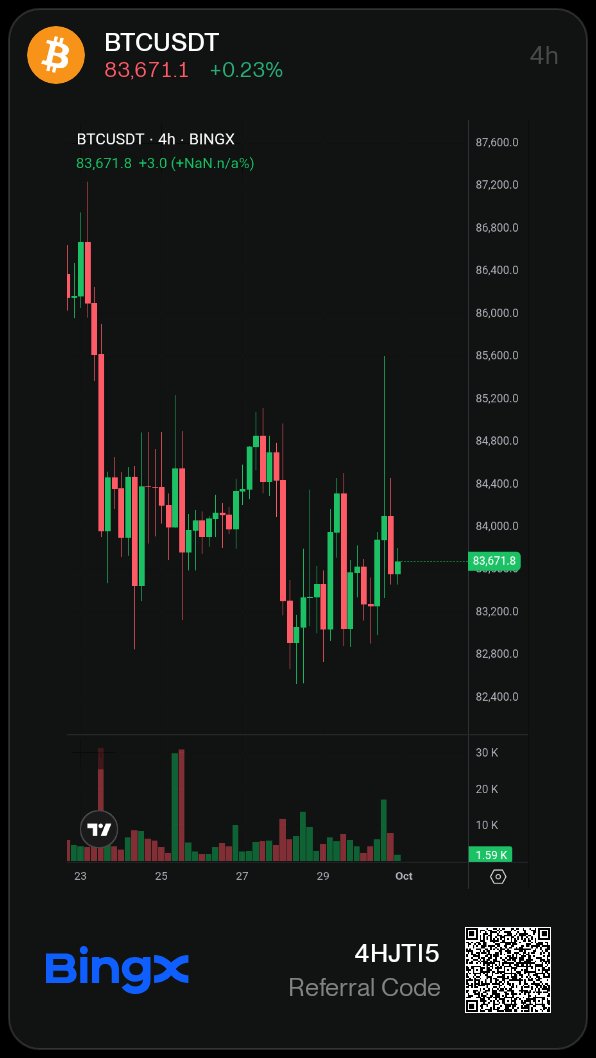
$BTC shorts from range high played out textbook.
For now im looking for longs in that untested area of demand and take out all of that range low liquidity.
Liquidity right above a demand zone means its a strong POI.
Lets see if FOMC will get us there!
Bitcoin is showing a shift that I wouldn't ignore. 👀
From July to September, US buyers were the main force behind $BTC's rally.
But since the breakout, US trading hours have turned into net selling.
That's a big change from what was driving Bitcoin higher just weeks ago.
I'm not calling this bearish yet, but if BTC wants another strong leg up, we need to see buyers stepping back in.
The next move could be very interesting.
How many finance apps are on your phone right now?
I used to have separate apps for crypto, stocks, charts, payments and market news. At some point, keeping track of everything became part of the work.
That’s why I find the direction of BingX interesting. Crypto, TradFi, the Card and AI tools are starting to sit under one roof.
Do we really need five finance apps anymore?
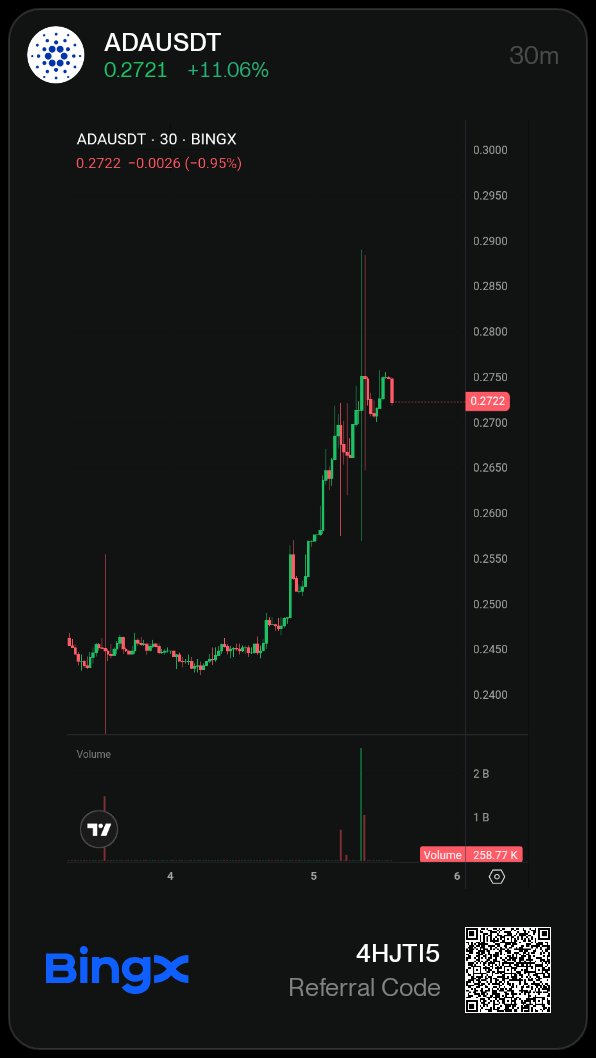
$ADA is moving again.
Up around 11% in 24 hours to roughly $0.27, pushing Cardano’s market cap back above $10B.
The move is interesting, but I’m more curious about what happens after the initial pump.
Can buyers actually hold these levels?
Keeping ADA on my watchlist.
25,000+ people. 160+ countries. 7,000+ companies.
TOKEN2049 Singapore is one of the places I’d watch if I wanted to understand where crypto is heading.
BingX returning as a Title Sponsor is interesting too, especially as it moves from a crypto-first platform toward multi-asset trading.
The bigger question: where does trading go next?
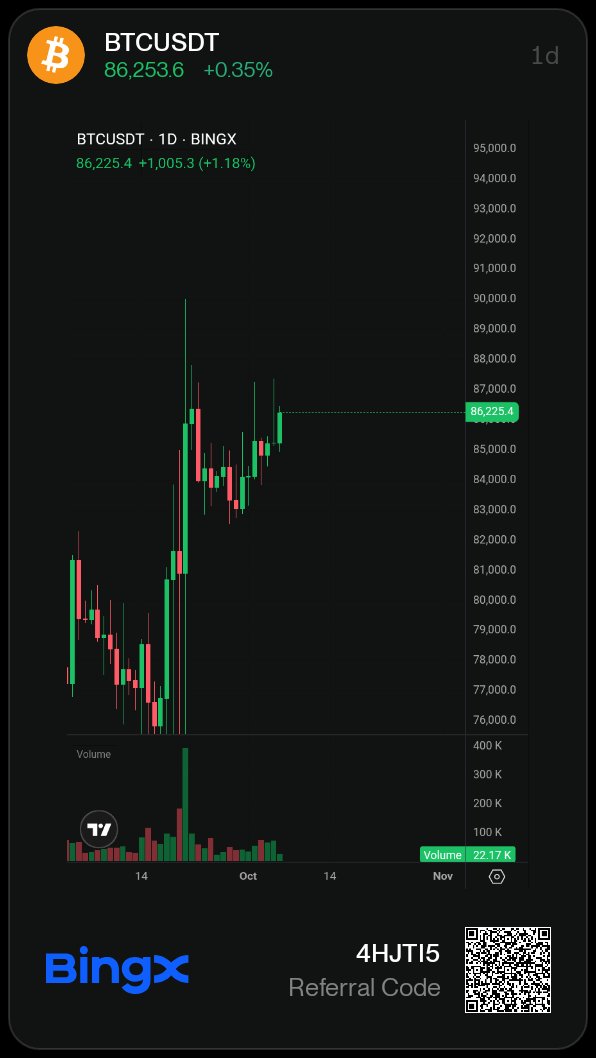
$BTC tried $87K again and sellers showed up.
Now it’s back around $85.5K, with $83.3K–$84.6K still looking like the key support zone.
ETF outflows add some pressure, but large-holder accumulation is still worth watching.
For me, the real signal is whether BTC finally breaks this range.
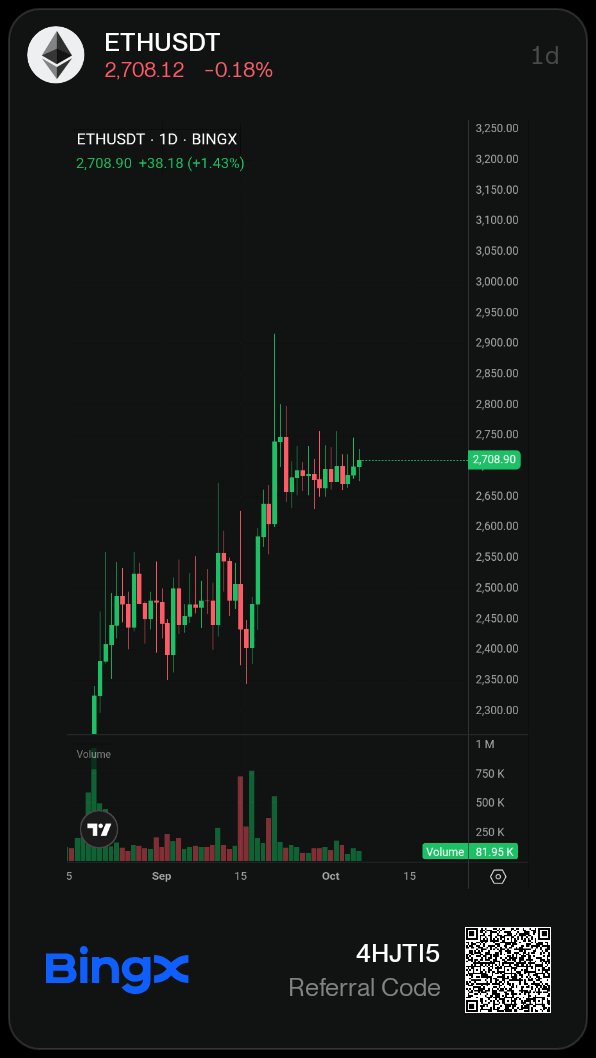
Ethereum has a lot happening behind the scenes right now.
EEZ just demonstrated an atomic L1-to-L2 transaction on mainnet, while Sepolia is testing 200M gas blocks for Glamsterdam.
One focuses on better L1/L2 coordination, the other on capacity.
$ETH is worth watching here.
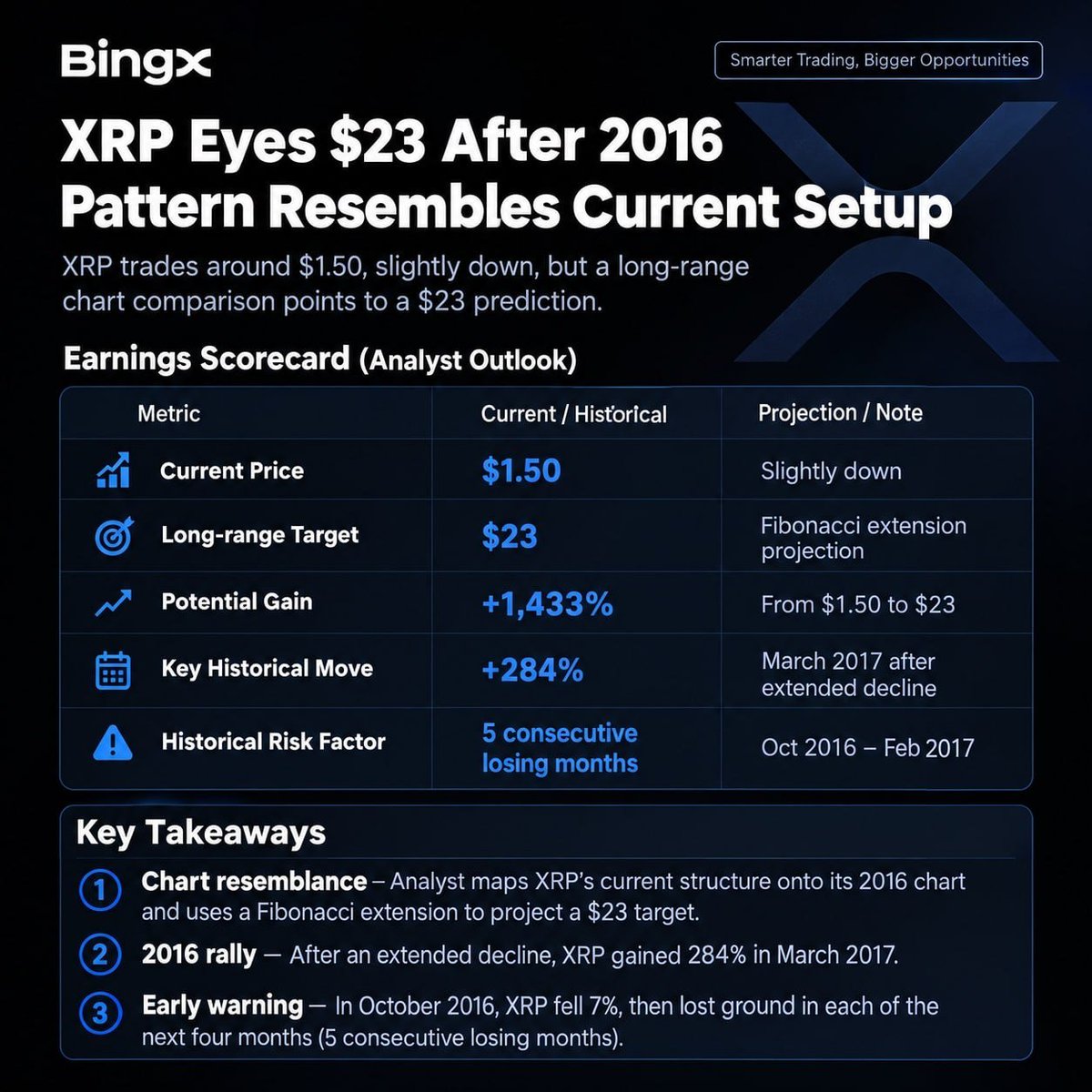
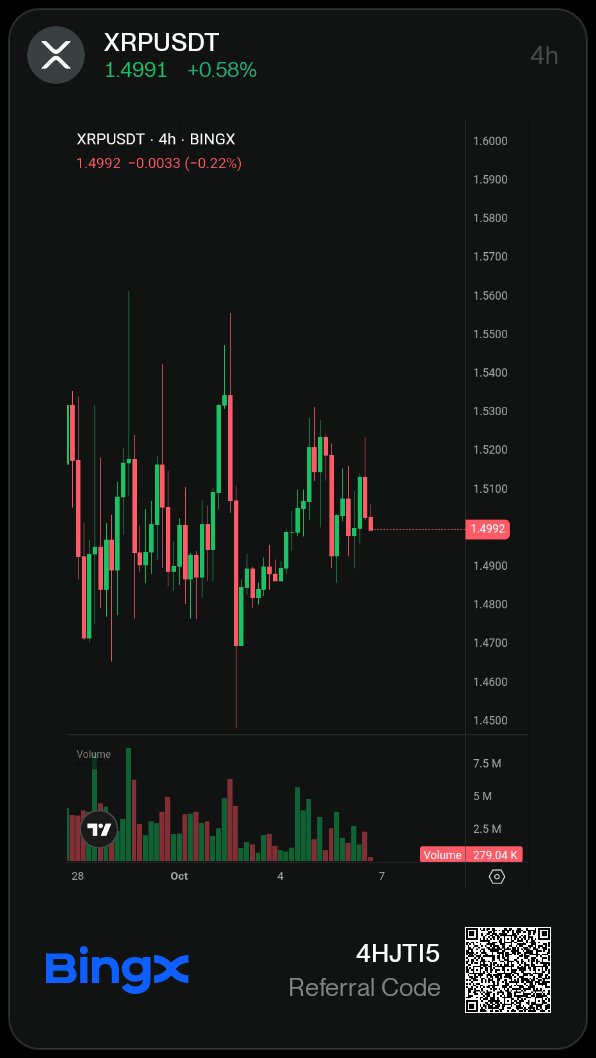
$XRP at $23? The chart comparison is interesting, but I’m not buying the target blindly.
The 2016 setup had five straight losing months before that huge 2017 move.
For now, I’m watching $1.52–$1.55 first.
I’ve got XRP on my BingX watchlist to see how it reacts.
I’ve started looking at markets beyond crypto more often.
BTC can be moving while gold, oil, stocks, forex or the dollar are reacting to the same macro news. Having those markets in one place makes it easier to connect the dots.
That’s what I like about the multi-asset setup on BingX.
Why should a crypto trader stop at crypto?
I started with $BTC, then $ETH, and eventually found myself watching Nasdaq, gold, oil, the dollar and Fed decisions too.
The more connected markets become, the less useful an isolated crypto view feels.
That’s why multi-asset makes sense to me. The trader evolved, so the platform should too.
BingX is one example of that shift.
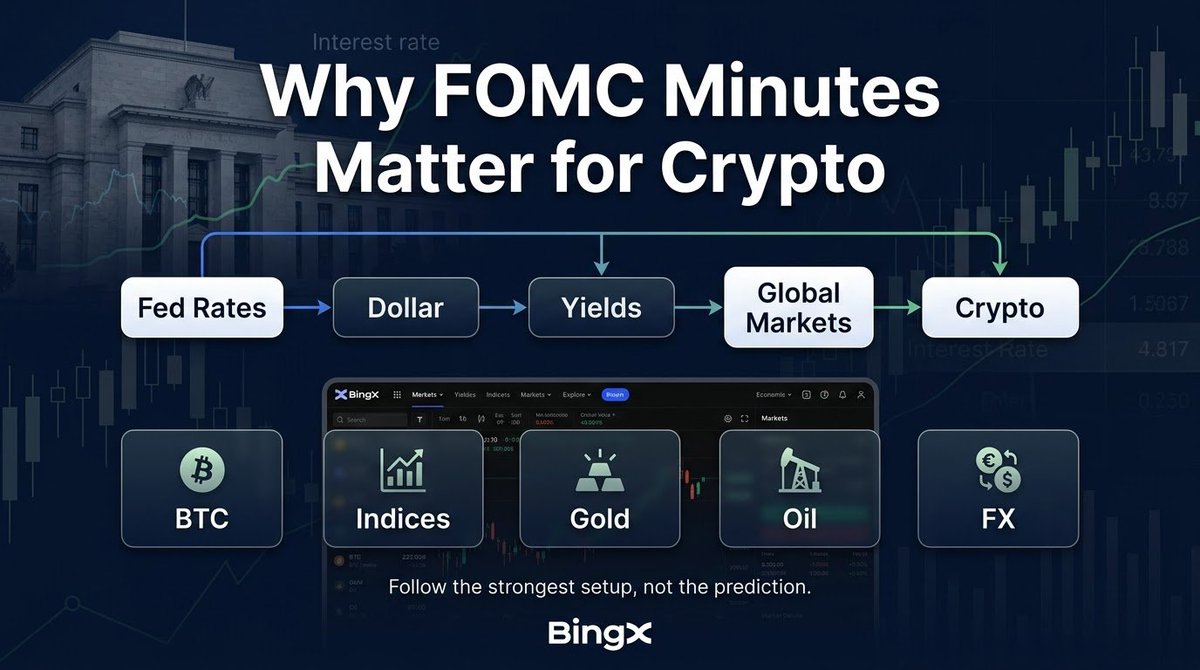
FOMC minutes drop Wednesday at 2 PM ET.
I’m not picking a side beforehand. Hawkish could push yields and the dollar higher, while a softer tone could help risk assets and gold.
I’m watching BTC, Nasdaq, gold and FX on BingX.
Whatever the Fed says, I want to trade the reaction.
84K jobs is the number I’m watching for Friday.
With the previous print at 162K and the Fed still weighing rates, a big surprise could move yields, the dollar and $BTC pretty quickly.
I’ll be watching the reaction, not just the headline.
Digital sovereignty starts with a simple question:
Who actually controls the technology you depend on?
A lot of our digital lives run through centralized platforms. They provide the infrastructure, store the data, manage access, and ultimately decide how that infrastructure operates.
Decentralization changes that relationship.
@Minima_Global is exploring a model where blockchain infrastructure can exist much closer to users and devices, rather than relying entirely on large centralized systems.
➤ Users can participate directly in the network
➤ Devices can run full nodes
➤ Data can be verified through decentralized infrastructure
➤ Machines can become active participants instead of passive endpoints
That matters as more of our world becomes connected.
Cars, sensors, phones, drones and autonomous machines will increasingly generate and exchange valuable data.
Digital sovereignty means having stronger control over how that data and digital activity are verified and managed.
This is one reason I find the direction @Minima_Global is taking interesting.
The future of decentralization may not only be about owning digital assets.
It could also be about owning a greater part of the infrastructure that makes our digital lives work.
@BingXOfficial One platform with AI tools and deep liquidity sounds good...
Anyone here actually used BingX for multi-asset trading and can say if it’s legit smooth?