Driving parameterized models with voice has a lot of potential, for avatars and beyond.
@JonPTaylor's pipecat-visemes does just that: it maps TTS audio onto mouth shapes in real time and streams them via @pipecat_ai's RTVI.
The mapping can be sensitive to the TTS voice though. Some @cartesia voices say "who" with frequencies that suggest "ee", so the avatar smiles instead of rounding its lips. So I've added a calibration step: the voice reads 38 short words ("Heed. Tea. Bead. Knee. …", about 30 s of audio), and the analyzer learns where that voice puts each vowel.
The demo below shows some cases where the differences are strong.
gh repo: OpenHRIai/vrm-lipsync
13. m'kay (@maxipesfix)
One voice for all your coding agents, from your phone.
🚢 3 features shipped
⚡ Fastest: 26 min, confirm-and-undo so tasks hit the right agent
🙋 Users wanted: to pick the agent before speaking, and ElevenLabs voices.
I was scheduling m'kay "one voice for all agents" on PH and found out about Hypership Day on the 30th. Not sure what it means but we'll see!
https://t.co/dVWJbkB0He
Forget lidar.
One single camera.
Runs in real time & is open source:
A streaming 3D model that reconstructs scenes live, at ~20 FPS, over long sequences.
End-to-end.
Optimization tricks, cleanup steps?
Nope.
And it beats both streaming and even some offline methods.
Perception is becoming software-first.
Closer to machines that see and understand the world as it unfolds.
Thanks for sharing, @YinghaoXu1
📍Models: https://t.co/gnSDy919eX
Project page: https://t.co/zgpkgBvcik
Code: https://t.co/Js0MzHE387
Paper: https://t.co/FrzMojMMZC
——
Weekly robotics and AI insights.
Subscribe free: https://t.co/9Nm01QUcw3
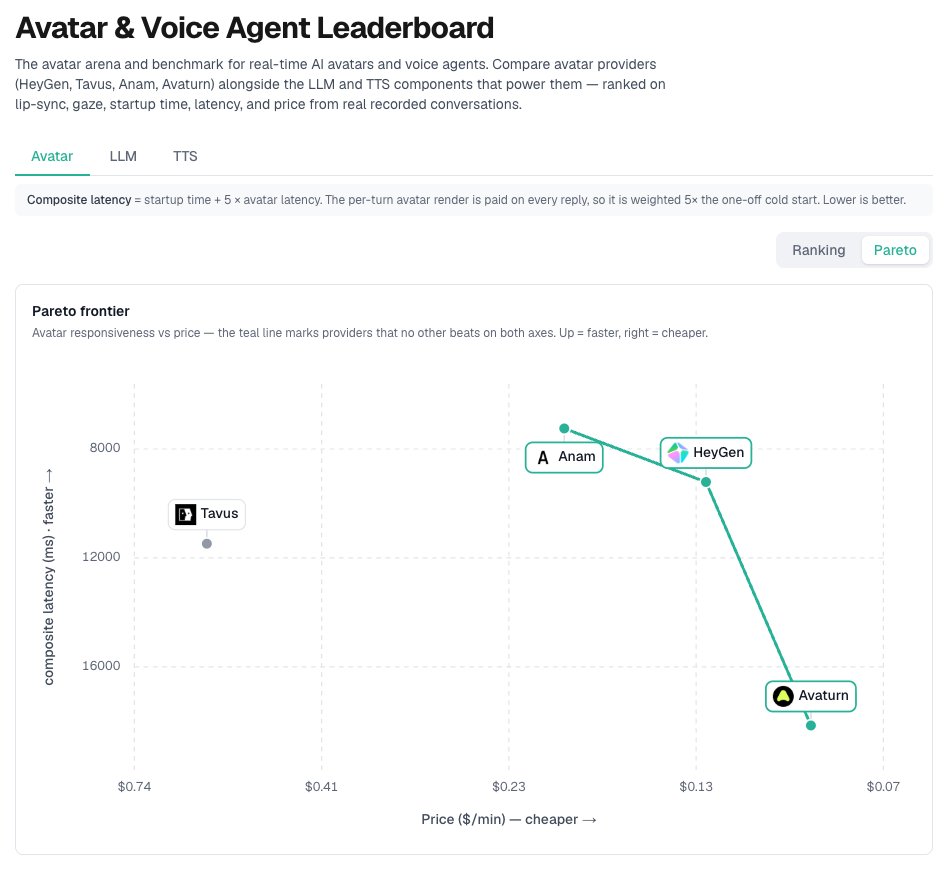
utility of leaderboards for choosing a model is questionable, since likelihood that a 1-dimensional metric fits one's use case is rather small. The hope is that they do help push the SOTA further. With that said: https://t.co/tyfnwvQlCl
@Anam__ai@avaturn_me@HeyGen@tavus