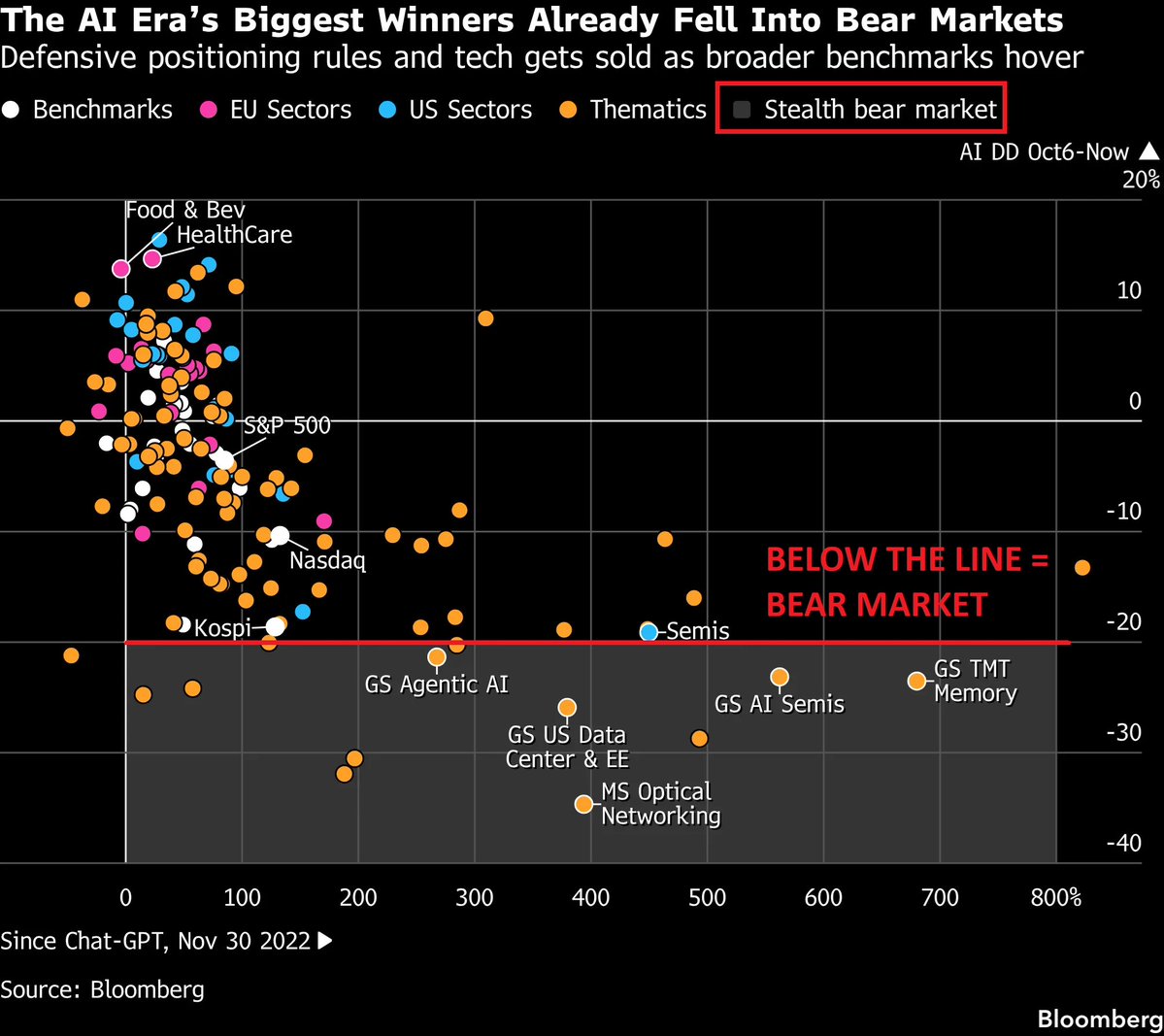
A stealth bear market is spreading beneath the S&P 500:
A MASSIVE 60% of S&P 500's constituents are trading in bear market territory, despite the index being within ~3% of its latest all-time high.
Notably, the Magnificent 7 have lost -$4 trillion in market capitalization since October 15th, while the Semiconductor Index has fallen more than -30% since June and dropped below its 200-day moving average for the first time in a year.
This comes as investors exit crowded AI trades and rush into defensive and under-owned sectors.
In other words, investors are increasingly questioning the cost of the AI buildout and how long it will take to generate returns, as hyperscalers' cash flow declines and they increasingly rely on debt and equity financing.
Amazon's long-term debt alone surged to $173 billion from $66 billion in just 9 months.
Meanwhile, the spread between B- and CCC-rated corporate bonds spiked to ~8%, a level seen fewer than 5 times since 1996.
In every previous instance, the S&P 500 was at least -11.5% below its 52-week high.
Will the stealth bear market spread across the broader market?
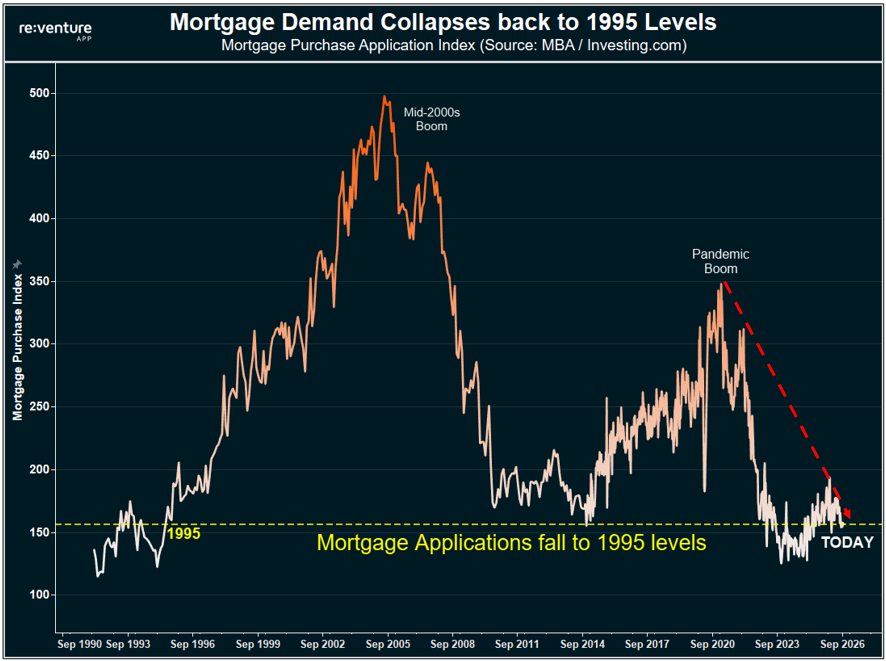
The U.S. mortgage market is mired in its deepest recession on record.
Applications to purchase a home are now down 47% from the pre-pandemic norm.
And also down 19% from last year.
The index level in early November was only 131.4, compared to 250 back in 2018-2019.
So few people are going out to buy houses with mortgages, that purchase application levels are even lower than the 2008-2012 bust.
The upshot here is that the U.S. is now a buyer's market.
Supply is now past 2019 levels, while demand keeps dropping, meaning big discounts are available in many markets.
Just make sure not to overpay.
To see where mortgage applications have dropped most, search your ZIP: https://t.co/9C8XA40BSL
The unwind in Hedge Fund equity exposures this year has been the biggest since at least 2017.
Active de-grossing (reduction in long + short positions) by global hedge funds has now hit over 8% of total gross exposure since June, according to the Morgan Stanley Prime Brokerage Content team.
This has taken gross leverage for US long/short funds down to the 10th percentile versus the last year.
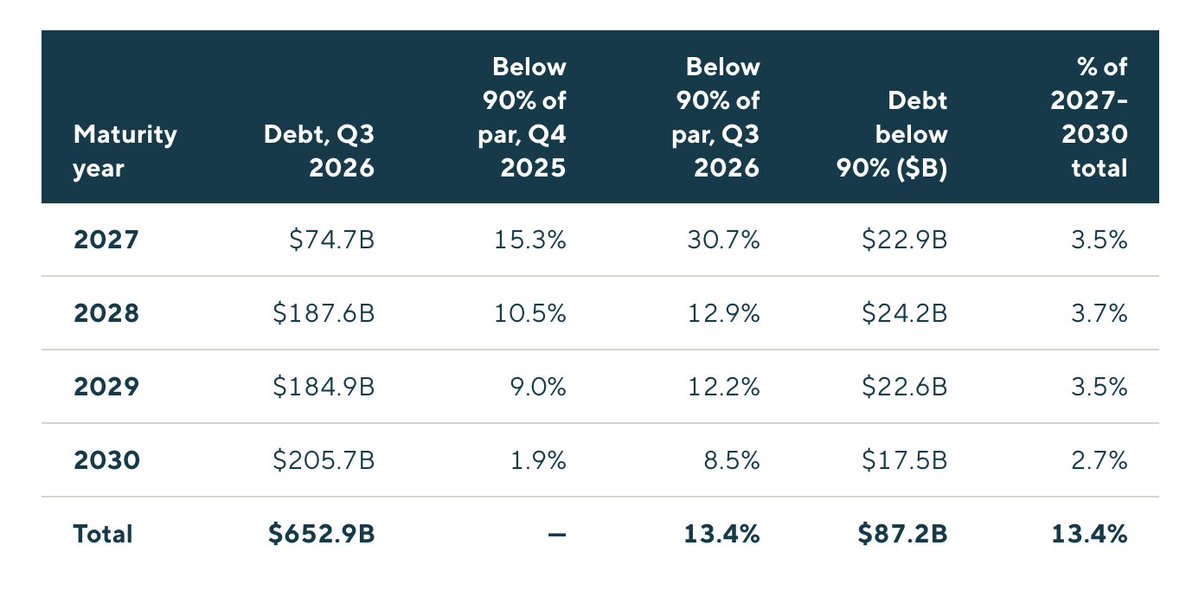
Believe it or not, the private credit maturity wall is shrinking.
Debt due 2027-2029 is down ~$76.5bn (15%) since the beginning of the year
But only the good credits are refinancing. Of the debt still due in 2027, the share marked below 90 doubled from 15% to 31%.
🦔Ares Management, one of the biggest private credit firms, won’t lend against AI chips. CEO Michael Arougheti told analysts he doesn’t know “how to underwrite the decline and depreciation curves” on GPUs, so Ares lends against the data center buildings instead. Plenty of other lenders jumped in anyway, on deals like Broadcom’s roughly $60 billion debt package for chips it leases to Anthropic (SpaceX wants about $40 billion for Nvidia chips too).
My Take
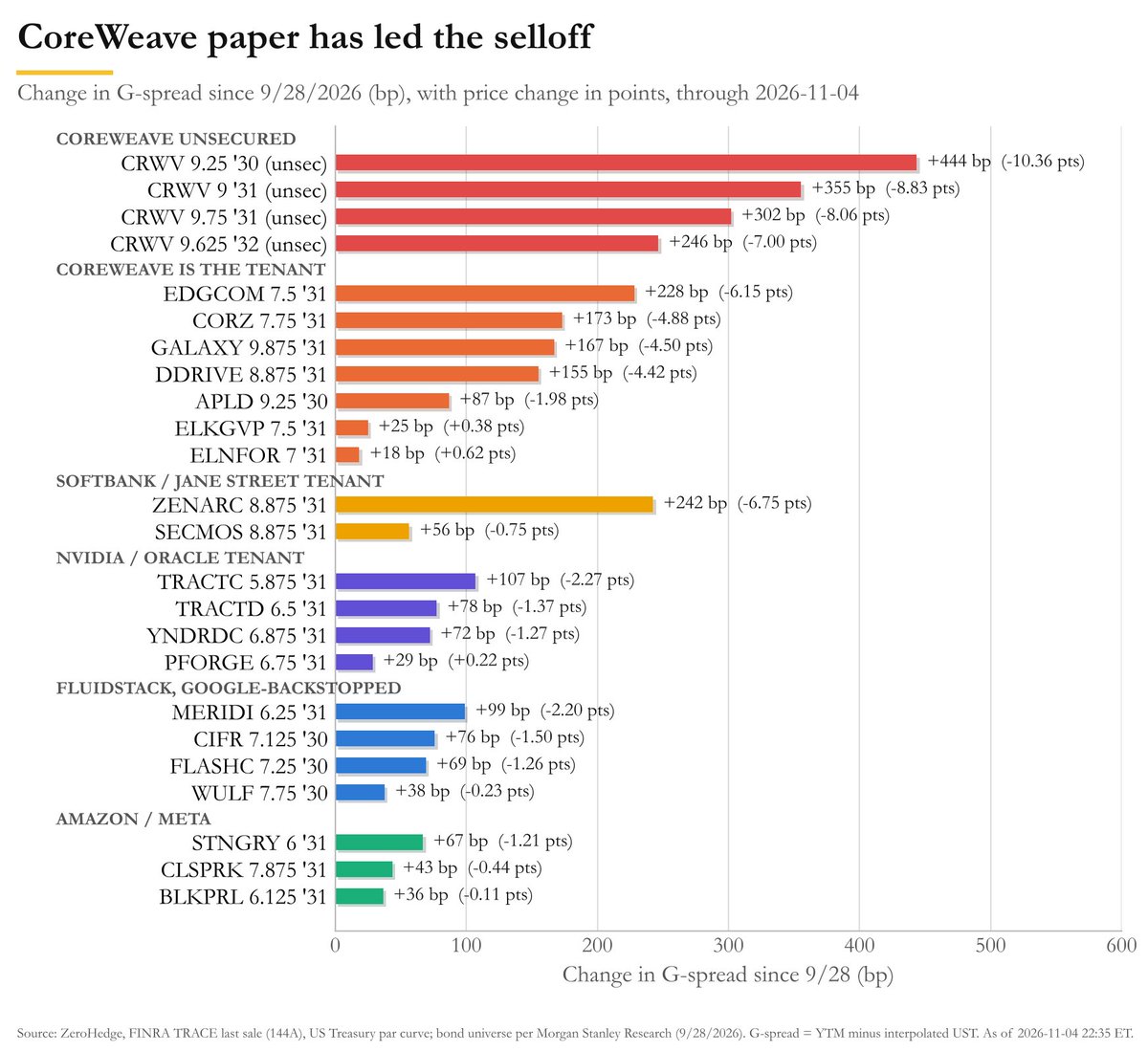
I respect a lender who admits he can’t price something. Most of the market plugged in five or six years of useful life for these chips and called it a day, and I doubt many of those lenders have watched a three-year-old GPU try to keep up with a new one. Ares has its own exposure (a data center only pays off if tenants keep filling it with chips), but at least a building doesn’t go obsolete. I think the loans already written against GPUs get repriced, and CoreWeave (it rents out GPUs, and its bonds already trade near distress levels) takes the first hit.
Hedgie🤗
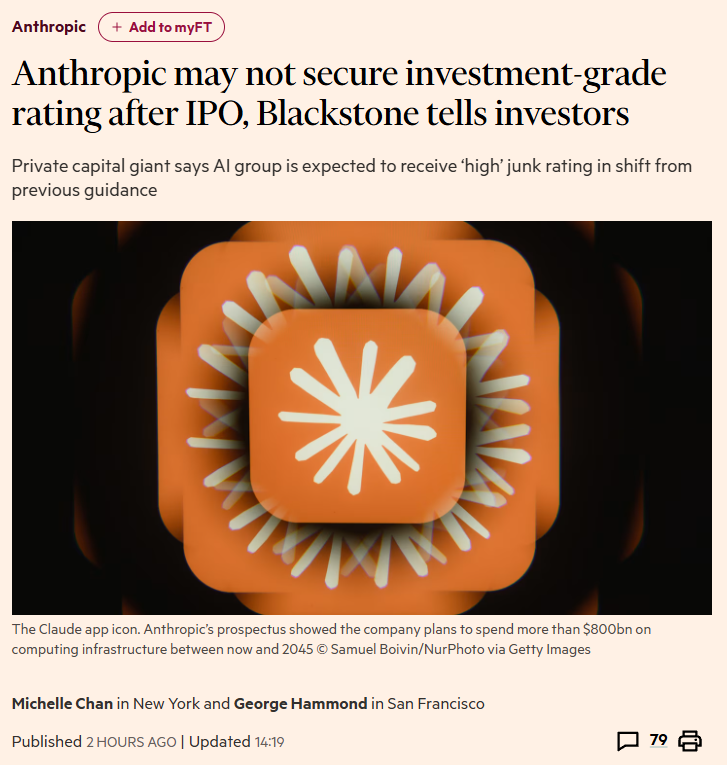
Surprise, surprise. Anthropic may NOT get an IG rating afterall.
Junk bond market, here we come. Fortunately for them, spreads are quite tight for BB credits
$ANT
Mortgage demand has crashed. It's only going to get worse from here folks.
I keep talking to big real estate investor friends and they keep saying "it's already over"... but we are really in the early innings..
This is end of a cycle an we are transitioning into a new one.
The sooner you look at the big picture, the better.
Alphabet posting negative FCF for two quarters in a row (worst since 2004) feels like a turning point.
Funding the AI boom was fine when Search grew 19%. At 12% growth, burning this much cash is a lot harder to defend.
Institutional investors RAMPED UP their BULLISH tech positions just before the SELLOFF:
Speculative investors added ~$60 BILLION in Nasdaq futures over the last 2 months, marking their largest 2-month increase on record.
These investors include leveraged funds such as hedge funds and CTAs, as well as other institutional asset managers.
This pushed Nasdaq Non-Dealer Net Positioning to +$55 BILLION, its highest level in at least 2 years, according to CFTC data.
Meanwhile, Nasdaq 100 Futures are now down over -2%, to their lowest level since early August.
The market’s most crowded tech position ran into massive earnings disappointments from Big Tech.
Truly incredible.
If a CCC company refinanced today, it would need to pay 8 percentage points more than its current coupon on average
For BBs and Bs, it’s only about 1 point.
That’s the highest for CCCs since March 2020 and above the '22 peak. In other words, the market is not open for you.
Source: PIMCO
AI infrastructure is increasingly being built on credit. Long-term debt and off-balance-sheet vehicles are financing the build-out but may also concentrate risks among a small number of firms and investors.
Read more: https://t.co/zcIrqXCy55
#BISBulletin
HY is really three markets right now:
> Generic HY: holding up, headline spreads only slightly wider
> AI-linked credit: +100bps in last month
> CCCs: 4-year wides, with a handful of names doing most of the damage
The index average hides almost all of it.
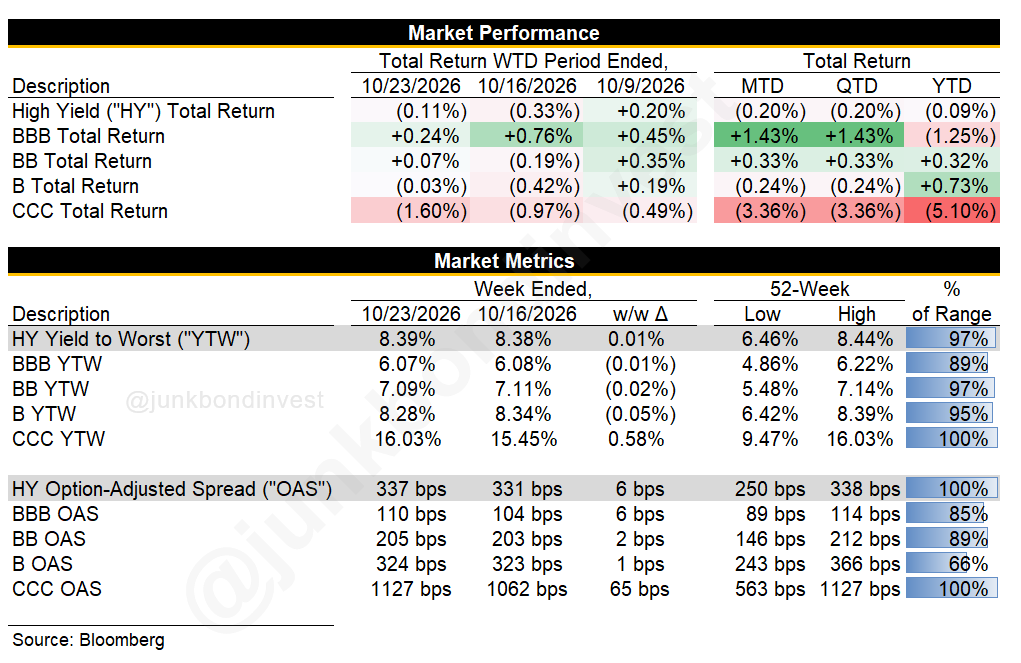
High yield officially negative total return for the year (-0.09%). Overall returns across all ratings look terrible.
CCCs especially at -5.1% YTD and spreads over 1,100bps now. Lots of idiosyncratic stuff in there so would't read too much into it though.
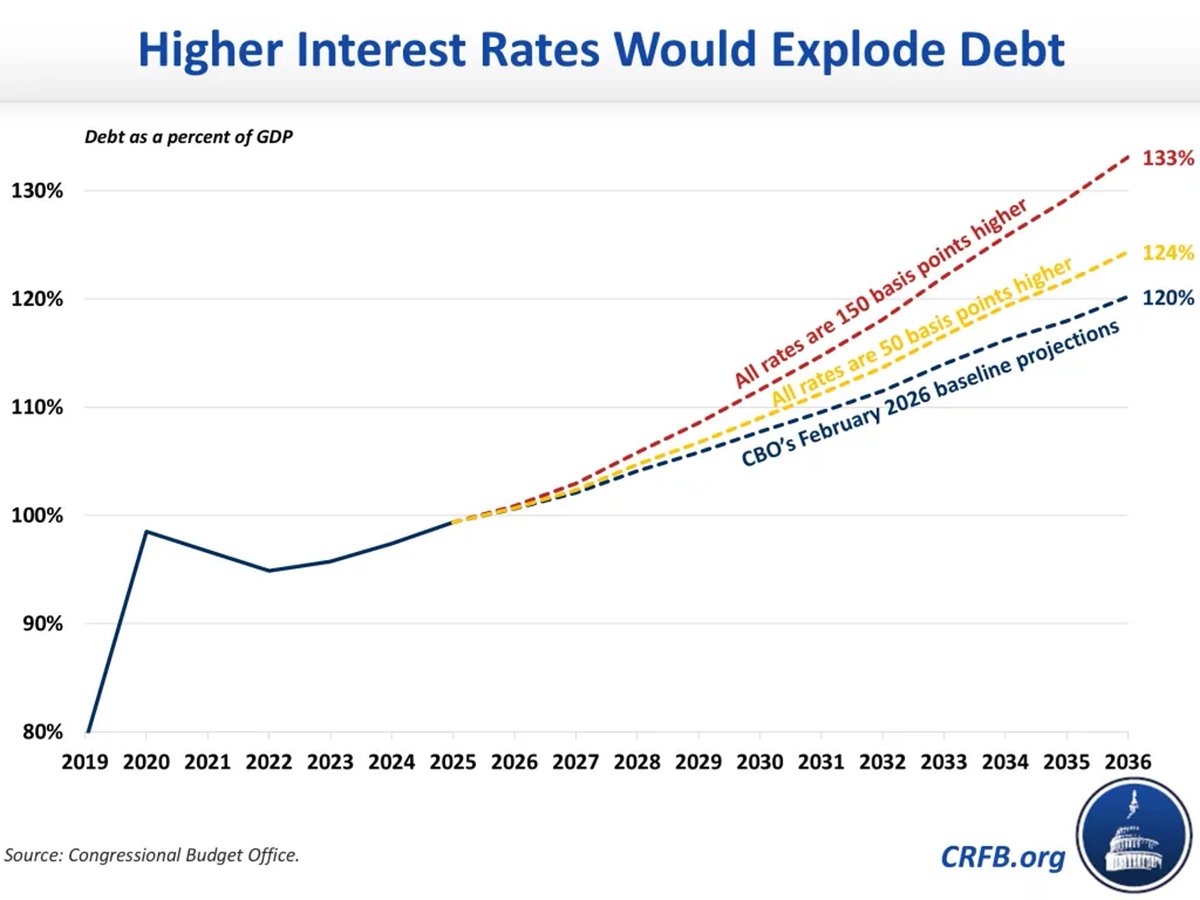
The US government cannot afford higher interest rates.
If interest rates average +150 basis points above CBO’s February projections by 2036, US deficits would increase by nearly $6 trillion over this period.
The deficit would then rise to 8.8% of GDP, the highest level since WWII, excluding 2008 and 2020.
This would also push the US public Debt-to-GDP ratio to a record 133%, up from ~100% currently.
If rates average +50 basis points above projections, deficits would increase by nearly $2 trillion, lifting the Debt-to-GDP ratio to 124% by 2036.
Just weeks ago, the 10Y Note yield traded at ~5.30%, or ~100 basis points above CBO’s average projected rate over the next 10 years.
The US government needs rate cuts.
Today’s Treasury rally may be signaling something far more consequential than a recession still somewhere on the horizon. The economy has already been deteriorating beneath headline statistics, and a recession may well be underway before official data recognize it. If Treasury yields continue falling while corporate credit spreads widen, hiring weakens and investment contracts, it would suggest that existing economic deterioration is spreading into a broader financial and credit contraction.
Anthropic's IPO filing is a study in AI economics.
The maker of Claude booked about $15 billion in revenue in the first half of 2026, triple a year earlier. Its founders are paid modestly by big-tech standards: CEO Dario Amodei earned roughly $18 million in 2025, below the median S&P 500 CEO. The eye-popping net loss near $90 billion is almost all a non-cash charge on convertible notes as the valuation soared, not cash burned.