🇺🇸 VALERY BOCHKOV: “FOR GOD’S SAKE, TRUMP, YOU’D BE BETTER OFF DRINKING — LIKE YELTSIN!”
Did you know Donald Trump doesn't drink? Not a drop. Never has. Not even beer. And do you know why? Because he's afraid.
His older brother, Fred Trump Jr., died after struggling with alcoholism. Fred was once the family's great hope, the son expected to inherit the business. He was handsome, charming, and dreamed of becoming a pilot. He wanted to fly airplanes, not collect rent from tenants in his father's buildings.
And he actually became a pilot.
But in the Trump family, such romantic ambitions weren't encouraged. What mattered was money, power, and the ability to crush anyone standing in your way. Their father wanted to raise a predator. His eldest son wanted something different.
Then the younger brother stepped onto the family stage. Donald.
He learned his father's lessons far better. You don't need intelligence if you have enough arrogance. You don't need talent if you can claim credit for other people's achievements. You don't need to earn respect if you can buy applause.
Fred drank, gradually destroying his life, and died at just 42. Donald watched his brother's tragedy unfold and, by his own account, learned one important lesson: never touch alcohol.
You might think that's admirable. A man witnessed a family tragedy, learned from it, and avoided a destructive habit.
But here's the fascinating part.
Boris Yeltsin drank. Sometimes so heavily that his entire country was embarrassed. His drunken antics appeared on television, inspired jokes, and caused international scandals. The president of a nuclear superpower could conduct an orchestra, dance onstage, or fail to emerge from an airplane.
Trump is completely sober.
Yet he behaves like someone whose brain is being continuously filled with cheap moonshine straight from a gasoline can.
The endless boasting. The extraordinary sensitivity to criticism. The desperate hunger for admiration. The ability to say one thing today, the exact opposite tomorrow, and apparently believe himself absolutely right both times.
These are the kinds of things that might make people wonder whether alcohol was involved.
But no. Not a drop.
And that's what frightens me most.
A drunk man can sober up. He can wake up ashamed, apologize, or even stop drinking altogether. At least there's some possibility of change.
But what do you do with someone who behaves this way while completely sober?
Yeltsin, despite his faults and historic mistakes, at least understood that one day he would have to surrender power.
Trump seems to regard the very idea of leaving office as a personal insult inflicted upon him by humanity itself.
And that's what makes this family story so remarkable.
The older brother drank and destroyed himself. The younger brother never drank and reached the White House, gaining the power to influence the lives of millions.
Fred Trump Sr. would probably have called that a magnificent parenting success.
But I look at that perfectly sober face, remember Boris Yeltsin with his glass, and think:
For God's sake, Donald, maybe it would have been better if you drank.
At least humanity might have had some hope that one morning you'd wake up with a terrible hangover, look at what you'd done, and finally feel ashamed.
But the terrifying reality is that you do all of this stone-cold sober.
— Adapted from Valery Bochkov
THE TRUMP EFFECT AND THE CONFIDENCE TRAP: HOW PERCEPTION DEFEATS INTELLIGENCE
It seems that hardly anyone still doubts that Trump is an idiot. His absurd behavior, economic ignorance, limited vocabulary, narcissism, contradictory statements, and constant reversals have even earned him the nickname TACO — Trump Always Chickens Out. But the real question is: how did someone like him become president of the United States?
Niccolò Machiavelli offered an explanation 500 years ago. Power is a performance. The winner is not necessarily the person who knows the most, but the one who performs most convincingly. Politics rewards appearances, confidence, and the ability to create an image of strength. People do not always seek truth. They seek certainty.
Intelligent people recognize complexity. They understand consequences, compromises, probabilities, and uncertainty. They hesitate before making promises because they know reality rarely offers simple answers. But crowds often interpret caution as weakness. One person says, “We need to analyze the consequences.” Another declares, “I know exactly how to fix everything!” Guess whom the crowd follows.
Modern psychology describes a related phenomenon: the Dunning-Kruger effect. People with limited competence may overestimate their abilities, while genuine experts are often more conscious of what they do not know. Confidence becomes a substitute for competence. The louder someone speaks, the more certain they appear, and the easier it becomes for others to mistake conviction for knowledge. As Shakespeare wrote, “The fool doth think he is wise, but the wise man knows himself to be a fool.”
This is the trap of modern politics. People who speak as though they know everything can attract enormous audiences, while those who carefully explain complicated realities struggle to be heard. But the greatest danger begins when such a leader actually gains power.
Machiavelli wrote: “The first method for estimating the intelligence of a ruler is to look at the men he has around him.” A weak leader fears strong personalities. He dislikes independent judgment, criticism, and anyone who might demonstrate greater competence. Instead of surrounding himself with experts, he chooses loyalists. Instead of people who identify problems, he appoints people who conceal them. Instead of advisers who challenge his decisions, he prefers those who applaud every word.
And incompetence spreads downward through the entire system. Eventually, the government becomes an ecosystem of mediocrity, where loyalty matters more than ability, criticism is treated as betrayal, and uncomfortable truths are systematically suppressed. Such a leader does not strengthen institutions. He gradually destroys them from within.
He fears independent experts because they expose his limitations. He fears honest feedback because it threatens his carefully manufactured image of greatness. And when a genuine crisis arrives, this system reveals its weaknesses. There is no depth, no independent expertise, no flexibility. Only mutual fear, personal loyalty, and illusions of strength.
History has repeatedly demonstrated how dangerous such political structures can become. The tragedy is that societies continue to reward the very qualities that make these systems possible. Why do people follow leaders who promise easy solutions, speak loudly, and never admit uncertainty? The answer lies not only in Trump, but in human psychology.
Our brains seek shortcuts. Confidence, decisiveness, and simple explanations feel reassuring, especially during periods of fear and instability. But confidence is not intelligence. Charisma is not competence.
The greatest political danger begins when a society can no longer distinguish between someone who understands reality and someone who merely sounds certain about it.
And that brings us to the most uncomfortable question of all: why do voters repeatedly mistake the performance of leadership for leadership itself?
Firmen und Politiker verzweifeln an den Konsumenten. Sie hätten sich in den vergangenen drei Jahren so stark verändert wie in den letzten dreissig Jahren nicht, sagt der deutsche Trendforscher Marc Schumacher. Aber was wollen die Konsumenten?
Linke Stadtbewohner blicken unbarmherzig auf ihre politischen Gegner. Das zeigt eine vielbeachtete Studie. Anstatt den Ball aufzunehmen, reagieren die Angesprochenen betupft.
Ein Kommentar von @Blitzsche
https://t.co/R3VaX1up9b
SPD und Grüne machen einfach weiter, weil: So geht Politik? Nein: So geht sie kaputt. Mehrheit ist mehr als Mathe. Aber wenn das nur rechts der Mitte gilt, ist das Doppelmoral vom Dreistesten. @derspiegel#Berlinwahl2023#Giffey https://t.co/lomUJEVpe0
»Jetzt kriegen eh alle Omikron«, Risikogruppen können gucken, wo sie bleiben, und wer eine Infektion wirklich vermeiden will, gilt als naiver, ängstlicher Depp — aber klar, die Regierung hat alles »gut unter Kontrolle«. Ich bin wütend, immer noch.
https://t.co/5lx8TOFku4
Ob er sich einen schwulen Kanzler vorstellen könne? Mit seiner Antwort auf diese Frage lässt Friedrich Merz tief blicken: Offenbar bewegt sich der CDU-Mann in einem Umfeld, das im vergangenen Jahrhundert stecken geblieben ist. Kommentar @RobertRossmann https://t.co/og0h3P6kq4
Der Präsident müsste Trauer zeigen und die Lage beruhigen. Doch Donald Trump heizt das Feuer der Aufstände noch an. Dieser Mann ist ein Maulheld, ungeeignet für sein Amt, kommentiert Kurt Kister. https://t.co/bD29OZpGt0
Ein Politiker stolpert: Bewusstlos, Platzwunde, Krankenhaus.
Und auf Twitter ist alles voll mit dummen Witzen, Sprüchen...
Manchmal kotzen mich Menschen im Internet einfach an.
#Altmaier PS: Gute Besserung @peteraltmaier!
@BILD Saubere Kampagne, Bild. SUV-Schelte ist grad in, taugt zum Abo-Generieren. Jeden Tag räumen Autofahrer Motorradfahrer von der Straße. Kleinwagenfahrer räumt Motorrad ab zieht halt weniger...
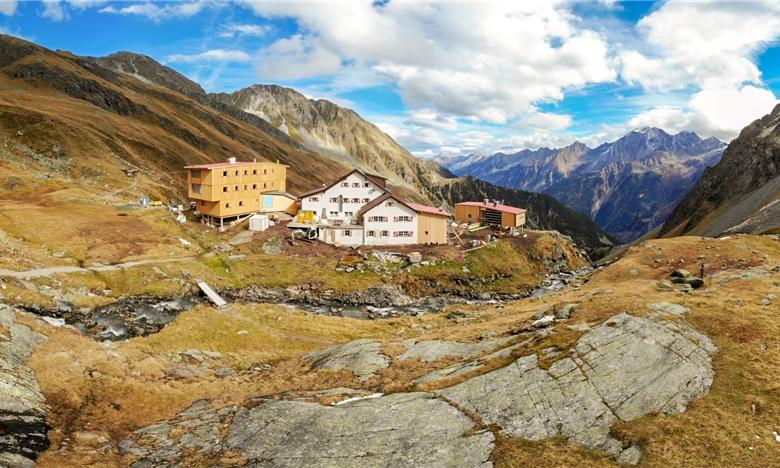
Mehr Komfort und eine größere Terrasse: Voraussichtlich Mitte 2019 wird die „ganz neue Regensburger Hütte“ im Stubaital wieder öffnen. https://t.co/MCUkXHZRSq (*M Plus)
Söder kann so gute Politik machen wie er will - so lange Seehofer an der Spitze steht, ist diese Partei für mich unwählbar! Sehr schade und große Leere am 14.10.
Die CSU muss ein desaströses Ergebnis bei der Landtagswahl in Bayern befürchten. Die Wut richtet sich zunehmend gegen Horst Seehofer. Er will sich aber nicht zum Sündenbock machen lassen. https://t.co/Q2uSXGarD5