Director & Counsel, Technology & Privacy at Multistate Associates, specializing in state legislation and regulations on data privacy, AI, and other tech issues.
Gov. Landry signs SB 386 into law.
The Louisiana Data Privacy Act applies to businesses with annual revenues of $25M, buy/sell the personal information of 75,000 or more consumers, or derive half of revenues from data sales https://t.co/IsiqRoPhSM
Wow. This EO is almost exactly similar to the leaked text from the EO POTUS chose not to sign because it was too regulatory. The only major difference is that the “voluntary�� pre-deployment review process is now 30 days rather than 90. That is a concession, but a very small one compared to what I would have expected based on the President’s remarks about the earlier draft.
This is fairly major win for the safety contingent within the Admin, and a significant loss for the Sacks/accelerationist wing, and is surprising to me.
I continue to think this EO is a mistake. This is clearly teeing up the infrastructure for a model licensing regime, and the fact that the administration is classifying the details of how this “voluntary” system will work is egregious. The public and the employees of the labs have a right to know how this works. Most lab staff don’t have clearances, but if the literal regulatory thresholds that trigger pre-deployment review are classified, researchers themselves won’t know whether what they are training is regulated by this EO. All for a benefit that is barely articulable; what, exactly, is the intelligence community going to do in 30 days to make the models safer?
It’s not a huge mistake, but a small-medium sized one. But I am fairly confident this is a mistake nonetheless.
Scoop: President Trump has signed a scaled back AI executive order that has a shorter government review period of 30 days before, down from 90 days in the preview version, two White House officials told me.
Attorney General Ken Paxton Secures Major Victory Protecting Children Online By Requiring Age Verification and Parental Approval for Minors’ App Downloads: https://t.co/qRlbY7mzR3
Today, we announced the first-in-the-nation state-led lawsuit against OpenAI and its CEO, Sam Altman.
OpenAI and Altman ignored internal and external safety warnings, put children at great risk, and allowed a dangerous product to reach millions of Floridians.
https://t.co/MDgE8yBSfp
Trahan indicating that third-party auditing will be part of her forthcoming federal AI bill.
As I said last week, by blocking regulation for a year accelerationists have raised the bar on what that regulation is going to end up being.
Illinois' new AI safety bill shows that the campaign to stop federal AI laws is backfiring.
The longer Washington fails to regulate AI, the more room there is for states to pass stronger legislation — and raise the bar that an eventual federal framework will have to clear.
The question now is whether accelerationists will finally realize this.
https://t.co/KDeatZCn8W
The Vermont Senate has concurred with the House on changes to the privacy bill (VT SB 71), allowing the bill to be sent to Gov. Phil Scott. This week I wrote about how the House version differs from what the Senate passed last spring.
BREAKING: Illinois legislature passes first-of-its-kind bill requiring leading AI companies to undergo third-party audits for safety issues. SB315 goes beyond existing legislation from CA and NY and will head to gov's desk. I spoke with sponsor Rep. Didech to hear more (below).
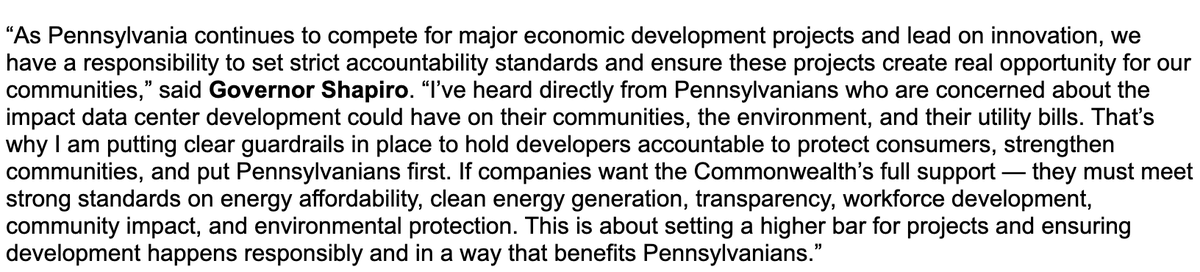
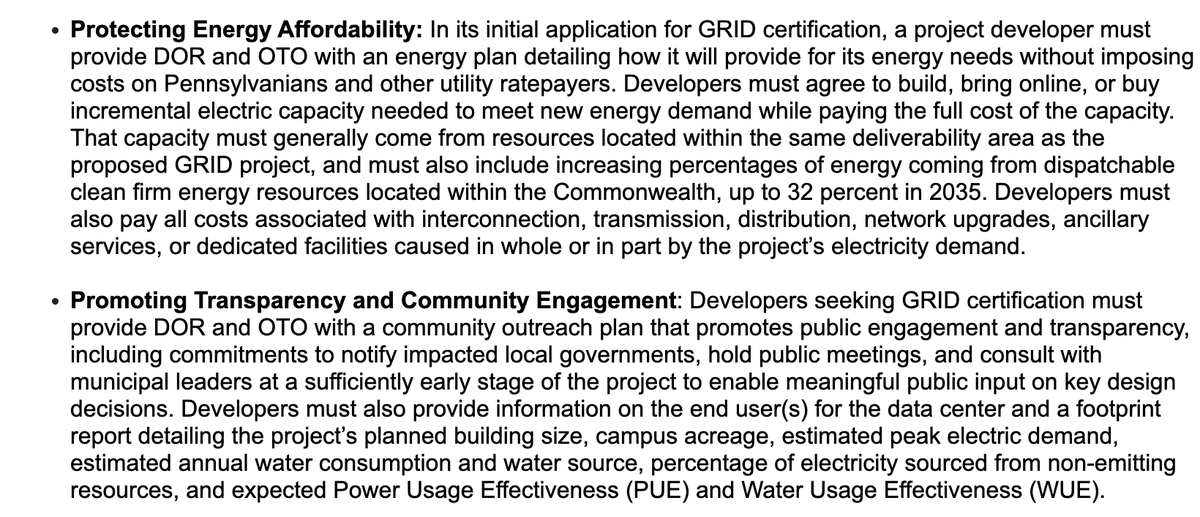
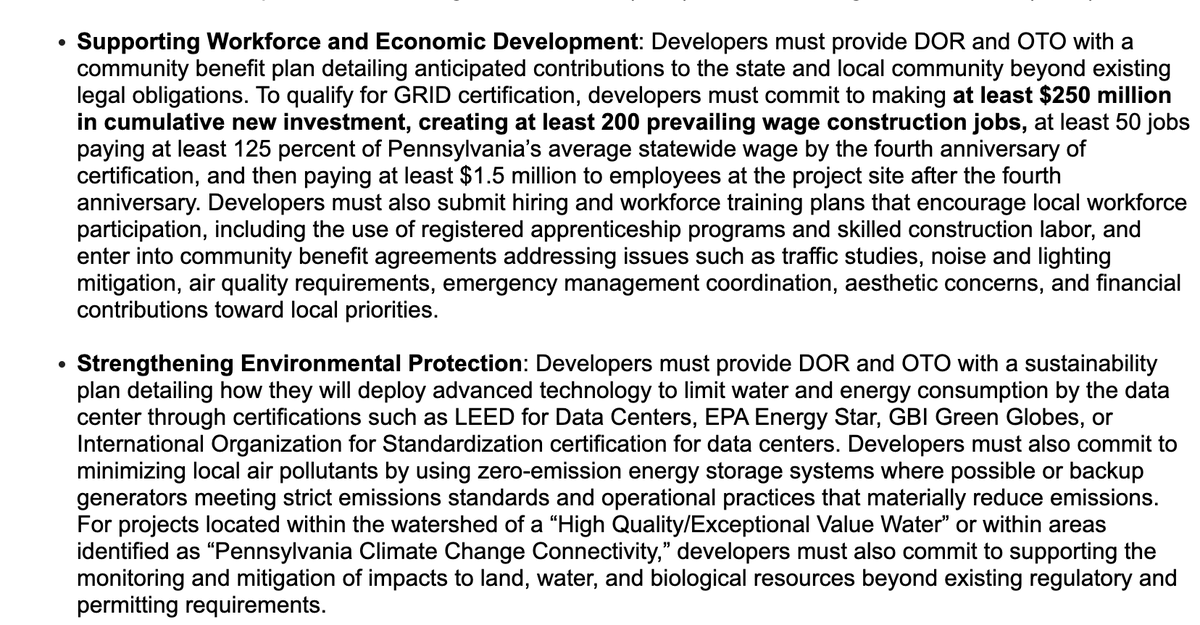
Inbox: Gov. Josh Shapiro is calling for the Pennsylvania General Assembly to place new conditions on data center development, requiring his proposed transparency, energy, wage and environmental standards in exchange for qualifying for an existing multi-million tax break.