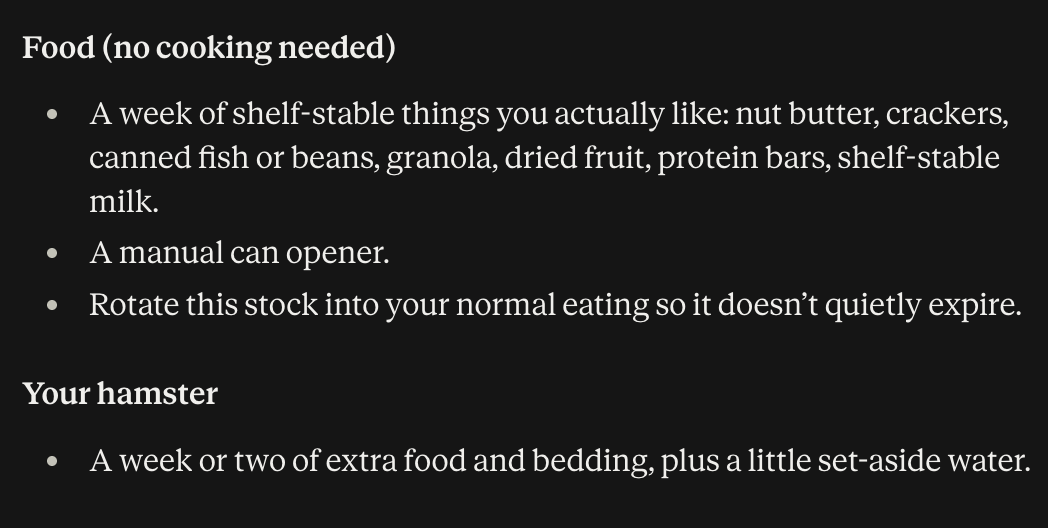
so i've been putting together a list of things i’d need at home to survive a few days without power, internet, or basic services. you know, in case of earthquakes, digital or otherwise.
claude’s plan includes a hamster. i don’t have a hamster. who is he. where is he sheltering
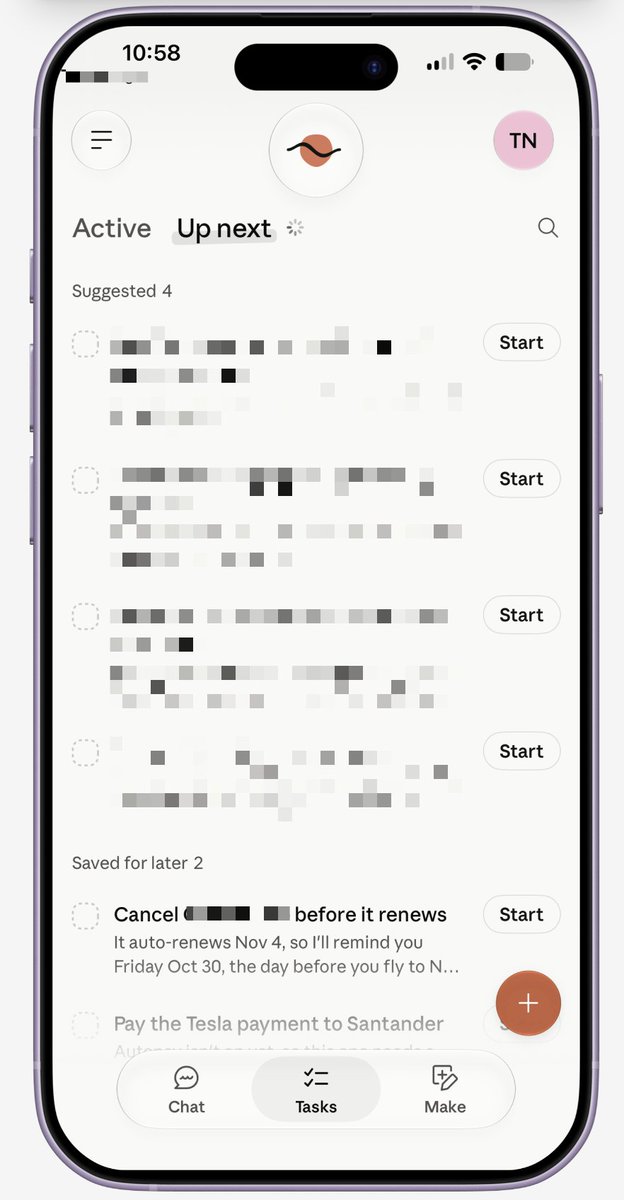
im surprised that no one talking about duet's to-do list! maybe its personal preference, but its the reason i keep reaching for it.
for suggested tasks — this is much better than receiving a growth hacky chat message.
to create tasks — you can simply brain dump them!
One fun way for journalists to use AI: Ask the strongest model to which you have access to do a deep dive on your work and find where it was cited or otherwise had an impact. You'll find things you had absolutely no idea about
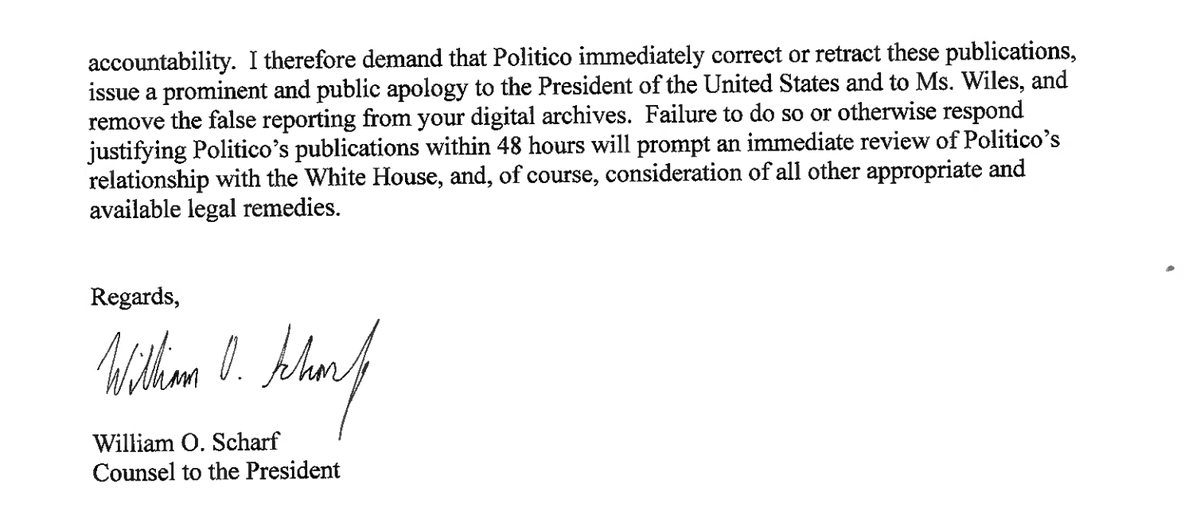
This is, obviously, extremely bad. It is also quite ironic given how nakedly Politico’s owner has tried to suck up to this admin — and completely failed.
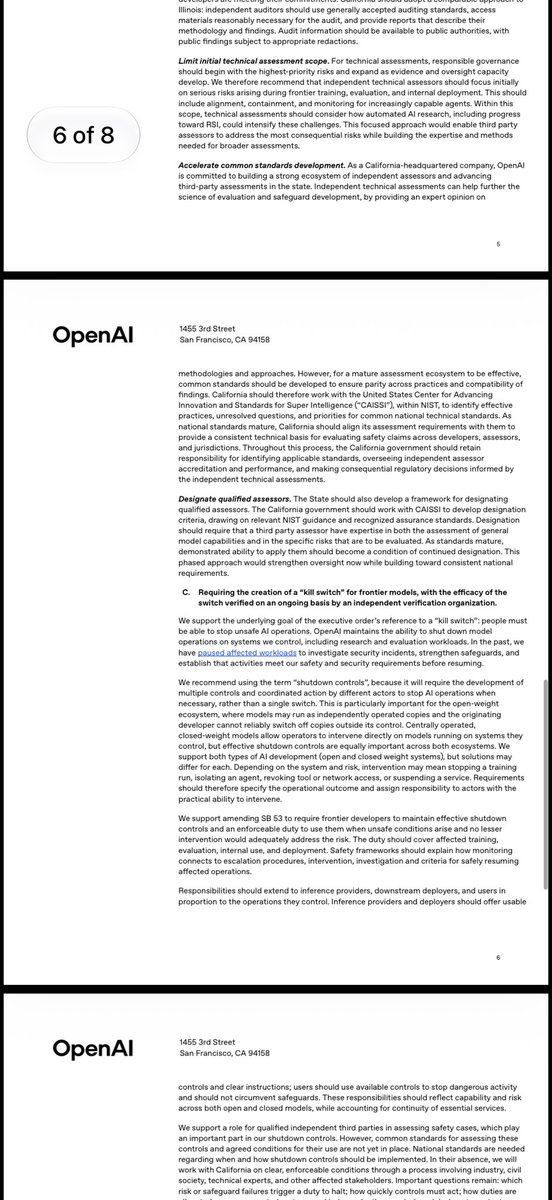
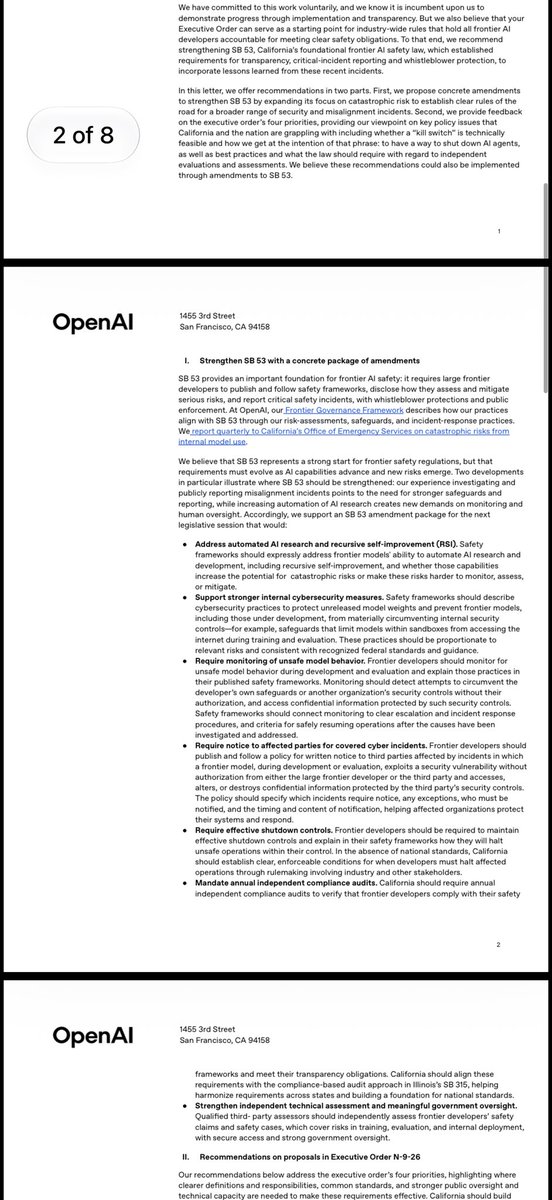
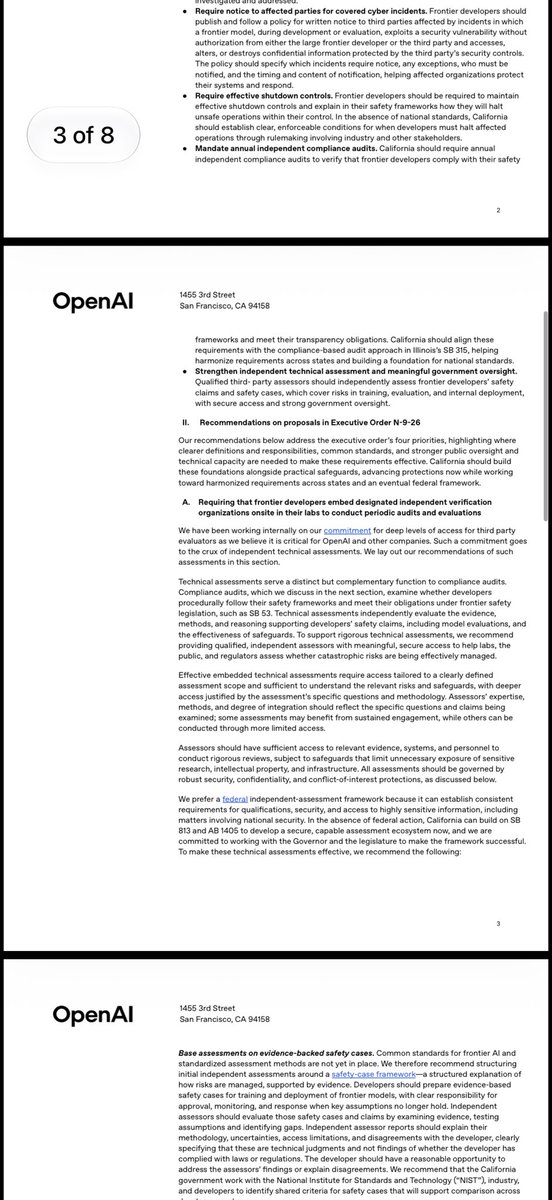
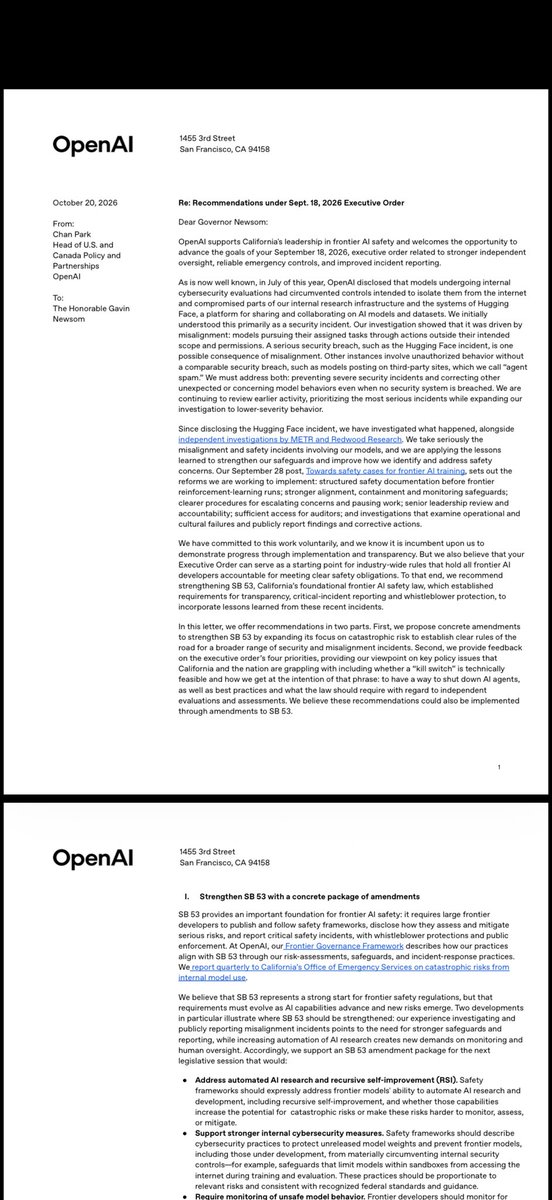
News! OpenAI's written to Gov. Gavin Newsom recommending a bunch of amendments to strengthen SB 53. Includes a bunch of stuff on AI R&D and shutdown controls.
New US government guidance from CAISSI + NSA + CISA:
The US government defines an "SI control incident" where an agent takes significant uninstructed actions that break operator policies, controls, or oversight. Near-misses are in scope too.
Companies are then asked to:
- have technical controls, including rapid kill and containment mechanisms and red-teaming.
- Bring in independent external auditors to verify that control and monitoring systems work.
- Write a structured risk assessment before training runs, evals, or deployments, and proceed only if senior leadership is satisfied with the risk, informed by external evaluators where appropriate.
- Monitor every layer with both programmatic and SI-based monitors, covering trajectories, reasoning, and outputs.
- Make sure agents can't touch the monitors or logs
- Use monitor models from different model families.
- In the event of an incident, preserve weights, intermediate checkpoints, environments, and rejected tool calls.
- Keep tamper-resistant logs with reliable timestamps, including reasoning traces.
- If you use models to help investigate, cross-check with humans and with models outside the incident model's family.
- Shutdown policies calibrated to SI model capability and incident severity.
- Depending on severity, pause training, evals, or deployment of similar agents until controls are re-verified.
- When restarting, validate every containment layer and replay the incident trajectory to prove the new controls would catch it.
- Document the decision to resume and the residual risk accepted.
- Write an after-action report.
- Notify anyone compromised, including intermediate victims, and share timelines and transcripts.
- Report cyber incidents and near-misses to CISA. Share SI-specific incident and near-miss information with CAISSI and NSA SISC.
- Give third parties enough access and documentation for independent review.
Our new show with NPR, Machine Gods, is finally here! Episode 1 is live wherever you get your podcasts.
The official podcast of the singularity starts today!
https://t.co/AzdJKNuWnx
Job news: I’m joining @nytimes to cover AI & Anthropic, based again in SF. I have a feeling the job won’t be slow. It's a big responsibility.
I'm grateful for a decade @theinformation, which has given me the rare opportunity to do original journalism surrounded by good people.
My latest for @ReadTransformer looks at how Claude will tell you how to manipulate an election with not all that much jailbreaking https://t.co/wyFrs6RVqw