Co-Founder & CEO of Neurala Inc., Director of Boston University Neuromorphics Lab. PhD in Cognitive and Neural Systems and PhD in Experimental Psychology.
As AI is leaving datacenters for the physical world, Analog Devices is pioneering Physical Intelligence: ultra-low power, ultra-low latency AI that bridges digital computation and physical reality.
#PhysicalAI#EdgeAI#AI
https://t.co/GLWl04vDgv
Check out my latest article: From Mars rovers to factory floors, from NASA grants to commercial success, leading Neurala has been an amazing ride! https://t.co/cEUgO84W2D via @LinkedIn
Is AI just a tool, or part of the Universe’s deeper (purposeful!?) plan to accelerate its own entropy?
A Sunday thought experiment on AI's "cosmic role", and our contribution to it by the tech we build.
https://t.co/5kCkVEPgaj
#AI#Entropy#Philosophy#Future#TechAndExistence
What a week with #DeepSeek panic mode, but the reality is that AI is not apassing wave, but a deep, unstoppable current like the Gulf Stream, where durface ripples don’t change its mega trend trajectory. #AI#trends
https://t.co/gqF4v5njh1
The #NobelPrizeinPhysics2024 for Hopfield & Hinton rewards plagiarism and incorrect attribution in computer science. It's mostly about Amari's "Hopfield network" and the "Boltzmann Machine."
1. The Lenz-Ising recurrent architecture with neuron-like elements was published in 1925 [L20][I24][I25]. In 1972, Shun-Ichi Amari made it adaptive such that it could learn to associate input patterns with output patterns by changing its connection weights [AMH1]. However, Amari is only briefly cited in the "Scientific Background to the Nobel Prize in Physics 2024." Unfortunately, Amari's net was later called the "Hopfield network." Hopfield republished it 10 years later [AMH2], without citing Amari, not even in later papers.
2. The related Boltzmann Machine paper by Ackley, Hinton, and Sejnowski (1985) [BM] was about learning internal representations in hidden units of neural networks (NNs) [S20]. It didn't cite the first working algorithm for deep learning of internal representations by Ivakhnenko & Lapa (Ukraine, 1965)[DEEP1-2][HIN]. It didn't cite Amari's separate work (1967-68)[GD1-2] on learning internal representations in deep NNs end-to-end through stochastic gradient descent (SGD). Not even the later surveys by the authors [S20][DL3][DLP] nor the "Scientific Background to the Nobel Prize in Physics 2024" mention these origins of deep learning. ([BM] also did not cite relevant prior work by Sherrington & Kirkpatrick [SK75] & Glauber [G63].)
3. The Nobel Committee also lauds Hinton et al.'s 2006 method for layer-wise pretraining of deep NNs (2006) [UN4]. However, this work neither cited the original layer-wise training of deep NNs by Ivakhnenko & Lapa (1965)[DEEP1-2] nor the original work on unsupervised pretraining of deep NNs (1991) [UN0-1][DLP].
4. The "Popular information" says: “At the end of the 1960s, some discouraging theoretical results caused many researchers to suspect that these neural networks would never be of any real use." However, deep learning research was obviously alive and kicking in the 1960s-70s, especially outside of the Anglosphere [DEEP1-2][GD1-3][CNN1][DL1-2][DLP][DLH].
5. Many additional cases of plagiarism and incorrect attribution can be found in the following reference [DLP], which also contains the other references above. One can start with Sec. 3:
[DLP] J. Schmidhuber (2023). How 3 Turing awardees republished key methods and ideas whose creators they failed to credit. Technical Report IDSIA-23-23, Swiss AI Lab IDSIA, 14 Dec 2023. https://t.co/Nz0fjc6kyx
See also the following reference [DLH] for a history of the field:
[DLH] J. Schmidhuber (2022). Annotated History of Modern AI and Deep Learning. Technical Report IDSIA-22-22, IDSIA, Lugano, Switzerland, 2022. Preprint arXiv:2212.11279. https://t.co/Ys0dw5hkF4 (This extends the 2015 award-winning survey https://t.co/7goTtI5Uwv)
Live n Facebook at the PIB event on AI: What's the Hype? Legal and Ethical Implications on Sept 14th. As AI transforms our world, it's crucial to address its legal & ethical challenges.
https://t.co/rphaWwxvhe
#AI#Ethics#LegalImplications#Neurala#BostonEvents
Excited to speak at the upcoming PIB event on AI: What's the Hype? Legal and Ethical Implications on Sept 14th. As AI transforms our world, it's crucial to address its legal & ethical challenges.
#AI#Ethics#LegalImplications#Neurala#BostonEvents
https://t.co/s3OYIj1R2q
🚀 Proud to announce that Neurala continues its incredible growth trajectory, with over 300% revenue growth in H1 2024! This success is a testament to our team and patented AI tech, transforming manufacturing across the globe #AI#Growth#Innovation
https://t.co/Rf64mXLiCb
🚀 Proud to announce that Neurala continues its incredible growth trajectory, with over 300% revenue growth in H1 2024! This success is a testament to our team and patented AI tech, transforming manufacturing across the globe #AI#Growth#Innovation
https://t.co/Rf64mXLiCb
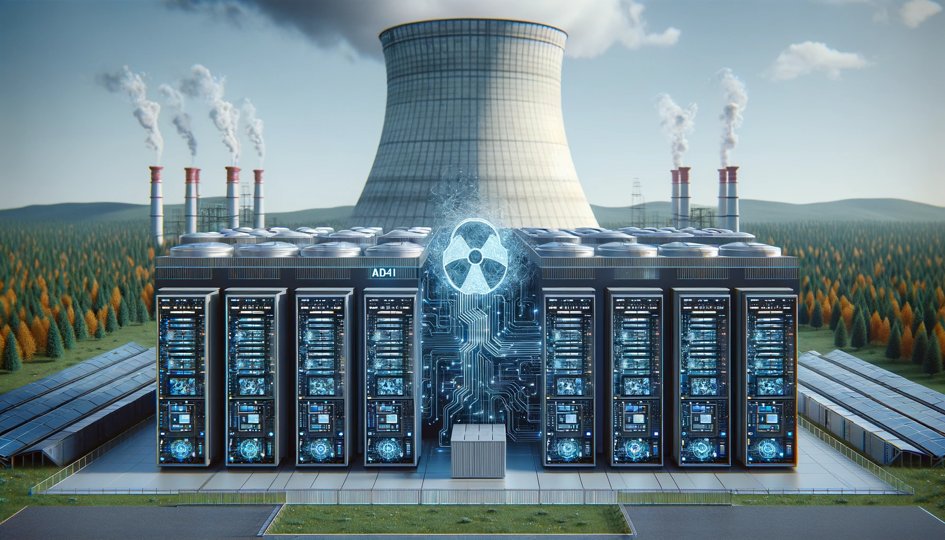
AI going Nuclear? Diving into the future of AI with Edge Learning: revolutionizing energy efficiency in AI - no more data center dependence! Better, cheaper, more private, local, faster AI in low-power solutions. #EdgeComputing#EcoFriendlyTech#EdgeAI
https://t.co/KlvlYKNl0X
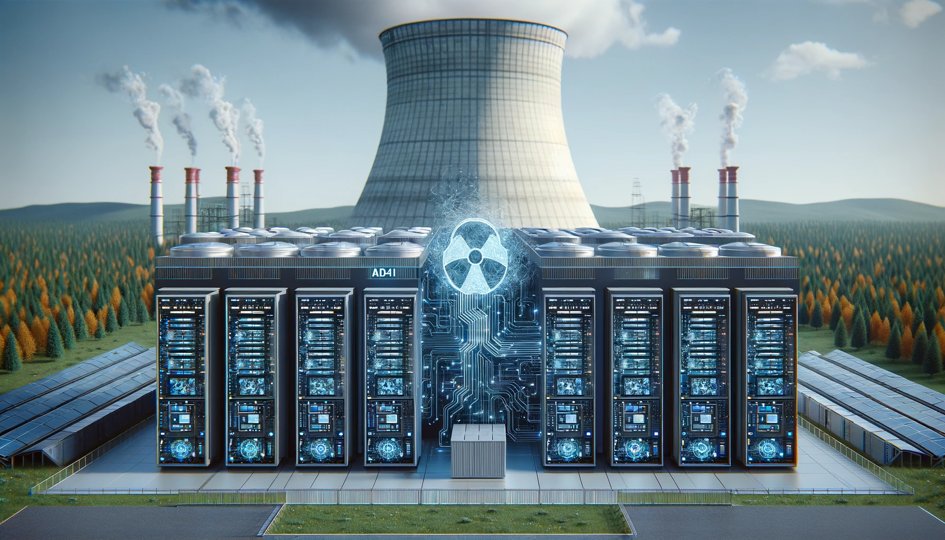
AI going Nuclear? Diving into the future of AI with Edge Learning: revolutionizing energy efficiency in AI - no more data center dependence! Better, cheaper, more private, local, faster AI in low-power solutions. #EdgeComputing#EcoFriendlyTech#EdgeAI
https://t.co/KlvlYKNl0X